
Slideshow Items

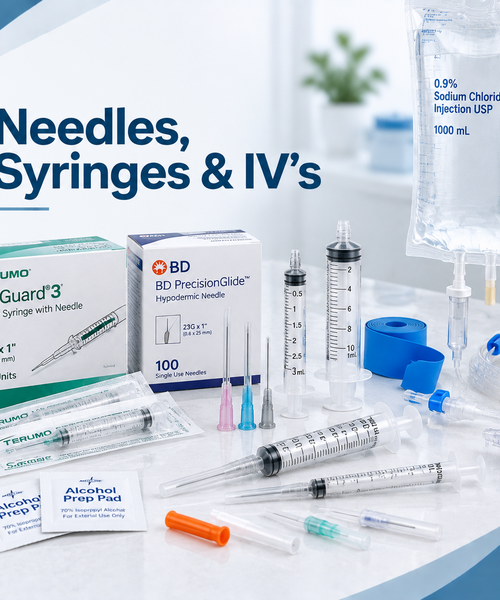
  • Needles, Syringes & IV's
  • needles-syringes-ivs
BX-Baxter

  |  

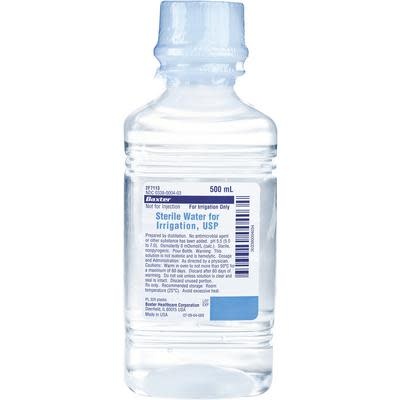
Baxter Canada Sterile Water For Irrigation In Plastic 500ml Pour Bottle 15/Bx

C$169.10
In stock online
In store: Check availability

Available in store

SKU: 533-JF7623P

preservative-free wound cleansing with rigid pour bottle design for controlled fluid delivery, sterile nonpyrogenic preparation for safe tissue contact, and 500 mL volume for adequate irrigation of moderate wounds and surgical sites.

    • Why Preservative-Free Sterile Water in 500 mL Pour Bottles for Safe Wound Irrigation

      Preservative-free sterile water provides mechanical wound cleansing without the cellular toxicity associated with antiseptic solutions like hydrogen peroxide, povidone-iodine, or chlorhexidine that kill bacteria but also damage fibroblasts and keratinocytes essential for wound healing—making sterile water the safe choice for routine wound irrigation where chemical disinfection is not required and tissue preservation is paramount. The rigid plastic pour bottle design with controlled pour spout enables direct application of irrigation fluid without requiring syringes or additional equipment, essential for emergency departments, operating rooms, and clinical settings where rapid wound preparation is necessary—the firm bottle construction allows single-handed operation and precise stream direction for effective debris removal from wound beds, unlike flexible bags requiring additional handling equipment. The 500 mL volume provides adequate irrigation for moderate to large wounds, surgical site preparation, and equipment rinsing while remaining manageable for healthcare providers, more practical than liter bottles for most procedures yet more efficient than small unit-dose containers for substantial cleansing needs.

      Key Features & Benefits

      Key Features:

      • Sterile water prepared by distillation
      • 500 mL volume per pour bottle
      • Rigid plastic pour bottle with controlled pour spout
      • Sterile, nonpyrogenic preparation
      • Preservative-free (no additives, buffers, or antimicrobials)
      • Single-use bottles prevent contamination
      • Clear transparent bottle for visual inspection
      • Tamper-evident cap ensures sterility
      • Room temperature stable (no refrigeration required)
      • Case of 15 bottles for clinical inventory
      • Long shelf life (typically 2-3 years)
      • Manufactured by Baxter (trusted healthcare supplier)
      • Meets USP standards for sterile water for irrigation
      • For irrigation use only (not for IV or oral use)

      Benefits:

      • Pure water provides mechanical cleansing without chemical toxicity
      • No tissue damage unlike antiseptic solutions
      • Safe for all wound types and tissue exposure
      • Pour bottle enables direct controlled application
      • Single-handed operation streamlines procedures
      • Adequate volume for thorough wound cleansing
      • Sterile preparation ensures infection control
      • Nonpyrogenic prevents fever reactions
      • Preservative-free supports optimal wound healing
      • Room temperature storage convenient
      • Long shelf life reduces waste
      • Single-use prevents cross-contamination
      • Clear bottle allows solution inspection
      • Cost-effective for routine irrigation

      Clinical Applications

      Baxter Sterile Water for Irrigation is appropriate for:

      ✓ Acute wound irrigation (lacerations, abrasions, punctures) ✓ Traumatic wound cleansing in emergency department ✓ Surgical site irrigation before closure ✓ Post-operative wound cleansing ✓ Burn wound irrigation ✓ Chronic wound cleansing (pressure ulcers, diabetic ulcers) ✓ Foreign body removal from wounds ✓ Abscess irrigation after incision and drainage ✓ Debridement preparation (pre-procedure cleansing) ✓ Fistula and sinus tract irrigation ✓ Ostomy site cleansing ✓ Surgical equipment and instrument rinsing ✓ Medical device irrigation and flushing ✓ Procedure tray preparation (moistening supplies) ✓ Laboratory specimen preparation ✓ General irrigation during procedures ✓ Equipment cleaning in sterile fields

      Usage & Application

      IMPORTANT WARNINGS:

      FOR IRRIGATION USE ONLY

      • DO NOT use for intravenous injection (not for IV use)
      • DO NOT use for oral administration (not for drinking)
      • DO NOT use with electrosurgical equipment (not electrically conductive)
      • For external use only

      Pre-Use Inspection:

      1. Check bottle integrity:
        • Inspect bottle for cracks or leaks
        • Check for punctures or damage
        • Ensure tamper-evident seal intact
        • Discard if any damage noted
      2. Inspect solution:
        • Solution should be clear and colorless
        • No particles or cloudiness
        • Check for discoloration
        • Discard if appearance abnormal
      3. Verify expiration date:
        • Check date on bottle
        • Do not use if expired
      4. Verify appropriate use:
        • Confirm irrigation application
        • Not for IV or internal use
        • Appropriate for tissue contact

      Opening Bottle:

      1. Remove tamper-evident cap:
        • Twist or pull off protective seal
        • Do NOT touch bottle opening after opening
        • Maintain sterility of pour spout
      2. Inspect solution again:
        • Look for particles after opening
        • Verify clear, colorless appearance
        • Discard if concerns about sterility

      Wound Irrigation Technique:

      General principles:

      • Use adequate volume for thorough cleansing
      • Irrigate from cleanest to dirtiest areas
      • Use appropriate pressure (8-15 psi ideal for most wounds)
      • Continue until return fluid runs clear

      Method 1: Direct Pour (Simple Irrigation)

      1. Position wound:
        • Over collection basin or waterproof pads
        • Ensure catch basin available
        • Protect surrounding areas from splash
      2. Pour technique:
        • Hold bottle 6-12 inches above wound
        • Tilt bottle to pour steadily
        • Direct stream across wound surface
        • Use sweeping motion to cover entire wound
        • Adjust height/angle for desired pressure
      3. Volume:
        • Use entire 500 mL bottle for thorough cleansing
        • Large or contaminated wounds may need multiple bottles
        • Continue until return fluid clear

      Method 2: Syringe Irrigation (More Control)

      1. Pour into sterile basin:
        • Pour sterile water into sterile basin or container
        • Maintain sterile technique
      2. Draw into irrigation syringe:
        • Use 35-60 mL catheter-tip syringe
        • Fill from basin
        • Attach splash shield if available
      3. Irrigate:
        • Hold syringe 2-4 inches above wound
        • Apply steady, moderate pressure (8-15 psi)
        • Direct stream across wound surface
        • Refill as needed from basin

      Surgical Site Irrigation:

      1. Pre-closure irrigation:
        • Pour or use syringe technique
        • Irrigate entire surgical field
        • Remove blood, debris, bone fragments
        • Continue until clear return
      2. Volume:
        • Varies by procedure
        • Orthopedic procedures may use liters
        • 500 mL adequate for many procedures

      Equipment and Instrument Rinsing:

      1. Pour over instruments:
        • Hold bottle over sterile basin
        • Pour to rinse instruments
        • Remove blood, tissue, debris
      2. Maintain sterility:
        • Do not contaminate bottle opening
        • Pour into sterile containers only

      Post-Use Care:

      1. Dispose of bottle:
        • Single-use only—discard after opening
        • Do NOT save for later use
        • Even if solution remains, discard after opening
        • Place in appropriate waste container
      2. Document:
        • Record irrigation performed
        • Note volume used
        • Document wound assessment

      Storage:

      Unopened Bottles:

      • Store at room temperature 15-30°C (59-86°F)
      • Protect from freezing
      • Protect from excessive heat
      • Keep in original packaging until use
      • Store in clean, dry area
      • Check expiration dates regularly
      • Rotate stock using FIFO (first in, first out)
      • Shelf life typically 2-3 years

      Opened Bottles:

      • Use immediately after opening
      • Do NOT save for later use
      • Discard any unused portion
      • Once opened, sterility compromised
      • Bacteria can multiply in sterile water

      Troubleshooting:

      Solution appears cloudy or discolored:

      • Do NOT use—indicates contamination or degradation
      • Discard bottle immediately
      • Report quality concern

      Particles visible in solution:

      • Do NOT use—foreign material present
      • Discard bottle
      • May indicate manufacturing defect or storage damage

      Bottle leaking or damaged:

      • Sterility compromised
      • Discard immediately
      • Do NOT attempt to use

      Inadequate cleansing despite irrigation:

      • May need larger volume
      • May need mechanical debridement
      • Some debris requires sharp debridement
      • Consider more aggressive cleaning methods

      Special Considerations:

      Contaminated wounds:

      • Use copious amounts (1-2 liters may be needed)
      • High-volume irrigation more effective for bacteria removal
      • May need multiple 500 mL bottles
      • Consider adjunctive therapies

      Deep wounds or tunnels:

      • Use syringe with catheter for deep access
      • Ensure irrigation reaches all wound areas
      • May need angiocatheter for very deep tracts

      Burns:

      • Copious irrigation removes debris and contaminants
      • Room temperature or slightly warm water
      • Gentle technique (burned tissue very fragile)
      • Continue irrigation as part of burn care

      Surgical wounds:

      • Pre-closure irrigation reduces infection rates
      • Adequate volumes important
      • May use pulse lavage in OR
      • Post-operative irrigation for wound care

      Diabetic ulcers:

      • Gentle irrigation to remove loose debris
      • Do NOT irrigate too aggressively (damages fragile tissue)
      • Regular irrigation important for infection prevention

      Pressure ulcers:

      • Irrigate to remove slough and debris
      • Gentle technique for fragile tissue
      • Undermining and tunneling require catheter irrigation

      Eye irrigation:

      • Verify solution labeled for ophthalmic use if available
      • Sterile water acceptable for emergency eye irrigation
      • Chemical exposure: irrigate 15-20 minutes minimum

      Pediatric patients:

      • Same principles apply
      • Adjust volume to wound size
      • Use gentle pressure
      • Provide comfort measures

      Geriatric patients:

      • Fragile skin and tissue
      • Use gentle irrigation pressure
      • Pat dry carefully (fragile skin tears easily)

      Home healthcare:

      • Teach patients/caregivers proper technique
      • Emphasize single-use importance
      • Demonstrate irrigation pressure
      • Provide written instructions

      Infection Control:

      • Always use sterile water for wound irrigation
      • Single-use bottles only
      • Never reuse opened bottles
      • Never share bottles between patients
      • Do NOT top off bottles with new solution
      • Use aseptic technique throughout
      • Change gloves between patients
      • Clean equipment after use

      Comparison to Alternatives:

      Sterile Water vs. Normal Saline for Irrigation:

      • Sterile Water:
        • Pure H2O
        • Hypotonic (cells may absorb water)
        • No electrolytes
        • Adequate for most routine irrigation
        • Often less expensive
      • Normal Saline:
        • 0.9% sodium chloride
        • Isotonic (no cellular osmotic effect)
        • Preferred for some procedures
        • More expensive
      • Clinical recommendation: Both acceptable for most wound irrigation

      Sterile Water vs. Tap Water:

      • Sterile Water:
        • Guaranteed sterile
        • No bacteria or contaminants
        • Required in clinical settings
        • Required for surgical wounds
      • Tap Water:
        • Studies show acceptable for some clean wounds
        • Not appropriate in clinical/surgical settings
        • May contain bacteria or chemicals
        • Should not be used for immunocompromised patients

      Sterile Water vs. Antiseptics (Betadine, Peroxide, Chlorhexidine):

      • Sterile Water:
        • No tissue toxicity
        • Safe for repeated use
        • Gentle on healing tissue
      • Antiseptics:
        • Kill bacteria but damage healing cells
        • Delay wound healing
        • Reserved for specific contaminated situations
      • Clinical recommendation: Use sterile water for routine cleansing

      When to Contact Healthcare Provider:

      • Wound shows signs of infection after irrigation
      • Wound not healing despite proper irrigation
      • Patient develops fever or systemic symptoms
      • Excessive bleeding during or after irrigation
      • Questions about irrigation technique or frequency

      Regulatory and Quality Standards:

      • Manufactured to USP (United States Pharmacopeia) standards
      • Sterile via validated sterilization process
      • Non-pyrogenic (tested for endotoxins)
      • Meets FDA requirements for sterile water for irrigation
      • Manufactured in FDA-registered facilities following cGMP
      • Quality tested for sterility, pH, particulate matter

      Advantages of Pour Bottle Design:

      vs. Flexible Bags:

      • Rigid bottle easier to handle
      • Single-handed operation
      • Better pour control
      • More precise stream direction
      • Doesn't require squeezing

      vs. Small Unit-Dose Vials:

      • Larger 500 mL volume more efficient
      • Fewer containers to open
      • More economical
      • Better for moderate to large wounds

      vs. Large 1-Liter Bottles:

      • 500 mL more manageable
      • Reduces waste (won't use full liter for many procedures)
      • Easier to handle and pour
      • Lighter weight

      Technical Specifications

      Product Details:

      • Manufacturer: Baxter Healthcare Corporation (Canada)
      • Product Name: Sterile Water for Irrigation, USP
      • Active Ingredient: Water (H2O) prepared by distillation
      • Concentration: 100% water (no additives)
      • Volume: 500 mL per bottle
      • Container Type: Rigid plastic pour bottle
      • Pour Spout: Controlled pour spout for directed application
      • Cap: Tamper-evident cap ensures sterility
      • Sterility: Sterile until opened
      • Sterilization Method: Terminal sterilization (autoclave or other validated method)
      • Pyrogenicity: Non-pyrogenic (endotoxin-free)
      • Preservatives: None (preservative-free)
      • Additives: None (pure water only)
      • pH: Approximately 5.0-7.0 (water pH range)
      • Osmolality: Hypotonic (pure water, no solutes)
      • Appearance: Clear, colorless solution
      • Particulate Matter: Free of visible particles
      • Packaging: Case of 15 bottles (7.5 liters total)
      • Individual Packaging: Each bottle individually sealed
      • Shelf Life: Typically 2-3 years from manufacture date
      • Storage: Room temperature 15-30°C (59-86°F); protect from freezing
      • Intended Use: Irrigation ONLY (not for injection, not for oral use)
      • Routes: External irrigation only
      • Disposal: Discard unused portion after opening; follow facility protocols
      • Regulatory Status: FDA-regulated medical device/drug product
      • USP Standards: Meets USP specifications for Sterile Water for Irrigation
      • Country of Origin: Canada (Baxter Canada)
    • No reviews yet

      Add yours

    Testimonials from Google

    See all reviews

    Your cart — 0

    You cart is currently empty

    Login

    By using our website, you agree to the use of cookies. These cookies help us understand how customers arrive at and use our site and help us make improvements. Hide this message More on cookies »