Why Professional Heat Molding Transforms Orthopedic Brace Effectiveness?
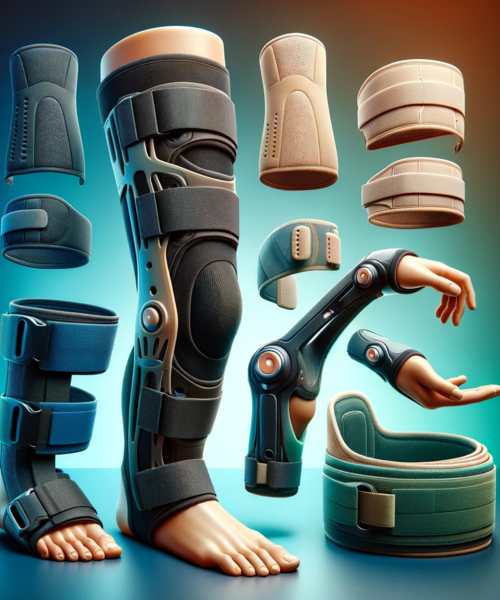
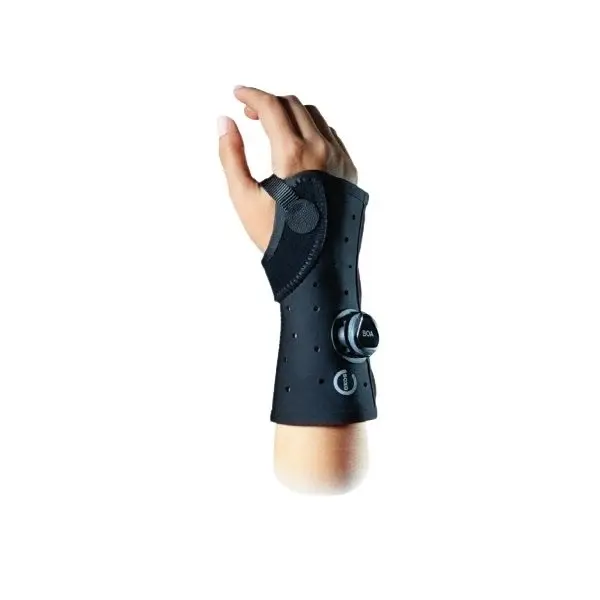
EXOS braces are manufactured from a proprietary thermoformable polymer composite that softens and becomes pliable when heated to a specific temperature range — typically between 60 and 75 degrees Celsius — and returns to a rigid, shape-retaining structure as it cools to body and room temperature. This thermoplastic behavior is the material property that distinguishes EXOS from conventional rigid orthoplastic braces and from soft neoprene or fabric braces at the other end of the immobilization spectrum. A conventional rigid brace is manufactured in a fixed geometry that approximates the average anatomy of its size category — it cannot be altered to accommodate the patient's specific bony prominences, joint angles, or limb contours, and the clinical consequence is a brace that fits well for the statistical average patient and poorly for everyone whose anatomy deviates from that average. The EXOS thermoformable system is engineered to be clinician-molded to each individual patient's anatomy — but that molding capability is only realized when the heat molding process is performed correctly by a trained clinician with appropriate heating equipment and anatomical positioning knowledge.
The heat molding process involves controlled heating of the EXOS brace panel in a specialized dry heat oven or heat gun until the polymer reaches its thermoplastic transition temperature, confirmed by the material becoming visibly translucent and pliable under gentle manual pressure. The clinician then applies the heated brace to the patient's limb in the prescribed therapeutic position — maintaining the joint angle and alignment specified by the treating physician or therapist — and uses controlled manual pressure to conform the softening polymer to the patient's bony landmarks, contour transitions, and soft tissue topography. As the material cools — typically over 3 to 5 minutes of maintained positioning — it solidifies into a three-dimensional shell that precisely reproduces the patient's anatomy in the therapeutic position. The result is a brace whose inner surface contacts the patient's limb uniformly across the full contact area rather than at isolated prominence contact points — distributing the immobilization force over the widest possible tissue area and eliminating the concentrated interface pressure at bony prominences that causes pain, skin breakdown, and compliance failure in improperly fitted braces.
The clinical significance of pressure point elimination in orthopedic brace fitting extends beyond patient comfort into therapeutic effectiveness and compliance. A brace that creates significant pressure discomfort at bony prominences — the ulnar styloid in wrist braces, the lateral malleolus in ankle braces, the first metatarsal head in foot braces — will be removed by the patient during the hours when it causes the most discomfort: typically at night and during sedentary activities when the immobilization is least practically inconvenient to remove but most therapeutically important for fracture healing or soft tissue recovery. Patient-reported brace removal rates in improperly fitted rigid orthoses are substantially higher than in custom-molded equivalents — and the cumulative hours of brace non-use during a recovery period directly affect the healing outcomes the brace is prescribed to protect. A correctly heat-molded EXOS brace that distributes interface pressure uniformly across the full contact surface is worn continuously because it is not uncomfortable enough to justify removal — and consistent wear is the fundamental prerequisite for the brace to achieve its therapeutic function.
The remoldability of the EXOS thermoformable system is a clinical advantage that conventional rigid braces cannot offer and that is particularly valuable in the management of fractures and post-operative limb conditions where tissue swelling follows a predictable resolution trajectory over the first two to four weeks of recovery. At the time of initial fitting — typically within 48 to 72 hours post-injury or post-surgery — limb circumference is at its maximum due to acute inflammatory swelling, and the brace is molded to this swollen limb geometry. As swelling resolves over the following weeks, the limb circumference decreases and the brace that was correctly fitted to the swollen limb becomes progressively looser — the contact surface area decreases, concentrated pressure points re-emerge at the remaining contact sites, and the brace provides less immobilization as the limb-to-brace contact force distribution deteriorates. With an EXOS thermoformable brace, the clinician can reheat the brace at a follow-up appointment and remold it to the patient's reduced limb circumference, restoring the uniform contact surface and immobilization quality that was achieved at initial fitting — a capability that makes a single brace appropriately sized throughout the full swelling-resolution recovery period.
What the Service Includes
- Professional heat molding and custom anatomical shaping of the EXOS thermoformable brace to the patient's specific limb geometry and joint position
- Proper anatomical alignment and therapeutic joint positioning maintained throughout the molding and cooling cycle
- Strap adjustment and secure fastening configuration for the patient's donning and doffing capability and daily activity level
- Patient comfort and pressure-point assessment after cooling — confirming uniform contact and identifying any bony prominence relief adjustments required
- Patient education on correct donning sequence, proper wear schedule, safe removal, and brace care and cleaning
- Post-molding fit verification and any required local adjustments before the patient leaves the fitting appointment
Key Clinical Features
- Thermoformable polymer molding produces a three-dimensional inner surface that matches the patient's anatomy precisely — not the size category average
- Uniform contact surface distribution eliminates the concentrated bony prominence pressure that causes pain, skin irritation, and brace non-compliance in off-the-shelf fits
- Remoldable at follow-up appointments as post-injury or post-surgical swelling resolves — maintaining correct fit throughout the recovery trajectory
- Clinician-controlled joint positioning during molding ensures the therapeutic angle prescribed by the treating physician or therapist is preserved in the hardened brace geometry
- Pressure-point assessment after cooling identifies any remaining contact concentration before the patient leaves the clinic — allowing local spot heating and adjustment without full remolding
- Patient education on correct wear reduces the donning errors that compromise immobilization quality between clinical appointments
Benefits
- Custom-molded inner surface provides superior immobilization quality compared to off-the-shelf rigid brace fit by eliminating the anatomy-to-brace gap that allows unwanted motion
- Pressure-point elimination supports the consistent brace wear compliance that determines therapeutic outcomes in fracture management and soft tissue stabilization
- Remolding capability maintains correct fit as post-acute swelling resolves, replacing the need for multiple brace size changes during recovery
- Correct therapeutic joint positioning maintained in the hardened brace geometry supports the healing trajectory prescribed by the treating physician
- Patient education at the molding appointment reduces post-fitting calls and unscheduled visits related to donning difficulty, discomfort, or wear schedule confusion
- Professional molding quality ensures the brace functions as the manufacturer designed it — thermoformable braces that are self-applied from the box without heat molding do not achieve the anatomical contact that makes them clinically superior to standard rigid braces
Clinical Applications
✓ Wrist fractures — distal radius, scaphoid, and carpal fractures requiring custom-molded immobilization in the prescribed wrist position throughout the healing period ✓ Wrist sprains and ligament injuries — TFCC, scapholunate, and lunotriquetral ligament injuries requiring immobilization in functional wrist position ✓ Thumb injuries — ulnar collateral ligament sprains, Bennett fractures, and first CMC joint instability requiring custom thumb spica or post molding ✓ Foot and ankle stabilization — post-fracture or post-ligament injury ankle and midfoot immobilization where standard Walker boot fit is insufficient ✓ Post-operative orthopedic support — wrist, hand, ankle, and foot surgical sites requiring custom immobilization in the surgically determined position during early healing ✓ Sports injury management — athletic injuries where return-to-training timelines require a brace that is both therapeutically effective and comfortable for activity ✓ Pediatric fracture management — children's limb proportions and smaller anatomy benefit particularly from custom-molded rather than size-category-based brace fitting ✓ Chronic joint instability — recurrent wrist or ankle instability where a comfortable, precisely fitting brace supports proprioceptive protection during activity ✓ Occupational injury rehabilitation — workplace injury cases where brace compliance is a documented outcome measure in return-to-work timelines ✓ Patients with atypical limb anatomy — post-surgical scar tissue, previous fracture deformity, or anatomical variation that standard brace sizes cannot accommodate
Service Process
Pre-Molding Assessment Before initiating the heat molding process, the clinician reviews the treating physician's or therapist's prescription for the specific brace model, therapeutic joint position, and any immobilization precautions relevant to the patient's diagnosis. The clinician measures the patient's limb circumference and joint dimensions to confirm the EXOS brace size is correct — a brace that is too small cannot be molded to cover the required anatomical area regardless of heat molding technique, and a brace that is significantly oversized will have excess polymer volume that creates bulk and weight without additional immobilization benefit. The clinician identifies the key bony landmarks that will require relief in the molding — the ulnar styloid for wrist braces, the lateral malleolus for ankle braces, the first metatarsal head for foot braces — and plans the molding sequence to ensure these areas are addressed during the critical shaping window.

 780 409-1509
 Get directions