Why Graduated Compression with Extra-Wide Calf for Venous Health
Venous insufficiency, chronic edema, and varicose veins require therapeutic compression that promotes blood flow from the lower leg back toward the heart—but standard compression stockings often fail users with fuller calves, causing constriction, rolling, discomfort, and poor compliance. Graduated compression technology applies maximum pressure at the ankle (20-30 mmHg in this firm compression class) and gradually decreases up the leg, creating a pressure gradient that assists venous return and reduces pooling in the lower extremities. This is clinically proven to reduce swelling, alleviate aching and heaviness, prevent venous complications, and improve quality of life for those with moderate venous disease. However, compression is only effective when worn consistently—and standard sizing creates barriers for users with larger or disproportionate calves who experience painful constriction, difficulty donning, or stockings that roll down. The extra-wide calf design specifically addresses these fit challenges, providing adequate circumference for fuller legs while maintaining therapeutic compression gradients. The beaded silicone top band creates gentle, stay-up grip without the constricting bands or garters that cause circulation problems and discomfort. Opaque fabric conceals varicose veins, spider veins, and skin discoloration, supporting user confidence during daily wear. This combination makes extra-wide calf compression stockings essential for effective, comfortable venous therapy in users whose leg proportions don't match standard compression stocking sizing.
Key Features
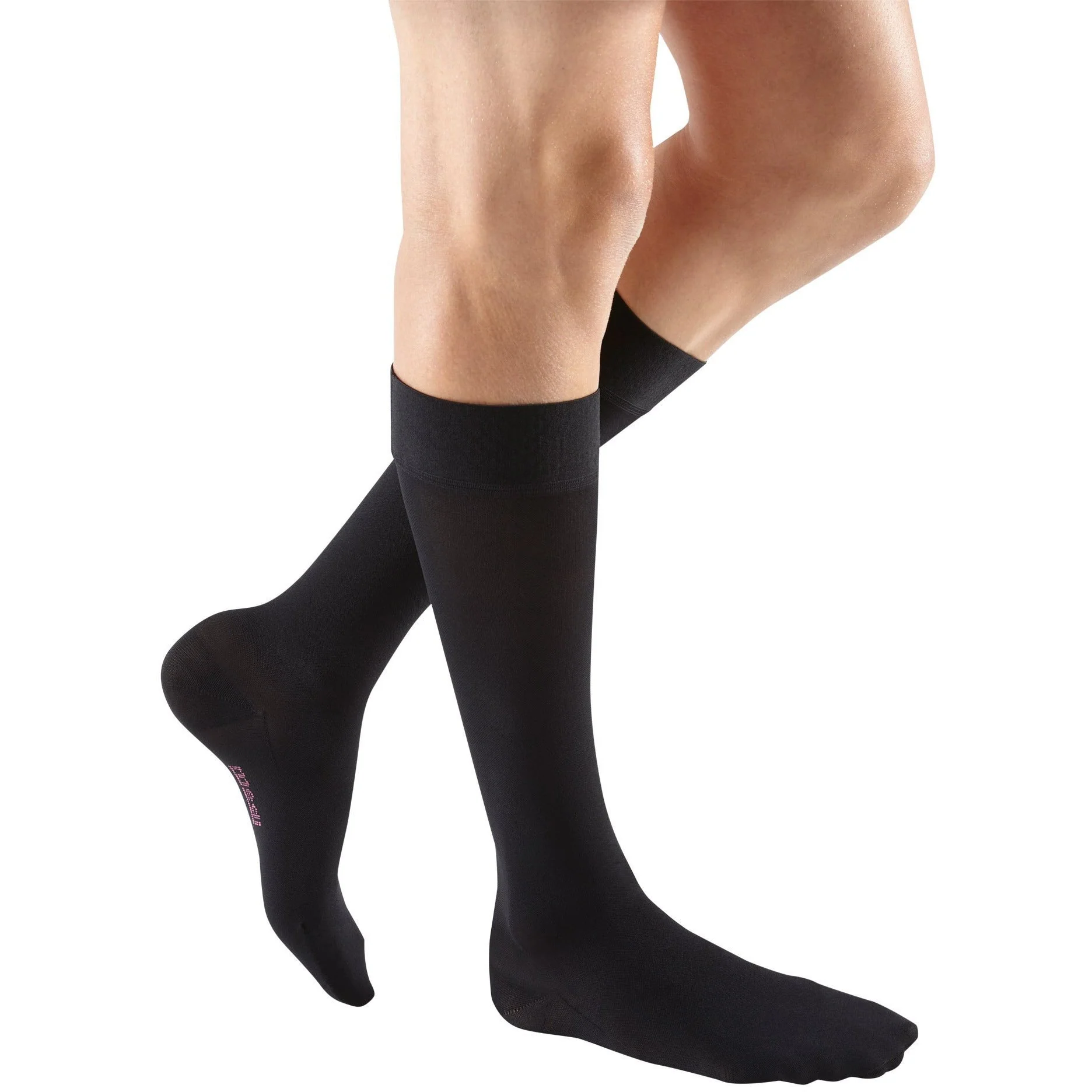
- 20-30 mmHg Graduated Compression – firm, medical-grade compression for moderate venous insufficiency, edema, and varicose veins
- Extra-Wide Calf Sizing – accommodates fuller calves comfortably without constriction or rolling
- Beaded Silicone Top Band – secure stay-up grip prevents slipping without painful constriction
- Graduated Pressure Profile – maximum compression at ankle, gradually decreasing up the leg for optimal venous return
- Opaque Knit Fabric – conceals varicose veins, spider veins, and skin discoloration for confident wear
- Knee-High Length – extends to just below knee for targeted lower leg compression
- Size 5 – specific sizing for precise fit based on ankle, calf, and leg length measurements
- Classic Black Color – versatile, professional appearance suitable for any wardrobe
- Latex-Free Construction – safe for users with latex allergies or sensitivities
- Durable Medical-Grade Knit – maintains compression effectiveness through repeated wear and washing
- Soft, Comfortable Fabric – feels smooth against skin for all-day wearability
- Closed Toe Design – provides full foot coverage and compression
- mediven Plus Quality – trusted medical compression brand with clinically-proven effectiveness
Benefits
- Improves Venous Circulation – graduated compression assists blood flow from lower legs back to heart, reducing venous pooling
- Reduces Edema and Swelling – consistent compression prevents fluid accumulation in ankles and lower legs
- Alleviates Leg Pain and Heaviness – compression reduces venous pressure and associated discomfort
- Prevents Varicose Vein Progression – therapeutic compression helps manage existing varicose veins and prevent worsening
- Reduces Risk of Blood Clots – promotes circulation, lowering risk of deep vein thrombosis (DVT) in at-risk individuals
- Eliminates Fit Barriers – extra-wide calf design ensures comfortable fit without painful constriction that causes non-compliance
- Stays in Place All Day – silicone top band prevents rolling, slipping, and constant readjustment
- Simplifies Donning – extra-wide design is easier to pull on than standard compression stockings
- Supports Active Lifestyle – firm compression provides stability during walking, standing, and daily activities
- Conceals Vein Appearance – opaque fabric allows confident wear of skirts, dresses, and shorts
- Enhances Leg Energy – reduces fatigue and heaviness for improved mobility and comfort
- Prevents Skin Changes – compression reduces venous hypertension that causes skin discoloration and lipodermatosclerosis
- Offers Professional Appearance – black color and opaque finish look polished and appropriate for work settings
Clinical Applications
✓ Moderate chronic venous insufficiency (CVI) requiring firm compression therapy
✓ Varicose veins causing symptoms (aching, heaviness, swelling, fatigue)
✓ Post-thrombotic syndrome following deep vein thrombosis (DVT)
✓ Chronic leg edema and lymphedema (mild to moderate)
✓ Prevention of venous leg ulcers in at-risk individuals
✓ Support during pregnancy for women with venous issues and larger calves
✓ Post-sclerotherapy or vein ablation procedures to support healing
✓ Occupational edema prevention for prolonged standing or sitting (healthcare workers, retail, office workers)
✓ Long-distance travel to reduce DVT risk in susceptible individuals
✓ Orthostatic hypotension management to improve venous return and reduce dizziness
✓ Users with fuller calves who cannot tolerate standard compression stocking sizing
✓ Post-surgical compression following orthopedic or vascular procedures
Usage & Application
Sizing and Measurement
Critical: Proper sizing is essential for compression effectiveness and comfort. Measure legs in the morning before swelling increases.
Required Measurements for Size 5:
- Ankle Circumference (Point B) – Measure around the narrowest part of ankle, just above ankle bone
- Calf Circumference (Point C) – Measure around the fullest part of calf
- Calf Length – Measure from floor to bend of knee (popliteal fold) while standing
Size 5 Specifications (verify exact measurements with manufacturer's sizing chart):
- Typically fits calf circumference: 16-20 inches (varies by manufacturer)
- Extra-wide calf designation provides additional room compared to standard sizing
- Ankle and leg length measurements also determine proper size—consult full sizing chart
Measuring Tips:
- Always measure in the morning before swelling increases
- Stand while measuring for accurate calf circumference
- Use flexible measuring tape placed snugly but not tight
- Record measurements in both inches and centimeters
- If measurements fall between sizes, consult healthcare provider or compression fitter
- Remeasure every 3-6 months as leg size may change with treatment success or weight changes
When to Seek Professional Fitting:
- First-time compression stocking users
- Complex leg shapes or significant size discrepancies between measurements
- History of difficulty with compression stocking fit
- Severe edema or venous disease requiring precise compression
- Post-surgical or post-procedure compression prescription
Before First Wear
- Inspect Stockings: Check for any defects, runs, or damage before wearing.
- Wash Before First Use (Optional): Some users prefer to wash stockings before first wear. Hand wash gently in cool water with mild detergent, rinse thoroughly, and air dry flat.
- Review Prescription: If prescribed by healthcare provider, verify compression level (20-30 mmHg) and wear schedule match prescription.
- Prepare Skin: Ensure legs are clean and completely dry before donning. Remove any lotions, oils, or moisturizers that make skin slippery.
- Trim Nails: Keep toenails and fingernails trimmed short to avoid snagging fabric.
- Consider Donning Aids: For users with limited mobility or strength, donning aids (stocking butler, metal frame device, or rubber gloves) can significantly ease application.
Donning (Putting On) Procedure
Best Practice: Don stockings first thing in the morning before getting out of bed, or after elevating legs for 15-30 minutes if already up. This ensures minimal swelling for easiest application and most effective compression.
Hand Method (Standard):
- Sit Down: Sit on edge of bed or chair with leg extended or slightly bent at knee.
- Turn Stocking Inside-Out: Reach inside stocking and grasp heel pocket. Pull fabric inside-out down to heel, leaving only foot portion right-side-out.
- Insert Foot: Slip foot into stocking, positioning heel properly in heel pocket. Ensure toes are fully into toe area without wrinkles.
- Roll Up Leg: Grasp gathered stocking fabric at ankle level. Gently roll and pull fabric up over ankle, then up calf, using both hands to work stocking upward evenly. Do not pull from top band—this stretches fabric and reduces compression.
- Smooth as You Go: Eliminate wrinkles and folds as you pull stocking up. Fabric should lie smooth against skin without bunching.
- Position Top Band: Pull stocking up until silicone band sits approximately 1-2 inches below the back of knee (popliteal fold). Do not position band directly in knee bend—this causes discomfort and rolling.
- Smooth and Adjust: Run hands over entire stocking from ankle to top, smoothing out any remaining wrinkles or twisted areas. Ensure heel is properly positioned and fabric lies flat.
- Check Silicone Band: Verify silicone band sits comfortably against skin without rolling or pinching. Band should grip gently but not create painful constriction line.
Using Rubber Gloves Method:
- Wear rubber dishwashing gloves (textured surface) to grip stocking fabric more easily
- Follow same inside-out method as above
- Gloves prevent fingernails from snagging fabric and provide better grip on slippery compression material
Using Stocking Butler/Frame Device:
- Place stocking over frame device according to device instructions
- Insert foot into stocking while on frame
- Pull frame handles to slide stocking up leg
- Remove frame and smooth stocking into final position
- Particularly helpful for users with limited mobility or back problems
Donning Tips:
- Never use lotions, oils, or powders on legs before donning—they interfere with fabric grip and make application impossible
- If skin is very dry, apply lotion at night and allow it to fully absorb before morning application
- Do not pull stocking from top band—always work from foot upward to preserve compression integrity
- Take your time—rushing leads to runs, tears, and improper positioning
- If stocking won't go on, verify you're using correct size and that legs haven't swelled significantly
- Some users find slight dampness on skin helps stocking slide (wet hands slightly and moisten skin, or apply after shower while skin is slightly damp—but ensure most moisture has dried)
Wearing Guidelines
Daily Wear Schedule:
- Put On: First thing in morning before or immediately after rising from bed (before significant swelling occurs)
- Wear Duration: Typically worn throughout waking hours (8-12 hours for most users)
- Remove: In evening before bed, or earlier if discomfort develops
- Night Wear: Generally NOT worn during sleep unless specifically prescribed by physician for certain conditions (such as severe lymphedema)
Activity Guidelines:
- Wear during all daily activities—standing, walking, sitting, light exercise
- Safe for most exercises (walking, cycling, swimming) unless fabric restricts movement
- May remove during high-intensity exercise if preferred, but compression during activity often provides additional support
- Reapply after swimming or bathing
Gradual Acclimation:
- First-time compression users may need to build tolerance gradually
- Start with 2-4 hours of wear and increase by 1-2 hours daily until wearing full day
- Mild discomfort is normal initially as legs adjust to compression
- Severe pain, numbness, tingling, or color changes are NOT normal—remove immediately and consult provider
Monitoring During Wear:
- Check legs periodically for discoloration, excessive redness, pain, or numbness
- Verify top band hasn't rolled or created constriction line
- Ensure stocking hasn't twisted or developed wrinkles that cause pressure points
- Remove and reposition if stocking shifts significantly during day
Doffing (Removing) Procedure
- Sit Comfortably: Sit on bed or chair with leg extended or slightly bent.
- Roll Top Down: Grasp top band and gently roll stocking down, working gradually from top to ankle.
- Remove from Foot: Once at ankle, carefully pull stocking off foot and over toes.
- Avoid Pulling from Top: Do not yank stocking off from top band—this damages fabric and silicone band.
- Inspect Leg: After removal, check leg for any marks, redness, or irritation. Mild indentation from top band is normal and should fade within 15-30 minutes.
Skin Care
Before Wearing:
- Wash and dry legs thoroughly
- Avoid lotions or oils immediately before donning
- Check for cuts, wounds, or skin infections—do not wear compression over compromised skin without medical guidance
After Wearing:
- Inspect legs for redness, blisters, or breakdown
- Elevate legs for 15-30 minutes after removing stockings to promote continued circulation
- Apply moisturizer to dry skin after removal (not before next wear)
- Allow skin to "breathe" overnight without compression
Skin Problems:
- If persistent redness, blisters, or breakdown occur, discontinue use and consult healthcare provider
- Compression should not cause skin damage when properly fitted and applied
- Address underlying skin conditions (eczema, dermatitis) before wearing compression
Care and Cleaning
Hand Washing (Recommended):
- Fill basin with cool or lukewarm water (never hot—damages elastic fibers)
- Add small amount of mild detergent (avoid fabric softeners, bleach, or harsh chemicals)
- Submerge stocking and gently squeeze and swish. Do not wring, twist, or scrub
- Rinse thoroughly in cool water until all soap is removed
- Gently squeeze out excess water (do not wring or twist)
- Lay flat on clean towel to air dry away from heat and direct sunlight
- Do not hang to dry (stretches fabric)—lay flat or drape over drying rack without folding at stress points
Machine Washing (If Manufacturer Allows):
- Place stocking in mesh laundry bag to protect from snagging
- Use delicate cycle with cool water
- Use mild detergent—no bleach or fabric softener
- Remove promptly after cycle
- Air dry flat—never tumble dry
Drying:
- Always air dry—never use clothes dryer, as heat destroys compression properties
- Do not hang (causes stretching)—lay flat on towel
- Keep away from heat sources (radiators, heating vents, direct sunlight)
- Allow to dry completely before wearing (typically 12-24 hours)
Washing Frequency:
- Wash after every wear to remove skin oils, sweat, and body products that degrade fabric
- Having two pairs allows alternating daily while one is being washed
- Clean stockings maintain compression effectiveness and hygiene
Detergent Selection:
- Use mild, gentle detergent (such as Woolite, baby detergent, or compression garment-specific wash)
- Avoid detergents with fabric softeners, bleach, or optical brighteners
- Rinse thoroughly to remove all detergent residue
Prohibited Cleaning Methods:
- No dry cleaning
- No bleach or harsh chemicals
- No ironing
- No tumble drying or heat exposure
- No wringing or twisting
Replacement Schedule
- Typical Lifespan: 3-6 months with daily wear and proper care
- Replace When:
- Compression feels looser or less effective
- Fabric becomes stretched, thin, or pilled
- Silicone band loses grip and stocking slips frequently
- Runs, holes, or tears develop
- Stocking no longer fits properly due to leg size changes
- Multiple Pairs: Having 2-3 pairs allows rotation and extends overall wearability (alternating reduces wear on each pair)
- Insurance Coverage: Many insurance plans cover 2-4 pairs of compression stockings annually—check benefits and obtain prescription from healthcare provider
Troubleshooting
Stocking Rolls Down or Won't Stay Up:
- Verify silicone band is clean and making proper skin contact (body oils reduce grip—clean band with rubbing alcohol on cotton pad)
- Check leg hair isn't preventing silicone adhesion—consider shaving small band area where silicone contacts skin
- Ensure stocking is correct size—too large will slip despite silicone band
- Position band at proper location (1-2 inches below knee, not in knee bend)
- If band is damaged or has lost grip permanently, stocking needs replacement
- Avoid lotions, oils, or powders on legs where silicone band contacts skin
Stocking Too Difficult to Put On:
- Verify legs aren't swollen—don compression stockings in morning before swelling increases
- Try donning aids (rubber gloves, stocking butler, metal frame device)
- Ensure legs are completely dry before attempting application
- Check that you're using correct size—too small is extremely difficult to don
- Use proper inside-out technique rather than trying to pull stocking on right-side-out
- Consider seeking help from family member or caregiver, or ask healthcare provider about compression alternatives if donning remains impossible
Stocking Too Tight or Causes Pain:
- Remove immediately if experiencing severe pain, numbness, tingling, or color changes (white, blue, purple discoloration)
- Check sizing—may need to remeasure and size up
- Verify compression level is appropriate for condition (20-30 mmHg is firm compression—some users may need lower level initially)
- Ensure stocking isn't twisted or bunched, creating pressure points
- Check that top band isn't positioned too tightly or hasn't rolled
- Consult healthcare provider if discomfort persists—compression may need to be adjusted or alternative treatment considered
Stocking Too Loose or Ineffective:
- Check that stocking hasn't stretched from extended use—may need replacement
- Verify proper sizing—legs may have reduced in size due to successful treatment (remeasure and potentially size down)
- Ensure stocking is medical-grade compression (20-30 mmHg)—lower compression levels provide less support
- Confirm stocking is being donned correctly with fabric smooth and unwrinkled
- If stocking is relatively new but feels loose, contact supplier—may be defective
Runs, Snags, or Tears:
- Always handle stockings gently with clean, trimmed nails
- Use rubber gloves when donning to prevent fingernail damage
- Remove rings, bracelets, and watches before handling stockings
- Check bed sheets, footwear, and furniture for rough edges that can snag fabric
- Small runs can sometimes be stopped with clear nail polish, but stocking effectiveness is compromised
- Replace stockings with significant damage—compromised fabric loses compression properties
Skin Irritation or Rash:
- Remove stocking and inspect skin
- If redness fades within 30 minutes, this is normal compression marking
- If redness persists, blistering occurs, or rash develops, discontinue use and consult healthcare provider
- Ensure legs are clean and dry before wearing
- Check that laundry detergent isn't causing irritation—switch to hypoallergenic option
- Verify stocking is latex-free if latex allergy suspected
- Apply barrier cream or moisturizer to dry, irritated skin (at night after stocking removal, not before wearing)
Stocking Feels Too Hot:
- Compression stockings trap some heat—this is normal
- Choose lighter-weight compression for warm weather if available in required compression level
- Ensure adequate hydration during hot weather
- Elevate legs when possible to reduce need for continuous compression in heat
- Some users find applying stocking to slightly damp legs helps with cooling sensation (but ensure most moisture has dried)
Silicone Band Causes Irritation:
- Clean band regularly with rubbing alcohol to remove buildup
- Ensure band isn't positioned in crease behind knee—should be 1-2 inches below knee bend
- Check that stocking isn't too small, causing band to compress excessively
- Some users with silicone sensitivity may need stockings with alternative stay-up mechanisms (though less common in medical compression)
- Apply thin layer of moisture barrier cream where band contacts skin (test first to ensure doesn't reduce grip)
Special Considerations
Pregnancy:
- Compression stockings are safe and often recommended during pregnancy for varicose veins and swelling
- Extra-wide calf design accommodates leg swelling common in pregnancy
- Size may need adjustment as pregnancy progresses and leg size changes
- Consult obstetrician before use and follow specific guidance
- May need lower compression level in first trimester
Diabetes:
- Diabetics can wear compression stockings but require extra caution
- Check feet daily for any wounds, blisters, or pressure areas
- Ensure stockings fit properly without creating tight bands or pressure points
- Remove immediately if any numbness, pain, or discoloration occurs
- Consult endocrinologist or podiatrist before starting compression therapy
Arterial Disease:
- Do NOT wear compression stockings if you have significant peripheral arterial disease (PAD) without physician clearance
- Compression can worsen arterial insufficiency
- Ankle-brachial index (ABI) test should be performed before compression therapy to rule out arterial disease
- If ABI is abnormal, compression is typically contraindicated
Open Wounds or Ulcers:
- Do not wear compression stockings over open venous ulcers without specific wound care protocol from healthcare provider
- Compression is important for venous ulcer healing but must be applied properly over appropriate dressings
- Requires professional assessment and management
Edema Management:
- For severe edema, legs may need to be wrapped with compression bandages first to reduce size before transitioning to compression stockings
- Consider combining compression with elevation, exercise, and lymphatic drainage as directed by healthcare provider
- Monitor leg size changes—may need to remeasure and adjust stocking size as swelling improves
When to Seek Medical Attention
Stop Wearing and Contact Healthcare Provider If:
- Severe pain, numbness, or tingling develops during wear
- Toes or foot becomes cold, pale, blue, or purple
- New or worsening swelling develops despite compression use
- Skin breakdown, blistering, or open sores occur
- Signs of infection develop (redness, warmth, fever, drainage)
- Symptoms worsen rather than improve with compression therapy
- You suspect deep vein thrombosis (sudden leg pain, swelling, warmth, redness)
Medical Emergency—Seek Immediate Care If:
- Sudden chest pain or difficulty breathing (possible pulmonary embolism)
- Severe leg pain with inability to bear weight
- Leg becomes suddenly cold, numb, or discolored
- Any signs of serious allergic reaction (hives, swelling, difficulty breathing)
Technical Specifications
- Brand/Series: mediven Plus
- Compression Level: 20-30 mmHg (Firm/Medical Grade II)
- Compression Type: Graduated compression (maximum at ankle, decreasing up leg)
- Style: Knee-high with silicone top band
- Calf Width: Extra-wide calf
- Size: 5
- Color: Black
- Fabric: Opaque medical-grade knit
- Material Composition: Latex-free (typically nylon/elastane blend—verify specific composition with manufacturer)
- Toe Style: Closed toe
- Top Band: Beaded silicone stay-up band
- Length: Knee-high (extends to approximately 1-2 inches below knee)
- Gender: Unisex (though marketed as women's style)
- Intended Use: Moderate chronic venous insufficiency, varicose veins, edema, post-thrombotic syndrome, DVT prevention
- Wash Care: Hand or gentle machine wash in cool water; air dry flat
- Expected Lifespan: 3-6 months with daily wear and proper care
- Compression Class: Class II (European classification)
- Medical Device Classification: Class I medical device (in most jurisdictions)
- Prescription Required: Typically requires physician prescription for insurance coverage (available over-counter in some regions)
- Quality Standards: Meets RAL quality standards for medical compression (verify with manufacturer)

 780 409-1509
 Get directions