
Slideshow Items

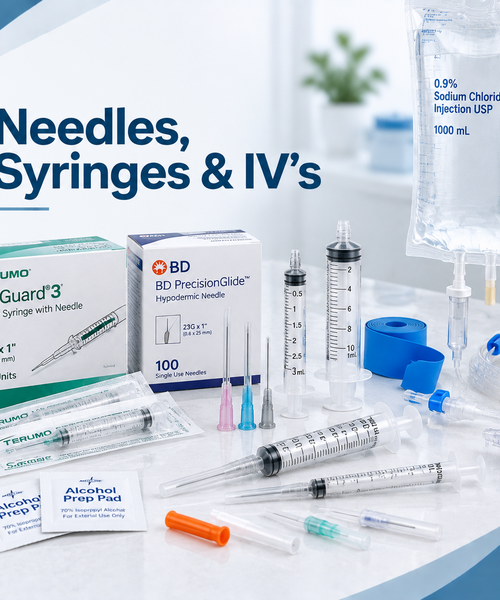
  • Needles, Syringes & IV's
  • needles-syringes-ivs
Saljet

  |  

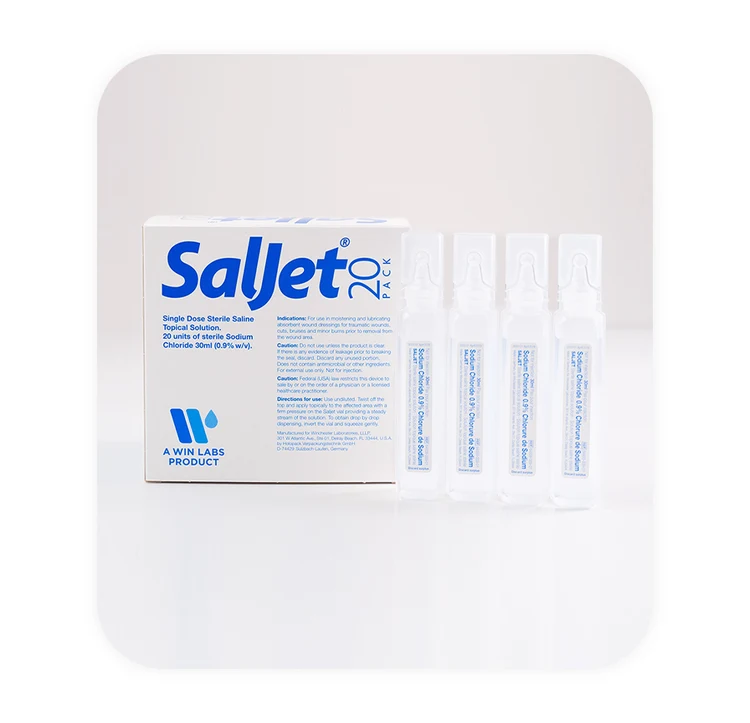
Saljet Sterile Saline Topical Solution bx/20

C$49.99
3+ Day Shipping
In store: Check availability

Available in store

SKU: 60188151

Saljet® Sterile Saline Topical Solution provides convenient, single-use sterile saline for wound cleansing and topical irrigation. Pre-measured vials help reduce contamination risk while supporting safe, effective care.

    • Why Single-Use Sterile Saline Vials for Infection Control and Wound Care Safety

      Single-use unit-dose vials eliminate the cross-contamination risks inherent in multi-use saline bottles, which can become colonized with bacteria after opening despite careful technique—particularly problematic in wound care where infection prevention is critical. Each sterile vial contains precisely 0.9% sodium chloride (normal saline, isotonic solution), matching the body's natural salt concentration to provide gentle, non-irritating cleansing that won't damage healing tissue or cause cellular disruption like hypotonic or hypertonic solutions can. The ready-to-use format eliminates preparation errors, contamination during mixing, and inconsistent concentrations that can occur with diluted solutions. Pre-measured volumes reduce waste compared to pouring from larger bottles where unused portions must be discarded, while the individual packaging supports point-of-care use in clinical settings, home health, first aid kits, and travel medical supplies. Latex-free construction protects patients and healthcare workers with latex sensitivities, while the sterile, preservative-free formulation is safe for all wound types including surgical sites, burns, abrasions, and chronic wounds.

      Key Features & Benefits

      Key Features:

      • Sterile 0.9% sodium chloride solution (normal saline, isotonic)
      • Single-use, unit-dose vials for one-time application
      • Ready-to-use format—no mixing, diluting, or preparation required
      • Pre-measured volume for consistent application (typically 15-30 mL per vial)
      • Preservative-free formulation (important for wound healing)
      • Twist-off or snap-off cap for easy opening
      • Clear vial allows visual inspection of solution
      • Latex-free packaging and materials
      • Sterile until opened—maintains sterility in individual packaging
      • pH-balanced and isotonic to body fluids
      • Non-pyrogenic (fever-free) solution
      • USP-grade ingredients meeting pharmaceutical standards
      • Individually sealed in tamper-evident packaging
      • Compact size for portability and storage
      • Box of 20 vials for clinical or home use inventory
      • Long shelf life when stored properly
      • Cost-effective compared to contaminated multi-use bottles requiring replacement

      Benefits:

      • Eliminates cross-contamination between patients or wound care sessions
      • Reduces infection risk with sterile, single-patient-use format
      • Gentle isotonic solution won't harm healing tissue
      • No stinging or burning during application (unlike antiseptics)
      • Ready-to-use convenience saves preparation time
      • Consistent concentration ensures reliable wound cleansing
      • Pre-measured volume reduces waste and controls costs
      • Portable vials ideal for home health visits, clinics, or travel
      • Latex-free protects sensitive patients and caregivers
      • Preservative-free formulation better for wound healing
      • Supports infection control protocols and regulatory compliance
      • Easy to open—no additional equipment needed
      • Clear vials allow inspection for particles or discoloration
      • Long shelf life reduces inventory waste

      Clinical Applications

      Saljet Sterile Saline unit-dose vials are appropriate for:

      ✓ Acute wound cleansing (cuts, lacerations, abrasions, punctures) ✓ Surgical incision site cleansing and irrigation ✓ Chronic wound care (pressure ulcers, diabetic ulcers, venous stasis ulcers) ✓ Burn wound cleansing and debridement preparation ✓ Pre-dressing cleansing to remove debris and exudate ✓ Post-dressing removal wound irrigation ✓ Removing dried blood, crusts, or slough from wound beds ✓ Flushing tunneling or undermining wounds ✓ Eye irrigation for foreign body removal or chemical exposure (if ophthalmic-grade) ✓ Piercing site cleansing and aftercare ✓ Ostomy site cleansing around stoma ✓ Catheter site cleansing (IV sites, PICC lines, central lines) ✓ Tracheostomy site care ✓ Moistening gauze for wound packing ✓ Preparing wound bed before applying topical medications ✓ First aid treatment for minor injuries ✓ Emergency irrigation until definitive care available ✓ Home healthcare wound management ✓ Athletic training room injury care ✓ Tattoo aftercare and piercing maintenance

      Usage & Application

      Pre-Use Preparation:

      1. Assess wound: Evaluate wound size, depth, drainage, and signs of infection (redness, warmth, swelling, purulent drainage, odor). Determine if sterile saline irrigation is appropriate or if wound requires more advanced care.
      2. Gather supplies: Saljet saline vial(s), clean or sterile gloves (per facility protocol and wound type), gauze pads, wound dressing materials, waste container, waterproof pad or towel to protect surrounding area.
      3. Hand hygiene: Wash hands thoroughly with soap and water for at least 20 seconds. If soap and water unavailable, use alcohol-based hand sanitizer.
      4. Position patient: Position patient comfortably with wound accessible. Place waterproof pad under wound area to catch irrigation fluid and drainage.
      5. Inspect vial: Check vial for cracks, leaks, or damage. Verify solution is clear and free from particles or discoloration. Check expiration date—do not use expired product.

      Opening the Vial:

      1. Remove from packaging: Open individual vial package using clean technique. Do not touch the vial opening or cap interior.
      2. Open vial: Depending on vial design:
        • Twist-off cap: Grasp vial firmly in one hand, twist cap counterclockwise with other hand
        • Snap-off cap: Hold vial at base, grasp neck near cap, snap cap off by bending away from you
        • Some vials may have pull-tab seals—follow package instructions
      3. Inspect solution: After opening, look into vial to confirm solution remains clear with no floating particles.

      Wound Cleansing Technique:

      Method 1: Direct Pour/Irrigation

      1. Don gloves: Put on clean gloves (sterile gloves if wound requires sterile technique per facility protocol).
      2. Remove old dressing (if applicable): Gently remove previous wound dressing. Dispose of in appropriate waste container.
      3. Position catch basin: Hold waterproof pad, emesis basin, or towel adjacent to wound to catch runoff saline and debris.
      4. Irrigate wound: Hold vial 2-4 inches above wound. Pour saline in steady stream across entire wound surface. Use gentle pressure—enough to dislodge debris without damaging tissue.
      5. Cleanse from clean to dirty: For surgical wounds, start at incision and irrigate outward. For contaminated wounds, cleanse from least contaminated to most contaminated areas.
      6. Use adequate volume: Use entire vial or multiple vials as needed to thoroughly cleanse wound. Wounds with heavy drainage or debris may require 2-3 vials.
      7. Pat dry: After irrigation, gently pat wound edges dry with sterile or clean gauze. Do not rub (damages healing tissue).

      Method 2: Gauze Application

      1. Don gloves: Put on clean or sterile gloves as appropriate.
      2. Remove old dressing: Gently remove previous dressing.
      3. Moisten gauze: Pour saline from vial onto sterile gauze pad or sponge.
      4. Gently cleanse wound: Using moistened gauze, gently wipe wound surface to remove dried drainage, blood, or debris. Use one-direction strokes (don't wipe back and forth—recontaminates wound).
      5. Use fresh gauze: Use fresh gauze with each stroke. Discard used gauze.
      6. Repeat as needed: Continue until wound is clean and free of visible debris.
      7. Pat dry: Gently pat wound and surrounding skin dry with clean gauze.

      Method 3: Wound Packing Preparation

      1. Open vial and prepare packing material: Have sterile gauze packing strips or wound filler ready.
      2. Moisten packing material: Pour saline from vial onto packing material according to provider instructions (some wounds require moist packing, others require damp).
      3. Pack wound: Gently insert moistened packing into wound cavity following proper wound packing technique. Do not pack too tightly (impairs circulation).

      Method 4: Eye Irrigation (if ophthalmic-grade saline)

      Note: Verify product is specifically labeled for ophthalmic use before using for eye irrigation. Not all sterile saline is approved for eye use.

      1. Position patient: Have patient tilt head toward affected eye side (irrigation drains away from unaffected eye).
      2. Prepare catch basin: Place towel on shoulder, hold emesis basin at cheek to catch runoff.
      3. Open eyelid: Gently separate eyelids with fingers.
      4. Irrigate eye: Pour saline across eye surface from inner corner (near nose) toward outer corner. Continue for recommended duration (typically 15-20 minutes for chemical exposures, less for foreign bodies).
      5. Encourage blinking: Have patient blink frequently during irrigation to help flush debris.

      Post-Cleansing Care:

      1. Assess wound: After cleansing, evaluate wound bed appearance, measure wound dimensions if monitoring healing progress, document condition.
      2. Apply treatment: Apply any prescribed topical medications, antimicrobial agents, or wound care products per care plan.
      3. Apply fresh dressing: Cover wound with appropriate dressing type (gauze, foam, hydrocolloid, transparent film, etc.) based on wound characteristics and drainage level.
      4. Secure dressing: Use tape, wraps, or retention devices to secure dressing without causing skin tension or impaired circulation.
      5. Dispose of materials: Discard used vial and contaminated materials in appropriate waste container. Biohazard waste for heavily contaminated materials per facility protocol.
      6. Remove gloves and perform hand hygiene: Remove gloves using proper technique. Wash hands thoroughly.
      7. Document care: Record date, time, wound assessment findings, cleansing method, products used, dressing applied, and patient tolerance.

      Frequency of Use:

      • Acute wounds: Cleanse with each dressing change, typically daily or as ordered
      • Chronic wounds: Cleanse per care plan—may be daily to several times weekly depending on drainage and wound condition
      • Surgical incisions: May cleanse daily for first few days post-op, then per surgeon instructions
      • Catheter sites: Cleanse during dressing changes per protocol (often every 3-7 days or when soiled)
      • Minor injuries: Cleanse immediately after injury, then once or twice daily until healed
      • Piercings: Cleanse 2-3 times daily during healing period (6-8 weeks for earlobes, longer for cartilage)

      Storage After Opening:

      IMPORTANT: Saljet vials are SINGLE-USE ONLY.

      • Do NOT save partially used vials for later use
      • Do NOT re-cap or attempt to re-sterilize opened vials
      • Discard any unused portion after opening
      • Once sterile seal is broken, solution can become contaminated within minutes
      • Using non-sterile saline in wounds increases infection risk significantly

      Unopened Vial Storage:

      • Store at room temperature 15-30°C (59-86°F)
      • Protect from freezing and excessive heat
      • Keep in original packaging until use
      • Store in clean, dry area away from contaminants
      • Check expiration dates regularly—rotate stock using FIFO (first in, first out)
      • Do not use if package is damaged or vial shows cracks

      Troubleshooting:

      Vial cap difficult to remove:

      • Ensure you're twisting/pulling in correct direction per package instructions
      • Try using gauze or towel for better grip
      • Don't use excessive force (may shatter glass vials or spill plastic vials)
      • If cap won't open despite proper technique, discard and use new vial

      Solution appears cloudy or discolored:

      • Do NOT use—solution should be crystal clear
      • Cloudiness or discoloration indicates contamination or degradation
      • Discard vial immediately
      • Report quality concern to manufacturer if multiple vials affected

      Particles visible in solution:

      • Do NOT use—sterile saline should contain no particles
      • Discard immediately
      • This may indicate manufacturing defect or package damage during storage

      Vial is cracked or leaking:

      • Do NOT use—sterility is compromised
      • Discard carefully to avoid cuts from broken glass (if glass vial)
      • Select new, intact vial

      Insufficient volume for wound cleansing:

      • Use multiple vials as needed
      • Large or heavily contaminated wounds may require 2-4 vials for adequate cleansing
      • Better to use adequate volume than insufficient cleansing

      Patient complains of stinging during irrigation:

      • Sterile saline should NOT sting or burn (unlike hydrogen peroxide or antiseptics)
      • If patient reports discomfort, verify you're using saline and not another solution
      • Some stinging may occur if wound is very sensitive or inflamed
      • Very cold saline may be uncomfortable—allow to reach room temperature if stored in cool area

      Wound not healing despite regular saline cleansing:

      • Saline cleanses but doesn't treat infection or promote healing alone
      • Wound may need additional interventions (antimicrobials, debridement, offloading pressure)
      • Consult healthcare provider for comprehensive wound assessment
      • Consider underlying factors (diabetes, circulation, nutrition, infection)

      Special Considerations:

      Diabetic wounds (foot ulcers, leg ulcers):

      • Gentle saline irrigation is ideal for diabetic wounds (removes debris without tissue damage)
      • Diabetic patients have higher infection risk—never reuse saline vials
      • Monitor closely for infection signs (redness, warmth, increased drainage, odor)
      • May require daily cleansing depending on drainage level
      • Ensure proper offloading and glucose control for healing

      Pressure ulcers (bedsores):

      • Saline irrigation helps remove slough and necrotic tissue loosely adhered to wound bed
      • Cleanse with each dressing change
      • Use adequate volume to flush undermined or tunneling areas
      • Repositioning and pressure relief essential for healing (saline cleanses but doesn't heal)

      Surgical incisions:

      • Gentle saline cleansing from incision outward prevents contamination
      • May cleanse daily initially, then reduce frequency as healing progresses
      • Watch for signs of infection (increased redness, warmth, drainage, wound separation)
      • Follow surgeon's specific post-operative care instructions

      Burns:

      • Saline irrigation removes burn debris and loosened tissue
      • Use copious amounts for large burns or chemical burns
      • Keep burn clean and moist during healing
      • Severe burns require specialized burn care—saline is supportive, not primary treatment

      Catheter site care (IV, PICC, central line):

      • Follow facility protocol for catheter site cleansing frequency and technique
      • Saline may be used to remove old dressing adhesive before applying antiseptic
      • Some protocols use saline before applying chlorhexidine or other antiseptics
      • Never inject saline from topical vials into catheters (non-injectable formulation)

      Pediatric patients:

      • Saline is gentle and safe for children's wounds
      • May need assistance holding child still during cleansing
      • Explain procedure in age-appropriate terms to reduce anxiety
      • Parents can perform saline cleansing at home with proper instruction

      Elderly patients:

      • Elderly often have fragile skin—use gentle irrigation pressure
      • Thin skin tears easily—pat dry gently, don't rub
      • May have multiple chronic wounds requiring individual vials for each site
      • Ensure adequate nutrition and hydration to support wound healing

      Immunocompromised patients:

      • Strict sterile technique is critical
      • Use separate vials for each wound site
      • Monitor closely for infection (may not show typical signs in immunocompromised)
      • Report any wound changes promptly to healthcare provider

      Home healthcare:

      • Teach patients/caregivers proper hand hygiene before wound care
      • Demonstrate proper vial opening and irrigation technique
      • Emphasize single-use importance—never save opened vials
      • Ensure adequate supply of vials at home
      • Provide written instructions for wound care frequency
      • Schedule follow-up to assess technique and wound progress

      Athletic injuries:

      • Saline irrigation ideal for field injuries (abrasions, lacerations from falls/contact)
      • Keep unit-dose vials in athletic training room first aid kits
      • Cleanse immediately after injury, before applying bandages
      • Monitor for infection signs in days following injury

      Piercings and tattoos:

      • Saline is gentler than antiseptics for piercing aftercare
      • Use 2-3 times daily during healing period
      • Saturate gauze with saline, apply to piercing for 5-10 minutes
      • Never use contaminated saline—always fresh vial
      • Consult piercing professional or healthcare provider for specific aftercare instructions

      Travel and emergency preparedness:

      • Unit-dose vials ideal for travel first aid kits (compact, sterile)
      • Won't spill like bottles in luggage
      • Useful for emergency wound care until medical attention available
      • Include in disaster preparedness supplies

      Infection Control Considerations:

      Why single-use matters:

      • Multi-use saline bottles become contaminated with bacteria within 24 hours of opening (even with careful technique)
      • Studies show 30-60% of opened multi-use bottles grow bacteria after 24-48 hours
      • Contaminated saline introduces bacteria directly into wounds, increasing infection rates
      • Single-use vials eliminate this contamination risk entirely

      Proper technique:

      • Never touch vial opening or cap interior (introduces bacteria)
      • Don't allow vial to contact wound or contaminated surfaces
      • Use aseptic/clean technique throughout procedure
      • Separate vial for each wound or patient
      • Gloves must be clean/sterile as appropriate—change between wounds if treating multiple sites

      Comparison to Alternatives:

      Saline vs. Tap water:

      • Tap water may contain bacteria, chemicals, or contaminants
      • Studies show saline has lower infection rates than tap water for wound cleansing
      • Tap water may be acceptable for some clean, minor wounds in home settings (consult provider)
      • Always use sterile saline for surgical wounds, deep wounds, or immunocompromised patients

      Saline vs. Hydrogen peroxide:

      • Hydrogen peroxide damages healing tissue and delays wound healing
      • May be used for initial contaminated wound cleansing, but not for ongoing wound care
      • Saline is gentler and better for wound healing

      Saline vs. Povidone-iodine or chlorhexidine:

      • Antiseptics kill bacteria but can also damage healing cells if used repeatedly
      • Saline cleanses without tissue toxicity
      • Antiseptics have specific indications (contaminated wounds, pre-operative prep)
      • For most routine wound cleansing, saline is preferred

      Saline vs. Wound cleansers:

      • Commercial wound cleansers contain surfactants to help remove debris
      • More expensive than saline
      • May be beneficial for wounds with adherent slough or biofilm
      • Saline is first-line choice for most routine cleansing

      When NOT to Use:

      • Do NOT inject—topical use only (not sterile injectable grade)
      • Do NOT use for nasal irrigation or sinus rinse unless specifically labeled for that use
      • Do NOT use if solution is cloudy, discolored, or contains particles
      • Do NOT use if vial is cracked, leaking, or package is damaged
      • Do NOT use if expired
      • Do NOT use to dilute medications unless specifically directed by healthcare provider
      • Do NOT use as eye irrigation unless specifically labeled ophthalmic grade

      When to Seek Medical Attention:

      • Wound shows signs of infection (increasing redness, warmth, swelling, purulent drainage, red streaking, fever)
      • Wound not improving with regular saline cleansing and dressing changes
      • Wound is deep, large (>1 inch), or has jagged edges (may need sutures)
      • Bleeding that won't stop with pressure
      • Foreign body embedded in wound that you cannot remove
      • Human or animal bites (high infection risk, may need antibiotics)
      • Puncture wounds, especially on foot or from dirty objects (tetanus risk)
      • Burns larger than palm of hand or involving face, hands, feet, genitals
      • Wounds in diabetic patients (especially on feet)
      • Any wound in immunocompromised patients
      • Numbness, tingling, or inability to move area around wound (possible nerve damage)

      Regulatory and Quality Standards:

      • Manufactured to USP (United States Pharmacopeia) standards
      • Sterile via validated sterilization process (typically autoclave or irradiation)
      • Non-pyrogenic (tested for fever-causing endotoxins)
      • pH-balanced to physiologic range (approximately 4.5-7.0)
      • Osmolality approximately 308 mOsm/kg (isotonic with body fluids)
      • Meets FDA requirements for sterile saline solutions
      • Manufactured in FDA-registered facilities following cGMP (current Good Manufacturing Practices)

      Technical Specifications

      Product Details:

      • Product Name: Saljet® Sterile Saline Topical Solution
      • Active Ingredient: 0.9% Sodium Chloride USP (normal saline)
      • Concentration: 9 mg/mL sodium chloride (0.9% w/v)
      • Osmolality: Approximately 308 mOsm/kg (isotonic)
      • pH: Approximately 4.5-7.0 (physiologically compatible)
      • Solution Type: Clear, colorless aqueous solution
      • Sterility: Sterile until opened
      • Preservatives: None (preservative-free)
      • Additives: None (pure saline solution)
      • Pyrogenicity: Non-pyrogenic (endotoxin tested)
      • Vial Volume: Typically 15-30 mL per unit-dose vial (verify specific product)
      • Vial Material: Medical-grade plastic or glass (product dependent)
      • Closure Type: Twist-off or snap-off cap (tamper-evident)
      • Latex Content: Latex-free (no natural rubber latex in vial or packaging)
      • DEHP-Free: Typically yes (verify specific product)
      • Sterility Method: Autoclaved or gamma irradiation
      • Intended Use: Topical irrigation and wound cleansing ONLY (not for injection)
      • Route: External/topical use only
      • Packaging: Box of 20 individually wrapped unit-dose vials
      • Individual Wrapping: Sealed protective package (peel-open or tear-open)
      • Shelf Life: Typically 2-3 years from manufacture date (check individual vials)
      • Storage: Room temperature 15-30°C (59-86°F); protect from freezing
      • Disposal: Discard as medical waste per facility protocol
      • Regulatory Status: FDA-regulated medical device/drug product
      • USP Standards: Meets USP specifications for 0.9% Sodium Chloride Irrigation
      • Manufacturer: Saljet (verify specific manufacturer from package labeling)
    • No reviews yet

      Add yours

    Testimonials from Google

    See all reviews

    Your cart — 0

    You cart is currently empty

    Login

    By using our website, you agree to the use of cookies. These cookies help us understand how customers arrive at and use our site and help us make improvements. Hide this message More on cookies »