
Why Ultra-Fine 31G Needles with Short Length for Comfortable Insulin Delivery
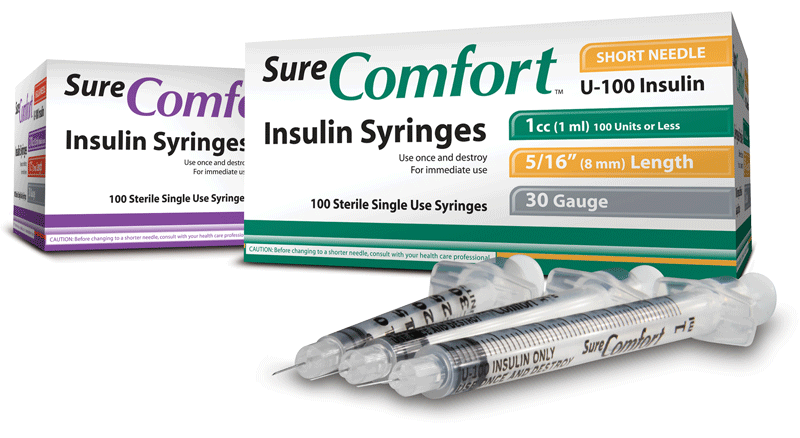
Ultra-fine 31G needles (0.25mm diameter) represent some of the thinnest insulin syringe needles available, significantly reducing injection discomfort compared to larger gauge needles. The short 5/16" (8mm) needle length is ideal for subcutaneous insulin delivery in most adult patients, minimizing risk of intramuscular injection while ensuring reliable insulin absorption. This combination of ultra-fine gauge and appropriate length supports consistent daily insulin administration with minimal pain—critical for treatment adherence in patients requiring multiple daily injections. The 1cc (100-unit) capacity accommodates most insulin dosing needs while maintaining clear, easy-to-read unit markings for accurate dose measurement.
Key Features & Benefits
Key Features:
- Ultra-fine 31G (0.25mm) needle for minimal injection discomfort
- Short 5/16" (8mm) needle length for safe subcutaneous delivery
- 1 cc barrel capacity with 100-unit graduation for U-100 insulin
- Clear barrel with bold, easy-to-read unit markings (typically 1-unit increments)
- Sterile, individually wrapped for infection prevention
- Smooth plunger action for controlled injection
- Standard Luer-Lok or slip-tip connection (model dependent)
- Latex-free construction for allergy safety
- Single-use, disposable design
- Box of 10 syringes for convenient supply
Benefits:
- Reduces injection pain and anxiety with ultra-fine needle
- Minimizes tissue trauma and injection site reactions
- Appropriate needle length prevents intramuscular injection risk
- Clear markings support accurate insulin dosing
- Smooth delivery reduces injection force needed
- Sterile packaging ensures safety for immunocompromised patients
- Convenient packaging for home diabetes management
- Cost-effective for daily insulin therapy
Clinical Applications
Sure Comfort 31G 5/16" insulin syringes are appropriate for:
✓ Type 1 diabetes requiring multiple daily insulin injections ✓ Type 2 diabetes managed with basal and/or mealtime insulin ✓ Patients requiring U-100 insulin formulations (most common) ✓ Daily insulin doses up to 100 units per injection ✓ Adults and adolescents with adequate subcutaneous tissue ✓ Patients with needle anxiety or injection discomfort ✓ Self-administration of insulin at home or work ✓ Basal insulin regimens (long-acting insulin once or twice daily) ✓ Bolus insulin regimens (rapid-acting insulin with meals) ✓ Correction doses for hyperglycemia management ✓ Patients rotating injection sites (abdomen, thighs, arms, buttocks) ✓ Diabetes management requiring precise small-dose adjustments
Usage & Application
Pre-Injection Preparation:
- Verify insulin and dose: Check insulin type (U-100), expiration date, and prescribed dose. Ensure insulin is at room temperature (remove from refrigerator 30 minutes before injection if refrigerated).
- Gather supplies: Insulin vial, Sure Comfort 31G syringe (unopened sterile package), alcohol swabs, sharps container, and blood glucose meter if checking before injection.
- Hand hygiene: Wash hands thoroughly with soap and water for at least 20 seconds, or use alcohol-based hand sanitizer.
- Inspect insulin: Check insulin appearance—clear insulins should be completely clear; cloudy insulins (NPH) should be uniformly cloudy after gentle rolling (never shake). Discard if discolored or contains particles.
Drawing Up Insulin:
- Clean vial top: Wipe rubber stopper of insulin vial with alcohol swab and allow to air dry.
- Prepare syringe: Remove syringe from sterile packaging. Do not touch the needle or remove needle cap yet.
- Draw air: Pull plunger back to draw air equal to your insulin dose (air prevents vacuum in vial).
- Insert needle into vial: Remove needle cap, insert needle straight through rubber stopper into insulin vial.
- Inject air: Push plunger down to inject air into vial (this makes drawing insulin easier).
- Invert vial: Turn vial upside down with needle still inserted.
- Draw insulin: Pull plunger back slowly to draw insulin slightly beyond your prescribed dose line.
- Check for air bubbles: Look for air bubbles in syringe. If present, tap syringe gently to move bubbles to top, then push plunger slightly to expel air back into vial. Redraw to correct dose line.
- Verify dose: Double-check that insulin level aligns exactly with your prescribed dose marking.
- Remove needle from vial: Pull needle straight out of vial and replace needle cap carefully (or proceed immediately to injection if using proper technique).
Injection Site Selection:
- Rotation sites: Use abdomen (fastest absorption), thighs (slower absorption), upper arms, or buttocks. Rotate sites systematically to prevent lipodystrophy (fat deposits or depressions).
- Site preparation: Choose injection site at least 2 inches (5 cm) away from previous injection, scars, moles, or the navel. Avoid areas with lumps, swelling, or redness.
- Clean site: Wipe injection site with alcohol swab in circular motion. Allow alcohol to air dry completely (wet alcohol can cause stinging).
Injection Technique:
- Position: Sit or stand comfortably with injection site accessible and relaxed.
- Skin pinch (if needed): For very lean patients or children, gently pinch skin to create a fold, lifting subcutaneous tissue away from muscle. Most adults with adequate fat don't need to pinch when using 8mm needles.
- Insert needle: Hold syringe like a dart. Insert needle at 90-degree angle (straight in) with quick, firm motion. The entire needle should enter skin smoothly.
- Inject insulin: Push plunger down slowly and steadily until all insulin is injected (typically 2-3 seconds per injection).
- Count to 5-10: After plunger is fully depressed, count slowly to 5-10 before removing needle. This ensures complete insulin delivery and prevents leakage.
- Remove needle: Pull needle straight out at same angle it entered. Do not rub injection site.
- Apply pressure (if needed): If slight bleeding occurs, apply gentle pressure with clean gauze or cotton ball. Do not massage site (can affect absorption).
Post-Injection Care:
- Immediate disposal: Without recapping needle, immediately place used syringe in FDA-approved sharps container. NEVER reuse insulin syringes—they are single-use only.
- Monitor injection site: Check site briefly for unusual redness, swelling, or leakage. Slight bleeding or small raised area is normal and resolves quickly.
- Record keeping: Log injection time, dose, insulin type, and injection site in diabetes logbook or app.
- Blood glucose monitoring: Test blood glucose as directed by healthcare provider (timing depends on insulin type and diabetes management plan).
Special Insulin Types:
- Clear insulins (rapid-acting, short-acting, long-acting analogs): No mixing needed; draw up directly as described above.
- Cloudy insulins (NPH, premixed): Roll vial gently between palms 10-20 times before drawing (never shake; this creates air bubbles). Insulin should be uniformly cloudy.
- Mixing two insulins: If prescribed mixed insulin doses, always draw clear (rapid/short-acting) insulin FIRST, then cloudy (NPH) insulin second. Use mnemonic "clear before cloudy" to remember sequence.
Injection Site Rotation Strategy:
- Divide each body area into quadrants and rotate systematically (e.g., right abdomen Monday, left abdomen Tuesday, right thigh Wednesday, left thigh Thursday, etc.).
- Keep consistent timing with body areas—use abdomen for morning doses (faster absorption) and thighs for evening doses if preferred.
- Space injections at least 1 inch (2.5 cm) apart within same area.
- Inspect all rotation sites weekly for lipodystrophy (lumps or depressions indicating repeated trauma).
Troubleshooting:
Air bubbles in syringe:
- Tap syringe barrel gently to move bubbles to top
- Push plunger slightly to expel air back into vial
- Redraw insulin to correct dose line
- Small bubbles (1-2 tiny ones) are generally harmless but best practice is to remove all air
Insulin leakage after injection:
- Count to 10 (instead of 5) before removing needle next time
- Ensure needle is inserted fully before injecting
- Inject more slowly to allow tissue to accept insulin
- Check injection technique with diabetes educator
Needle won't penetrate skin:
- Ensure needle is sharp and syringe is new (never reuse)
- Insert with firm, quick motion rather than slow push
- If skin is very tough, try different injection site
- Verify needle isn't bent or damaged
Pain during injection:
- Ensure alcohol has dried completely before injecting
- Use fresh injection site (rotate properly)
- Insert needle quickly rather than slowly
- Consider switching to even shorter needle (consult provider)
- Bring insulin to room temperature before injecting
Difficulty reading markings:
- Use good lighting when drawing insulin
- Consider magnifying device if vision impaired
- Ask pharmacist about syringes with larger markings
- Prefilled insulin pens may be easier alternative for vision-impaired patients
Insulin crystallization in needle:
- This can occur with cold insulin; ensure insulin is room temperature
- Clean vial top thoroughly before each use
- Don't store insulin in freezer (freezing damages insulin permanently)
- Replace insulin if it appears crystallized or cloudy (when it should be clear)
Bleeding at injection site:
- Normal to have small amount of blood occasionally
- Apply gentle pressure with clean gauze
- If frequent bleeding occurs, evaluate injection technique
- Avoid areas with visible veins
- Patients on blood thinners may experience more bleeding (apply pressure longer)
Bruising:
- Rotate sites more frequently
- Insert needle at proper 90-degree angle
- Avoid injecting into same spot repeatedly
- Don't massage injection site after injecting
- If on blood thinners, bruising is more common (generally harmless)
Special Considerations:
Children and adolescents: The 8mm needle length is appropriate for most children with adequate subcutaneous fat. Very lean children or toddlers may require shorter needles (4mm, 5mm, 6mm) to avoid intramuscular injection—consult pediatric endocrinologist for needle length guidance.
Obese patients: The 8mm needle length is generally adequate for subcutaneous insulin delivery in obese patients. Longer needles are rarely necessary and increase intramuscular injection risk.
Pregnancy: Insulin is the preferred diabetes medication during pregnancy. The 31G needle is appropriate for pregnant women; injection sites should avoid the developing abdomen in later trimesters (use thighs, arms, buttocks instead).
Exercise considerations: Exercise increases insulin absorption, especially from exercising limbs. If planning leg exercise, inject into abdomen instead of thighs. Wait 30-60 minutes after injection before vigorous exercise.
Temperature extremes: Don't inject cold insulin (can be painful and affect absorption). In very hot climates, keep insulin cool but not frozen; avoid leaving in hot cars.
Travel: Carry insulin and syringes in carry-on luggage (never checked baggage where it may freeze). Bring prescription or doctor's letter for airport security. Use insulated travel cases to protect insulin from temperature extremes.
Vision impairment: Patients with vision problems should work with diabetes educator on magnification strategies, syringe magnifiers, dose-setting aids, or consider switching to prefilled insulin pens with audible click counters.
Arthritis or limited dexterity: Larger barrel syringes with easy-grip features or insulin pens may be easier to manipulate. Occupational therapy evaluation can help with adaptive techniques.
Needle anxiety: Consider working with diabetes psychologist or educator on anxiety management techniques, distraction strategies, or desensitization protocols. Ultra-fine 31G needles significantly reduce pain compared to older, larger needles.
Lipodystrophy prevention: Systematic site rotation is critical. Inspect all injection sites monthly. Avoid injecting into lumpy or depressed areas (insulin absorption is unpredictable in damaged tissue).
Disposal Requirements:
- Use FDA-cleared sharps container or heavy-duty plastic container with secure lid (e.g., detergent bottle).
- When container is 3/4 full, seal lid with heavy-duty tape.
- Check local regulations for sharps disposal (some areas have household hazardous waste programs; others allow sealed containers in regular trash).
- NEVER place loose syringes in regular trash or recycling bins.
- Many pharmacies and hospitals offer sharps collection programs.
When to Contact Healthcare Provider:
- Persistent pain, redness, or swelling at injection sites
- Unexplained blood glucose patterns despite consistent insulin administration
- Frequent hypoglycemia (low blood sugar) or hyperglycemia (high blood sugar)
- Development of lipodystrophy (lumps or depressions at injection sites)
- Difficulty drawing up accurate insulin doses
- Signs of infection at injection site (increasing redness, warmth, drainage, fever)
- Allergic reactions (rare but can include hives, itching, or swelling beyond injection site)
- Questions about proper injection technique or insulin storage
Technical Specifications
Product Details:
- Brand: Sure Comfort
- Product Type: Insulin syringe for subcutaneous injection
- Needle Gauge: 31G (0.25mm diameter, ultra-fine)
- Needle Length: 5/16 inch (8 mm)
- Barrel Capacity: 1 cc (100 units total capacity)
- Graduation Markings: 1-unit increments (typically); check product specifications
- Insulin Compatibility: U-100 insulin (100 units per mL)
- Sterility: Sterile, individually packaged, single-use
- Materials: Medical-grade plastic barrel, stainless steel needle, latex-free
- Packaging: Box of 10 syringes (individually wrapped)
- Connection Type: Standard syringe connection (model dependent)
- Intended Use: Subcutaneous insulin injection for diabetes management
- Patient Population: Adults and adolescents with adequate subcutaneous tissue
- Prescription Status: Over-the-counter in most states; some states require prescription (check local regulations)