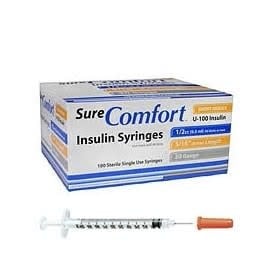
Why Sure Comfort Design with 31-Gauge × 5/16" Configuration for Enhanced Patient Compliance
The Sure Comfort brand specifically addresses patient comfort concerns that significantly impact diabetes management adherence: studies demonstrate that injection pain and anxiety represent primary barriers to insulin therapy compliance with up to 30% of patients admitting to dose skipping or delay due to needle fear, while the psychological burden of multiple daily injections contributes to diabetes distress and treatment burnout particularly in newly-diagnosed patients transitioning to insulin therapy—the Sure Comfort design philosophy prioritizes pain minimization through ultra-thin needle construction and optimized needle tip geometry that reduces tissue trauma during penetration, shorter needle length that decreases perceived threat and actual discomfort, and ergonomic syringe barrel design facilitating controlled single-handed injection technique. The 31-gauge ultra-fine needle diameter represents the optimal balance between comfort and functionality: thinner than this becomes structurally fragile risking needle bending during insertion or breakage during use creating patient safety hazards, while maintaining 0.25mm outer diameter enables comfortable penetration through epidermis and dermis layers with minimal nerve ending activation reducing pain perception—this proves particularly valuable for patients with needle phobia, children requiring parental insulin administration where distress impacts family dynamics, elderly patients with thin fragile skin vulnerable to bruising from thicker needles, and individuals requiring 4-6 daily injections where cumulative discomfort from standard needles creates treatment resistance. The 5/16-inch (8mm) short length addresses both physiological and psychological comfort factors: the abbreviated dimension ensures subcutaneous rather than intramuscular insulin delivery across diverse body compositions including lean patients, children, and individuals with minimal abdominal subcutaneous tissue where longer needles risk muscle penetration causing rapid insulin absorption and hypoglycemia risk, while the visibly shorter needle reduces anticipatory anxiety especially in newly-diagnosed diabetics and pediatric patients where needle length directly correlates with injection fear and treatment resistance affecting long-term diabetes control outcomes. The 0.5 mL (50-unit) capacity with widely-spaced bold unit markings enables accurate small-dose measurement essential for tight glycemic control: the larger graduation spacing compared to 1 mL syringes reduces misreading errors that cause dangerous hypoglycemia or inadequate insulin delivery, accommodates low-dose regimens common in type 1 diabetes, early type 2 diabetes, pediatric protocols, and mealtime rapid-acting insulin coverage where precise 2-5 unit adjustments prove critical for preventing postprandial hyperglycemia, and the 10-syringe bag packaging provides economical supply for individual patients while maintaining product freshness and reducing storage space requirements.
Key Features & Benefits
Key Features:
- Sure Comfort brand (comfort-focused design)
- 0.5 mL (0.5 cc) capacity = 50 units maximum
- U-100 insulin calibration (100 units per mL)
- 31-gauge (31G) ultra-thin needle
- Needle outer diameter: 0.25mm
- 5/16-inch (8mm) short needle length
- Bold, clear unit markings
- 1-unit increment graduations
- Permanently attached needle
- Optimized needle tip geometry
- Lubricated needle coating
- Sterile, individually packaged
- Single-use, disposable design
- Latex-free construction
- 10 syringes per bag
- Safety cap protecting needle
- Ergonomic barrel design
Benefits:
- Sure Comfort design enhances patient experience:
- Comfort-focused engineering
- Reduces injection anxiety
- Improves treatment compliance
- Better for multiple daily injections
- 0.5 mL ideal for low doses:
- Perfect for doses under 50 units
- Widely-spaced markings (easier to read)
- More accurate small-dose measurement
- Reduces dosing errors
- Good for:
- Type 1 diabetes
- Type 2 diabetes (lower doses)
- Pediatric patients
- Mealtime rapid-acting insulin
- 31G ultra-thin minimizes discomfort:
- Among thinnest needles available
- Less tissue trauma
- Significantly more comfortable
- Important for frequent injections
- Reduces needle phobia
- Better patient acceptance
- 5/16" short length benefits:
- Appropriate subcutaneous delivery
- Reduces muscle injection risk
- Less intimidating visually
- Good for patients with less body fat
- Suitable for children and lean adults
- Psychological comfort (shorter = less scary)
- Optimized needle tip:
- Enhanced penetration
- Smoother insertion
- Minimal pain
- Bold markings ensure accuracy:
- Easy to read even with vision challenges
- Clear dose verification
- Prevents errors
- Permanently attached needle:
- No assembly required
- Reduced dead space
- Convenient ready-to-use
- Lubricated coating:
- Smoother skin penetration
- Enhanced comfort
- Sterile packaging ensures safety:
- Individual wrappers
- Infection prevention
- Single-use eliminates contamination
- Latex-free protects allergic patients
- 10-syringe bag practical:
- Smaller convenient package
- Lower upfront cost
- Good for individual supply
- Maintains product freshness
- Ergonomic design:
- Comfortable grip
- Better control
- Easier single-handed use
Clinical Applications
Sure Comfort Insulin Syringe 0.5 mL, 31G × 5/16" is appropriate for:
✓ Type 1 diabetes (insulin-dependent) ✓ Type 2 diabetes requiring insulin therapy ✓ Gestational diabetes (pregnancy-related) ✓ Pediatric diabetes (children with diabetes) ✓ Low-dose insulin regimens (<50 units per injection) ✓ Mealtime rapid-acting insulin (bolus coverage) ✓ Correction doses (supplemental insulin for high blood sugar) ✓ Basal insulin (if dose ≤50 units) ✓ Patients with needle phobia or anxiety ✓ Patients requiring multiple daily injections ✓ Patients with minimal subcutaneous fat ✓ Patients prioritizing injection comfort ✓ Newly diagnosed diabetics ✓ Elderly patients with fragile skin ✓ Home diabetes self-management ✓ Any patient requiring comfortable U-100 insulin delivery ≤50 units
Usage & Application
IMPORTANT: Insulin syringes must be used under healthcare provider guidance. Follow prescribed insulin regimen exactly. Improper insulin use can cause dangerous hypoglycemia (low blood sugar) or hyperglycemia (high blood sugar).
Pre-Use Preparation:
- Verify appropriateness:
- Confirm insulin dose is ≤50 units
- Ensure using U-100 insulin (not U-500 or other)
- Check needle specifications appropriate
- Gather supplies:
- Sure Comfort insulin syringe 0.5 mL, 31G × 5/16"
- Prescribed insulin
- Alcohol swabs
- Sharps disposal container
- Cotton ball or gauze (optional)
- Hand hygiene (wash hands thoroughly)
- Prepare insulin:
- Verify correct insulin type (check label carefully)
- Check expiration date
- Inspect insulin:
- Clear insulin should be transparent (rapid/long-acting)
- Cloudy insulin needs gentle rolling (NPH, premixed)
- Check for clumps, crystals, or discoloration (abnormal)
- If cloudy insulin: Roll gently between palms 10-20 times
- Do NOT shake vigorously (damages insulin)
- Inspect syringe package:
- Check package integrity
- Ensure sterile seal intact
- Verify expiration date
Drawing Insulin from Vial:
- Clean vial rubber top:
- Wipe with alcohol swab
- Let air dry (reduces contamination)
- Remove syringe from package:
- Open carefully
- Do NOT touch needle
- Keep cap on until ready to use
- Draw air equal to insulin dose:
- Pull plunger to prescribed dose marking
- Example: For 20 units insulin, pull to 20-unit mark
- Air volume equals insulin volume
- Insert needle into vial:
- Remove needle cap
- Push needle straight through rubber stopper
- 31G thin needle penetrates easily
- Inject air into vial:
- Push plunger completely
- Injects air into vial
- Creates positive pressure (easier withdrawal)
- Invert vial:
- Turn vial upside down
- Keep needle tip submerged in insulin
- Hold vial at eye level
- Draw insulin slowly:
- Pull plunger down slowly
- Draw slightly more than prescribed dose
- Watch bold markings carefully
- Check for air bubbles:
- Hold syringe vertically (needle pointing up)
- Tap barrel gently to move bubbles to top
- Push plunger slowly to expel air
- Small bubbles acceptable but remove large ones
- Redraw insulin if needed
- Adjust to exact prescribed dose
- Remove needle from vial:
- Pull straight out
- Recap only if delaying injection
- Best to inject immediately after drawing
Mixing Two Insulins (if prescribed):
CRITICAL: Only mix if specifically instructed by provider. Not all insulins can be mixed.
"Clear before cloudy" rule:
- Draw air for both:
- Calculate total: cloudy amount + clear amount
- Draw total air into syringe
- Inject air into cloudy vial first:
- Push needle into cloudy insulin vial
- Inject air equal to cloudy dose
- Remove needle WITHOUT drawing (important)
- Inject air into clear vial:
- Insert needle into clear insulin vial
- Inject remaining air
- Leave needle in vial
- Draw clear insulin:
- Invert vial
- Draw clear insulin to prescribed amount
- Check for air bubbles, expel
- Remove needle from clear vial
- Draw cloudy insulin:
- Insert needle back into cloudy vial
- Invert vial
- Carefully draw cloudy insulin
- Pull plunger to TOTAL dose (clear + cloudy)
- Example: 10 units clear + 15 units cloudy = 25 total
- Be careful not to push any mixed insulin back into vial
- Final check:
- Verify total dose correct
- Remove from vial
- Inject immediately (don't delay mixed insulin)
Selecting Injection Site:
Best sites for subcutaneous insulin:
- Abdomen (most common):
- Fastest absorption
- 2+ inches away from belly button
- Avoid waistline and bony areas
- Large area for rotation
- Preferred for rapid-acting insulin
- Thighs (outer upper):
- Medium absorption (slower than abdomen)
- Easy to reach
- Good alternative site
- Upper arms (back/outer):
- May need assistance
- Medium absorption
- Smaller area (limited rotation)
- Buttocks (upper outer):
- Slowest absorption
- May need assistance
- Good for long-acting insulin
Site rotation (CRITICAL):
- Rotate injection sites systematically
- Stay within same general area for consistent absorption
- Move 1 inch (finger-width) from previous injection
- Prevents lipohypertrophy (fat lumps from repeated injections)
- Lumps impair insulin absorption
- Do NOT inject into:
- Lumps, bumps, or hard areas
- Scars or moles
- Bruises or tender spots
- Areas within 2 inches of belly button
Injection Technique:
- Select and prepare site:
- Choose injection area per rotation plan
- Clean with alcohol swab
- Rub in circular motion
- Let dry completely (30 seconds minimum)
- Dry alcohol prevents stinging
- Prepare syringe:
- Hold like pencil or dart
- Remove needle cap
- Check dose one final time
- Pinch or no pinch:
- With 5/16" needle (short):
- Most adults: NO PINCH NEEDED
- Inject straight into skin
- Children or very lean adults:
- Gently pinch skin (prevents muscle injection)
- Create small fold
- Different from longer needles (which require pinching)
- Insert needle:
- Quick, smooth, dart-like motion
- 90-degree angle (perpendicular to skin)
- 31G ultra-thin should be virtually painless
- Sure Comfort design minimizes discomfort
- Insert completely (full 5/16" depth)
- Release pinch (if used):
- Let go of skin fold after needle inserted
- Inject insulin:
- Push plunger down steadily
- Slow, controlled (over 5-10 seconds)
- Complete injection (push plunger all the way)
- Do NOT rush
- Count to 10:
- Keep needle in place after injection
- Count slowly to 10 (some say 5, but 10 better)
- Prevents insulin leakage
- Ensures complete delivery
- Critical step many people skip
- Remove needle:
- Pull straight out
- Same 90-degree angle as insertion
- Smooth, quick withdrawal
- Do NOT rub site:
- Rubbing can affect absorption
- May cause bruising
- Apply gentle pressure if bleeding:
- Use cotton ball or gauze
- Light pressure only
- Minor bleeding occasionally normal
Post-Injection Care:
- Dispose of syringe immediately:
- NEVER recap needle (needlestick injury risk)
- Place directly into sharps container
- NEVER reuse insulin syringes (safety and sterility)
- Single-use only
- Hand hygiene
- Record injection details:
- Time of injection
- Insulin dose
- Site used
- Blood glucose reading (if monitoring)
- Track in diabetes logbook or app
- Store insulin properly:
- Unopened vials: Refrigerate (36-46°F)
- In-use vials: Room temperature or refrigerate per product
- Do NOT freeze
- Protect from direct sunlight and heat
- Check expiration dates
- Discard per manufacturer guidelines
Troubleshooting:
Dose hard to read:
- Use good lighting
- Sure Comfort has bold markings (easier than some brands)
- Use reading glasses if needed
- Ask pharmacist or diabetes educator for help
- Magnifying devices available
Air bubbles won't clear:
- Tap syringe more firmly
- Hold truly vertical
- May take several taps
- Very small bubbles (<2-3 units) usually harmless but remove if possible
Needle feels dull:
- Should NOT happen (new sterile needle)
- Never reuse syringes (needles dull quickly)
- Use each syringe only once
- Report product concern to manufacturer
Insulin leaking after injection:
- Count to 10 (or even 15) before removing needle
- May need to rotate to different area
- Small leak occasionally normal
- Consult provider if persistent
Pain during injection:
- 31G Sure Comfort should be very comfortable
- Ensure alcohol completely dry
- Quick insertion reduces pain
- Try different site
- Check needle not bent
- Persistent pain: Consult provider
Bruising or bleeding:
- Occasionally normal (small blood vessel)
- Apply gentle pressure
- Rotate sites
- Frequent bruising: Tell provider (may indicate clotting issue or poor technique)
Lumps at injection sites (lipohypertrophy):
- From repeated injections in same spot
- Strictly rotate sites
- Avoid injecting into lumps (impairs absorption)
- Lumps may take months to resolve
- Report to healthcare provider
Insulin not lowering blood sugar:
- Check insulin not expired
- Verify correct dose
- Check injection technique
- Injecting into lumps reduces absorption
- Consult provider
Special Considerations:
Pediatric patients:
- 31G × 5/16" EXCELLENT for children
- Ultra-thin needle reduces fear and pain
- Short length appropriate for small bodies
- Pinch skin before injection (children have less fat)
- Parent/caregiver administers to young children
- Teach self-injection when developmentally ready (typically 8-12 years)
- 0.5 mL capacity appropriate for most pediatric doses
- Sure Comfort design helps reduce injection anxiety
Elderly patients:
- May have vision difficulties (bold markings help)
- May have dexterity challenges
- Fragile skin (gentle technique)
- 31G prevents excessive bruising
- Caregiver assistance may be needed
- Consider insulin pens if dexterity major issue
Pregnant patients (gestational diabetes):
- Common during pregnancy
- 5/16" appropriate for most pregnant women
- Rotate sites carefully
- Avoid lower abdomen in late pregnancy (consult provider on sites)
- Tight glucose control critical for baby
- Close medical monitoring essential
Patients with obesity:
- 5/16" needle adequate for most
- Subcutaneous layer sufficient even with obesity
- Studies confirm short needles effective
- No pinch typically needed
- If concerns, discuss with provider
Very lean patients:
- 5/16" IDEAL (prevents muscle injection)
- Always pinch skin before injection
- May use 45-degree angle (consult provider)
- Athletes and children often very lean
Visually impaired patients:
- Bold markings on Sure Comfort help
- Dose measurement aids available
- Magnifying devices
- Prefilled insulin pens alternative (audible clicks)
- Caregiver assistance
- Diabetes educator can teach adaptive techniques
Newly diagnosed diabetics:
- Sure Comfort design less intimidating
- Thin, short needle reduces anxiety
- Comprehensive diabetes education essential
- Practice injections with healthcare provider
- Support groups helpful
- Gradual confidence building
- Comfort focus improves adherence
Multiple daily injections (MDI):
- 31G comfort critical (injecting 4-6 times daily)
- Sure Comfort reduces cumulative discomfort
- Strict site rotation essential
- Detailed tracking of injection locations
- Proper technique prevents complications
- Regular skin assessment
Needle phobia:
- Sure Comfort specifically designed to address anxiety
- Thin, short needle less threatening
- Psychological support important
- Behavioral techniques (distraction, relaxation)
- Gradual desensitization
- Consider counseling if severe
- Patient comfort improves compliance
Safety and Complications:
Hypoglycemia (low blood sugar):
- MOST DANGEROUS ACUTE COMPLICATION
- Causes:
- Too much insulin
- Missed or delayed meals
- Unexpected exercise
- Alcohol
- Symptoms:
- Shaking, sweating
- Fast heartbeat
- Confusion, irritability
- Dizziness
- Hunger
- Blurred vision
- Treatment:
- 15-15 rule: 15g fast-acting carbs, wait 15 minutes, recheck
- Fast-acting carbs: Glucose tablets, juice, regular soda, candy
- Never inject insulin when low
- Severe: Glucagon injection or emergency care
- Prevention:
- Accurate dosing
- Consistent meal timing
- Blood glucose monitoring
- Understanding insulin action times
Hyperglycemia (high blood sugar):
- Too little insulin
- Illness, stress
- Dietary indiscretion
- Symptoms: Increased thirst/urination, fatigue, blurred vision
- Check blood glucose
- Follow sick-day plan
- Contact provider if persistent
Dosing errors:
- Double-check dose before every injection
- Good lighting
- Use bold markings on Sure Comfort syringe
- Never guess
- Ask for help if uncertain
- Consequences can be serious
Wrong insulin type:
- Verify insulin matches prescription
- Different insulins have different actions
- Confusing types can be dangerous
- Keep insulins organized
- Read labels carefully every time
Infection Control:
- Hand hygiene before and after
- Clean injection sites with alcohol
- Single-use syringes only
- Proper disposal in sharps container
- Never share syringes (bloodborne pathogen risk)
Sharps Disposal:
- FDA-approved sharps container (rigid, puncture-proof)
- Place syringe in container immediately after use
- Do NOT recap
- When 3/4 full, seal and dispose per local regulations
- Options:
- Household hazardous waste collection
- Mail-back programs
- Supervised collection sites
- Never dispose in regular trash
Storage:
Insulin storage:
- Follow product-specific guidelines
- General guidelines:
- Unopened: Refrigerate 36-46°F (2-8°C)
- In-use: Room temperature (<86°F) or refrigerate
- Do NOT freeze
- Avoid direct sunlight and heat
- Check expiration dates
- Discard per package insert (typically 28 days after opening)
Syringe storage:
- Keep in original packaging until use
- Room temperature, dry place
- Protect from moisture and extreme temperatures
- Check expiration dates
- Do NOT use if package damaged
Advantages:
Sure Comfort vs. Standard Insulin Syringes:
Sure Comfort advantages:
- Comfort-focused design philosophy
- Enhanced patient experience
- May improve compliance (more comfortable = better adherence)
- Optimized needle geometry
- Patient acceptance better
0.5 mL vs. 1 mL Syringes:
0.5 mL advantages:
<ul class="[li_&]:mb-0 [li_&]:mt-1 [li_&]:gap-1 [&:not(:last-child)_ul]:pb-1 [&:not(:last-child)_ol]:pb-1 list-disc flex flex-col gap-1 pl