Why 18G × 0.75" with Flexible Wings for High-Flow Venous Access
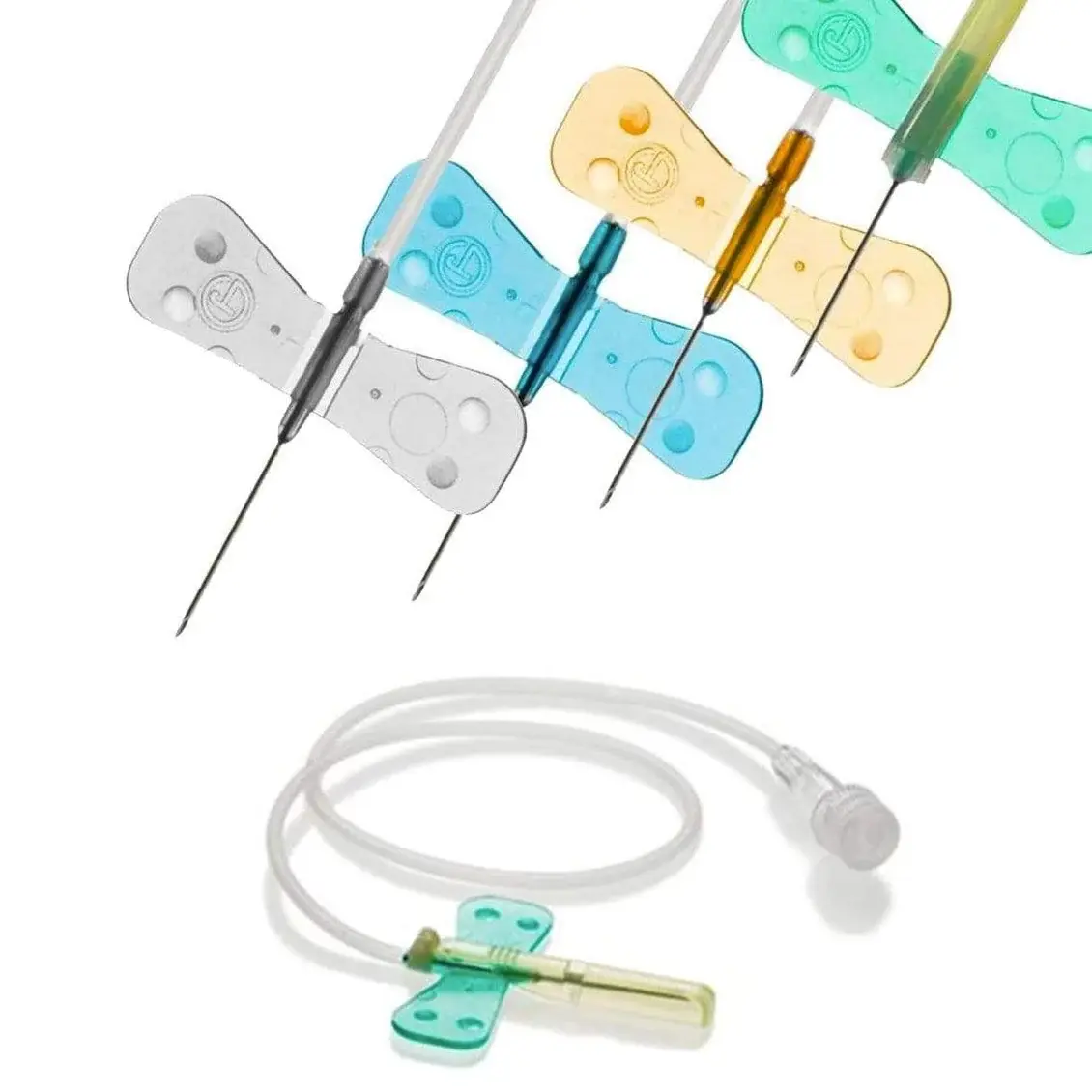
The 18-gauge needle (1.3mm outer diameter) provides the large bore necessary for rapid fluid administration, blood product transfusion, emergency resuscitation, and high-volume blood collection where flow rate is paramount—the wide lumen significantly reduces infusion time and allows viscous medications or blood products to flow without excessive pressure that could damage smaller gauge needles or cause hemolysis during blood draws, critical for trauma resuscitation, blood donation procedures, rapid medication delivery in emergency departments, and situations where every second of fluid delivery matters for patient outcomes. The distinctive flexible wing design combined with the larger 18-gauge caliber provides the precise control necessary to successfully access veins with a needle that would otherwise be difficult to stabilize—the wings enable fingertip positioning that compensates for the larger needle diameter, allowing clinicians to access hand veins, forearm veins, and even challenging sites that might seem inappropriate for 18-gauge access when attempted with straight needles, while the flat taping platform prevents the movement and dislodgement that would be catastrophic during high-flow infusions. The short 0.75-inch (19mm) length ensures superficial vein access without the deep penetration that risks posterior wall puncture, nerve damage, or hematoma formation—particularly important when combining large bore needles with the hand and forearm sites commonly accessed using butterfly needles, while the 12-inch extension tubing decouples the manipulation of IV equipment, syringes, or collection devices from the needle insertion site, preventing the transmission of movement that could tear vessel walls or dislodge the larger-diameter needle during critical high-flow procedures.
Key Features & Benefits
Key Features:
- 18-gauge (18G) large-bore needle (1.3mm outer diameter)
- 0.75-inch (19mm, 3/4 inch) short needle length
- Flexible plastic wings for handling and stabilization
- 12-inch (30cm) extension tubing
- Latex-free construction (no natural rubber latex)
- DEHP-free tubing for safer IV delivery
- Luer Lock or Luer Slip female connector
- Precision-sharpened tri-bevel needle tip
- Transparent flashback chamber for blood return visualization
- Color-coded wings (pink for 18G per ISO standards)
- Kink-resistant flexible tubing
- Sterile, individually packaged
- Single-use, disposable design
- Stainless steel needle cannula
- Clear tubing for flow monitoring
- Wings lie flat for secure taping
- Meets FDA and ISO quality standards
Benefits:
- Large 18G bore enables rapid fluid delivery
- Fastest flow rate for emergency situations
- Appropriate for blood product administration
- Excellent for blood donation and collection
- Wings provide control despite larger needle size
- Precise positioning for difficult access
- Flat wing design ideal for secure taping
- Short length appropriate for superficial veins
- Prevents over-insertion with large bore needle
- 12-inch tubing allows manipulation without needle movement
- Latex-free protects sensitive patients and healthcare workers
- DEHP-free reduces exposure concerns with IV therapy
- Flashback chamber confirms successful vein entry
- Color-coded for instant gauge identification
- Sterile packaging ensures infection control
- Single-use prevents cross-contamination
Clinical Applications
Winged Infusion Sets 18G × 0.75" are appropriate for:
✓ Rapid IV fluid resuscitation in trauma or shock ✓ Emergency department high-flow IV access ✓ Blood product transfusion administration ✓ Packed red blood cell transfusion ✓ Plasma transfusion ✓ Blood donation and whole blood collection ✓ Therapeutic phlebotomy (large volume removal) ✓ Rapid medication administration in emergencies ✓ Contrast media injection for CT or MRI ✓ Large-volume blood sample collection ✓ Blood culture collection (multiple bottles) ✓ Operating room rapid IV access ✓ Dialysis access procedures ✓ Apheresis procedures ✓ Bone marrow aspiration and biopsy ✓ High-flow short-term IV therapy ✓ Critically ill patients requiring rapid access ✓ Any high-flow venous access application
Usage & Application
IMPORTANT: This device should be used by trained healthcare professionals only.
Pre-Use Assessment:
- Verify clinical indication:
- Confirm high-flow access needed
- Review patient condition and urgency
- Check patient allergies (latex-free, but verify other sensitivities)
- Assess appropriateness:
- 18G × 0.75" appropriate for:
- Emergency fluid resuscitation
- Blood transfusions requiring rapid delivery
- Blood donation
- Large-volume blood collection
- Contrast media administration
- Critically ill patients
- Adequate vein size for 18G
- Consider alternatives if:
- Small fragile veins (use 21G-23G instead)
- Extended IV therapy planned (use IV catheter)
- Routine blood draw on adequate veins (smaller gauge sufficient)
- Gather supplies:
- Winged infusion set 18G × 0.75"
- Tourniquet
- Alcohol swabs
- Gauze pads
- Tape for securing wings
- Transparent dressing (optional)
- IV fluids/blood products or collection equipment
- Clean gloves
- Sharps container
- Hand hygiene and don gloves
- Inspect package:
- Check integrity and expiration
- Ensure sterile seal intact
- Verify latex-free and DEHP-free labeling
Device Preparation:
- Open sterile package:
- Peel open packaging
- Remove butterfly set aseptically
- Do NOT touch needle or connector
- Inspect device:
- Check needle sharp and straight
- Verify tubing not kinked or damaged
- Ensure flashback chamber clear
- Check wings intact and flexible
- Verify Luer connector undamaged
- Prime if for IV use:
- Connect to primed IV tubing
- Flush to remove air
- Keep needle sheathed until insertion
Venipuncture Technique:
- Select appropriate vein:
- 18G requires adequate vein:
- Large antecubital veins preferred
- Prominent forearm veins acceptable
- Hand veins only if robust enough for 18G
- Palpate carefully:
- Vein must feel large enough for 18G
- Bouncy, resilient quality
- Straight path for insertion
- Avoid:
- Small, thin-walled veins (will damage)
- Fragile elderly veins
- Areas of scarring or bruising
- Apply tourniquet:
- 3-4 inches above insertion site
- Adequate pressure to distend veins
- Not on >1 minute
- Clean site:
- Alcohol swab in circular motion
- Allow to air dry 30 seconds
- Do NOT touch after cleaning
- Remove needle sheath:
- Pull straight off
- Keep needle sterile
- Grasp wings:
- Hold wings together between thumb and index finger
- Wings folded (touching)
- Firm grip (18G requires more control)
- Stabilize hand on patient's arm
- Anchor vein:
- Pull skin taut below insertion site
- Critical for preventing vein rolling with larger needle
- Use firm tension
- Insert needle:
- Bevel up
- 15-30 degree angle (shallow for superficial veins)
- Smooth, deliberate insertion
- 18G requires confident insertion (hesitation causes pain)
- Watch for blood flashback in chamber
- Large bore shows quick, brisk flashback
- Once flash: lower angle, advance 1-2mm
- Release tourniquet:
- Once blood flowing or access secured
- Before beginning rapid infusion
- Secure wings:
- Release wing grip
- Wings open flat against skin
- Secure tape critical with 18G:
- Larger needle more prone to dislodgement
- Use chevron taping method
- May use transparent dressing for visibility
- Ensure very stable (high flow creates pressure)
Rapid Fluid Administration:
- Connect IV tubing:
- Attach to Luer connector
- Verify secure connection (pressure test)
- Open clamp
- Begin infusion:
- 18G enables very rapid flow:
- Wide-open IV can deliver 1000+ mL in minutes
- Monitor patient tolerance
- Watch for fluid overload signs
- Pressure bag use:
- May use pressure bag for even faster delivery
- Monitor carefully
- Watch insertion site
- Monitor closely:
- Check site frequently (every 5-15 minutes minimum)
- 18G infiltration very serious:
- Large volume rapidly into tissue
- Significant tissue damage possible
- Watch for:
- Swelling at site
- Patient pain
- Slowed flow rate
- Coolness at site
- Stop immediately if infiltration suspected
Blood Transfusion:
- Verify blood product:
- Check patient identity
- Verify blood type match
- Two-person verification per protocol
- Connect blood administration set:
- Attach to Luer connector
- Prime filter chamber
- Begin transfusion:
- 18G appropriate gauge for blood products
- Start slowly per protocol
- Monitor for transfusion reactions
- May increase rate if tolerated
- 18G prevents hemolysis during rapid transfusion
Blood Collection:
- Attach collection equipment:
- Tube holder to Luer connector
- Or large syringe (30-60 mL)
- Collect blood:
- 18G provides very rapid collection
- Fill multiple tubes quickly
- Good for blood donation volumes
- Appropriate for therapeutic phlebotomy
- Complete collection:
- Remove last tube/syringe
- Prepare for removal
Removal:
- Stop infusion/collection:
- Close clamp or remove equipment
- Place gauze:
- Position over insertion site
- Remove tape:
- Withdraw needle:
- Pull straight out at insertion angle
- Immediate firm pressure critical (18G = larger hole)
- Apply pressure:
- Minimum 5 minutes firm pressure
- 10 minutes if anticoagulated
- 18G requires longer pressure than smaller gauges
- Elevate arm if possible
- Do NOT bend arm
- Check bleeding stopped:
- Verify completely before bandage
- 18G may ooze longer
- Apply pressure dressing:
- Secure bandage
- May need pressure dressing
Post-Procedure:
- Dispose immediately:
- Do NOT recap
- Place entire set in sharps container
- Never reuse
- Remove gloves, hand hygiene
- Monitor patient:
- Watch for hematoma
- Assess for complications
- Document procedure
Troubleshooting:
Difficult insertion with 18G:
- Larger needle requires more force
- Ensure adequate vein size
- Confident insertion technique
- May need to try smaller gauge if vein inadequate
No flashback:
- Vein may not be large enough for 18G
- May have missed vein
- Withdraw and try different approach or site
Infiltration during infusion:
- STOP IMMEDIATELY (18G infiltration serious)
- Remove butterfly
- Elevate extremity
- Apply cold compress initially, then warm
- Large volume infiltration may need medical evaluation
- Document and monitor
Rapid hematoma formation:
- 18G creates larger puncture
- May have gone through vein
- Remove, apply firm pressure 10+ minutes
- Elevate
- Ice application
Vein blows during insertion:
- 18G may be too large for vein
- Use smaller gauge
- Try different, larger vein
Needle dislodges during infusion:
- Serious with high-flow infusion
- Stop infusion immediately
- Remove needle
- Apply pressure
- Restart in different location
- Prevention: Secure taping critical with 18G
Special Considerations:
Emergency/Trauma patients:
- 18G ideal for trauma resuscitation:
- Rapid fluid delivery critical
- Large bore enables massive transfusion
- May use bilateral 18G access
- Speed of access critical
- May need multiple attempts
- Document clearly
Blood transfusion:
- 18G recommended gauge for blood products
- Prevents hemolysis
- Allows rapid transfusion if needed
- Monitor closely for reactions
Blood donation:
- 18G standard for whole blood donation
- Donor comfort important despite larger needle
- Usually good veins (screened donors)
- Typical collection 450-500 mL
Contrast media administration:
- 18G appropriate for power injection:
- High flow rates needed
- High pressure injection
- Verify device rated for power injection if applicable
- CT scans requiring rapid contrast
- Must be secure (high pressure)
Geriatric patients:
- Generally avoid 18G in elderly:
- Fragile veins cannot tolerate
- Use smaller gauge (21G-23G)
- Only if absolutely necessary
- Very careful technique
- Extended pressure after removal
Pediatric patients:
- 18G rarely appropriate for children
- Only in adolescents with adequate veins
- Or emergency situations in older children
- Usually use smaller gauges
Obese patients:
- May have deep veins
- 0.75" length may be inadequate
- Assess carefully
- May need longer needle
Patients on anticoagulation:
- 18G increases bleeding risk:
- Larger puncture site
- Pressure 10+ minutes mandatory
- Watch for hematoma
- Consider risk vs. benefit
- May need smaller gauge if not critical
DEHP-Free Tubing Importance:
- DEHP concerns:
- Di(2-ethylhexyl)phthalate used in some medical tubing
- May leach into IV solutions
- Concerns about endocrine disruption
- Particularly concerning in certain populations
- DEHP-free advantages:
- Safer for prolonged infusions
- Better for neonates, pregnant women
- Eliminates leaching concerns
- Increasingly standard
Latex-Free Importance:
- Protects latex-sensitive patients
- Protects healthcare workers with latex allergy
- Standard for modern medical devices
- Critical in emergency situations (unknown allergies)
18G vs. Other Gauges:
When 18G appropriate:
- Rapid fluid resuscitation
- Blood transfusions
- Blood donation
- Large-volume blood collection
- Emergency situations
- Adequate large veins available
When smaller gauge better:
- Routine blood draws
- Fragile veins
- Elderly or pediatric patients
- Non-urgent situations
- Extended IV therapy (use catheter)
Advantages of Butterfly Design with 18G:
- Wings provide control for larger needle
- Easier to stabilize than straight 18G
- Better for difficult access despite large size
- Flat taping platform prevents movement
- 12-inch tubing reduces manipulation at site
Infection Control:
- Strict aseptic technique mandatory
- Never reuse
- Dispose immediately after use
- Clean site thoroughly before insertion
Documentation:
- Record gauge and length used
- Document site, attempts, success
- Note patient tolerance
- Record volume infused or collected
- Document any complications
When to Contact Provider:
- Unable to establish access in emergency
- Significant infiltration occurred
- Large hematoma developing
- Signs of nerve injury
- Suspected infection
- Questions about appropriate use
Technical Specifications
Product Details:
- Product Type: Winged infusion set (butterfly needle, scalp vein set)
- Needle Gauge: 18G (1.3mm outer diameter)
- Needle Length: 0.75 inch (19mm, 3/4 inch)
- Tubing Length: 12 inches (30cm, ~305mm)
- Tubing Material: Medical-grade flexible plastic, DEHP-free
- Latex Content: Latex-free (no natural rubber latex)
- DEHP Content: DEHP-free tubing
- Wing Design: Flexible plastic wings for handling and stabilization
- Flashback Chamber: Transparent for blood return visualization
- Connector Type: Female Luer Lock or Luer Slip (product dependent)
- Needle Tip: Tri-bevel precision-sharpened
- Needle Material: Stainless steel
- Color Coding: Pink wings for 18G (per ISO 6009 standard)
- Tubing Features: Kink-resistant, clear for flow visualization
- Sterility: Sterile, individually packaged
- Sterilization Method: Ethylene oxide (EtO) or gamma radiation
- Packaging: Individually wrapped in peel-open pouches
- Intended Use: High-flow IV access, blood collection, transfusion
- Patient Population: Adults, larger adolescents (adequate veins)
- Typical Use Duration: Single procedure or short-term access (<24 hours)
- Flow Rate: Highest among standard clinical gauges
- Pressure Rating: Check if rated for power injection (varies by product)
- Regulatory Status: FDA-cleared medical device, Class II
- Standards Compliance:
- ISO 8536 (infusion equipment)
- ISO 7864 (sterile needles)
- ISO 6009 (needle color coding)
- Shelf Life: Typically 5 years from manufacture
- Manufacturers: BD, Terumo, Smiths Medical, Nipro, others