
Why 29G × 1/2" with 0.5 mL U-100 Calibration for Comfortable Accurate Insulin Delivery
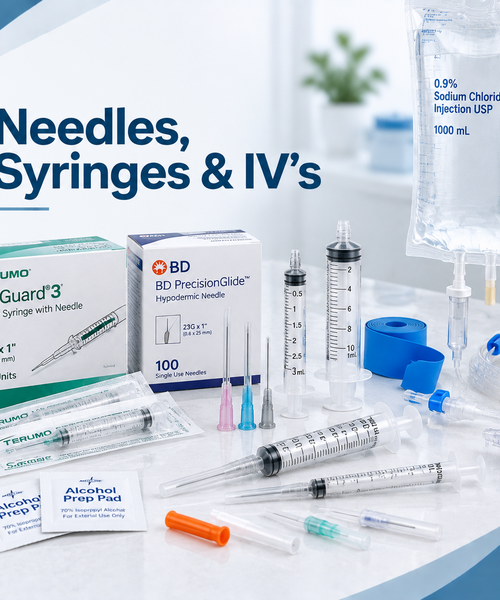
The 29-gauge (0.33mm outer diameter) ultra-fine needle represents one of the thinnest needles available for insulin delivery, providing substantially reduced tissue trauma and injection pain critical for people with diabetes requiring 2-4 daily injections where cumulative comfort impacts long-term treatment adherence and quality of life—the minimal diameter creates virtually painless insertions that transform insulin therapy from a dreaded ritual into a tolerable routine task, particularly important for children, needle-anxious adults, and anyone facing decades of daily injections. The 1/2-inch (12.7mm) needle length ensures reliable subcutaneous insulin deposition in most patients while minimizing the risk of inadvertent intramuscular injection that causes rapid unpredictable insulin absorption and potential hypoglycemia—this length works effectively for the majority of adults and many children when proper injection technique with skin pinching is employed, though very lean individuals or young children may benefit from even shorter 5/16-inch needles, while the half-inch standard represents the balance between universal applicability and reliable subcutaneous delivery. The 0.5 mL barrel capacity with U-100 insulin unit graduations (50 units maximum) provides the specialized calibration essential for accurate low-dose insulin measurement—each graduation mark represents one unit of U-100 insulin, eliminating the dangerous calculation errors that occur when people attempt to measure insulin using standard mL syringes, while the 50-unit maximum capacity accommodates typical single-injection insulin doses for most patients without the unnecessarily large barrel that would reduce measurement precision for the 5-20 unit doses commonly used.
Key Features & Benefits
Key Features:
- 29-gauge (29G) ultra-fine needle (0.33mm outer diameter)
- 1/2-inch (12.7mm, 0.5") needle length
- 0.5 mL (0.5 cc) barrel capacity
- Calibrated for U-100 insulin (100 units per mL)
- 50 units maximum capacity (0.5 mL)
- Unit graduations (each line = 1 unit of insulin)
- Bold, easy-to-read markings
- Permanently attached needle (integrated design)
- Micro-polished needle for smooth penetration
- Silicone coating for lubrication
- Tri-bevel needle tip
- Clear barrel for dose verification
- Plunger with dead space minimization
- Sterile, individually packaged
- Single-use, disposable design
- Latex-free construction
- Box of 100 syringes
- Color-coded cap (product dependent)
Benefits:
- 29G ultra-fine minimizes injection pain
- Improves patient comfort and compliance
- Ideal for frequent daily injections
- 1/2" length appropriate for most patients
- Ensures subcutaneous delivery (not muscle)
- U-100 calibration prevents dosing errors
- Direct unit reading (no calculation needed)
- Each mark = 1 insulin unit
- 50-unit capacity adequate for most doses
- Precise for low doses (5-20 units common)
- Integrated needle prevents separation
- Micro-polished for smooth insertion
- Silicone lubrication reduces resistance
- Clear barrel allows dose verification
- Minimal dead space reduces insulin waste
- Sterile packaging ensures infection control
- Single-use prevents cross-contamination
- Latex-free protects sensitive patients
- Box of 100 convenient for regular use
- Cost-effective for daily insulin therapy
Clinical Applications
U-100 Insulin Syringes 29G × 1/2", 0.5 mL are appropriate for:
✓ Type 1 diabetes insulin administration ✓ Type 2 diabetes insulin therapy ✓ Basal insulin injection (long-acting) ✓ Bolus insulin injection (rapid-acting) ✓ Mealtime insulin coverage ✓ Correction dose insulin ✓ Mixed insulin regimens ✓ Low-dose insulin requirements (5-50 units) ✓ Pediatric diabetes management ✓ Gestational diabetes treatment ✓ Hospital inpatient insulin administration ✓ Home diabetes self-management ✓ Long-term care facility insulin delivery ✓ Multiple daily injection (MDI) therapy ✓ Basal-bolus insulin regimens ✓ Intensive insulin therapy ✓ Any subcutaneous U-100 insulin administration ≤50 units
Usage & Application
CRITICAL: For U-100 insulin ONLY. Do NOT use for other medications.
Pre-Use Education and Preparation:
Understanding U-100 Insulin:
- U-100 = 100 units per mL
- Most common insulin concentration in USA
- Syringe ONLY compatible with U-100 insulin
- Using with U-500 or other concentrations causes dangerous errors
Verify insulin and syringe compatibility:
- Check insulin vial: Must say "U-100"
- Check syringe: Must say "U-100" or "100"
- Never mix insulin concentrations
Pre-Injection Assessment:
- Check blood glucose (if applicable):
- Test before injection per protocol
- Adjust dose per sliding scale if ordered
- Verify insulin order:
- Insulin type (rapid, short, intermediate, long)
- Dose in units
- Timing (mealtime, bedtime, etc.)
- Gather supplies:
- U-100 insulin syringe 29G × 1/2", 0.5 mL
- U-100 insulin vial
- Alcohol swabs
- Sharps container
- Cotton ball or gauze (optional)
- Hand hygiene
Inspecting Syringe:
- Check package:
- Verify sealed, sterile package
- Check expiration date
- Ensure correct size (0.5 mL, 29G × 1/2")
- Open package:
- Peel open carefully
- Do NOT touch needle
- Keep sterile until use
- Inspect syringe:
- Check needle straight, sharp
- Verify graduations readable
- Ensure plunger moves smoothly
Preparing Insulin:
Inspecting insulin vial:
- Check vial:
- Verify U-100 insulin
- Check expiration date
- Inspect for:
- Clear insulins: Should be clear, colorless (rapid, short, long-acting)
- Cloudy insulins: Should be uniformly cloudy after mixing (NPH, 70/30)
- Discard if:
- Expired
- Clumps, crystals, or frosting
- Discolored
- Frozen previously
- Mix if needed:
- NPH and mixed insulins: Roll gently between palms (do NOT shake)
- Should be uniformly cloudy
- Clear insulins: Do NOT need mixing
- Clean vial top:
- Wipe rubber stopper with alcohol
- Allow to air dry
Drawing Insulin:
Single insulin type:
- Draw air equal to insulin dose:
- Pull plunger down to desired dose in units
- Example: Need 15 units → pull to 15 mark
- Inject air into vial:
- Insert needle through rubber stopper
- Push plunger to inject air
- Leaves vial at atmospheric pressure
- Invert vial:
- Turn vial upside down
- Keep needle tip below insulin level
- Withdraw insulin:
- Pull plunger down slowly
- Watch unit markings carefully
- Draw to exact prescribed dose
- Each line = 1 unit (no calculation needed)
- Check for air bubbles:
- Hold syringe vertically (needle up)
- Tap barrel gently to float bubbles up
- Push plunger to expel air
- Air bubbles displace insulin (affects dose)
- Withdraw more insulin if needed to reach dose
- Verify dose:
- Hold at eye level
- Read at top of plunger rubber
- Should align exactly with prescribed units
- Double-check critical doses
- Remove needle from vial:
- Pull straight out
- Do NOT recap (needlestick risk)
- Proceed to injection immediately
Mixing two insulins (if prescribed):
"Clear before Cloudy" rule:
- Inject air into cloudy insulin first:
- Draw air = cloudy insulin dose
- Insert needle into cloudy vial
- Inject air
- Withdraw needle (don't draw cloudy yet)
- Inject air into clear insulin:
- Draw air = clear insulin dose
- Insert needle into clear vial
- Inject air
- Draw clear insulin:
- Leave needle in clear vial
- Invert vial
- Withdraw clear insulin dose
- Remove air bubbles
- Verify dose
- Remove from clear vial
- Draw cloudy insulin:
- Insert needle into cloudy vial
- Invert
- Carefully withdraw cloudy insulin
- Pull to total dose (clear + cloudy)
- Example: 10 units clear + 15 units cloudy = pull to 25 units
- Do NOT push any insulin back into vial
- Verify total dose:
- Should equal clear + cloudy units
- Mixed insulin must be used immediately
Selecting Injection Site:
Recommended sites:
- Abdomen (preferred for most insulins)
- 2+ inches away from navel
- Avoid waistline
- Fastest absorption
- Large area for rotation
- Thighs (outer thigh)
- Mid-thigh to upper thigh
- Outer aspect
- Slower absorption than abdomen
- Arms (back of upper arm)
- May be difficult to self-inject
- Slower absorption
- Buttocks (upper outer quadrant)
- Rarely used for self-injection
- Good for others to inject
Site rotation:
- Critical to prevent lipohypertrophy (lumpy fat tissue)
- Rotate within same area (e.g., different spots in abdomen)
- Move ≥1 inch from previous injection
- Use different quadrant each injection
- Do NOT inject into lipohypertrophy (erratic absorption)
Injection Technique:
- Clean injection site:
- Alcohol swab
- Allow to dry 30 seconds (wet alcohol stings)
- Do NOT touch site after cleaning
- Prepare needle:
- Remove needle cap if still on
- Hold syringe like dart or pencil
- Pinch skin (if needed):
- Most adults with 1/2" needle: NO pinch needed
- Very lean patients or children: Pinch gently
- Pinch skin and subcutaneous tissue (not muscle)
- Insert needle:
- 90-degree angle (straight in) for most patients
- 45-degree angle if very lean or pinching skin
- Quick, smooth insertion
- 29G ultra-fine = minimal pain
- Insert to full 1/2" depth
- Inject insulin:
- Push plunger slowly and steadily
- Take 5-10 seconds for full injection
- Slow injection more comfortable
- Count after injection:
- Count to 5-10 after plunger fully depressed
- Ensures complete insulin delivery
- Prevents insulin leakage when needle removed
- Remove needle:
- Pull straight out at same angle inserted
- Do NOT rub injection site (affects absorption)
- Light pressure with cotton ball acceptable if bleeding
Post-Injection Care:
- Dispose of syringe immediately:
- Do NOT recap needle (needlestick risk)
- Place entire syringe in sharps container
- Never reuse insulin syringes (dulls needle, contaminates insulin)
- Hand hygiene
- Document:
- Insulin type and dose
- Injection site
- Blood glucose (if checked)
- Time
- Monitor for hypoglycemia:
- Especially 1-4 hours after rapid/short-acting insulin
- Symptoms: shakiness, sweating, confusion, hunger
- Treat per protocol if occurs
Reading Insulin Syringe Graduations:
0.5 mL (50 unit) syringe:
- Each small line = 1 unit
- Bold lines typically every 5 units (5, 10, 15, 20, etc.)
- Numbers marked: 5, 10, 15, 20, 25, 30, 35, 40, 45, 50
- Maximum dose: 50 units
Reading technique:
- Hold syringe at eye level
- Ensure adequate lighting
- Read at top of plunger rubber (not top of rod)
- Count lines carefully for doses between bold marks
Examples:
- Plunger at 3rd line: 3 units
- Plunger at bold line after 10: 15 units
- Plunger at 2nd line past 25: 27 units
Troubleshooting:
Air bubbles difficult to remove:
- Tap barrel more firmly
- Hold vertical
- Flick with finger
- Push and redraw if needed
- Small air bubble displaces insulin (affects dose)
Cannot see dose clearly:
- Better lighting
- Reading glasses
- Have another person verify
- Consider larger syringe (1 mL) if vision issue
Insulin leaking from injection site:
- May not have counted long enough after injection
- Next time count to 10
- Small amount acceptable
- If large amount: may need to adjust technique
Lipohypertrophy developing:
- Caused by repeated injections in same spots
- Rotate injection sites systematically
- Never reuse needles (trauma contributes)
- Do NOT inject into lumps (absorption erratic)
Pain during injection:
- 29G should be nearly painless
- Possible causes:
- Alcohol not dry (stings)
- Injecting too fast
- Needle dulled from hitting vial stopper multiple times
- Hitting muscle (angle too steep)
- Reused needle (never reuse)
Bent needle:
- May have hit bone or tough tissue
- Discard syringe, use new one
- Check injection technique
Wrong insulin drawn:
- NEVER inject if wrong insulin
- Discard syringe
- Start over with correct insulin
Dose uncertainty:
- If unsure of dose drawn
- Better to discard and redraw
- Never guess on insulin dose
Special Considerations:
Type 1 diabetes:
- Multiple daily injections required
- 29G ultra-fine critical for patient comfort
- Intensive insulin therapy
- Requires consistent technique
Type 2 diabetes:
- May need once-daily or multiple injections
- 0.5 mL appropriate for most Type 2 doses
- Often basal insulin initially
Pediatric patients:
- Low doses common (0.5 mL syringe ideal)
- 29G ultra-fine reduces fear and pain
- Parent/caregiver administration initially
- Teach child age-appropriately
- Very young children may need shorter needle (5/16")
- Pinch skin for children (less subcutaneous fat)
Geriatric patients:
- May have vision difficulties (reading graduations)
- Dexterity issues
- Consider pre-filled pens if available
- Assistance may be needed
- 29G easy to insert (requires less force)
Pregnant patients (gestational diabetes):
- Insulin safest medication for diabetes in pregnancy
- 0.5 mL appropriate for most gestational doses
- Abdomen safe for injection (avoid near navel)
- Rotate sites as abdomen grows
Patients with visual impairment:
- May need assistance measuring dose
- Consider insulin pen with dose selector
- Magnifying devices
- Dose-measuring aids
- Always have second person verify
Very lean patients:
- Risk of IM injection with 1/2" needle
- Pinch skin and inject at 45-degree angle
- Consider shorter needle (5/16")
- Watch for rapid insulin action (may indicate IM)
Obese patients:
- 1/2" adequate for most
- No pinch needed
- 90-degree angle
- Very obese may need longer needle for reliable SubQ
Renal failure patients:
- Insulin doses may be lower (reduced clearance)
- Monitor blood glucose closely
- Hypoglycemia risk increased
Infection Control:
- Aseptic technique throughout
- Never share insulin syringes (even family members)
- Never reuse insulin syringes (infection risk)
- Single-use only
- Clean injection sites
- Dispose in sharps container
Insulin Storage:
Unopened vials:
- Refrigerate until expiration date
- Do NOT freeze
- Bring to room temperature before injecting
Opened/in-use vials:
- Room temperature acceptable for most insulins
- Check package insert for specifics
- Typically 28-30 days at room temperature
- Mark vial with date opened
- Discard after maximum days
Syringes (unused):
- Store at room temperature
- Keep in original packaging
- Protect from damage
- Check expiration dates
0.5 mL vs. Other Insulin Syringe Sizes:
0.5 mL (50 unit) appropriate for:
- Doses ≤50 units
- Most Type 1 diabetes (doses typically 2-20 units per injection)
- Many Type 2 patients on insulin
- Pediatric patients (low doses)
- Anyone needing precision for low doses
1 mL (100 unit) syringe:
- Doses 51-100 units
- Larger patients
- High insulin resistance
- Graduations 2 units each (less precise)
0.3 mL (30 unit) syringe:
- Doses ≤30 units
- Even more precise (0.5 unit graduations available)
- Very small children
- Very low-dose requirements
29G vs. Other Needle Gauges:
29G advantages:
- Ultra-fine = minimal pain
- Excellent for frequent injections
- Reduces needle anxiety
Larger gauges (25G-27G):
- Slightly more pain
- May flow faster (negligible with insulin)
Smaller gauges (30G-32G):
- Even finer (if available)
- May be harder to insert for some
1/2" vs. Other Needle Lengths:
1/2" (12.7mm) appropriate for:
- Most adults and children
- Standard length
- Works for majority of patients
Shorter needles (5/16", 8mm or 4mm):
- Very lean patients
- Young children
- Reduces IM injection risk
- Increasingly popular
Longer needles (5/8"):
- Rarely needed
- Very obese patients possibly
Insulin Pens vs. Vials/Syringes:
Syringes advantages:
- Can mix insulins
- Lower cost (often)
- No special device needed
- Can adjust dose by 1 unit
Insulin pens advantages:
- More convenient
- Easier for some patients
- No drawing required
- Better for vision-impaired
- Socially discreet
Safety and Disposal:
Sharps disposal:
- Use approved sharps container
- Puncture-resistant
- Leak-proof
- Clearly labeled
- Dispose when 3/4 full
- Follow local regulations
Home disposal:
- Never regular trash
- Never toilet/sink
- Check local sharps disposal programs
- Some pharmacies accept sharps
- Mail-back programs available
When to Contact Healthcare Provider:
- Frequent hypoglycemia
- Blood sugars consistently high
- Lipohypertrophy developing
- Injection site infection
- Questions about insulin dosing
- Difficulty with injection technique
- Insulin leakage concerns
Technical Specifications
Product Details:
- Product Type: Insulin syringe with permanently attached needle
- Insulin Compatibility: U-100 insulin ONLY (100 units per mL)
- Barrel Capacity: 0.5 mL (0.5 cc)
- Maximum Dose: 50 units (of U-100 insulin)
- Graduations: 1-unit increments
- Bold Lines: Typically every 5 units
- Numbers: Marked at 5, 10, 15, 20, 25, 30, 35, 40, 45, 50
- Needle Gauge: 29G (0.33mm outer diameter)
- Needle Length: 1/2 inch (12.7mm, 0.5")
- Needle Type: Permanently attached (integrated design)
- Needle Features:
- Micro-polished for smooth penetration
- Silicone-coated for lubrication
- Tri-bevel tip
- Ultra-sharp
- Barrel Material: Clear medical-grade polypropylene
- Plunger Design: Low dead space to minimize insulin waste
- Sterility: Sterile, individually packaged
- Sterilization Method: Ethylene oxide (EtO) or gamma radiation
- Latex Content: Latex-free (no natural rubber latex)
- Packaging: Individually wrapped with protective needle shield
- Box Quantity: 100 syringes per box
- Intended Use: Subcutaneous injection of U-100 insulin
- Patient Population: Adults and children with diabetes requiring insulin
- Shelf Life: Typically 5 years
- Storage: Room temperature, dry conditions
- Regulatory Status: FDA-cleared medical device, Class II