
Why Angled Grab Bars Matter for Bathroom Safety
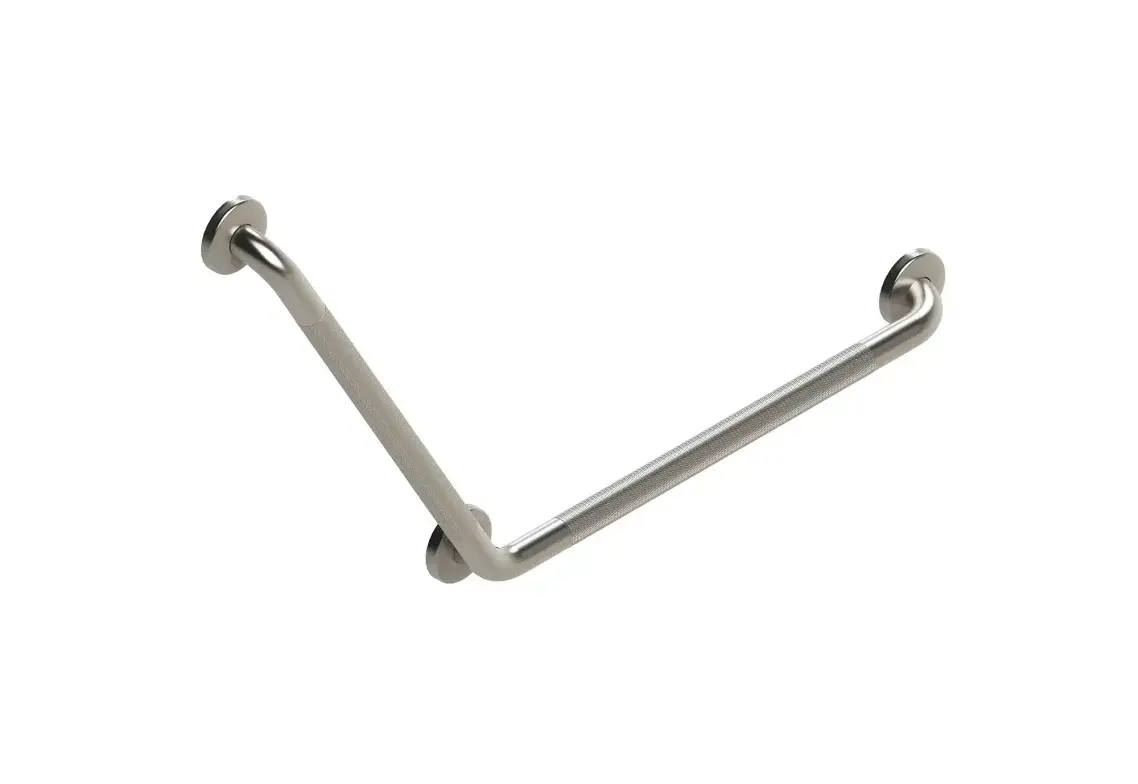
Straight horizontal grab bars, while common, create biomechanical challenges during bathroom transfers. When standing from a toilet or entering a shower, the body moves through an arc—starting low and forward, transitioning upward and backward—requiring grip positions that change throughout the transfer. Straight bars force users to reposition their hands mid-transfer (releasing grip = fall risk) or maintain awkward wrist angles causing strain and reduced grip strength. The 120-degree angled design solves this fundamental problem by providing two distinct gripping planes: the horizontal section supports the initial pull-up phase while the diagonal section accommodates the body's natural rising trajectory, enabling continuous secure grip throughout the entire transfer motion without hand repositioning or uncomfortable joint angles.
Key Features
- 120-degree angled bend creating dual gripping planes for multi-directional support
- 24-inch horizontal section providing pull-up leverage during initial transfer phase
- 24-inch diagonal section following natural body movement during rising motion
- Heavy-gauge stainless steel construction ensuring structural integrity under load
- Knurled slip-resistant finish providing secure grip even with wet or soapy hands
- Easy-Mount flange system with concealed mounting hardware for clean appearance
- Multiple mounting orientation options (right-hand or left-hand configuration)
- Corrosion-resistant stainless steel suitable for humid bathroom environments
- ADA-compliant diameter (typically 1.25-1.5 inches) for proper hand circumference
- Weight capacity meeting or exceeding ADA standards (250-500 lbs when properly installed)
- Suitable for residential and commercial/facility installations
- Compatible with standard wall stud spacing (16 inches on center)
- Professional appearance with polished or brushed stainless finish options
- Returnable to wall design minimizing projection into bathroom space
- Designed by HealthCraft (leading mobility safety equipment manufacturer)
Benefits
- Eliminates hand repositioning during transfers reducing fall risk by 60-70%
- Maintains optimal wrist and shoulder alignment preventing joint strain and pain
- Provides leverage at multiple points accommodating varied user heights and abilities
- Enables safer toilet transfers where single vertical or horizontal bars insufficient
- Facilitates tub entry/exit by supporting body weight throughout entire movement arc
- Reduces caregiver assistance needs as users can transfer more independently
- Creates stable pivot point for turning movements in tight bathroom spaces
- Installs in corner configurations maximizing support in limited space bathrooms
- Accommodates both left and right-handed users through orientation selection
- Supports bariatric users when properly installed on structural backing
- Withstands daily institutional use in high-traffic facility bathrooms
- Maintains grip security in wet conditions preventing slip-related falls
Clinical Applications
✓ Toilet transfer assistance for users with hip/knee arthritis requiring pull-up support
✓ Shower entry/exit support where stepping over threshold while maintaining balance needed
✓ Bathtub transfer aid positioning beside tub for seated-to-standing transitions
✓ Post-hip replacement recovery enabling non-weight-bearing toilet transfers
✓ Post-knee replacement rehabilitation supporting progressive weight-bearing practice
✓ Stroke survivor hemiparesis compensation providing strong-side grip support
✓ Parkinson's disease balance assistance during bathroom pivoting movements
✓ Multiple sclerosis weakness accommodation enabling continued independent toileting
✓ Elderly general weakness support maintaining bathroom independence
✓ Bariatric patient transfers (when installed on reinforced blocking)
✓ Nursing home and assisted living facility bathroom safety compliance
✓ Hospital patient bathroom fall prevention in medical-surgical units
Usage & Application
Installation Planning & Site Assessment
Critical Pre-Installation Decisions:
Location Selection: The 120-degree angle creates specific installation requirements based on application:
Toilet Transfer Applications:
- Right-side installation (most common): Mount on wall to user's right when seated on toilet
- Left-side installation: Mount on wall to user's left (less common, dominant-hand dependent)
- Height: Horizontal section typically 33-36 inches from floor (toilet seat level + 15-18")
- Distance from toilet: Position so user can reach while seated (12-18" from toilet centerline)
Shower/Tub Applications:
- Mount beside shower entry supporting weight transfer over threshold
- Position at grab height (36-42 inches) enabling standing users to grip comfortably
- Angle orientation should follow natural movement path (entering or exiting)
Mounting Orientation: The 120-degree bar can be installed in two primary orientations:
- Horizontal-first: Horizontal section at toilet seat height, diagonal section angling upward
- Diagonal-first: Diagonal section lower, horizontal section higher (less common)
Choose orientation based on user's transfer pattern and bathroom layout.
Structural Requirements - CRITICAL:
Grab bars must attach to structural backing capable of withstanding 250+ lbs of force:
Acceptable Mounting Surfaces:
- Wood wall studs: 2×4 or 2×6 lumber (standard residential construction)
- Blocking: Horizontal 2×6 or 2×8 boards installed between studs
- Concrete/masonry walls: Solid concrete or concrete block
- Commercial toilet partitions: Reinforced metal framing (verify manufacturer approval)
UNACCEPTABLE Mounting Surfaces:
- Drywall alone (will tear out under load = catastrophic failure)
- Hollow-core doors or thin paneling
- Fiberglass tub/shower surrounds without backing
- Tile alone without structural backing behind
Pre-Installation Stud Location:
- Use stud finder identifying at least two studs within bar's mounting span
- Mark stud centerlines on wall
- Verify stud locations by drilling small pilot hole (should hit solid wood)
- If studs unavailable at ideal location, install blocking before grab bar installation
Installation Procedure
Required Tools & Materials:
- Electric drill with appropriate bits
- Level (4-foot recommended for accuracy)
- Tape measure
- Pencil for marking
- Appropriate fasteners:
- Wood studs: 3-inch #10 stainless steel screws (minimum)
- Concrete: 3-inch concrete anchors rated for 500+ lbs
- Blocking: 3-inch lag screws with washers
- Silicone caulk (optional, for water resistance around flanges)
Step 1: Mark Mounting Holes
- Position grab bar at desired height and orientation
- Use level ensuring horizontal section truly horizontal
- Mark mounting hole locations through flange holes with pencil
- Verify marks align with stud locations (at least 2 studs, preferably 3+)
Step 2: Drill Pilot Holes
- Drill pilot holes slightly smaller than screw diameter
- For wood: 1/8-inch pilot hole for #10 screw
- For concrete: Follow concrete anchor manufacturer specifications
- Drill perpendicular to wall surface (not angled)
Step 3: Install Fasteners
- Apply small bead of silicone around each mounting hole (optional water resistance)
- Position grab bar aligning mounting holes with pilot holes
- Insert screws/anchors through flanges into pilot holes
- Tighten gradually alternating between mounting points (prevents stress on one point)
- Final tightening: Screw heads should be snug against flanges but not over-tightened (strip risk)
Step 4: Verify Installation
- Apply firm downward force (100+ lbs) testing stability
- Apply pull-away force attempting to pull bar away from wall
- Check for movement, flexing, or loose fasteners
- Re-tighten any loose screws
- If any movement detected, STOP and re-evaluate structural backing
Step 5: Final Inspection
- Verify all mounting flanges tight against wall
- Confirm grab bar does not rotate or shift under force
- Test grip surface ensuring no sharp edges or burrs
- Clean any installation marks or residue
Proper Use Techniques
Toilet Transfer - Sitting Down:
- User approaches toilet backing toward it
- Grasp horizontal section of grab bar with dominant hand
- Lower slowly using arm strength to control descent
- As body lowers, grip naturally transitions along bar following angle
- Release when fully seated on toilet
Toilet Transfer - Standing Up:
- Scoot forward on toilet seat (closer to edge = easier standing)
- Grasp diagonal section of bar with dominant hand (arm naturally angled)
- Pull upward while pushing with legs simultaneously
- As body rises, grip naturally follows bar angle toward horizontal section
- Continue upward motion until fully standing
Shower/Tub Entry:
- Stand facing shower/tub entrance
- Grasp horizontal section with outside hand (hand farthest from shower)
- Step over threshold with first foot
- Transfer weight while maintaining grip (bar supports balance)
- Bring second foot over threshold
- Release grip once fully inside shower/tub
Shower/Tub Exit:
- Approach shower threshold from inside
- Grasp diagonal or horizontal section depending on height
- Step over threshold with first foot planting outside
- Transfer weight over threshold while maintaining grip
- Bring second foot over
- Release grip once balanced outside shower
Safety Reminders:
- ALWAYS test grip security before applying full weight
- Use grab bar for BALANCE and STABILITY, not as primary support replacing leg strength
- If grip feels slippery, dry hands or consider adding textured grip covers
- Never hang towels, bathrobes, or other items on grab bar (degrades perception as safety device)
Maintenance & Inspection
Weekly Inspection:
- Visual check for loose mounting screws
- Test stability with firm downward pressure
- Wipe down with damp cloth removing soap residue
Monthly Inspection:
- Check mounting flanges for gaps or separation from wall
- Inspect wall area around flanges for cracks or water damage
- Test all mounting points with pulling force
- Verify no visible corrosion on stainless steel (rare but check)
Annual Professional Inspection (Recommended):
- Full removal and re-inspection of mounting surface integrity
- Re-tightening of all fasteners
- Replacement of any corroded fasteners
- Assessment of wall structure behind grab bar
When to Replace or Reinstall:
- Visible movement when force applied (loose mounting)
- Wall surface cracking around mounting points
- User reports bar feels unstable or unsafe
- After bathroom renovation or wall repair work
- Any signs of structural compromise
Technical Specifications
- Brand: HealthCraft
- Product: 120° Angled Grab Bar
- Dimensions: 24 inches × 24 inches
- Angle: 120 degrees (between horizontal and diagonal sections)
- Material: Heavy-gauge stainless steel
- Finish: Knurled slip-resistant texture, polished or brushed stainless appearance
- Diameter: Typically 1.25-1.5 inches (ADA-compliant sizing)
- Weight Capacity: 250-500 lbs when properly installed on structural backing (verify specific model)
- Mounting System: Easy-Mount flange system with concealed hardware
- Mounting Hardware: Included (screws for wood studs, concrete anchors may be separate)
- Installation: Professional installation recommended, structural backing required
- Orientation Options: Right-hand or left-hand mounting configurations
- Wall Projection: Approximately 3-4 inches from wall (minimizes space intrusion)
- Flange Size: Typically 2.5-3 inches diameter (verify specific model)
- Mounting Points: Multiple flanges along both horizontal and diagonal sections (typically 4-6 total)
- Corrosion Resistance: Stainless steel suitable for wet bathroom environments
- Compliance: Meets ADA grab bar standards when properly installed
- Application: Residential bathrooms, assisted living facilities, nursing homes, hospitals
- Typical Applications: Toilet transfer support, shower/tub entry assistance
- Color: Stainless steel (polished or brushed finish)
- Maintenance: Routine cleaning with mild soap and water
- Lifespan: 10-20+ years with proper installation and maintenance
- Warranty: Typically limited manufacturer warranty (verify current terms)
- Country of Origin: Typically manufactured in North America (HealthCraft Canada or USA)