Slideshow Items

  • Hoyer Lift/Sling
  • mobility/hoyer-lift-sling
  • Mobility
  • mobility
Arjo

  |  

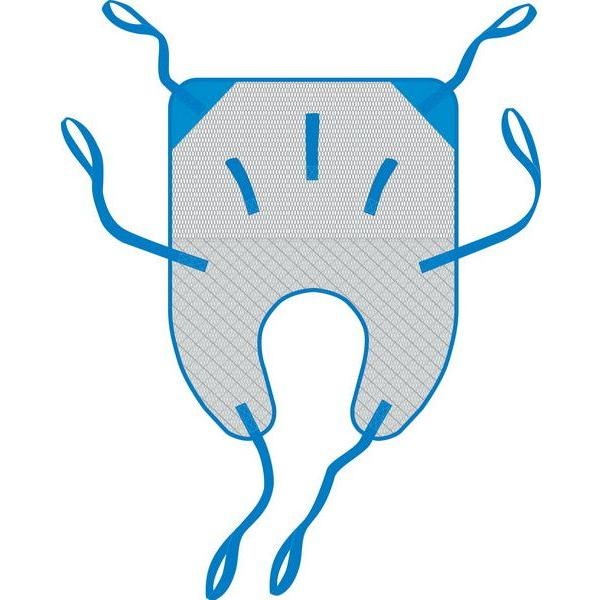
Arjo Loop Quick Fit Sling without Head Support

C$389.99
In stock online
In store: Check availability

Available in store

SKU: TIR-M-33

The Arjo Loop Quick Fit Sling without Head Support provides patient lift transfer support for compatible Arjo lift systems.

    • Why Choose the Arjo Loop Quick Fit Sling – Without Head Support

      The Arjo Loop Quick Fit Sling without Head Support is designed to support safe patient transfers when used with compatible patient lifts and proper caregiver technique. The loop-style attachment supports use with compatible spreader bars, while the quick fit design provides a practical sling option for daily transfer routines where head support is not required — the sling for users who bring their own head control to the transfer.

      Key Features

      ✔ Arjo quick fit sling

      ✔ Loop attachment design

      ✔ Without head support

      ✔ Designed for compatible patient lift systems

      ✔ Supports seated transfer routines

      ✔ Practical for home care and facility use

      ✔ Suitable for caregiver-assisted transfers

      ✔ Useful for daily mobility and repositioning needs

      ✔ Designed for trained caregiver operation

      Benefits

      ✔ Supports safer patient transfers when used properly

      ✔ Loop design allows attachment to compatible lift spreader bars

      ✔ Quick fit style supports efficient sling application

      ✔ Practical for users who do not require head support

      ✔ Useful for long-term care, home care, and clinical settings

      ✔ Helps reduce manual lifting strain for caregivers

      ✔ Supports transfer routines between bed, chair, wheelchair, or commode where appropriate

      Usage/Application

      Ideal for patient lift transfers, long-term care facilities, assisted living settings, home care, hospitals, rehabilitation settings, and caregivers who need an Arjo loop quick fit sling without head support for compatible lift equipment. The sling is the half of a lift system that touches the patient, and its specification is a clinical match: "without head support" designates this sling for users with reliable head and neck control through the transfer — assessed by the care team, since a user whose head control is uncertain belongs in the head-support version — while the loop attachment pairs with compatible loop-style spreader bars, making lift-and-sling compatibility a manufacturer's-guidance question confirmed before first use, not assumed across brands. The quick fit design earns its name in daily rhythm: applied per Arjo's instructions with the user positioned correctly in the sling body, leg pieces routed as trained, and the loops set to the prescribed configuration — loop choices change the user's seated angle, so the care plan's setting is the setting — then every transfer runs the professional sequence: loops fully seated on the spreader bar hooks, a pause at low height to confirm the sling holds before the full lift, the path cleared, and the user lowered fully before loops come off. Slings are inspected garments: check fabric, stitching, loops, and label legibility before each use per facility protocol, retire a sling with fraying, cuts, chemical damage, or an illegible capacity label immediately, launder per Arjo's care instructions since wrong washing degrades load-bearing fabric, and match the sling size and weight capacity to the user as the care assessment directs. Trained-caregiver operation is the standing rule — patient lifts and their slings are a system that rewards technique and punishes shortcuts, and the sling's condition is checked before the lift ever takes the weight.

    • No reviews yet

      Add yours

    Testimonials from Google

    See all reviews

    Your cart — 0

    You cart is currently empty

    Login

    By using our website, you agree to the use of cookies. These cookies help us understand how customers arrive at and use our site and help us make improvements. Hide this message More on cookies »