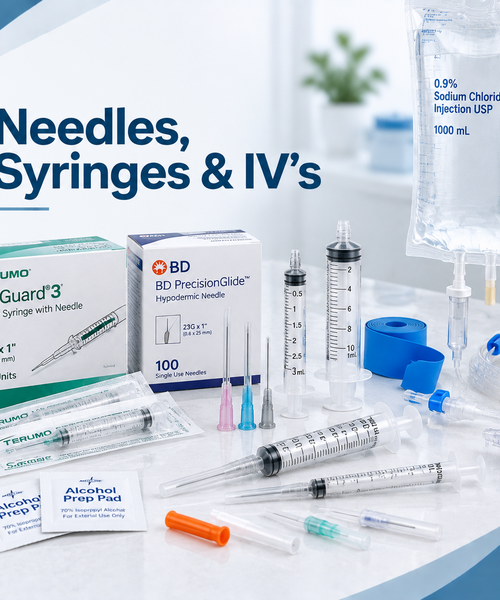
Why 23G × 1" with PrecisionGlide Technology for Versatile Clinical Applications
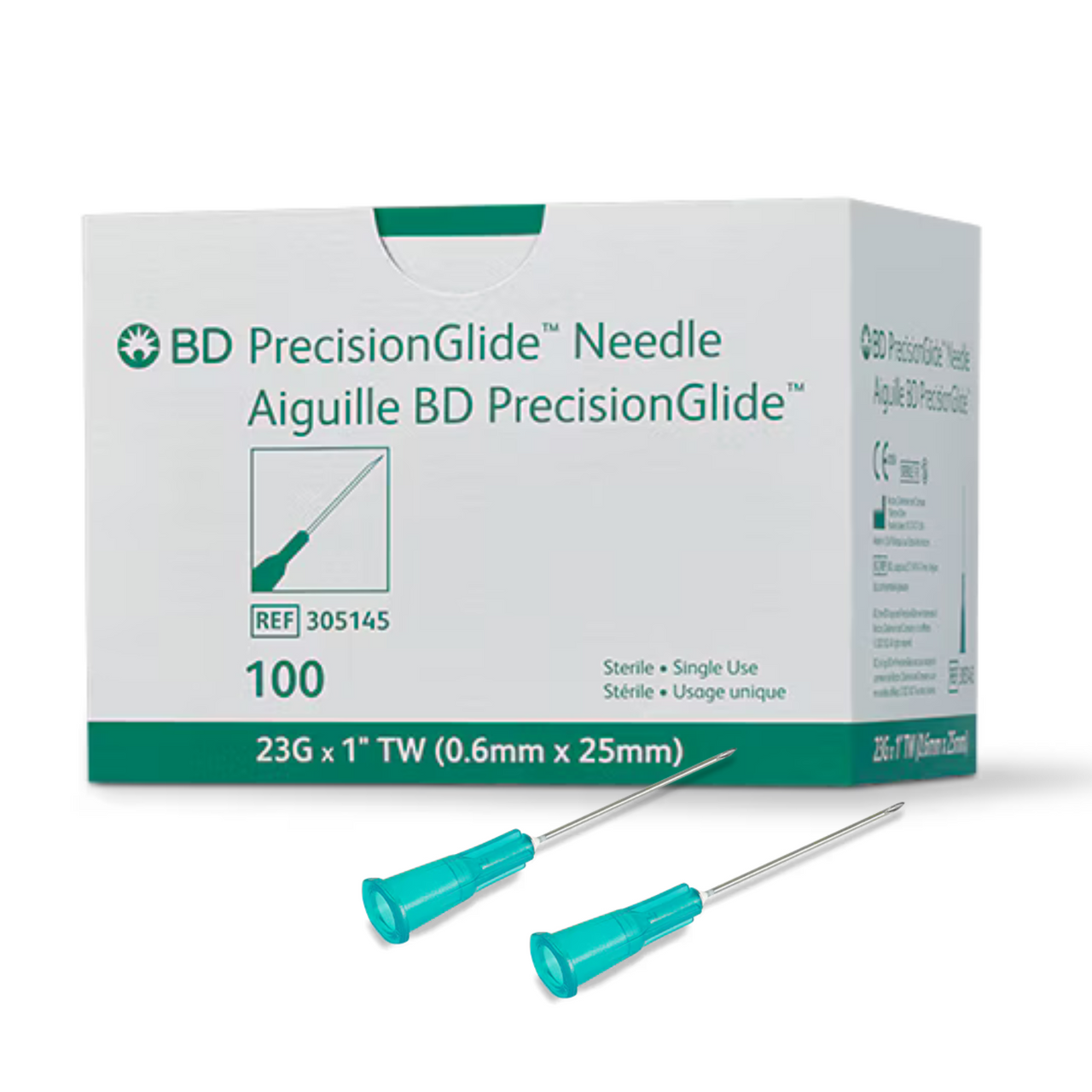
The 23-gauge needle (0.6mm outer diameter) represents the optimal balance between patient comfort and clinical functionality—fine enough to significantly reduce injection pain compared to larger gauges (21G, 20G) while maintaining adequate bore diameter for most medications, vaccines, and blood sampling without excessive injection pressure or prolonged administration time. The 1-inch (25mm) length is the clinical standard for intramuscular injections in the deltoid muscle of average-sized adults and appropriate for deep subcutaneous injections, making this gauge-length combination one of the most versatile and commonly used in medical practice across multiple specialties. BD's PrecisionGlide technology features precision-engineered bevels with triple-sharpened edges and consistent angles that reduce insertion force by up to 23% compared to conventional needles, minimizing tissue trauma and improving patient comfort while maintaining the structural integrity needed for reliable performance. The thin-wall cannula design optimizes internal diameter relative to outer diameter, improving medication flow rates without increasing gauge size or patient discomfort.
Key Features & Benefits
Key Features:
- 23-gauge (23G) needle with 0.6mm outer diameter for balanced comfort and flow
- 1-inch (25mm) length for standard IM and deep subcutaneous injections
- PrecisionGlide technology with triple-sharpened bevel for smooth penetration
- Thin-wall cannula construction optimizes flow rate
- High-quality stainless steel with consistent sharpness
- Color-coded hub (typically blue for 23G per ISO standards)
- Transparent hub for blood flashback visualization
- Compatible with both Luer Lock and Luer Slip syringes
- Electropolished surface reduces friction during insertion
- Sterile, individually packaged in protective shields
- Box of 100 needles for clinical inventory management
- Latex-free construction for allergy safety
- Manufactured by BD (trusted global medical device leader)
- Meets USP and ISO international quality standards
- Single-use, disposable design
Benefits:
- Balanced gauge reduces pain while maintaining adequate flow
- Standard length appropriate for most adult IM injections
- PrecisionGlide technology reduces insertion force up to 23%
- Thin-wall design improves flow without larger gauge
- Triple-sharpened bevel minimizes tissue trauma
- Compatible with multiple syringe types
- Color-coded hub enables quick gauge identification
- Clear hub allows blood return visualization
- Sterile packaging ensures infection control
- Latex-free protects sensitive patients and staff
- Reliable BD quality with consistent performance
- Cost-effective bulk packaging for clinical use
Clinical Applications
BD PrecisionGlide 23G × 1" hypodermic needles are appropriate for:
✓ Intramuscular injections in deltoid muscle (adults) ✓ Subcutaneous injections (average to obese patients) ✓ Vaccine administration (influenza, hepatitis, COVID-19, others) ✓ Antibiotic IM administration (most non-viscous formulations) ✓ Vitamin B12 injections (aqueous formulations) ✓ Hormone therapy injections (water-based formulations) ✓ Blood sample collection from veins ✓ Venipuncture for laboratory specimens ✓ Allergy immunotherapy injections ✓ Tuberculin testing (though 25G-27G more common) ✓ Local anesthetic administration ✓ Medication reconstitution and preparation ✓ Drawing medications from vials and ampules ✓ IV medication preparation ✓ Pediatric injections (older children and adolescents) ✓ Geriatric medication administration ✓ Home healthcare injections ✓ Veterinary medication administration
Usage & Application
Pre-Use Preparation:
- Verify clinical indication:
- Confirm medication order, dose, route, patient identity
- Check patient allergies
- Perform "5 Rights" verification
- Assess gauge-length appropriateness:
- 23G advantages:
- Comfortable for most patients
- Adequate flow for non-viscous medications
- Versatile for IM and SubQ routes
- Good for blood draws
- 23G appropriate for:
- Most vaccines and antibiotics
- Water-based medications
- Routine IM injections
- Blood sampling
- Consider larger gauge (21G) if:
- Viscous medication (oil-based, thick suspensions)
- Rapid injection needed
- 1" length appropriate for:
- Deltoid IM in average adults
- Deep SubQ in patients with adequate adipose tissue
- Most routine injections
- Gather supplies:
- BD PrecisionGlide 23G × 1" needle
- Appropriate syringe (1-3 mL typical)
- Medication
- Alcohol swabs
- Clean gloves
- Gauze pads
- Adhesive bandage
- Sharps container
- Hand hygiene and glove up
- Inspect needle package:
- Check sterile shield integrity
- Verify expiration date
- Discard if compromised
Attaching Needle to Syringe:
For Luer Lock:
- Align threads, twist clockwise until secure
- Verify tight connection with gentle tug
For Luer Slip:
- Push straight onto tip with firm pressure
- Ensure fully seated against barrel
Drawing Medication:
- From vials:
- Clean rubber stopper with alcohol
- Inject air equal to dose volume
- Insert needle, invert vial
- Withdraw medication
- Remove air bubbles, verify dose
- From ampules:
- Break ampule carefully
- Insert needle, draw medication
- Remove air bubbles
- Replace needle before injection (prevents glass particles, ensures sharp tip)
Intramuscular Injection Technique (Deltoid):
Site Selection:
- Deltoid (most common for 23G × 1"): Upper arm, 2-3 finger widths below acromion
- Vastus lateralis: Anterior thigh (alternative site)
- Ventrogluteal: Hip (for larger volumes or irritating medications)
Deltoid Injection Procedure:
- Position patient:
- Sitting or standing
- Arm relaxed at side (muscle relaxed)
- Expose upper arm
- Locate injection site:
- Feel for acromion process (bony prominence at shoulder)
- Measure 2-3 finger widths (1-2 inches) below acromion
- Injection site in thickest part of deltoid muscle
- Avoid too low (radial nerve risk)
- Clean site:
- Wipe with alcohol swab in circular motion
- Allow to air dry 30 seconds (prevents stinging)
- Stretch skin taut:
- Use non-dominant hand to pull skin tight
- Do NOT pinch (pinching for SubQ, not IM)
- Insert needle:
- Hold syringe like dart
- Insert at 90-degree angle with quick, smooth motion
- Insert to full 1-inch depth (to hub or near-hub)
- Quick insertion less painful than slow
- Aspirate (per protocol):
- Pull back slightly on plunger
- Check for blood return
- If blood appears: Withdraw, discard, prepare new injection
- If no blood: Proceed with injection
- Note: Many vaccines no longer require aspiration (per current CDC guidelines)
- Inject medication:
- Push plunger slowly and steadily
- Typical rate: 1 mL per 10 seconds
- Don't inject too rapidly (causes discomfort)
- Withdraw needle:
- Pull straight out quickly at same 90-degree angle
- Immediately cover with gauze
- Apply pressure:
- Light pressure with gauze
- Massage gently (promotes absorption for most IM medications)
- Do NOT massage for certain medications (check drug info)
Subcutaneous Injection Technique:
Site Selection:
- Abdomen (2 inches from navel)
- Anterior thigh
- Upper arm (posterior triceps)
- Upper buttocks
Procedure:
- Clean site with alcohol, allow to dry
- Pinch or not pinch:
- Average/lean patients: Gently pinch subcutaneous tissue
- Obese patients: May inject without pinch
- Insert needle:
- 45-90 degree angle depending on:
- Amount of subcutaneous tissue
- Needle length
- Patient body habitus
- 1" needle typically:
- 45 degrees if lean/average patient with pinch
- 90 degrees if obese patient
- Release pinch before injecting
- Inject slowly
- Count to 5 after plunger depressed (ensures complete delivery)
- Withdraw needle
- Do not massage (unless specifically indicated)
Vaccine Administration:
- Deltoid site preferred for most adult vaccines
- Verify vaccine route:
- Most vaccines are IM
- Some are SubQ (check vaccine information)
- Technique:
- 90-degree angle insertion
- Do NOT aspirate for vaccines (per CDC guidelines)
- Inject at steady pace
- Withdraw quickly
- Document:
- Vaccine name, lot number, expiration, site
- VIS (Vaccine Information Statement) provided
Blood Draw Technique:
- Apply tourniquet 3-4 inches above puncture site
- Select vein:
- Palpate vein (don't just visualize)
- Choose straight, well-anchored vein
- Clean site with alcohol
- Anchor vein:
- Pull skin taut below puncture site with non-dominant hand
- Insert needle:
- Bevel up
- 15-30 degree angle
- Advance until blood flashback in hub
- Release tourniquet once blood flowing
- Collect sample into appropriate tubes
- Remove needle:
- Place gauze over site
- Withdraw needle
- Apply firm pressure 2-5 minutes
Post-Procedure Care:
- Do not recap (needlestick injury risk)
- If must recap: one-handed scoop technique only
- Immediate disposal in sharps container
- Remove gloves, hand hygiene
- Document:
- Medication, dose, route, site, time
- Patient response
- Any adverse reactions
- Monitor patient:
- Observe for reactions
- Assess injection site after 10-15 minutes
Troubleshooting:
Needle won't attach:
- Verify Luer Lock vs. Luer Slip compatibility
- Check for damaged threads
- Ensure proper alignment
Difficulty penetrating skin:
- Use quick, dart-like motion (not slow push)
- Ensure needle new and sharp
- May have tough skin in some areas
Medication won't inject smoothly:
- 23G should handle most non-viscous medications well
- If very viscous, consider 21G
- Apply steady, consistent pressure
- Verify needle not occluded
Blood appears during aspiration (IM):
- Withdraw needle immediately
- Apply pressure
- Discard medication
- Prepare new injection, different site
Patient reports severe pain:
- May have hit nerve or periosteum
- If sharp, shooting pain: withdraw immediately
- Select different site
- Ensure inserting in correct anatomical location
Excessive bleeding after injection:
- Apply firm pressure 3-5 minutes
- Patient may be on anticoagulants
- Elevate extremity if possible
- If doesn't stop, notify provider
Special Considerations:
Pediatric patients:
- 23G × 1" appropriate for older children and adolescents
- Younger children may need smaller gauge (25G) or shorter length
- Deltoid develops adequately by 3 years for vaccines
- Vastus lateralis preferred for infants and young children
- Use distraction techniques
- Consider topical anesthetic for anxious children
Geriatric patients:
- May have decreased muscle mass
- Assess deltoid carefully—may be atrophied
- 23G good choice (less painful than larger gauges)
- Inject slowly (fragile tissues)
- May bruise easily (especially if on anticoagulants)
Obese patients:
- 1" needle adequate for deltoid in most obese patients
- May need 1.5" for other IM sites (ventrogluteal)
- For SubQ: no pinch needed, 90-degree angle
Thin/cachectic patients:
- 1" may be adequate to excessive depending on site
- Assess muscle mass
- May need shorter needle (5/8")
- Be cautious not to hit bone
Patients on anticoagulation:
- Apply pressure longer (5-10 minutes)
- Monitor for hematoma
- SubQ preferred over IM when possible (less bleeding)
- 23G better than larger gauges (less trauma)
Patients with needle anxiety:
- 23G good choice (smaller than 21G, less intimidating)
- Explain that thinner needle reduces pain
- Use distraction, relaxation techniques
- Quick insertion less painful than hesitant
- Consider topical anesthetic
Vaccines:
- 23G widely used for vaccine administration
- Appropriate for most adult vaccines
- Some prefer 25G for patient comfort
- Follow vaccine-specific guidelines
Multiple injections:
- Rotate sites
- Space injections at least 1 inch apart
- Use site rotation chart for frequent injections
Storage:
- Store at room temperature 15-30°C (59-86°F)
- Protect from heat, cold, humidity
- Keep in original packaging
- Store in clean, dry area
- Check expiration dates
- Rotate stock using FIFO
- Do not use expired needles
Disposal:
- Dispose immediately in sharps container
- Never recap with two hands
- Do not separate needle from syringe
- Never place in regular trash
- Seal container when 3/4 full
- Dispose per local regulations
Infection Control:
- Always use aseptic technique
- Never reuse needles
- Never share between patients
- Discard from damaged packages
- Clean injection sites properly
- New sterile needle each injection
- Change needles between drawing and injecting
When to Contact Healthcare Provider:
- Persistent pain, redness, swelling at site
- Signs of infection (warmth, drainage, fever)
- Severe bruising or hematoma
- Suspected nerve injury
- Needlestick injury
- Questions about technique
- Allergic reaction after injection
Regulatory Compliance:
- BD needles meet FDA requirements
- Manufactured in FDA-registered facilities
- Comply with ISO 7864 (sterile hypodermic needles)
- Comply with ISO 9626 (needle dimensions)
- Meet USP standards for sterility and sharpness
- Color coding follows ISO 6009 (blue hub for 23G)
- Latex-free for safety compliance
Technical Specifications
Product Details:
- Manufacturer: BD (Becton, Dickinson and Company)
- Product Line: PrecisionGlide™
- Needle Gauge: 23G (0.6mm outer diameter, 0.3mm inner diameter typical)
- Needle Length: 1 inch (25mm)
- Bevel Type: Regular bevel with PrecisionGlide technology
- Bevel Features: Triple-sharpened edges, precision-engineered angle
- Cannula Material: High-quality surgical-grade stainless steel
- Cannula Type: Thin-wall construction for optimized flow
- Surface Treatment: Electropolished for reduced friction
- Hub Color: Blue (per ISO 6009 color coding standard for 23G)
- Hub Material: Medical-grade polypropylene
- Hub Type: Transparent for blood flashback visualization
- Connection Type: Universal hub compatible with Luer Lock and Luer Slip syringes
- Needle Shield: Rigid protective shield maintains sterility
- Sterility: Sterile, individually packaged
- Sterilization Method: Ethylene oxide (EtO) or gamma radiation
- Latex Content: Latex-free (no natural rubber latex)
- DEHP-Free: Yes
- Expiration: Typically 5 years from manufacture (check packages)
- Packaging: Box of 100 individually packaged needles
- Intended Use: Intramuscular injection, subcutaneous injection, blood draws, aspiration
- Route: Intramuscular, subcutaneous, intravenous access
- Patient Population: Adults, adolescents, older children
- Regulatory Status: FDA-cleared medical device, Class II
- Standards Compliance:
- ISO 7864 (sterile hypodermic single-use needles)
- ISO 9626 (stainless steel needle tubing)
- ISO 6009 (needle color coding)
- USP standards for sharpness and sterility
- Country of Origin: Varies by manufacturing facility (check package labeling)


 780 409-1509
 Get directions