
Slideshow Items

|
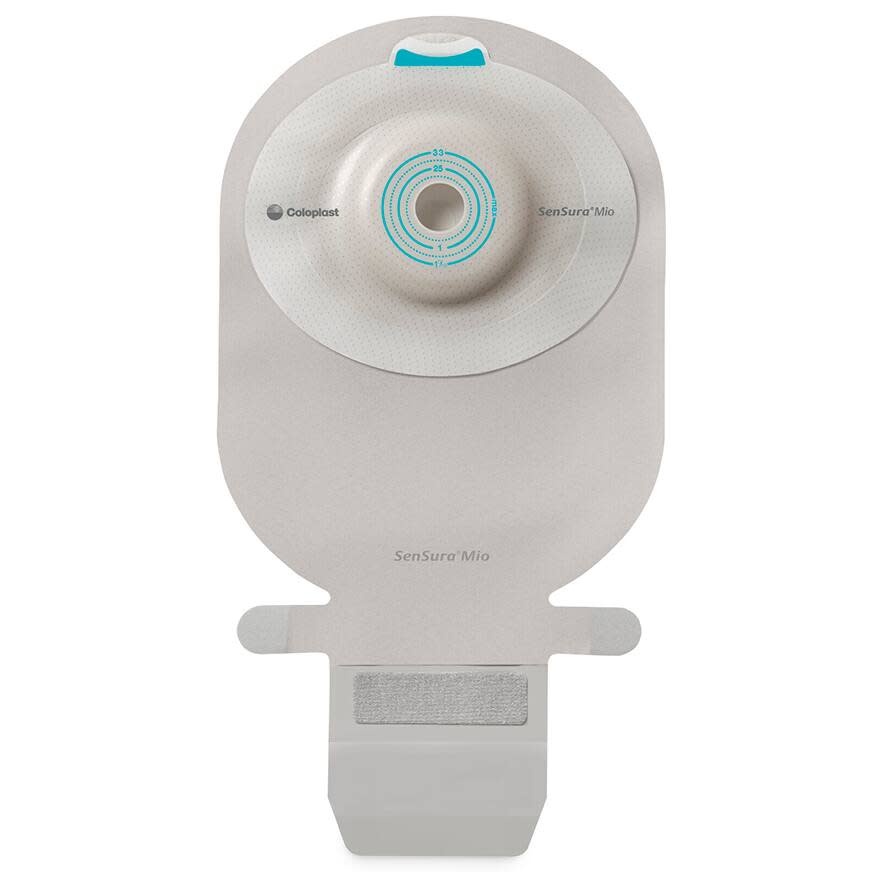
1-piece deep convex urostomy pouch with firm pressure support for retracted stomas. Pre-cut 25mm opening, maxi capacity, transparent. Anti-reflux valve prevents backflow. Soft drain tap for day/night use. Secure sealing. 10 pouches per box.
Loading…
The SenSura Mio 1-piece Deep Convex urostomy pouch represents Coloplast's advanced solution for one of the most challenging clinical scenarios in urostomy management: retracted, flush, or irregular stomas that resist adequate sealing with flat barriers. Deep convexity provides firm, targeted pressure around the stoma base, effectively "pushing out" retracted tissue to create a more prominent stoma profile and establish a secure seal between the barrier adhesive and peristomal skin—the critical junction where leakage most commonly occurs.
Retracted or flush stomas represent 20-30% of all ostomy patients and pose significantly elevated leakage risk compared to protruding stomas. When a stoma sits at or below the skin surface level, urine can flow under the barrier edge rather than into the pouch, causing undermining (adhesive failure from moisture intrusion), skin damage from constant urine exposure, and the psychological distress of unpredictable leakage. Deep convex barriers address this fundamental anatomical challenge through mechanical pressure, creating functional stoma protrusion even when the surgical construction is suboptimal.
The distinction between "Light Convex," "Moderate Convex," and "Deep Convex" is clinically significant—depth of convexity determines the amount of pressure applied to peristomal tissues and the degree of stoma protrusion achieved. Deep Convex represents Coloplast's maximum convexity option, typically projecting 10-12mm from the barrier surface and applying substantial pressure (critical for severely retracted stomas, those with significant abdominal folds obscuring the stoma, or cases where lighter convexity has proven insufficient). This product serves the most challenging clinical presentations where flat or light convex barriers have failed repeatedly.
The pre-cut 25mm opening eliminates measurement and cutting errors while providing optimal sizing for stomas measuring approximately 20-23mm in diameter (accounting for the recommended 2-3mm clearance). While 25mm is not the most common urostomy stoma size (30mm and 35mm are more frequent), it represents an important segment—smaller mature stomas, pediatric-sized stomas in adults, or stomas that have constricted from stenosis, retraction, or scar tissue formation. The precision of factory pre-cutting creates perfectly circular openings with smooth edges, superior to hand-cutting which can create irregular shapes, sharp edges, or sizing errors that compromise the seal.
The Maxi capacity designation indicates this pouch accommodates 600-800mL of urine before requiring drainage—substantially more than standard urostomy pouches (300-400mL). For urostomy patients who produce 1000-1500mL of urine daily, Maxi capacity translates to 4-5 hour intervals between drainage during the day versus 2-3 hours with standard pouches, and critically, enables overnight use without requiring nighttime drainage or middle-of-the-night emptying for many users. This extended capacity becomes particularly valuable for the retracted-stoma population who may already be managing complicated care routines—reducing drainage frequency provides meaningful quality-of-life improvement.
The transparent design serves essential clinical purposes: post-operative stoma monitoring (color, size, bleeding, edema), early detection of complications (blood in urine indicating infection/stones/trauma, unusually dark or cloudy urine suggesting dehydration or UTI), visual confirmation of proper drainage flow, and peace of mind from being able to see urine characteristics without pouch removal. For retracted-stoma patients who face elevated complication risk, transparency provides an additional layer of monitoring capability.
The integrated anti-reflux valve is medically essential for urostomy pouches, preventing urine from flowing backward from the pouch toward the stoma when lying down, sitting forward, or during physical activity. For retracted-stoma patients, the anti-reflux valve becomes even more critical—any backflow creates moisture at the barrier-skin junction (the already-vulnerable seal area), accelerating adhesive failure and increasing UTI risk. Clinical studies document that anti-reflux valves reduce UTI incidence by 60-70% in urostomy patients, a benefit that extends to the entire urostomy population but particularly impacts retracted-stoma patients whose anatomical challenges already elevate infection risk.
The 1-piece integrated design combines the barrier and pouch into a single disposable unit, eliminating coupling mechanisms and creating the lowest-profile convex system available. For retracted-stoma patients dealing with the bulk of deep convexity (the convex dome projects outward more than flat barriers), minimizing additional thickness from coupling rings is valuable—1-piece deep convex systems are thinner than 2-piece deep convex systems, improving discretion under clothing despite the convexity.
✓ 10-12mm convex projection (maximum pressure, maximum stoma protrusion)
✓ Firm, targeted pressure around stoma base (creates functional protrusion even with anatomical retraction)
✓ Addresses severe retraction (for flush or below-surface stomas that defeat flat barriers)
✓ Improves seal integrity (pressure optimizes barrier-to-skin contact at stoma base)
✓ Reduces undermining (prevents urine flow under barrier edge)
✓ Essential for: Retracted stomas, flush stomas, stomas in deep skin creases, stomas obscured by abdominal folds, prolapse causing irregular contours
✓ All-in-one design (barrier + pouch combined—no coupling mechanism)
✓ Lowest profile convex option (thinner than 2-piece deep convex systems)
✓ Simplified changing process (remove entire unit, apply new one)
✓ No coupling failure risk (no separation between barrier and pouch)
✓ Ideal for: Patients changing 1-2× daily, users wanting simplicity, maximum discretion under clothing
✓ Perfect circular symmetry (factory cutting superior to hand-cutting)
✓ Consistent sizing every time (eliminates measurement errors)
✓ Smooth edges (reduces irritation vs. scissor-cut edges)
✓ Time savings: 2-3 minutes per application (no measuring, no cutting)
✓ Ideal for: Round stomas measuring 20-23mm, smaller mature stomas, stenosed stomas, consistent-size stomas
✓ 600-800mL capacity (2-3× standard urostomy pouches)
✓ Extended drainage intervals: 4-5 hours vs. 2-3 hours standard
✓ Overnight use without night drainage for many users (5-8 hours typical)
✓ Reduces public restroom dependence during work, travel, social activities
✓ Particularly valuable for retracted-stoma patients (reduces frequency of complex pouch changes)
✓ One-way valve: Urine flows stoma → pouch only, prevents reverse flow
✓ 60-70% UTI reduction vs. non-reflux pouches (clinical evidence)
✓ Protection when lying down (prevents backflow from gravity)
✓ Essential for retracted stomas (any backflow moisture at vulnerable seal junction = adhesive failure)
✓ Protects during forward bending, sitting, physical activity
✓ Integrated design (always functioning, no maintenance, no user action needed)
✓ Complete visibility of urine output characteristics
✓ Early detection: Blood (infection, stones), dark/concentrated urine (dehydration), cloudiness (UTI)
✓ Post-operative monitoring standard protocol (first 4-8 weeks minimum)
✓ Visual confirmation of proper drainage (especially important with retracted anatomy)
✓ Peace of mind for retracted-stoma patients (see that pouch is filling properly)
✓ Healthcare professional assessment without pouch removal
✓ One-handed operation (lever-style tap)
✓ Controlled drainage without splashing
✓ Quick emptying: 2-3 seconds vs. 15-30 seconds with twist caps
✓ Easy to clean (rinse after emptying)
✓ Connects to night drainage bags if needed (though Maxi capacity often sufficient)
✓ Neutral-grey color (blends with skin tones, low-visibility)
✓ Quiet, non-rustling material (discretion in social/professional settings)
✓ Comfortable against skin and clothing (soft fabric feel, not plastic)
✓ Moisture-wicking properties (reduces perspiration buildup)
Primary Applications:
✓ Retracted Urostomy Stomas - PRIMARY INDICATION
Stoma retraction occurs in 15-30% of urostomy patients due to surgical technique variations, inadequate fascial fixation, patient body habitus (obesity shortens effective bowel length), weight gain post-surgery (abdominal wall thickening), or late complications (stenosis, prolapse retraction). Retracted stomas sit at or below skin surface level, allowing urine to flow under flat barriers rather than into pouches. Deep convex barriers apply firm pressure around the stoma base, effectively pushing the stoma outward to create functional protrusion even when anatomical construction is suboptimal. This mechanical pressure establishes the secure barrier-to-skin seal essential for leak-free wear.
✓ Flush Urostomy Stomas
Flush stomas sit exactly at skin surface level (neither protruding nor retracted), creating marginal barrier-sealing conditions. While flat barriers may initially work, any weight gain, skin fold development, or barrier application angle variation can compromise the seal. Deep convexity provides pressure compensation, ensuring consistent seal security regardless of body position changes or minor weight fluctuations. Many surgeons create deliberately flush stomas (believing they'll achieve better cosmetic outcomes), not realizing this creates long-term sealing challenges—deep convex barriers correct this surgical oversight.
✓ Urostomy in Skin Creases or Folds
Abdominal skin folds (from prior pregnancies, weight loss, aging) can obscure stoma openings, preventing flat barriers from achieving adequate contact with peristomal skin. The stoma may appear adequately protruding when standing but becomes functionally flush when sitting (skin folds compress), or may be hidden within a crease regardless of position. Deep convexity "flattens" the surrounding tissue while projecting the stoma above the skin fold plane, restoring proper barrier-to-stoma-to-pouch flow dynamics.
✓ Post-Operative Edema Resolution
Immediately post-surgery, stomas are swollen and protrude well. As surgical edema resolves over 6-12 weeks, many stomas "shrink" both in diameter and projection height. Stomas that initially protruded 15-20mm may settle at 5-8mm protrusion or even become flush—suddenly inadequate for the flat barriers that worked initially. Deep convex systems accommodate this anatomical evolution, maintaining seal security as natural post-surgical changes occur.
✓ Obesity-Related Stoma Challenges
Higher BMI correlates with thicker abdominal walls, shorter effective bowel length (more tension pulling stoma inward), and deeper abdominal recesses. Urostomy stomas in obese patients are disproportionately likely to be retracted or flush, and the surrounding skin may have pronounced folds creating additional sealing challenges. Deep convexity overcomes the anatomical disadvantages of obesity, applying sufficient pressure to achieve functional stoma protrusion despite adipose tissue thickness.
✓ Revision Surgery Failures
Some patients undergo surgical stoma revision attempting to correct retraction, only to experience re-retraction (scar tissue limits bowel mobility, or patient anatomy fundamentally resists protrusion). Rather than pursuing repeated surgeries with uncertain outcomes, many patients and surgeons elect to manage anatomical challenges with deep convex barriers—a non-surgical solution providing functional improvement without operative risk.
✓ Stenosis with Retraction
Stoma stenosis (narrowing) often accompanies retraction as scar tissue contracts around the stoma opening. The combination of reduced lumen diameter and decreased protrusion creates particularly challenging sealing conditions—the stoma opening is both smaller and harder to access. The 25mm pre-cut opening accommodates stenosed stomas (typically 20-23mm after narrowing), while deep convexity compensates for associated retraction.
✓ Neurogenic Bladder with Urostomy (High-Risk Population)
Spinal cord injury patients with urostomies face elevated complication rates—compromised sensation prevents early detection of leakage or skin damage, reduced mobility limits ability to perform frequent pouch changes, and potential hand dexterity limitations make barrier application challenging. Deep convex systems with extended Maxi capacity reduce change frequency (less manipulation required) while maximizing seal security (fewer leakage incidents).
✓ Post-Radiation Patients
Pelvic radiation damages skin elasticity and vascular supply, creating fragile peristomal skin that is more vulnerable to adhesive trauma and slower to heal. Retraction is more common in radiated tissues (poor tissue health reduces surgical stoma fixation success). Deep convex barriers establish secure seals with minimal adhesive surface area (the pressure itself, not extensive adhesive coverage, achieves the seal), reducing skin trauma while maximizing security.
Specific Patient Populations:
✓ Bladder Cancer Post-Cystectomy (80-85% of Urostomies)
Radiation or chemotherapy may have compromised tissue quality, increasing retraction risk
✓ Spinal Cord Injury Patients with Neurogenic Bladder
Compromised sensation = delayed leak detection; deep convex maximizes seal reliability
✓ Obese Patients (BMI >30)
Thicker abdominal walls, skin folds = higher retraction incidence
✓ Elderly Patients (65+ Years)
Skin laxity, tissue thinning, weight fluctuations common—deep convex accommodates changes
✓ Post-Revision Patients
Previous surgical attempts to correct retraction have failed; non-surgical solution needed
✓ Patients with Abdominal Scars
Prior surgeries create tissue tethering, skin irregularities—convexity flattens irregularities
✓ Stenosis Patients
25mm pre-cut accommodates narrowed stomas; convexity addresses associated retraction
✓ Radiation Therapy Recipients
Damaged skin requires maximum seal with minimal adhesive contact
✓ Patients with Recurrent Leakage History
Flat barriers have repeatedly failed; deep convex offers alternative solution
Product Details:
Material Composition:
Dimensions & Convexity:
Capacity & Performance:
Convexity Classification:
Stoma Compatibility:
Regulatory & Safety:
Packaging:
Carousel items
Testimonial items
Very welcoming and informative. We went in to rent a Walker for my mom to see if she would use it. They had no rentals left so he gave us a brand new one on rental. Highly recommend this company for all your ADL needs.
Tara Maye
The rating of this product is 5 out of 5
Fantastic service and experience, from delivery to pickup we could not have asked for anything more! We rented a hospital bed, and I do not believe you would get better service anywhere. Highly recommended!
Shawn Dillon
The rating of this product is 5 out of 5
Super friendly and very helpful! Delivered the wheelchair for me, special ordered other parts and took the time to show me how to install. I recommend!
Fiona Haines
The rating of this product is 5 out of 5
Can not thank the team at Med Supplies enough for their amazing service. We were in a tough spot till we got their help. Amazing service. Kind and respectful delivery. First class all the way. Thank you again.
Jon Beatty
The rating of this product is 5 out of 5
Ordered the chair on Sunday and it arrived Monday morning. Spoke to customer service to follow up on delivery times. It was already on my front door. Excellent and helpful staff. The product is sturdy and of good quality. Thank you for your help.
H D
The rating of this product is 5 out of 5
Excellent experience - website faithfully represented what was in stock (which hasn't always been my experience with other vendors sadly), and local shipping was really fast - ordered on the weekend, received it on Monday in my case. Thank you for being
Jason Hudson
The rating of this product is 5 out of 5
0/0
You cart is currently empty
780 409-1509
Get directions