
Slideshow Items

  • Infection, Skin & Wound Care
  • infection-skin-wound-care
  • Needles, Syringes & IV's
  • needles-syringes-ivs
MedPro

  |  

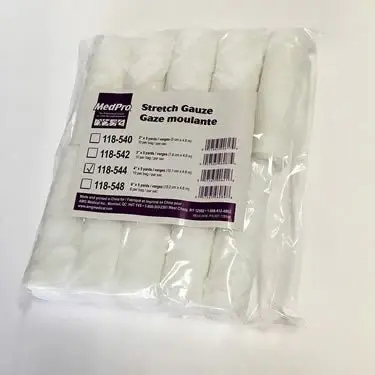
MedPro Softstretch Gauze 4 in x 5 yards 12/Bx

C$12.00
In stock online
In store: Check availability

Available in store

UPC Code: 057565906247
SKU: 118-544

Softstretch Gauze delivers versatile dressing retention with 4-inch width accommodating most limbs and joints, stretchable cotton fabric conforming to body contours, 5-yard length providing generous coverage, 12-roll box for clinical inventory efficiency.

Delivery time: Same Day Delivery in Edmonton Area
    • Why 4-Inch Width with 5-Yard Length for Standard Clinical Wound Care Applications

      The 4-inch width represents the universal standard for clinical gauze applications accommodating adult forearms and lower legs without excessive bulk, pediatric thighs and upper arms where narrower 3-inch gauze would require excessive wrapping passes, and wound dressings on torsos, backs, and larger surface areas requiring adequate coverage without the waste of 6-inch rolls used primarily for abdominal or head applications—this versatile mid-range dimension eliminates the need to stock multiple gauze widths for routine wound care while preventing the bunching that occurs when excessively wide gauze wraps around cylindrical extremities or the gaps that develop when narrow gauze attempts to cover broad surfaces. The 5-yard (15 feet, ~4.6 meters) length provides generous material quantity enabling complete wrapping with multiple overlapping layers ensuring secure dressing retention—adequate for circumferential wrapping of adult thighs or lower legs 3-4 times with proper 50% overlap technique, securing large abdominal or back dressings with full coverage, creating multi-layer compression bandages for venous insufficiency, or providing extended length for difficult anatomical areas requiring creative wrapping patterns—while the increased length compared to standard 4.1-yard rolls reduces the frequency of needing multiple rolls per application and minimizes mid-wrap transitions that create bulk and potential weak points in bandage security. The stretchable cotton construction with elastic weave properties delivers conformability essential for maintaining secure contact around joints during flexion and extension, irregular body contours including shoulders and hips where rigid gauze gaps away from skin surfaces, and mobile areas like chest walls that expand with respiration—the fabric's ability to stretch during application then recover to maintain tension prevents the loosening that necessitates frequent rewrapping while avoiding the excessive compression that non-elastic materials create when applied with sufficient tension for security, and the 12-roll box quantity supports clinical operations in emergency departments managing continuous trauma and wound patients, surgical suites performing multiple daily procedures, dialysis centers wrapping vascular access sites, and primary care offices where bulk packaging reduces per-procedure costs and ensures adequate supply during periods of high patient volume.

      Key Features & Benefits

      Key Features:

      • 4-inch (10 cm) width
      • 5 yards (15 feet, ~4.6 meters) length per roll
      • Soft, stretchable cotton gauze construction
      • Elastic weave for conformability
      • Breathable open-weave fabric
      • Absorbent cotton material
      • Soft texture for patient comfort
      • Box of 12 individually rolled gauze bandages
      • Latex-free construction
      • Non-sterile (for securing outer dressings)
      • Reusable within same patient encounter
      • White color
      • Rolled format for easy dispensing

      Benefits:

      • 4-inch width versatile for most applications
      • Appropriate for adult and pediatric extremities
      • Standard clinical size reduces inventory needs
      • 5 yards generous length
      • Longer than standard 4.1-yard rolls
      • Reduces need for multiple rolls per application
      • Fewer mid-wrap transitions
      • Stretchable conforms to body contours
      • Moves with patient without loosening
      • Maintains compression during activity
      • Soft texture increases patient comfort
      • Reduces skin irritation
      • Breathable prevents moisture buildup
      • Reduces maceration risk
      • Absorbent helps manage light exudate
      • Can layer over primary dressings
      • 12-roll box convenient for clinical settings
      • Cost-effective bulk packaging
      • Reduces restocking frequency
      • Ready supply for multiple patients
      • Latex-free protects sensitive patients
      • Easy to apply and adjust
      • Can self-adhere or secure with tape

      Clinical Applications

      Softstretch Gauze 4" × 5 yards is appropriate for:

      Securing wound dressings (primary use) ✓ Post-surgical dressing retentionForearm and lower leg bandagingThigh and upper arm coverageSprain and strain support wrappingJoint compression (knees, elbows, shoulders) ✓ Holding splints in place ✓ Burn dressing coverageVenous leg ulcer compressionLymphedema wrapping (as component) ✓ Securing IV sites and catheters ✓ Abdominal and back dressing retention ✓ Diabetic wound care ✓ Post-operative incision coverage ✓ Securing ostomy supplies ✓ Emergency first aid ✓ Athletic training room applications ✓ Home healthcare wound care ✓ Long-term care dressing changes ✓ Any application requiring versatile 4" width coverage

      Usage & Application

      IMPORTANT: For external use only. Non-sterile gauze for securing dressings. Use sterile gauze for direct wound contact.

      Pre-Use Preparation:

      1. Assess wound and select dressing:
        • Choose appropriate primary wound dressing
        • Softstretch secures these dressings
      2. Gather supplies:
        • Softstretch Gauze 4" × 5 yards
        • Scissors
        • Tape or clips (to secure end)
        • Gloves (if wound care)
        • Primary wound dressing
      3. Hand hygiene and don gloves (if wound care)
      4. Inspect gauze roll:
        • Check for cleanliness
        • Ensure roll intact
        • Discard if visibly soiled or damaged

      Application Techniques:

      General Wrapping Principles:

      1. Start below dressing:
        • Anchor gauze below dressing site
        • Make 1-2 circular wraps to secure
      2. Maintain appropriate tension:
        • Gentle to moderate stretch
        • Should be snug but not tight
        • Two-finger test: Should fit 2 fingers under wrap
      3. Use proper overlap:
        • 50% overlap each turn (standard)
        • Ensures complete coverage
        • Provides compression without excessive bulk
      4. Work from distal to proximal (when wrapping extremities):
        • Start at furthest point (hand, foot)
        • Wrap toward body (up arm, up leg)
        • Promotes venous return
        • Reduces swelling
      5. Secure end:
        • Tape end to previous layer OR
        • Self-adhesive clips OR
        • Tuck end under previous wrap OR
        • Tie if sufficient length remains
        • Do NOT use safety pins (injury risk)

      Extremity Wrapping:

      Forearm/Lower Leg:

      1. Starting position:
        • Begin at wrist or ankle
        • Anchor with 1-2 circular wraps
      2. Spiral wrap:
        • Work up limb toward elbow/knee
        • 50% overlap
        • Gentle to moderate tension
        • 4 inches perfect for adult forearms/lower legs
      3. Extent:
        • Cover dressing plus margins
        • Typically 2-3 inches above and below dressing
        • 5 yards adequate for forearm/lower leg wrapping
      4. Secure:
        • Tape or tuck end

      Thigh/Upper Arm:

      1. Larger circumference:
        • 4-inch width appropriate
        • May need more wraps than smaller limbs
      2. Technique:
        • Similar spiral or circular
        • Maintain overlap
        • 5 yards provides adequate length

      Knee/Elbow Support:

      Figure-8 technique:

      1. Position:
        • Joint in slight flexion (not fully extended)
      2. Application:
        • Start below joint
        • Cross over joint in figure-8 pattern
        • Alternately wrap above and below
        • Provides support while allowing movement
        • 4 inches good for knees and elbows
      3. Complete:
        • 3-4 figure-8s typically
        • Secure above or below joint

      Abdominal/Torso Dressing:

      1. Apply primary dressing to wound
      2. Circular wraps:
        • 4-inch width appropriate for torso
        • Wrap circumferentially around body
        • 50% overlap
        • Cover dressing completely
      3. Extent:
        • 5 yards may be adequate for small to moderate torso coverage
        • Very large patients may need 2 rolls
      4. Secure:
        • Tape securely (torso movement can loosen gauze)

      Securing Dressings (General):

      1. Apply primary dressing:
        • Sterile gauze pad, foam, hydrocolloid, etc.
        • Cover wound completely with margin
      2. Begin wrapping:
        • Anchor below dressing
        • Spiral, circular, or figure-8 technique
        • Ensure dressing completely covered
        • Extend above and below dressing
      3. Maintain tension:
        • Snug but comfortable
        • Two-finger test
      4. Secure end

      Compression Wrapping:

      Venous insufficiency, lymphedema:

      1. Special training often required
      2. May use multiple layers:
        • Start with padding
        • Apply compression gauze
        • 4-inch common for leg compression
      3. Technique:
        • Start at toes (if wrapping entire leg)
        • Work proximally
        • Graduated compression (tighter distally)
        • Specific overlap patterns per protocol
      4. Monitor closely:
        • Check circulation frequently

      Post-Application Assessment:

      1. Check circulation:
        • Capillary refill <2 seconds in fingertips/toes
        • Skin pink and warm
        • No numbness or tingling
        • Pulses palpable below wrap
        • If signs of constriction:
          • Remove and rewrap more loosely
      2. Check dressing security:
        • Dressing should not move
        • Gauze should feel snug but comfortable
        • No gaps or exposed dressing edges
      3. Patient education:
        • Keep dressing clean and dry
        • Report signs of constriction
        • When to change dressing
        • Signs of infection to watch for

      Changing/Removing:

      1. Removal:
        • Carefully unwind gauze
        • Can save and reuse on same patient if clean
        • Discard if soiled, wet, or contaminated
      2. Rewrapping:
        • Clean wound and apply new sterile dressing
        • Can reuse Softstretch gauze if still clean
        • Or use new roll

      Troubleshooting:

      Gauze too tight (constriction):

      • Signs:
        • Pain, numbness, tingling
        • Blue/pale fingertips or toes
        • Swelling beyond wrap
        • Cool extremity
        • Weak or absent pulses
      • Action:
        • Remove immediately
        • Rewrap more loosely
        • Reassess circulation
        • Seek medical evaluation if symptoms persist

      Gauze too loose (slipping):

      • Rewrap with appropriate tension
      • Ensure 50% overlap
      • Secure end properly
      • May need adhesive tape along length

      Gauze bunching or wrinkling:

      • Unroll smoothly
      • Maintain even tension
      • Proper overlap technique
      • May need to start over

      Roll unraveling:

      • Keep some tension while wrapping
      • Control unwinding speed
      • Secure end promptly

      Insufficient length:

      • 5 yards usually adequate for most 4" applications
      • If inadequate for very large areas: Use second roll
      • Overlap ends and secure with tape

      Excessive length (waste):

      • Cut excess with scissors
      • Save remainder for another use on same patient
      • Don't overwrap (creates excessive bulk)

      Special Considerations:

      Pediatric patients:

      • 4-inch may be wide for small children
      • Can use for larger children and adolescents
      • 3-inch may be better for very young
      • Gentle tension (delicate skin, easily compromised circulation)
      • Check circulation frequently

      Geriatric patients:

      • Fragile skin (very gentle tension)
      • Loose wrapping to prevent constriction
      • Check circulation frequently
      • May bruise easily
      • Clear instructions for caregivers

      Edematous extremities:

      • Swollen limbs
      • Gentle compression may help (if appropriate)
      • Monitor for increased swelling
      • May need frequent rewrapping as swelling changes
      • Consider specialist consultation for severe edema

      Diabetic patients:

      • Often have neuropathy (reduced sensation)
      • May not feel constriction
      • Extra careful with tension
      • Check circulation carefully
      • Foot care critical (inspect daily)

      Burn patients:

      • Gentle tension only
      • Breathable gauze beneficial
      • Frequent dressing changes
      • Avoid constriction

      Venous insufficiency:

      • Compression wrapping
      • Requires specific training
      • Graduated compression technique
      • Regular monitoring

      Post-surgical patients:

      • Secure dressings well
      • Patient may be moving/ambulatory
      • Stretchable gauze accommodates movement
      • Follow surgical wound care protocols

      Home healthcare:

      • Teach proper wrapping technique
      • Demonstrate tension assessment (two-finger test)
      • Provide written instructions
      • 12-roll box may last weeks to months
      • Schedule follow-up for technique check

      Athletic training:

      • Support for sprains/strains
      • Light to moderate compression
      • Allows movement
      • Can layer for more support
      • 4-inch good for knees, ankles, elbows

      Emergency departments:

      • Quick, secure dressing application
      • 4-inch versatile for most injuries
      • 5 yards reduces need for multiple rolls

      Long-term care facilities:

      • Routine wound care
      • 12-roll box economical
      • Staff training important
      • Monitor residents for circulation issues

      Infection Control:

      • Non-sterile gauze (not for direct wound contact)
      • Single patient use per roll
      • Discard if contaminated with body fluids
      • Can reuse on same patient if clean
      • Hand hygiene before and after
      • Follow facility protocols

      Storage:

      • Store in cool, dry place
      • Keep in original packaging or clean container
      • Protect from moisture and dirt
      • No expiration date typically
      • Inspect before use for damage or contamination

      Advantages:

      4-Inch Width:

      vs. 3-Inch:

      • 4-inch advantages:
        • Better for larger limbs (adult forearms, legs)
        • Faster coverage (fewer wraps needed)
        • More versatile (works for wider range)
      • 3-inch advantages:
        • Less bulky for small limbs
        • Better for wrists, ankles, hands
        • Ideal for pediatric

      vs. 6-Inch:

      • 4-inch advantages:
        • Less bulky
        • Easier to control
        • Standard for most applications
      • 6-inch advantages:
        • Better for very large areas (abdomen, thighs)
        • Faster coverage of broad surfaces

      When to use 4-inch:

      • Most general applications
      • Adult extremities (forearms, lower legs, thighs, upper arms)
      • Knees, elbows
      • Moderate-sized dressings
      • Standard clinical choice

      5 Yards vs. 4.1 Yards:

      5-yard advantages:

      • More material per roll
      • Reduces need for second roll
      • Fewer mid-wrap transitions
      • Better for larger limbs or extensive coverage
      • More economical per application (fewer rolls used)

      4.1-yard:

      • Slightly less expensive per roll
      • Adequate for many smaller applications

      Stretchable vs. Non-Stretch:

      Stretchable advantages:

      • Conforms to body contours
      • Moves with patient
      • Maintains security during activity
      • More comfortable

      Non-stretch:

      • Rigid, can gap
      • Restricts movement
      • May loosen easily

      12-Roll Box:

      Advantages:

      • Cost-effective bulk pricing
      • Reduces restocking frequency
      • Good for clinics, hospitals, facilities
      • Always have adequate supply

      Considerations:

      • Higher upfront cost
      • May be excessive for very low-volume
      • Good for moderate to high-volume settings

      When to Contact Provider:

      • Signs of infection (redness, warmth, pus, fever, red streaks)
      • Increasing pain
      • Signs of constriction not resolving
      • Wound not healing as expected
      • Dressing constantly soaked with drainage
      • Odor from wound
      • Questions about wound care

      Technical Specifications

      Product Details:

      • Product Type: Soft stretchable cotton gauze roll
      • Width: 4 inches (10 cm)
      • Length: 5 yards (15 feet, ~4.6 meters) per roll
      • Material: Cotton or cotton-blend gauze
      • Weave: Stretchable elastic weave
      • Texture: Soft
      • Breathability: Open-weave, breathable
      • Absorbency: Absorbent cotton
      • Color: White
      • Sterility: Non-sterile
      • Latex Content: Latex-free
      • Packaging: Box of 12 individually rolled bandages
      • Roll Format: Tightly rolled for easy dispensing
      • Intended Use: Securing wound dressings, compression, support
      • Application: External use only (not for direct wound contact)
      • Patient Population: All ages (primarily adults and larger children)
      • Reusability: Can reuse on same patient if clean
      • Storage: Cool, dry place
      • Shelf Life: No expiration (inspect before use)
    • No reviews yet

      Add yours

    Testimonials from Google

    See all reviews

    Recently viewed

    Your cart — 0

    You cart is currently empty

    Login