Why Three-Panel Design for Contouring Abdominal Support
Post-surgical recovery, post-partum healing, and abdominal muscle weakness all benefit from consistent compression and support—but traditional single-panel binders often feel restrictive, bunch up during movement, or fail to conform to the body's natural curves. The three-panel (tri-section) construction addresses these limitations by creating multiple zones that move independently while maintaining supportive compression. This hinged design allows the binder to flex with your body during sitting, standing, bending, and walking without rolling, bunching, or losing its supportive hold. The 9-inch width provides full coverage from below the ribs to the upper hip area, supporting the entire abdominal region where surgical incisions, muscle separation (diastasis recti), or strain occur. Hook & loop closure enables precise fit adjustment—critical during recovery when swelling fluctuates or as healing progresses and body shape changes. Extra Large sizing (31-34" waist/hip) ensures proper compression without constriction for women with larger frames or post-partum bodies. Latex-free materials eliminate allergy concerns while maintaining the elasticity needed for therapeutic compression. This combination makes the three-panel abdominal binder essential for comfortable, effective support during recovery periods when mobility must be maintained alongside healing.
Key Features
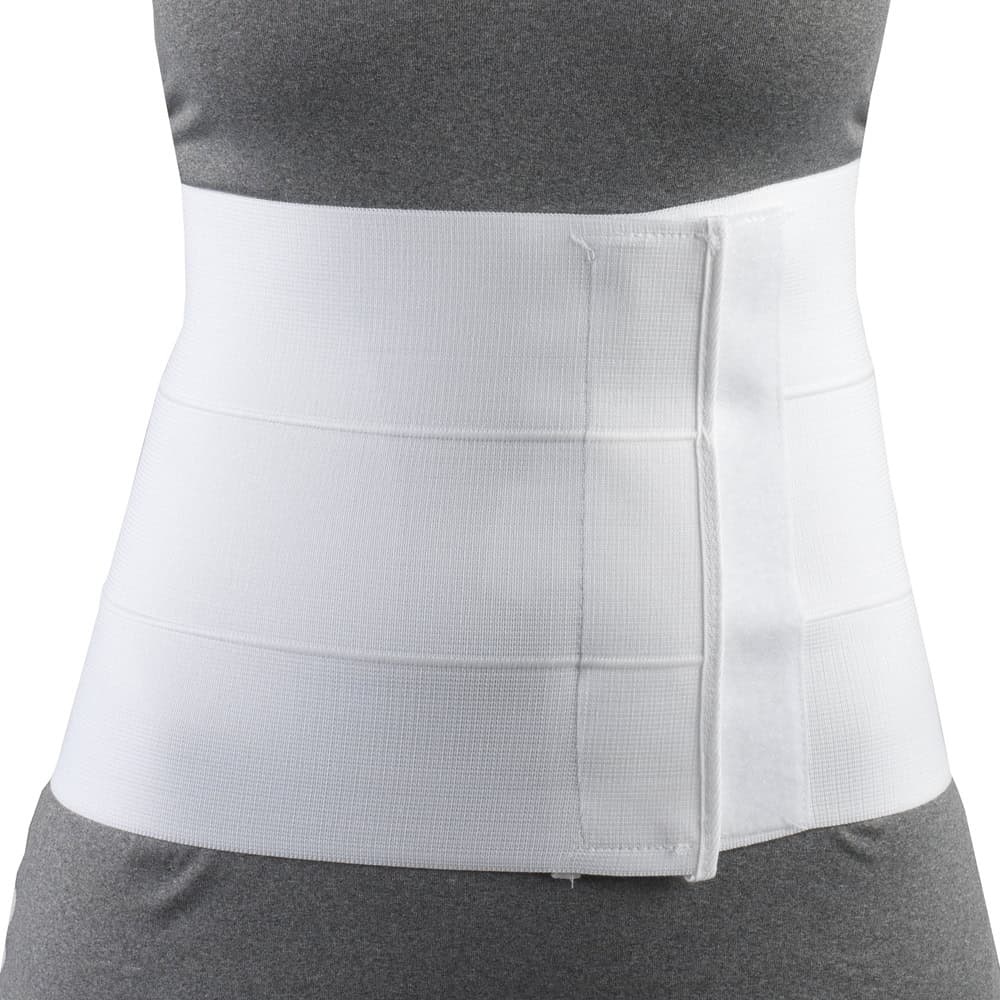
- Three-Panel Construction – hinged tri-section design contours to body curves and allows natural movement without bunching or rolling
- 9-Inch Width – provides full abdominal coverage from below ribs to upper hips for comprehensive support
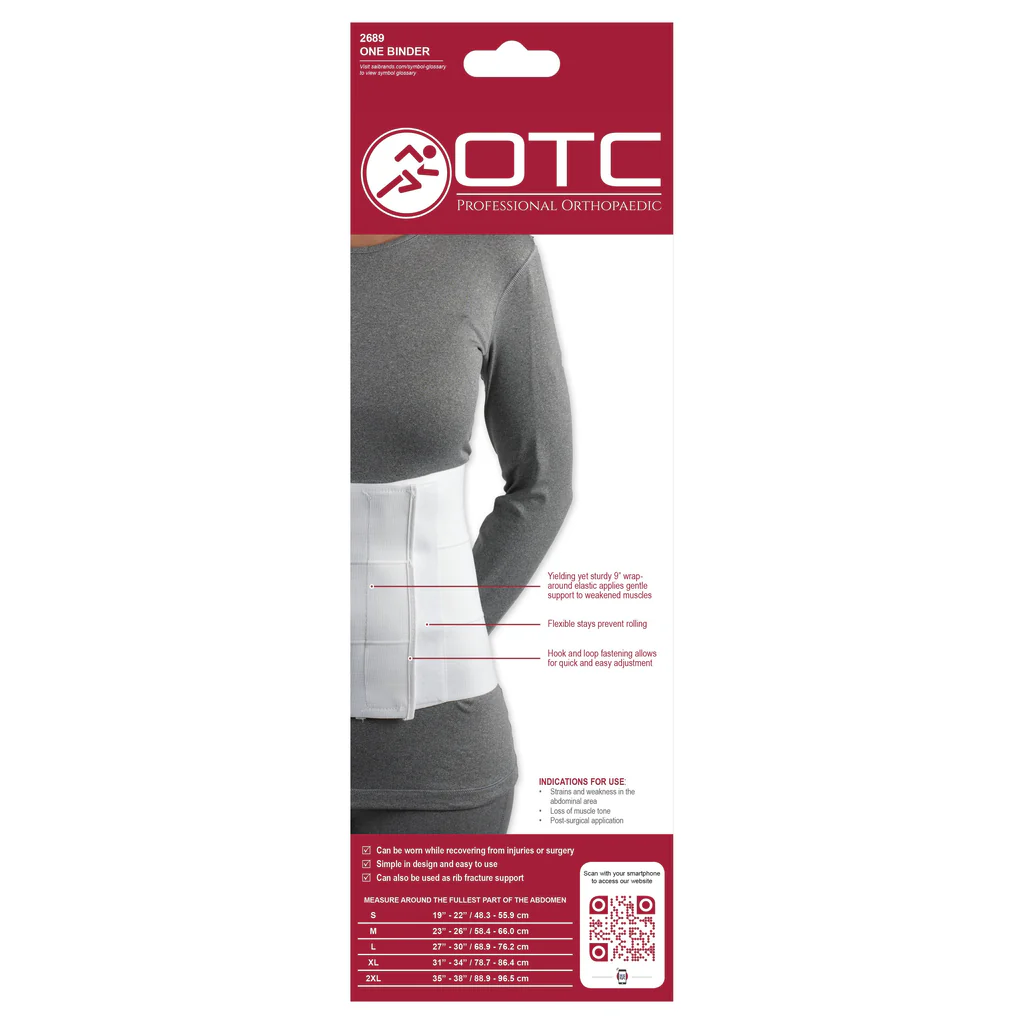
- Extra Large Sizing – fits waist/hip measurements approximately 31-34 inches (78.7-86.4 cm)
- Hook & Loop Closure – adjustable fastening system allows custom fit and easy reapplication throughout the day
- Elastic Compression – lightweight elastic material provides firm yet comfortable compression
- Latex-Free Materials – safe for users with latex allergies or sensitivities
- Low-Profile Design – thin, discreet construction wears comfortably under clothing without bulk
- Breathable Fabric – allows air circulation to reduce heat buildup and moisture
- Reinforced Edges – finished edges prevent rolling and maintain shape during wear
- Machine or Hand Washable – easy care maintenance for extended use
Benefits
- Supports Post-Surgical Healing – compression reduces swelling, supports incision sites, and provides stability during movement after abdominal surgeries
- Aids Post-Partum Recovery – gentle compression helps separated abdominal muscles (diastasis recti) and provides support during post-delivery healing
- Reduces Pain and Discomfort – compression stabilizes weakened or strained muscles, reducing pain during daily activities
- Improves Posture – abdominal support encourages upright posture, reducing strain on lower back
- Allows Natural Movement – three-panel design flexes with body during sitting, bending, and walking without restriction
- Accommodates Swelling Changes – adjustable closure lets you modify compression as post-surgical or post-partum swelling increases or decreases
- Prevents Rolling and Bunching – tri-panel construction stays in place during movement, eliminating constant readjustment
- Enhances Confidence – supportive compression provides reassurance during recovery and helps clothes fit more comfortably
- Protects Incision Sites – gentle compression and coverage protect surgical sites from accidental bumps or strain
- Promotes Better Breathing – unlike rigid binders, flexible design allows comfortable breathing and doesn't restrict diaphragm movement
- Offers Discreet Support – thin profile wears invisibly under clothing for public outings or work
- Eliminates Latex Concerns – latex-free construction prevents allergic reactions during extended wear
Clinical Applications
✓ Post-surgical abdominal support following C-section, hysterectomy, appendectomy, hernia repair, or other abdominal procedures
✓ Post-partum recovery support for diastasis recti (abdominal muscle separation) after pregnancy
✓ Support during post-delivery healing to reduce discomfort and promote muscle recovery
✓ Management of abdominal muscle strain or weakness from physical activity or aging
✓ Support for umbilical or ventral hernia (as directed by healthcare provider)
✓ Compression following liposuction, tummy tuck, or other cosmetic abdominal procedures
✓ Support during physical therapy for core muscle rehabilitation
✓ Pain management for chronic lower back pain related to weak abdominal muscles
✓ Temporary support during long periods of standing or physical activity
✓ Post-injury support for abdominal muscle tears or strains
✓ Support for conditions causing abdominal weakness (post-illness, prolonged bed rest)
Usage & Application
Sizing and Measurement
- Measure Correctly: Using a soft measuring tape, measure around the fullest part of your abdomen (typically at belly button level) while standing. Wear only undergarments for accurate measurement.
- Extra Large Sizing: This size fits waist/hip measurements approximately 31-34 inches (78.7-86.4 cm).
- Between Sizes: If your measurement falls between sizes, consider:
- Choose smaller size for firmer compression (if tolerable)
- Choose larger size if you're post-surgical with significant swelling or need gentler compression
- Consult healthcare provider if uncertain
- Remeasure Regularly: During recovery, swelling decreases and body shape changes—remeasure every 2-3 weeks and adjust size if needed
Before First Use
- Inspect Binder: Check for any defects, loose stitching, or damage to hook & loop fasteners.
- Wash (Optional): Some users prefer to wash binder before first use. Hand wash gently in cool water with mild detergent, rinse thoroughly, and air dry flat.
- Review Instructions: Read manufacturer's care label and any included instructions.
- Consult Healthcare Provider: If using post-surgically, confirm with surgeon or physician that abdominal binder use is appropriate and get specific guidance on wear schedule and compression level.
Application Procedure
- Position Yourself: Stand upright in front of a mirror if possible. Application is easiest while standing, though you may sit if standing is uncomfortable.
- Identify Panels: Note the three-panel construction—the binder will have hinged sections that allow it to contour to your body.
- Wrap Around Body: Hold binder with hook (rough) side facing outward. Position the center panel over your abdomen, ensuring bottom edge sits just above hip bones and top edge extends to just below bra line or ribs.
- Center Over Abdomen: Ensure binder is centered on your body (not twisted or shifted to one side). The three panels should align with your natural body curves.
- Bring Ends Together: Wrap one end of binder around to your back, then bring the other end around to overlap in front. The hook & loop sections should meet for secure closure.
- Adjust Tension: Pull the overlapping end to achieve desired compression level:
- Snug enough to provide support and stay in place
- Not so tight that breathing is restricted or skin bulges significantly above/below edges
- You should be able to slip 2 fingers between binder and skin comfortably
- Secure Fasteners: Press hook & loop closure firmly along entire overlapping section to ensure secure attachment.
- Check Positioning: Verify binder hasn't twisted, rolled, or shifted. Bottom edge should still be above hips, top edge below ribs. Three panels should contour smoothly around abdomen.
- Move and Adjust: Take a few steps, sit down, and stand up. If binder rolls, bunches, or shifts, remove and reapply with better positioning.
- Check Comfort: Binder should feel supportive but not painful. If you experience sharp pain, significant discomfort, numbness, or difficulty breathing, loosen or remove immediately.
Wear Guidelines
Post-Surgical Use:
- Initial Wear: Begin wearing as directed by surgeon (often immediately post-surgery or within first few days)
- Duration: Typically worn continuously (except when showering) for first 2-6 weeks post-surgery, then gradually reduced
- Sleep: Many surgeons recommend wearing during sleep for first 1-2 weeks, then discontinuing nighttime use. Follow your specific medical guidance.
- Activity: Wear during all upright activities (walking, standing, sitting). Remove when lying flat for extended periods (if cleared by surgeon).
- Gradual Discontinuation: Wean off binder use gradually over 1-2 weeks as healing progresses and strength returns
Post-Partum Use:
- Start Time: Generally safe to begin wearing within first few days after vaginal delivery, or 2-3 days after C-section (once surgeon approves)
- Duration: Wear during daytime hours for first 6-12 weeks post-partum, or as needed for comfort
- Sleep: Usually not necessary to wear during sleep after first week, unless healthcare provider advises otherwise
- Nursing Consideration: Ensure binder doesn't interfere with comfortable nursing positioning
General Support Use:
- As Needed: Wear during activities requiring abdominal support (exercise, lifting, long periods of standing)
- Duration: Limit continuous wear to 8-12 hours per day unless directed otherwise by healthcare provider
- Sleep: Not typically worn during sleep for general support purposes
- Exercise: May wear during light exercise for additional support, but avoid during high-intensity activities without medical guidance
Wear Time Recommendations:
- Remove every 2-3 hours initially to check skin condition and prevent irritation
- Once accustomed to binder, can wear for longer continuous periods (up to 8-12 hours)
- Always remove if experiencing pain, excessive sweating, skin irritation, or breathing difficulty
- Don't wear during bathing or swimming
Adjusting Throughout the Day
- Swelling Changes: Post-surgical and post-partum swelling fluctuates throughout the day (more swelling in evening). Loosen binder if it becomes uncomfortably tight as swelling increases.
- After Eating: You may need to loosen slightly after large meals for comfort.
- Activity Changes: Adjust compression when transitioning between activities (sitting to standing, resting to walking).
- Reapply as Needed: Hook & loop closure allows easy removal and reapplication. If binder shifts or loosens during wear, simply remove and reapply for proper positioning.
Skin Care and Monitoring
- Check Skin Regularly: Inspect skin under binder at least twice daily for redness, irritation, blisters, or breakdown.
- Keep Skin Clean and Dry: Ensure skin is clean and completely dry before applying binder. Moisture trapped under compression can cause irritation or fungal infections.
- Use Barrier if Needed: If experiencing irritation, apply thin layer of moisture barrier cream to skin before wearing (avoid thick lotions that create slippery surface).
- Wear Undershirt (Optional): Some users prefer to wear thin cotton undershirt beneath binder to absorb perspiration and reduce friction. Ensure shirt is smooth without wrinkles.
- Address Irritation Promptly: If redness persists more than 30 minutes after removing binder, or if blisters/sores develop, discontinue use and consult healthcare provider.
Care and Cleaning
Hand Washing (Recommended):
- Fill basin with cool or lukewarm water and add small amount of mild detergent (avoid harsh chemicals or bleach)
- Submerge binder and gently agitate. Do not wring, twist, or scrub aggressively
- Rinse thoroughly in cool water until all soap is removed
- Gently press out excess water (do not wring or twist)
- Lay flat on clean towel to air dry away from direct heat or sunlight
- Allow to dry completely before next use (typically 12-24 hours)
Machine Washing (If Manufacturer Allows):
- Place binder in mesh laundry bag to protect hook & loop fasteners
- Fasten hook & loop closure before washing to prevent snagging
- Use gentle cycle with cold water and mild detergent
- Do not use bleach or fabric softener
- Remove promptly after cycle ends
- Air dry flat—do not tumble dry, as heat can damage elastic fibers
Drying:
- Always air dry—never use clothes dryer, as heat damages elastic and reduces compression effectiveness
- Do not hang to dry, as this can stretch elastic—lay flat on towel
- Keep away from direct heat sources (radiators, heating vents, direct sunlight)
- Ensure completely dry before wearing to prevent skin irritation from moisture
Cleaning Frequency:
- Wash every 2-3 days during regular use, or daily if sweating heavily
- If you have two binders, alternate between them for continuous wear while one is being washed
- Keep binder clean to prevent skin irritation and bacterial growth
Storage:
- Store in cool, dry place away from direct sunlight
- Avoid folding in same place repeatedly (can damage elastic fibers)
- Keep away from sharp objects that could snag fabric
- Replace if elastic becomes stretched, worn, or loses compression effectiveness
Troubleshooting
Binder Rolls Up or Down:
- Ensure you selected correct size—too large will roll, too small will compress excessively
- Check positioning—bottom should sit above hip bones, top below ribs
- Verify binder is centered (not twisted or shifted to one side)
- Three-panel design should contour smoothly without forcing binder into awkward position
- Try applying while standing rather than sitting for better initial positioning
- If rolling persists, consider sizing up (if binder is too small) or down (if too large)
Binder Feels Too Tight:
- Remove immediately if experiencing pain, numbness, or difficulty breathing
- Loosen hook & loop closure to reduce compression
- Check that you're not overlapping binder excessively—moderate overlap is sufficient
- Swelling may have increased—normal post-surgically or post-partum. Loosen as needed throughout day
- Verify you selected correct size—measure again to confirm
- If binder remains uncomfortably tight even when loosened, you may need next size up
Binder Feels Too Loose:
- Ensure you're overlapping hook & loop sections adequately for secure closure
- Check that binder hasn't stretched from extended wear or improper laundering
- You may have selected size too large—remeasure to verify correct size
- As swelling decreases during recovery, binder may feel looser—this is normal. May need to size down after several weeks
- If elastic has lost compression effectiveness, binder may need replacement
Skin Irritation or Rash:
- Remove binder immediately and inspect skin
- Allow skin to air and recover before reapplying
- Ensure skin is clean and completely dry before wearing
- Consider wearing thin cotton undershirt beneath binder
- Check that laundry detergent isn't irritating skin—switch to hypoallergenic detergent
- Apply moisture barrier cream to protect skin
- If irritation persists, consult healthcare provider
- Discontinue use if severe irritation, blistering, or open sores develop
Binder Causes Back Pain:
- Check positioning—binder should support abdomen without forcing unnatural posture
- Ensure binder isn't too tight, which can cause muscle tension
- Verify you're wearing correct size
- If back pain persists, consult healthcare provider or physical therapist—may need alternative support or posture correction
Breathing Feels Restricted:
- Loosen binder immediately
- Check that top edge isn't positioned too high (should be below ribs, not compressing ribcage)
- Verify binder isn't wrapped excessively tight
- Take several deep breaths—if still difficult, remove binder and rest
- Do not wear binder so tight that breathing is compromised
- Consult healthcare provider if breathing difficulty continues even with proper positioning
Binder Shifts During Activity:
- Ensure correct size—too large will shift, too small will be uncomfortable
- Check application positioning—should be centered and level
- Verify hook & loop closure is secured along entire overlapping section
- May need to reapply binder after changing positions (sitting to standing)
- Some shifting is normal during vigorous activity—readjust as needed
Hook & Loop Fasteners Losing Grip:
- Clean fasteners regularly—lint and debris reduce holding power. Use soft brush or tape to remove buildup
- Ensure you're pressing hook & loop sections together firmly during application
- Check that fasteners aren't damaged or worn—if significantly worn, binder may need replacement
- Avoid getting lotions or oils on fasteners, which reduce adhesion
When to Discontinue Use
Stop Using Binder and Consult Healthcare Provider If:
- Severe pain, numbness, or tingling develops
- Skin breakdown, open sores, or blistering occurs
- Breathing becomes significantly restricted
- Circulation appears compromised (fingers/toes become cold, numb, or discolored)
- Swelling increases dramatically despite binder use
- Signs of infection develop (fever, redness, warmth, drainage at incision site)
- Binder causes more discomfort than benefit
Planned Discontinuation:
- Follow healthcare provider's guidance on when to stop using binder
- Wean off gradually by reducing wear time over 1-2 weeks
- Continue monitoring abdominal strength—if weakness or pain returns, discuss with provider
Special Considerations
Post-Surgical Users:
- Always follow surgeon's specific instructions regarding binder use—guidelines above are general
- Do not apply binder over unhealed incisions without medical approval
- Monitor incision sites carefully for signs of complications
- Attend all follow-up appointments to assess healing progress
Post-Partum Users:
- Abdominal binders support healing but do not replace exercise or physical therapy for diastasis recti
- Consult healthcare provider before beginning any exercise program post-delivery
- If C-section incision is still healing, ensure binder doesn't irritate incision line
- Combine binder use with proper posture and core strengthening for best recovery results
Users with Hernias:
- Abdominal binders may provide temporary support but do not cure hernias
- Consult healthcare provider about surgical options and appropriate management
- Monitor hernia site carefully—seek immediate care if hernia becomes painful, changes color, or cannot be gently pushed back
Long-Term Use:
- Abdominal binders are generally intended for temporary support during recovery
- Prolonged use beyond recommended timeframe may lead to muscle weakening (muscles "rely" on binder rather than strengthening)
- Work with physical therapist to develop core strengthening program to replace binder support
- If considering extended use beyond 3 months, discuss with healthcare provider
Pregnancy Warning
- Do not use abdominal binders during pregnancy unless specifically directed by healthcare provider
- Post-partum use only (after delivery)
Technical Specifications
- Type: Women's abdominal binder with three-panel construction
- Size: Extra Large – fits waist/hip measurements approximately 31-34 inches (78.7-86.4 cm)
- Width: 9 inches (approximately 23 cm) of vertical coverage
- Material: Lightweight elastic fabric with hook & loop closure
- Construction: Three-panel (tri-section) hinged design for contouring flexibility
- Closure Type: Hook & loop (Velcro-style) fastening system
- Latex Content: Latex-free (safe for users with latex allergies)
- Color: Typically beige, tan, or white (verify with supplier)
- Design: Low-profile, discreet construction suitable for wearing under clothing
- Breathability: Breathable elastic material allows air circulation
- Edge Finish: Reinforced edges prevent rolling and maintain shape
- Care: Hand or machine washable (gentle cycle); air dry flat
- Intended Use: Post-surgical support, post-partum recovery, abdominal muscle weakness, strain management
- Brand: OTC (Ohio Medical)
- Gender: Designed specifically for women's anatomy
- Compression Level: Moderate compression (firm support without rigid restriction)
- Reusability: Durable construction for extended use throughout recovery period (typically 6-12 weeks)
- Adjustability: Multiple fit adjustments via hook & loop closure to accommodate swelling changes