Slideshow Items

  • Accessories
  • compression-stockings-garments/accessories
  • Compression Stockings & Garments
  • compression-stockings-garments
RA-Rehabilitation Advantage

  |  

Sock Aid Slider for Putting Socks On Wide (10" x 5")

C$20.99
In stock online
In store: Check availability

Available in store

UPC Code: 847102020174
SKU: 847102020174

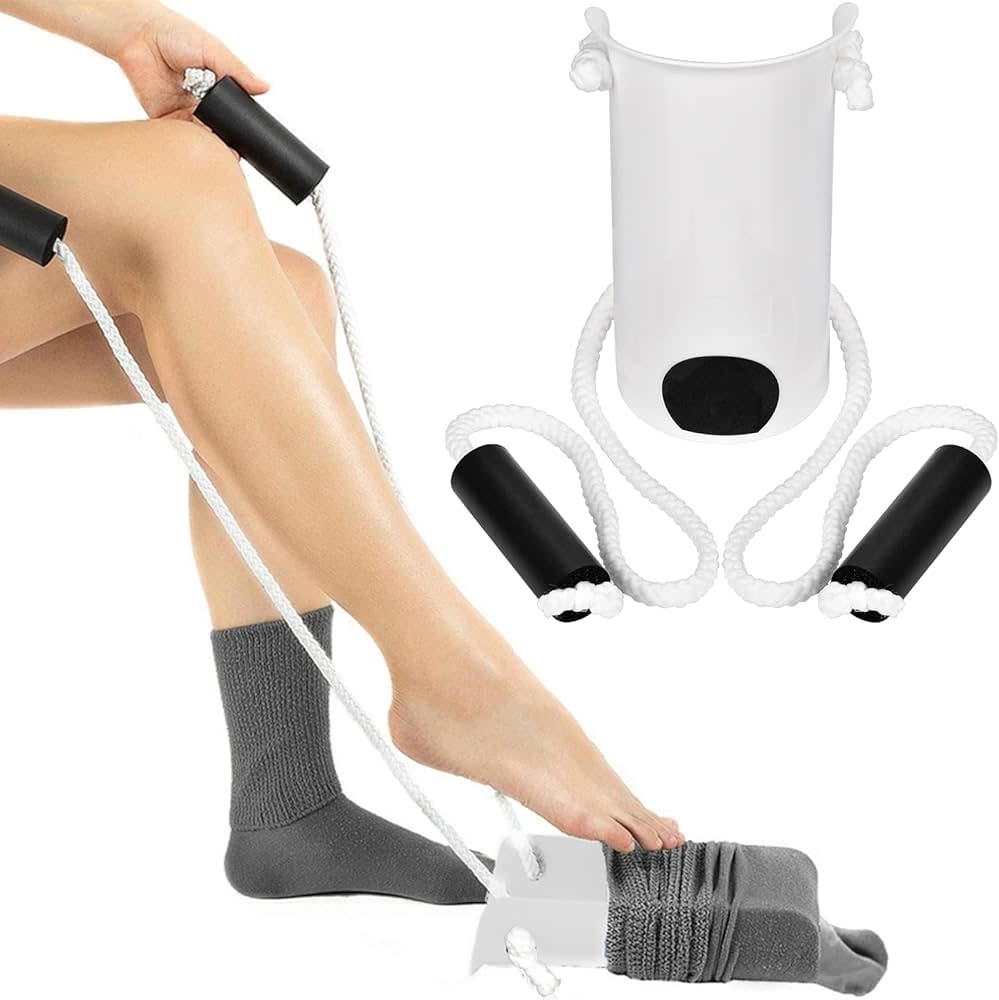
The Sock Aid Slider Wide 10 by 5 inch is a wide-cradle reusable flexible plastic dressing aid with long pull straps for independent sock application without bending or straining for seniors, arthritis, back pain, and limited-mobility users.

    • Why a Wide Sock Aid for Independent Daily Dressing?

      The ability to dress independently — including putting on socks — is one of the specific activities of daily living (ADL) that occupational therapists use to measure functional independence, and it is one of the first ADLs that becomes difficult or unsafe when bending range of motion is restricted by hip surgery recovery, chronic back pain, hip osteoarthritis, lumbar stenosis, or lower limb oedema. Putting on a sock unaided requires the individual to flex the hip to approximately 90 degrees or beyond while simultaneously maintaining balance and using both hands to manipulate the sock over the foot and heel — a combined demand of hip flexion, lumbar flexion, balance, and fine motor control that, when any one element is compromised, either becomes painful, risks a fall, or exceeds the precautionary limits placed on hip flexion following total hip replacement surgery. For individuals in these circumstances, the standard response of "just ask for help" creates a cycle of caregiver dependence for a task that, with the right adaptive equipment, can remain within the individual's independent capacity.

      The sock aid mechanism works by removing the need for hip and lumbar flexion from the sock-donning sequence entirely. The user loads the sock onto the curved plastic cradle while sitting upright — a position that requires no hip flexion — then lowers the cradle to the floor using the long pull straps while remaining seated. The foot is inserted into the open mouth of the loaded cradle, and a steady pull on the straps draws the cradle upward, guiding the sock over the heel and onto the foot without the user bending forward at all. The entire motion occurs in the sagittal plane of pulling and is controlled entirely by the hands and arms — the hip remains at or near the neutral seated angle throughout. This kinematic redesign of the sock-donning task is the core functional innovation that the sock aid provides, and it is why occupational therapists commonly prescribe or recommend sock aids as part of both post-operative hip and knee recovery equipment packages and chronic mobility management programs.

      The wide 10 inch by 5 inch cradle dimension of this specific model is the specification that distinguishes it from standard-width sock aids and makes it appropriate for the full range of sock types and foot sizes that users across the mobility-limited population actually wear. Standard-width sock aids are designed around the dimensions of regular thin dress or casual socks, and they present challenges when the user wears compression stockings — which are thicker, stiffer, and require more force to open and position on the cradle — winter wool socks, diabetic socks with thicker padding, or wide-fitting socks accommodating foot oedema or wide-width footwear. The wider cradle of the 10 by 5 inch design accommodates the full circumference of these thicker and larger sock types without requiring the user to stretch the sock excessively to fit the cradle, and the wider opening makes foot insertion more forgiving for users with reduced foot sensitivity, larger foot dimensions, or ankle mobility restrictions that make precise foot placement more difficult.

      The flexible plastic construction of the sock aid cradle serves a dual purpose that is specific to the mechanics of sock application. A rigid cradle would resist the conformational change required as the sock is pulled over the heel — the heel is the widest point of the foot, and the sock must briefly expand over this dimension before contracting to the narrower ankle. The flexible plastic deforms slightly under the pull load, allowing the cradle to release the sock at the heel transition without requiring excessive strap force that could pull the user forward off balance. After heel clearance, the cradle springs back to its original curvature as it continues up the ankle. This controlled flexibility is engineered into the cradle material specifically for this release-on-demand function, and it is what distinguishes a purpose-designed sock aid from improvised alternatives.

      Key Features

      • Wide 10" × 5" cradle accommodates compression stockings, winter socks, diabetic socks, and wide or thick sock varieties
      • Flexible molded plastic shell holds the sock open for foot insertion and releases smoothly over the heel during application
      • Long fabric or cord pull straps allow controlled cradle positioning and sock drawing from a fully upright seated position
      • Smooth inner surface minimizes friction during the sock-drawing motion for controlled effort and consistent application
      • Reusable durable construction supports daily use as a long-term independent dressing tool
      • Lightweight design suitable for travel, homecare, and facility use without adding significant weight to daily equipment
      • Promotes independent dressing for individuals with hip precautions, back pain, arthritis, and lower limb mobility limitations
      • Compatible with standard socks, compression hosiery, ankle support socks, and therapeutic footwear socks

      Benefits

      • Eliminates the hip and lumbar flexion requirement from sock donning — the specific motion most restricted after hip surgery
      • Wider cradle reduces the sock stretching and positioning difficulty associated with compression stockings and thick winter socks
      • Independent daily dressing preserves dignity and reduces reliance on caregiver assistance for a routine personal care task
      • Reduces risk of the forward fall that can occur when unsteady individuals attempt to reach their feet unaided
      • Supports post-operative hip precaution compliance by providing a safe hip-neutral sock application alternative
      • Reduces joint loading at the hip, knee, and lumbar spine compared to unassisted sock application in compromised users
      • Simple and intuitive mechanism requires minimal instruction to learn and integrate into daily dressing routine
      • Reusable format provides cost-effective ongoing independence support without recurring supply cost

      Clinical and Home Use Applications

      ✓ Post-operative total hip replacement recovery where hip flexion beyond 90 degrees is restricted during precaution period ✓ Post-operative total knee replacement recovery where knee flexion and forward reaching are restricted ✓ Lumbar disc disease, spinal stenosis, and chronic low back pain where forward bending causes pain or neural symptoms ✓ Hip osteoarthritis where hip flexion range of motion is reduced below the 90 degrees required for unassisted sock donning ✓ Compression stocking application for individuals with venous insufficiency and lower limb oedema requiring daily hosiery use ✓ Occupational therapy assessment and prescription as an ADL adaptive equipment recommendation ✓ Rehabilitation program discharge equipment package for hip and knee surgical patients returning to home care ✓ Homecare and personal support worker programs where independence-promoting equipment reduces care visit duration ✓ Seniors with age-related flexibility decline for whom sock donning has become difficult or unsafe without forward bending ✓ Individuals with obesity where body habitus limits forward reach to the foot without significant musculoskeletal strain ✓ Neurological conditions including Parkinson's disease and stroke where balance and fine motor coordination limit sock donning ✓ Facility daily living aids programs in long-term care where residents with limited mobility benefit from dressing independence

      Usage & Application

      Loading the Sock onto the Cradle Sit in a stable chair with a firm seat that supports an upright, neutral hip position. Hold the sock aid cradle in both hands with the curved opening facing upward and the straps hanging down. Stretch the mouth of the sock open wide and work it over the curved top of the cradle, pulling it down over the sides until the sock toe is seated at the bottom of the cradle and the sock cuff is turned down evenly around the top opening edge. The wider 10 by 5 inch cradle accommodates compression stockings by providing more surface area to work the stocking over — take the additional time needed to seat the stocking fully on the cradle before lowering it to the floor, as partial seating that leaves the stocking bunched will cause it to pull off the cradle before clearing the heel. The straps should be oriented above the cradle, hanging from your hands, ready to lower the cradle to the floor.

    • No reviews yet

      Add yours

    Testimonials from Google

    See all reviews

    Your cart — 0

    You cart is currently empty

    Login