Slideshow Items

  • Socks & Hosiery
  • compression-stockings-garments/socks-hosiery
  • Compression Stockings & Garments
  • compression-stockings-garments
SGV-SIGVARIS

  |  

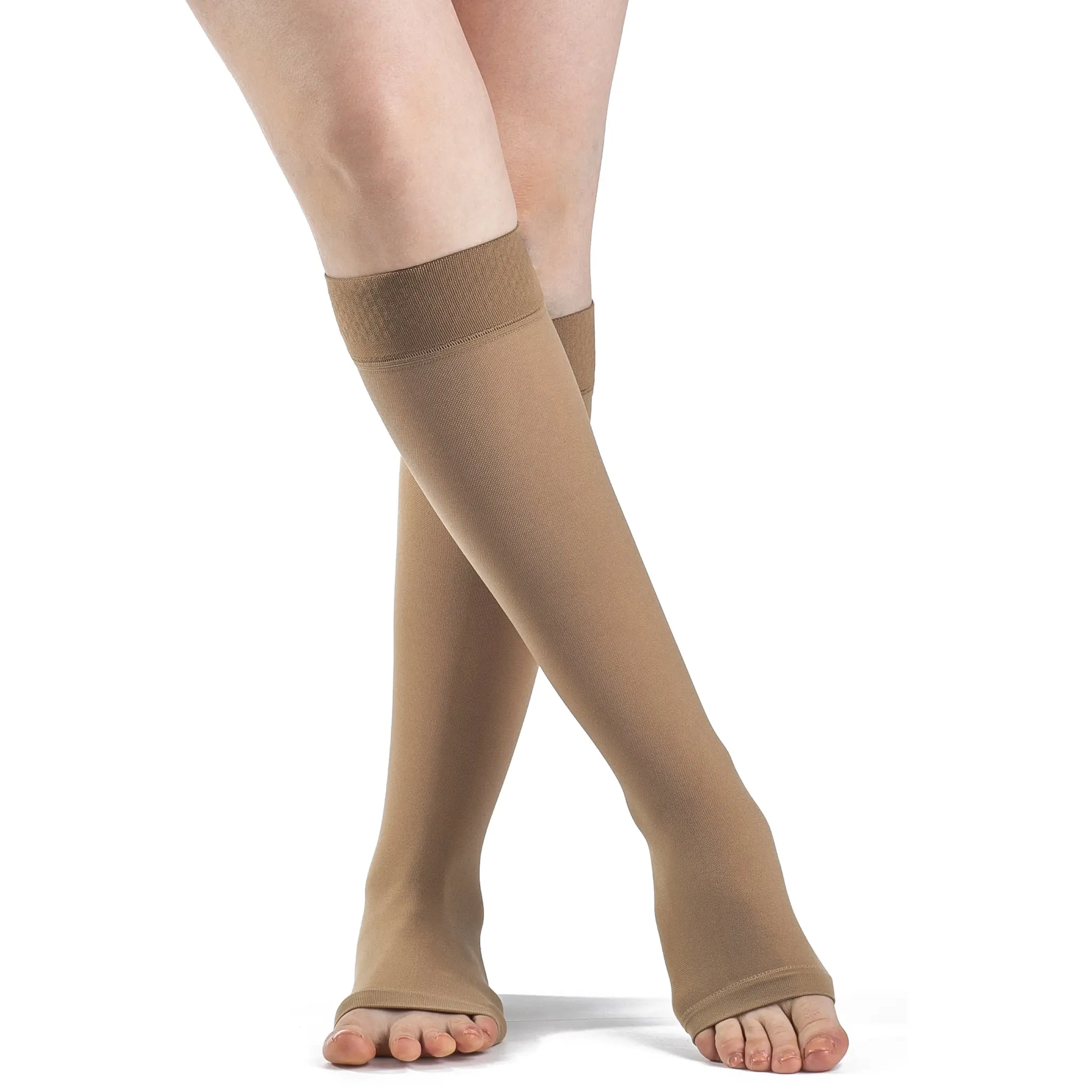
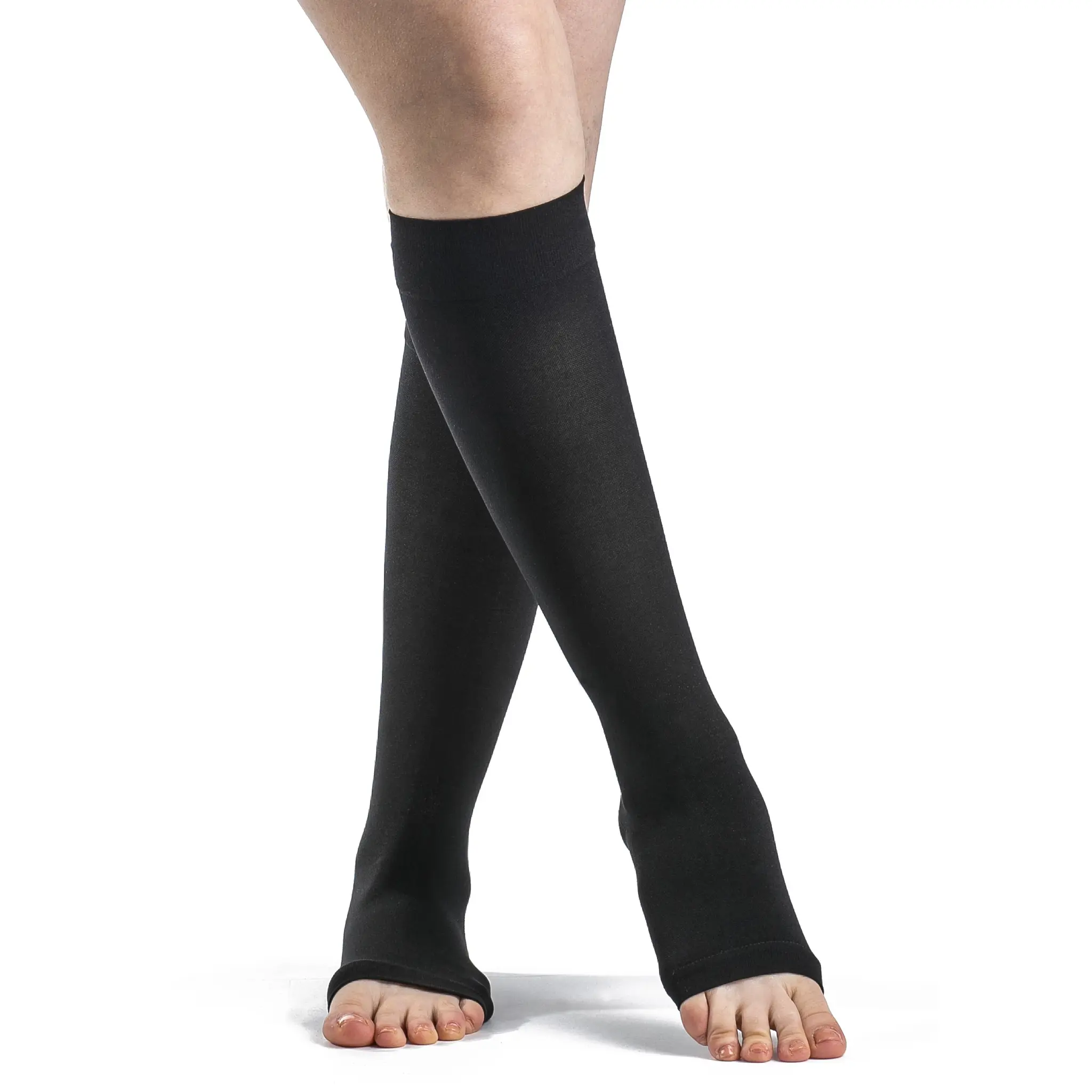
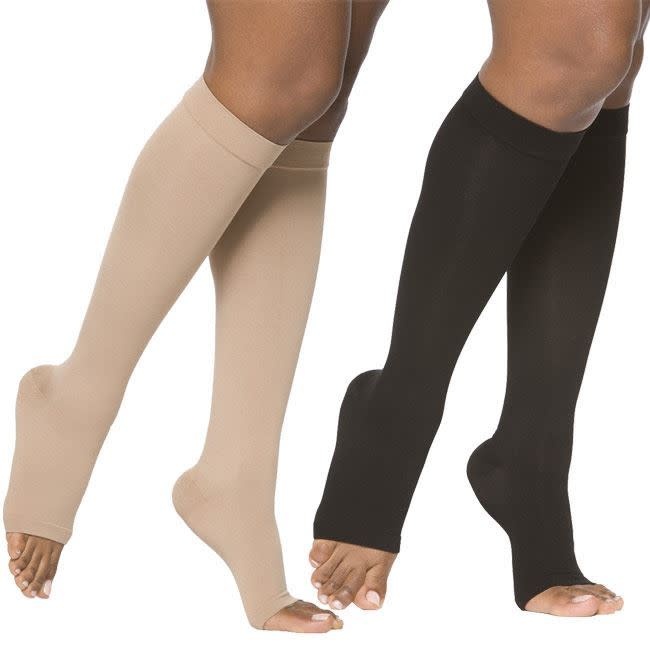
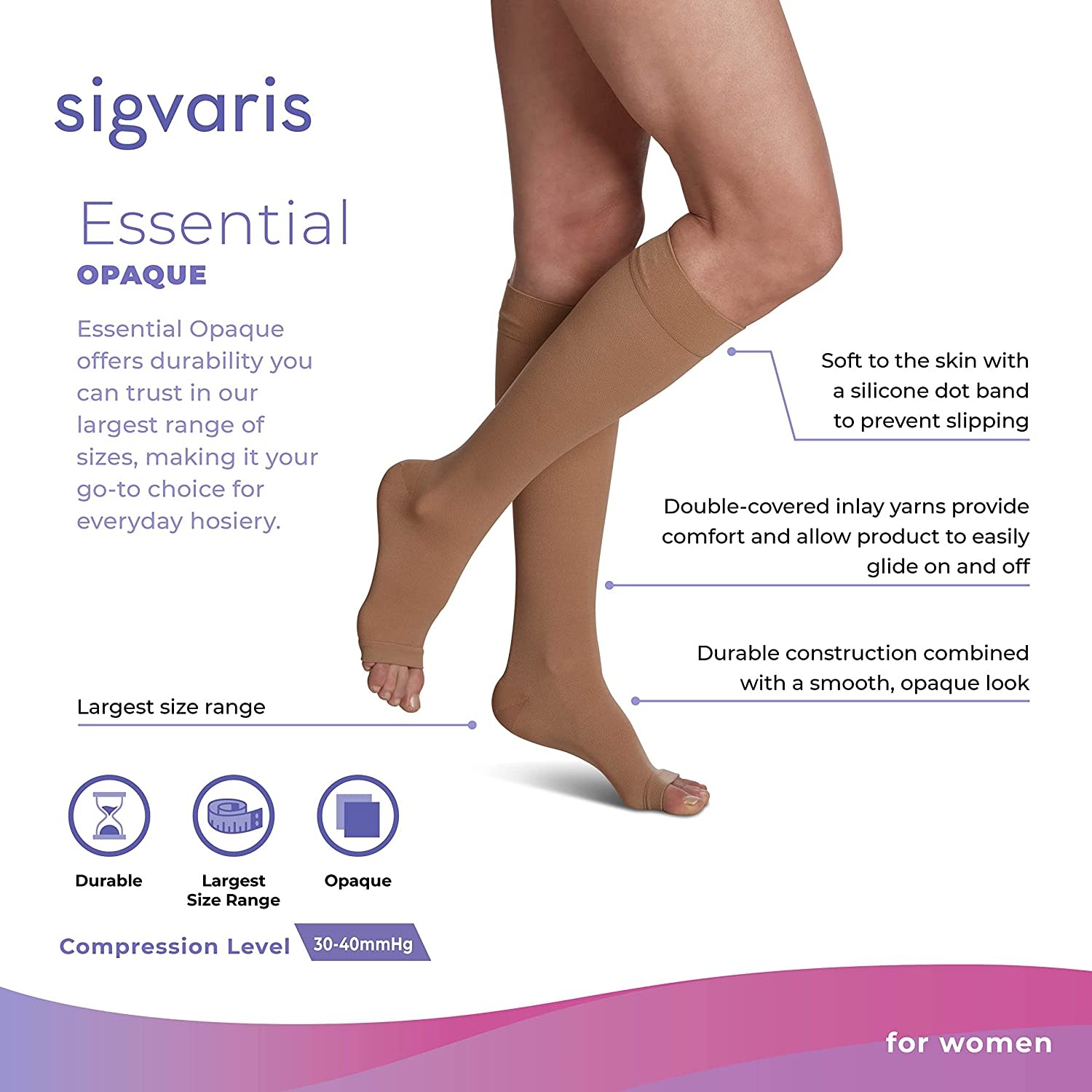
Essential Opaque Knee High 30-40mmHg Open Toe

C$109.00
In stock online
In store: Check availability

Available in store

UPC Code: 745129230371
SKU: 863CMSO66/P

High-compression support designed for advanced venous conditions. Essential Opaque Knee High Open Toe stockings deliver firm 30–40 mmHg graduated compression with a durable, professional opaque knit finish and a breathable open-toe design

    • Why Open Toe for Prescription-Strength Compression

      Open-toe compression stockings address critical practical and medical considerations in Class 3 (30-40 mmHg) prescription-strength compression therapy. The open-toe design provides essential benefits that significantly impact patient comfort, compliance, and clinical outcomes in advanced venous disease management. Unlike closed-toe stockings, the open-toe construction eliminates pressure on the toes and forefoot, preventing complications in patients with toe deformities, sensitive feet, diabetic neuropathy, or circulatory concerns affecting the extremities.

      For patients requiring firm 30-40 mmHg compression, toe comfort becomes increasingly important as the overall compression level intensifies. The open-toe design allows natural toe positioning and movement, preventing the cramped feeling that can occur with closed-toe styles at high compression levels. This is particularly valuable for patients with hammertoes, bunions, Morton's neuroma, or other toe conditions that make closed-toe compression intolerable. Additionally, the open-toe style provides visual inspection access—patients and healthcare providers can monitor toe color, temperature, and circulation throughout the day, which is crucial safety monitoring for prescription-strength compression.

      The breathability advantage of open-toe design becomes more significant with Class 3 compression. Firmer compression generates more heat and moisture at the foot level, and the open-toe construction provides essential ventilation that keeps feet cooler and drier. This reduces the risk of fungal infections, skin maceration, and the uncomfortable clammy feeling that often causes patients to remove compression prematurely. For patients wearing compression 12-16 hours daily as typically prescribed with 30-40 mmHg therapy, this breathability translates directly to improved compliance and better therapeutic outcomes.

      The opaque knit construction serves dual purposes: providing the necessary durability to withstand the stress of firm compression while offering cosmetic concealment of varicose veins, skin discoloration, and edema that commonly accompany advanced venous disease. The professional appearance reduces self-consciousness, enabling patients to wear their prescribed compression confidently in work and social settings, further supporting consistent use and therapeutic success.

      Key Features & Benefits

      Prescription-Strength Graduated Compression (30-40 mmHg)

      • Class 3 medical-grade compression for advanced venous conditions
      • Maximum therapeutic pressure at ankle gradually decreasing up the leg
      • Clinically proven efficacy for severe chronic venous insufficiency
      • Supports venous valve function and reduces venous hypertension
      • Prevents progression of advanced venous disease
      • Essential for post-thrombotic syndrome management
      • Reduces risk of venous ulcer development or recurrence

      Open-Toe Construction Benefits

      • Eliminates toe pressure and constriction at high compression levels
      • Allows natural toe positioning and movement throughout the day
      • Provides visual access for circulation and safety monitoring
      • Accommodates toe deformities, bunions, hammertoes without discomfort
      • Essential for patients with diabetic neuropathy requiring toe inspection
      • Compatible with sandals, open-toed shoes, and various footwear styles
      • Reduces heat and moisture buildup at forefoot

      Durable Opaque Knit Construction

      • Heavy-duty fabric withstands stress of firm 30-40 mmHg compression
      • Maintains compression integrity through extended daily wear
      • Resists runs, snags, and premature deterioration
      • Opaque coverage conceals varicose veins and skin discoloration
      • Professional matte finish appropriate for work environments
      • Shape retention through repeated compression and washing cycles
      • Long-lasting durability provides excellent value

      Reinforced Stress Zones

      • Extra reinforcement at heel for durability during daily wear
      • Strengthened construction at high-wear areas
      • Extends overall lifespan of stockings
      • Maintains therapeutic compression despite daily stress
      • Resists breakdown at critical pressure points
      • Professional-grade construction quality

      Knee-High Length Coverage

      • Appropriate length for most lower leg venous conditions
      • Easier to apply than thigh-high styles at this compression level
      • More practical for daily wear than full-length compression
      • Reduces application difficulty while maintaining therapeutic benefit
      • Comfortable behind-knee fit without constriction
      • Stays in place throughout active day

      Medical-Grade Construction Standards

      • Manufactured to medical device compression standards
      • Consistent graduated pressure verified through testing
      • Quality control ensures therapeutic efficacy
      • Professional-grade materials and construction
      • Meets regulatory requirements for Class 3 compression
      • Suitable for insurance reimbursement with prescription

      Professional Appearance

      • Opaque finish looks professional in work environments
      • Discreet appearance under business or casual attire
      • Reduces self-consciousness about medical compression
      • Neutral colors coordinate with various wardrobes
      • Enables confident wear in social and professional settings
      • Supports consistent compliance through acceptable aesthetics

      Clinical Applications

      Appropriate for patients with prescription for: ✓ Severe chronic venous insufficiency (CVI) CEAP class C4-C6 ✓ Active or healed venous leg ulcers requiring compression therapy ✓ Post-thrombotic syndrome with significant venous damage ✓ Severe varicose veins with substantial symptoms and complications ✓ Significant leg lymphedema requiring firm compression management ✓ Advanced venous disease unresponsive to lower compression levels ✓ Post-surgical compression following venous procedures (as directed) ✓ Severe leg edema requiring maximum standard compression therapy ✓ Prevention of venous ulcer recurrence in high-risk patients ✓ Management of lipodermatosclerosis and skin changes from CVI ✓ Severe venous eczema and dermatitis secondary to venous disease ✓ Deep venous incompetence requiring aggressive compression therapy ✓ May-Thurner syndrome management under vascular specialist care ✓ Klippel-Trenaunay syndrome with venous component (specialist-directed)

      CRITICAL: Prescription-Strength Compression Requirements This 30-40 mmHg compression level is Class 3 prescription-strength compression that REQUIRES physician prescription and professional fitting. This is not over-the-counter compression. Patients must NOT self-prescribe this compression level. Improper use of Class 3 compression can cause serious complications including tissue damage, skin necrosis, nerve compression, and circulatory compromise. MANDATORY physician evaluation before use to rule out contraindications, particularly peripheral arterial disease. Ankle-brachial index (ABI) testing typically required before prescribing 30-40 mmHg compression. Professional fitting by certified compression specialist strongly recommended and often required for insurance coverage.

      Absolute Contraindications - DO NOT USE if patient has:

      • Severe peripheral arterial disease (ABI <0.5)
      • Acute decompensated congestive heart failure with pulmonary edema
      • Acute deep vein thrombosis without therapeutic anticoagulation
      • Septic phlebitis or cellulitis
      • Advanced peripheral neuropathy preventing sensation monitoring
      • Severe dermatitis, oozing skin conditions, or infected wounds

      Relative Contraindications - Use ONLY under physician supervision:

      • Moderate peripheral arterial disease (ABI 0.5-0.8)
      • Diabetes with peripheral vascular disease
      • Controlled congestive heart failure
      • Significant arthritis limiting application ability
      • Severe obesity limiting proper fit assessment
      • Impaired mobility preventing independent application

      Usage & Application

      CRITICAL: For Prescription Compression Therapy Under Physician Direction Only: These 30-40 mmHg Class 3 compression stockings are prescription medical devices that must be used only under physician supervision. Professional fitting is mandatory. Improper use can cause serious harm.

      Mandatory Professional Fitting Requirements

      1. Physician Prescription Required:
        • Must have written prescription specifying 30-40 mmHg compression
        • Prescription should include diagnosis code and clinical justification
        • Physician must rule out contraindications before prescribing
        • ABI testing typically required to exclude arterial disease
        • Regular physician follow-up mandatory during compression therapy
      2. Professional Fitting Essential:
        • MUST be fitted by certified compression specialist or trained healthcare provider
        • Professional measurement ensures safe, therapeutic fit
        • Self-measurement NOT adequate for Class 3 compression
        • Improper sizing can cause serious complications
        • Professional fitters trained to identify contraindications and fit problems
      3. Critical Measurements:
        • Ankle circumference at narrowest point above malleolus
        • Calf circumference at widest point
        • Leg length from floor to fibular head (knee-high measurement)
        • Measurements taken in morning when swelling minimal
        • Professional assessment of leg shape and any anatomical variations
      4. Initial Fitting Evaluation:
        • Fitter assesses skin integrity and suitability for compression
        • Evaluation of patient's ability to apply/remove stockings
        • Assessment of whether donning aids or caregiver assistance needed
        • Discussion of realistic wear schedule and compliance expectations
        • Education on safety monitoring and warning signs

      Application Technique for Class 3 Compression

      IMPORTANT: 30-40 mmHg compression is significantly firmer than lower compression classes. Application requires proper technique and often donning aids. Do NOT force stockings or use excessive pulling that could damage fabric or cause injury.

      1. Optimal Application Timing:
        • Apply first thing in morning before getting out of bed
        • Legs must be elevated 10-15 minutes before application if applying later
        • NEVER apply to swollen legs (defeats compression purpose)
        • If legs already swollen, elevate until swelling subsides before applying
      2. Essential Preparation:
        • Legs must be completely clean and thoroughly dry
        • Remove ALL jewelry that might snag compression fabric
        • Ensure toenails trimmed short and filed smooth
        • Consider light dusting of talcum powder for easier application (if no skin contraindications)
        • CRITICAL: Have donning gloves ready (usually essential for Class 3 compression)
      3. Donning Aids Strongly Recommended:
        • Rubber or latex-free donning gloves provide grip without damaging fabric
        • Compression stocking donning devices (frames, applicators) often necessary
        • Professional fitter can recommend appropriate donning aids
        • Many patients CANNOT apply 30-40 mmHg without donning aids
        • Caregiver assistance may be necessary for some patients
      4. Step-by-Step Application Process:
        • Step 1: Put on donning gloves (essential for firm compression)
        • Step 2: Turn stocking inside-out down to heel pocket
        • Step 3: Hold heel pocket area with both hands
        • Step 4: Insert foot carefully, positioning heel precisely in heel pocket
        • Step 5: With open-toe design, ensure toes emerge correctly through opening
        • Step 6: Pull stocking gradually up foot in VERY small increments
        • Step 7: Work carefully over heel, ensuring proper heel pocket placement
        • Step 8: Continue pulling up ankle area very gradually
        • Step 9: Smooth all wrinkles continuously as you progress
        • Step 10: Pull up calf area slowly, working compression evenly
        • Step 11: Ensure no bunching behind knee
        • Step 12: Verify top band sits comfortably below knee without rolling
      5. Critical Fit Verification After Application:
        • Compression should feel FIRM but NOT painful
        • No wrinkles, bunches, or folds anywhere (pressure points risk)
        • Heel properly positioned in heel pocket
        • Toes have normal color and sensation through open-toe opening
        • Can wiggle toes freely without restriction
        • Top band secure but not cutting into skin
        • Stocking smooth and even all around leg
        • No twisted fabric anywhere
      6. IMMEDIATE REMOVAL Required If:
        • Severe pain or discomfort
        • Numbness, tingling, or loss of sensation
        • Toes become pale, blue, or cold
        • Excessive tightness preventing normal movement
        • Skin irritation or allergic reaction
        • Any concerning circulation changes

      Daily Wear Protocol for Prescription Compression

      • Prescribed Wear Schedule: Follow physician's specific instructions (typically all waking hours)
      • Typical Duration: 12-16 hours daily for most therapeutic regimens
      • Consistent Use Essential: Irregular use significantly reduces therapeutic benefit
      • Removal Timing: Remove before bedtime unless physician specifically prescribes nighttime wear
      • Break Periods: Do NOT remove intermittently during day (reduces efficacy)
      • Activity Compatibility: Suitable for normal daily activities, walking, standing, sitting
      • Monitoring Schedule: Check legs and feet every 2-3 hours initially, then as recommended by healthcare provider

      Safe Removal Technique

      1. Sit in comfortable position with good lighting
      2. Roll top band down slowly (do NOT pull or yank)
      3. Gradually peel stocking down leg in reverse of application
      4. Take time with removal (rushing can damage stocking or skin)
      5. Use donning gloves if needed for better grip during removal
      6. Inspect legs immediately after removal for any concerning marks or skin changes

      Mandatory Care and Maintenance for Class 3 Compression

      1. Daily Washing Required:
        • MUST wash after EVERY wearing for hygiene and compression maintenance
        • Hand wash preferred for Class 3 compression longevity
        • Use lukewarm water (hot water degrades elastic fibers)
        • Mild detergent WITHOUT bleach or fabric softeners
        • Gently squeeze water through fabric (NEVER wring or twist)
      2. Proper Drying Protocol:
        • Roll in clean towel to remove excess water
        • Lay completely flat to air dry
        • NEVER tumble dry, hang, or use any heat source
        • Ensure completely dry before next use (damp stockings harder to apply)
        • Drying time typically 12-24 hours (plan for two pairs in rotation)
      3. Rotation System Essential:
        • MUST have minimum TWO pairs for daily rotation
        • Allows proper drying time between wearings
        • Extends overall lifespan of compression stockings
        • Ensures continuous compression therapy without interruption
        • Insurance often covers 2-4 pairs annually for this reason
      4. Replacement Schedule:
        • Replace every 3-6 months with daily wear as prescribed
        • Class 3 compression experiences more stress than lower levels
        • Replace immediately if compression feels significantly reduced
        • Replace if any fabric damage, holes, or excessive wear visible
        • Do NOT continue using stockings past effective compression life

      Open-Toe Specific Considerations

      • Toe Monitoring: Check toes regularly throughout day for normal color, warmth, sensation
      • Footwear Compatibility: Open-toe allows sandals, open-toed shoes if medically appropriate
      • Toe Hygiene: Keep toes clean and dry; inspect between toes daily
      • Nail Care: Maintain short, smooth toenails to prevent catching on stocking
      • Circulation Verification: Toes should remain pink, warm, with normal sensation
      • Winter Considerations: May need closed-toe footwear over open-toe compression in cold weather

      Skin Care and Safety Monitoring

      • Daily Inspection MANDATORY: Remove stockings every evening and thoroughly inspect legs and feet
      • What to Check For:
        • Unusual redness, indentations, or marks that persist >30 minutes
        • Any blistering, skin breakdown, or raw areas
        • Changes in skin color, temperature, or sensation
        • Increased swelling despite compression use
        • Any signs of infection (warmth, redness, drainage)
      • Skin Protection:
        • Maintain good leg and foot hygiene
        • Keep skin moisturized AFTER removing stockings (never before application)
        • Address any dry, cracked, or damaged skin promptly
        • Report any skin changes to physician immediately
      • Circulation Monitoring:
        • Toes should maintain normal color and temperature
        • Should be able to feel light touch on toes and feet
        • Capillary refill in toes should be normal (<2 seconds)
        • Any circulation concerns require immediate physician contact

      Patient Education and Compliance Support

      • Realistic Expectations: Class 3 compression is challenging; acknowledge difficulty while emphasizing importance
      • Gradual Acclimation: Some physicians recommend gradual increase from lower compression if not previously worn
      • Problem-Solving: Work with healthcare provider to address barriers to compliance
      • Support Resources: Consider compression therapy support groups or educational resources
      • Caregiver Training: If assistance needed, ensure caregiver properly trained in application/removal
      • Follow-Up Schedule: Maintain regular appointments to monitor therapy effectiveness and adjust as needed

      Troubleshooting Class 3 Compression Issues

      1. Cannot Apply Stockings:
        • Verify using proper donning gloves
        • Consider compression stocking application device/frame
        • May need caregiver assistance
        • Professional fitter can provide application training
        • Ensure stockings are correct size (too small impossible to apply)
      2. Excessive Tightness/Pain:
        • REMOVE IMMEDIATELY if causing significant pain
        • Verify correct size with professional fitter
        • Check for wrinkles or bunching creating pressure points
        • May indicate contraindication requiring physician evaluation
        • Class 3 should feel FIRM, not painful
      3. Stockings Roll Down:
        • May indicate incorrect size (too large at top)
        • Ensure proper application technique pulling fully up
        • Consider silicone-band style if available
        • Professional fitting reassessment needed
      4. Skin Irritation or Breakdown:
        • STOP use immediately and contact physician
        • May indicate allergic reaction to materials
        • Could signal excessive pressure or contraindication
        • Never ignore skin problems with Class 3 compression
      5. Toes Cold, Pale, or Numb:
        • REMOVE STOCKINGS IMMEDIATELY
        • Contact physician urgently
        • May indicate arterial insufficiency contraindication
        • Do NOT resume use without physician clearance
      6. Cannot Remove Stockings:
        • Use donning gloves for better grip
        • Take time and work gradually (do NOT force)
        • May need caregiver assistance
        • If truly stuck, may need to carefully cut off (contact healthcare provider)

      WHEN TO CONTACT PHYSICIAN IMMEDIATELY

      Emergency - Seek Immediate Medical Attention:

      • Severe pain in leg or foot
      • Sudden swelling, redness, warmth suggesting blood clot
      • Toes become cold, pale, blue, or numb
      • Severe skin breakdown or open wounds
      • Signs of infection: fever, chills, red streaks up leg
      • Chest pain or shortness of breath (potential pulmonary embolism)

      Urgent - Contact Physician Same Day:

      • Increasing leg swelling despite compression use
      • New or worsening leg pain
      • Skin breakdown, blistering, or raw areas
      • Persistent marks or indentations from compression
      • Any circulation concerns
      • Significant difficulty tolerating prescribed compression

      Routine - Contact at Next Scheduled Appointment:

      • Questions about proper application technique
      • Fit concerns or sizing questions
      • Need for replacement stockings
      • General compliance challenges
      • Skin care questions

      Product Specifications

      Compression Parameters

      • Compression Class: Class 3 Medical Grade (prescription-strength)
      • Pressure Range: 30-40 mmHg at ankle (firm therapeutic compression)
      • Graduation Profile: Maximum pressure at ankle, decreasing gradient up calf
      • Pressure Distribution: Scientifically engineered graduated compression pattern
      • Clinical Classification: Appropriate for advanced venous disease (CEAP C4-C6)
      • Regulatory Status: Prescription medical device requiring physician authorization

      Construction and Materials

      • Primary Fabric: Opaque medical-grade knit compression material
      • Fiber Composition: Nylon/spandex blend engineered for Class 3 compression
      • Compression Yarn: High-performance medical elastane for sustained pressure
      • Knit Density: Heavy-duty opaque construction for durability and concealment
      • Finish: Professional matte opaque appearance
      • Weight: Heavier weight appropriate for firm compression demands

      Design Features

      • Length: Knee-high (terminates below knee)
      • Toe Style: Open toe with reinforced opening edge
      • Heel Design: Reinforced heel pocket for durability and proper positioning
      • Top Band: Comfortable band designed to stay in place without rolling
      • Reinforcement Zones: Extra durability at heel and other high-stress areas
      • Seam Construction: Flat seams to minimize irritation under firm compression
      • Color Options: Typically available in Beige, Black, White (check availability)

      Sizing Information

      • Size Determination: Based on ankle circumference, calf circumference, and leg length
      • Available Sizes: Typically XS through XXL (manufacturer-specific sizing)
      • Critical Importance of Proper Sizing: Incorrect size can be dangerous at 30-40 mmHg
      • Professional Fitting Mandatory: Self-measurement inadequate for Class 3 compression
      • Size Variance: Different manufacturers have different size charts
      • Custom Sizing: May be available for unusual measurements through some manufacturers

      Quality and Manufacturing Standards

      • Medical Device Standards: Manufactured to regulatory requirements for Class 3 compression
      • Compression Testing: Pressure gradient verified through standardized testing protocols
      • Quality Control: Rigorous QC ensures consistent therapeutic compression delivery
      • Durability Testing: Construction tested for wear resistance under Class 3 stress
      • Safety Standards: Meets safety requirements for prescription compression garments
      • Manufacturing Certification: Produced in facilities meeting medical device standards

      Performance Characteristics

      • Compression Retention: Maintains therapeutic pressure through 3-6 month wear cycle
      • Durability: Reinforced construction withstands daily Class 3 compression stress
      • Shape Stability: Resists stretching and deformation with proper care
      • Breathability: Opaque knit provides reasonable breathability for firm compression
      • Moisture Management: Moderate moisture-wicking properties
      • Opacity Level: Heavy opacity conceals varicosities and skin discoloration

      Care Requirements

      • Washing: Hand wash preferred, gentle machine wash acceptable with garment bag
      • Water Temperature: Lukewarm only (hot water degrades elasticity)
      • Detergent: Mild detergent without bleach, optical brighteners, or fabric softener
      • Drying: Lay flat to air dry only - NO heat, NO dryer, NO hanging
      • Frequency: Wash after every wearing (daily if worn daily)
      • Lifespan: 3-6 months with daily wear and proper care
      • Storage: Store flat or loosely rolled away from heat and sunlight

      Regulatory and Reimbursement Information

      • FDA Classification: Medical device - prescription compression garment
      • Prescription Required: YES - physician prescription mandatory
      • Professional Fitting: Strongly recommended and often required for insurance
      • Insurance Coverage: Often covered with prescription and medical necessity documentation
      • Typical Coverage: 2-4 pairs per year when medically necessary
      • Documentation Needed: Prescription, diagnosis codes, fitting notes, itemized receipt
      • Prior Authorization: May be required by some insurance plans

      Package Contents

      • Single stocking (sold individually, not in pairs)
      • Care instructions
      • Size and compression level information
      • Professional fitting typically includes education and documentation

      Manufacturer Information

      • Brand: Essential (budget-friendly medical compression brand)
      • Product Line: Essential Opaque
      • Country of Origin: Varies by manufacturer
      • Warranty: Standard manufacturer warranty against defects (proper care required)
      • Customer Support: Available through medical supply retailers and manufacturers

      Patient Selection Criteria

      Ideal Candidates for 30-40 mmHg Compression

      • Patients with confirmed severe chronic venous insufficiency
      • Post-thrombotic syndrome patients requiring aggressive compression management
      • Active or recently healed venous ulcer patients (with prescription)
      • Severe varicose vein patients with significant symptoms unrelieved by lower compression
      • Significant leg lymphedema patients requiring firm compression
      • Patients who have failed to improve with 20-30 mmHg compression
      • Those under vascular specialist care for advanced venous disease
      • Patients with good arterial circulation (ABI >0.8) verified by testing
      • Individuals capable of proper application or with caregiver assistance available
      • Motivated patients committed to compliance with challenging compression therapy
      • Those preferring open-toe comfort at high compression levels
      • Patients requiring toe inspection access for medical monitoring

      Absolute Contraindications - DO NOT USE

      • Severe Peripheral Arterial Disease: ABI <0.5 or critical limb ischemia
      • Acute Decompensated CHF: Pulmonary edema or severe fluid overload
      • Acute DVT: Without therapeutic anticoagulation
      • Septic Phlebitis: Active infection in veins
      • Severe Cellulitis: Acute infected skin requiring treatment first
      • Advanced Neuropathy: Cannot feel excessive pressure or monitor safety
      • Dermatitis with Oozing: Weeping, exudative skin conditions
      • Known Severe Allergy: To compression stocking materials

      Relative Contraindications - Use ONLY with Physician Supervision

      • Moderate Arterial Disease: ABI 0.5-0.8 (may need modified compression)
      • Diabetes with PVD: Requires careful monitoring
      • Controlled CHF: Stable patients may use with medical supervision
      • Severe Arthritis: May prevent independent application
      • Morbid Obesity: May prevent proper fit assessment and application
      • Immobility: Patients unable to move legs regularly during wear
      • Significant Leg Deformity: May prevent proper graduated compression delivery
      • Cognitive Impairment: May prevent safety monitoring unless caregiver involved

      Special Populations Requiring Extra Caution

      • Elderly Patients: May have reduced skin integrity and arterial circulation
      • Diabetic Patients: MUST have good arterial circulation verified; require vigilant skin monitoring
      • Mobility-Limited Patients: Need caregiver assistance for application/removal and monitoring
      • Neuropathy Patients: Require daily visual inspection as sensation unreliable
      • Pregnant Patients: Rarely prescribed Class 3; if needed, requires OB approval and monitoring
      • Post-Surgical Patients: Must follow surgeon's specific compression protocol and timeline

      Patient Capability Assessment

      • Physical Capability: Can patient physically apply and remove stockings (or has caregiver)?
      • Cognitive Capability: Can patient understand safety monitoring requirements?
      • Financial Capability: Can patient afford replacements every 3-6 months?
      • Compliance Capability: Is patient realistic about daily wear commitment?
      • Access to Care: Can patient attend follow-up appointments for monitoring?

      Insurance and Reimbursement

      Coverage Information for Prescription Compression

      • Insurance Coverage Common: Most health insurance covers medically necessary Class 3 compression with prescription
      • Medicare Coverage: Covers compression stockings for venous insufficiency and post-ulcer management
      • Medicaid Coverage: Varies by state; typically covers with medical necessity documentation
      • Private Insurance: Most plans cover with prescription and prior authorization if needed
      • Typical Annual Allowance: 2-4 pairs per year when medically necessary
      • Professional Fitting: Some plans cover fitting fee separately
      • Replacement Coverage: Usually covered when medically justified (typically every 3-6 months)

      Required Documentation for Insurance Coverage

      1. Physician Prescription:
        • Must specify exact compression level (30-40 mmHg)
        • Should include length (knee-high) and style (open-toe if relevant)
        • Physician signature and date
        • Valid prescription typically good for one year
      2. Medical Necessity Documentation:
        • Diagnosis code(s): ICD-10 codes for venous conditions
        • Clinical notes supporting need for Class 3 compression
        • Documentation of condition severity
        • May need to document failure of lower compression levels
        • ABI testing resu
    • No reviews yet

      Add yours

    Testimonials from Google

    See all reviews

    Your cart — 0

    You cart is currently empty

    Login

    By using our website, you agree to the use of cookies. These cookies help us understand how customers arrive at and use our site and help us make improvements. Hide this message More on cookies »