Slideshow Items

  • Socks & Hosiery
  • compression-stockings-garments/socks-hosiery
  • Compression Stockings & Garments
  • compression-stockings-garments
BSN-BSN

  |  

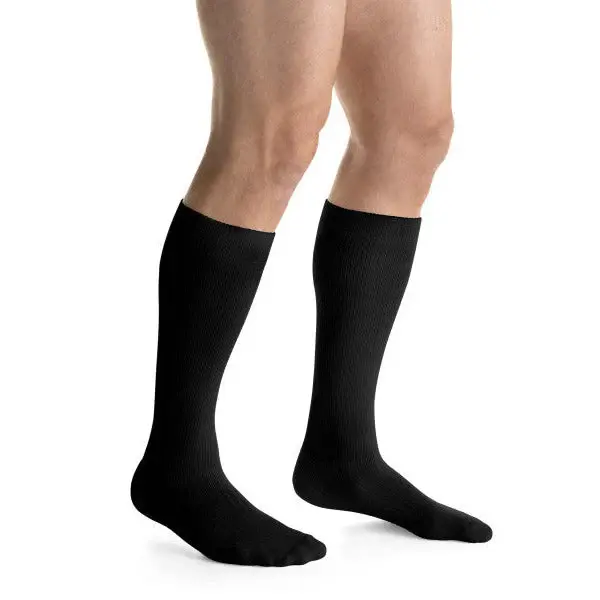
Jobst ActiveWear 15-20mmHg Compression Knee High CT BLK M

C$31.15
Out of stock online
In store: Check availability

Available in store

UPC Code: 035664104849
SKU: 110484

Graduated 15–20 mmHg compression knee-high socks deliver medical-grade support in casual style—promoting circulation, reducing leg fatigue, and providing all-day comfort. Black pairs with any outfit. Reinforced construction. Medium size

    • Why Graduated Compression for Daily Leg Health

      Graduated compression applies strongest pressure at the ankle and gradually decreases up the leg, working with your body's natural circulation to push blood upward against gravity back toward the heart. This proven medical technology helps prevent blood pooling in lower legs during prolonged standing or sitting, reducing leg fatigue, heaviness, swelling, and the progression of varicose veins. The 15–20 mmHg compression level is considered moderate support—strong enough to provide therapeutic benefits while comfortable enough for all-day wear without medical prescription. JOBST ActiveWear combines this medical-grade compression technology with casual, athletic styling that looks like regular socks, making it easy to incorporate leg health into everyday routines at work, during travel, or throughout active lifestyles.

      Key Features & Benefits

      • Graduated 15–20 mmHg compression promotes healthy blood flow from ankle to calf
      • Knee-high length provides effective coverage for entire lower leg
      • Black color offers versatile, discreet appearance suitable for any occasion
      • ActiveWear design looks like athletic socks, not medical hosiery
      • Soft, breathable nylon blend knit maintains comfort throughout day
      • Moisture-wicking properties keep feet dry during activity
      • Reinforced heel and toe areas enhance durability for frequent wear
      • Closed-toe design provides full foot coverage and support
      • Latex-free construction reduces allergy concerns
      • Medium size fits most average calf and ankle measurements

      Clinical Applications

      Appropriate for:

      ✓ Mild to moderate leg fatigue, heaviness, or achiness ✓ Early-stage varicose veins or spider veins ✓ Minor leg swelling (edema) from prolonged standing or sitting ✓ Long work shifts requiring extended standing (retail, healthcare, hospitality) ✓ Office workers sitting at desks for long periods ✓ Frequent travelers on long flights or car trips ✓ Pregnancy-related leg discomfort and swelling (consult provider) ✓ Active individuals wanting circulation support during exercise ✓ Post-workout recovery to reduce muscle soreness ✓ General preventive leg health and vein support

      Important: 15–20 mmHg compression does not require prescription but consult healthcare provider if you have severe venous disease, arterial insufficiency, peripheral neuropathy, or diabetes before use. Higher compression levels may be needed for advanced conditions.

      Usage & Application - User Guidance

      For Compression Sock Use: These graduated compression socks are designed for daily wear to support leg health and circulation. Proper sizing, application, and care ensure maximum benefit and comfort.

      Understanding Compression Levels:

      • 15–20 mmHg: Moderate compression, ideal for daily use
      • Benefits: Supports circulation, reduces fatigue, prevents swelling
      • No prescription needed: Over-the-counter compression level
      • Safe for most people: Appropriate for preventive and mild therapeutic use
      • All-day comfort: Can be worn from morning to evening

      Verifying Medium Size Fit:

      • Measure ankle circumference at narrowest point above ankle bone
      • Measure calf circumference at widest part
      • Medium typically fits: Ankle 8–9", Calf 12.5–15" (check JOBST size chart)
      • Proper fit critical—too tight causes discomfort, too loose reduces effectiveness
      • If measurements span two sizes, choose smaller for better compression
      • Re-measure every 6 months as body changes

      When to Wear:

      • Morning: Put on before legs swell from daily activity
      • Work: Wear throughout entire work shift
      • Travel: Put on before long flights or car trips
      • Exercise: Can wear during workouts for support
      • Recovery: Wear after intense activity to reduce soreness
      • Daily routine: Incorporate into regular wardrobe like normal socks

      Putting On Compression Socks:

      • Apply in morning before legs begin swelling
      • Sit in comfortable position with good lighting
      • Turn sock inside out to heel pocket
      • Insert foot, positioning heel in heel pocket
      • Gently pull sock up over ankle to calf
      • Smooth out wrinkles and bunching—folds reduce effectiveness
      • Top band should sit 1–2 inches below knee
      • Adjust to ensure even compression distribution
      • Should feel snug but not painful

      Application Tips for Easier Donning:

      • Wear rubber gloves for better grip on fabric
      • Use sock donning aid device if difficulty reaching feet
      • Apply light dusting of cornstarch to legs (helps slide on)
      • Put on over thin liner socks if direct contact uncomfortable
      • Take time—rushing causes bunching and uneven compression
      • Practice makes easier with repeated use

      Throughout the Day:

      • Compression should feel firm but not painful
      • Numbness, tingling, or pain indicates improper fit—remove immediately
      • Check periodically that sock hasn't slipped down
      • Smooth any wrinkles that develop
      • Top band shouldn't cut into skin behind knee
      • Toes should have full circulation and feeling

      Removing Compression Socks:

      • Remove before bed unless healthcare provider specifies overnight wear
      • Peel top down gently, gathering fabric as you go
      • Work down leg carefully without pulling harshly
      • Turn inside out as you remove from foot
      • Inspect legs after removal for any pressure marks
      • Light temporary marks are normal; deep or persistent marks indicate poor fit

      Daily Wear Schedule:

      • Put on in morning after showering
      • Wear throughout day (8–12 hours typical)
      • Remove before bed for most users
      • Some conditions require overnight wear—follow provider guidance
      • Consistency important for maximum benefit
      • Takes 2–3 weeks to notice full improvement in leg symptoms

      Care and Washing:

      • Hand wash in cool or lukewarm water with mild detergent
      • Machine wash gentle cycle in mesh laundry bag if needed
      • No bleach, fabric softener, or harsh chemicals
      • Air dry flat or hang dry—do not use dryer heat
      • Do not dry clean or iron
      • Wash after each use to maintain elasticity
      • Replace every 3–6 months or when compression feels reduced

      Activity-Specific Use:

      • Standing jobs: Wear entire shift to prevent leg fatigue
      • Desk work: Combat sitting-related circulation issues
      • Air travel: Put on before flight, wear throughout journey
      • Running/cycling: Support during exercise, aid recovery after
      • Pregnancy: Reduce leg swelling (with provider approval)
      • Post-surgery: Prevent blood clots during recovery (if prescribed)

      Managing Initial Adjustment:

      • First week may feel tight or unusual—this is normal
      • Start with shorter wear periods (4–6 hours) if needed
      • Gradually increase to full-day wear
      • Skin may show temporary fabric impressions—usually fade quickly
      • Persistent discomfort after adjustment period warrants size check

      Signs of Improper Fit:

      • Painful pressure or constriction
      • Numbness, tingling, or loss of feeling
      • Skin discoloration (blue, purple, very pale)
      • Top band rolling or cutting into skin
      • Sock sliding down leg repeatedly
      • Wrinkles or bunching that won't smooth out

      When to Replace:

      • Every 3–6 months with regular use
      • When fabric shows significant wear, holes, or runs
      • When compression feels noticeably less firm
      • After significant weight change affecting sizing
      • When elastic loses recovery (stays stretched when removed)

      Troubleshooting Common Issues:

      • Too difficult to put on: Try donning aid, gloves, or size up
      • Sliding down: May need smaller size or different style
      • Top band uncomfortable: Adjust position, check for proper size
      • Toes feel cramped: Ensure proper toe positioning in closed-toe design
      • Legs tingle: May be too tight; remove and reassess size

      When to Contact Healthcare Provider:

      • Persistent pain, numbness, or tingling during wear
      • Skin breakdown, sores, or irritation
      • Increased leg swelling despite compression use
      • Development of new varicose veins or worsening existing ones
      • Questions about appropriate compression level for your condition
      • Uncertainty about proper sizing or fit
      • Considering higher compression levels

      Product Specifications

      • Brand: JOBST
      • Product Line: ActiveWear
      • Compression Level: 15–20 mmHg (moderate, graduated)
      • Style: Knee High
      • Length: Extends to 1–2 inches below knee
      • Color: Black
      • Size: Medium (check JOBST size chart for specific measurements)
      • Toe Style: Closed Toe (CT)
      • Gender: Unisex design
      • Material: Nylon blend with elastic compression fibers
      • Features: Reinforced heel and toe, moisture-wicking
      • Latex: Latex-free
      • Prescription: Not required for 15–20 mmHg
      • Best For: Daily wear, work, travel, active lifestyles
      • Wash: Hand or gentle machine wash, air dry
      • Replacement: Every 3–6 months
    • No reviews yet

      Add yours

    Testimonials from Google

    See all reviews

    Your cart — 0

    You cart is currently empty

    Login