Slideshow Items

  • Ankle and Foot Supports
  • orthopedic-supports-braces/ankle-and-foot-supports
  • Orthopedic Supports & Braces
  • orthopedic-supports-braces
DJO - DJO Global

  |  

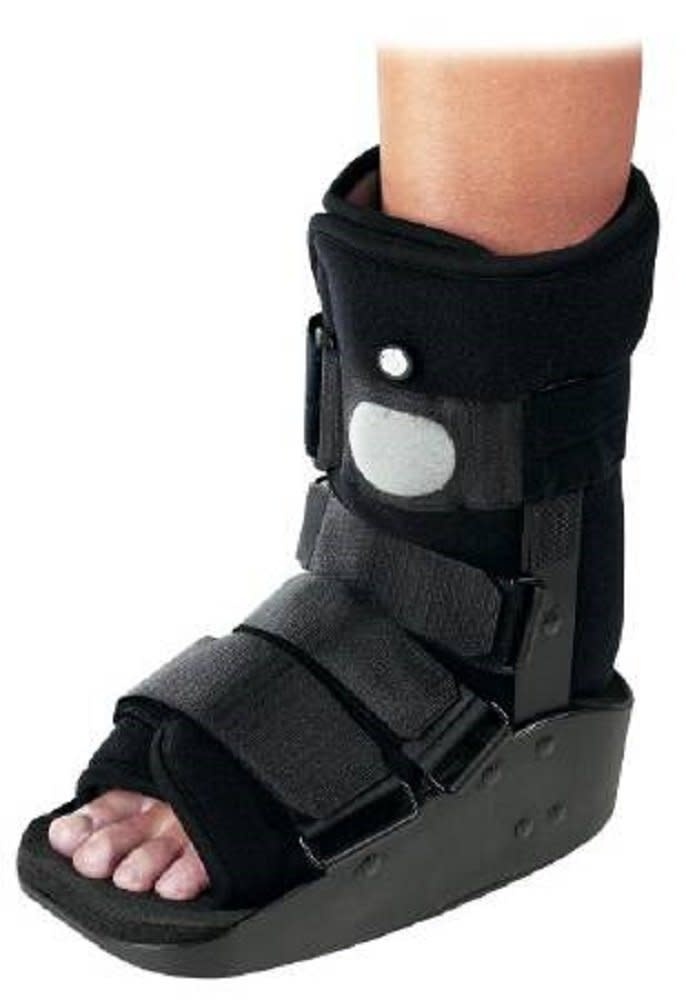
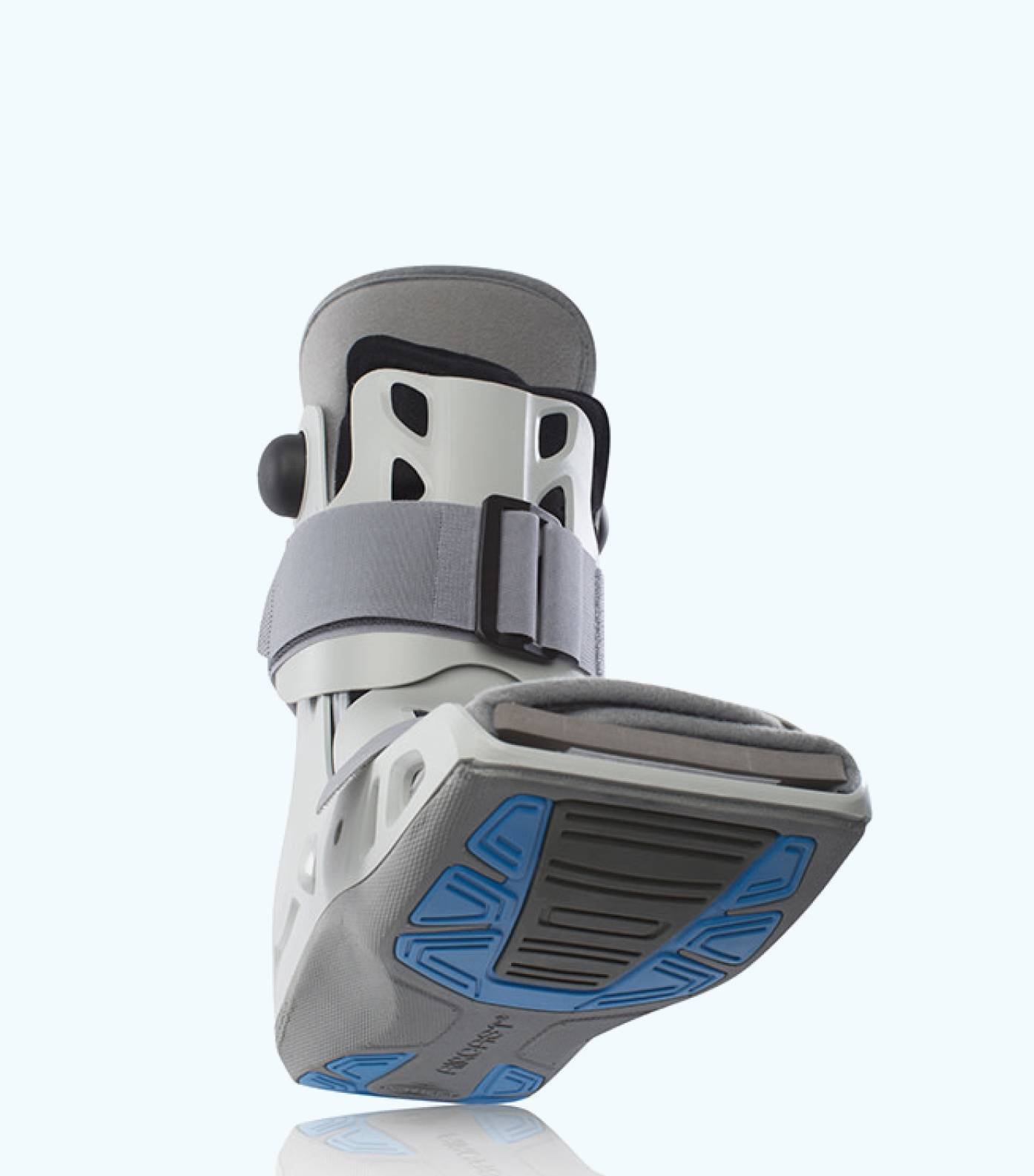
DJO Maxtrax Air Walker High Top Black XLarge

C$190.00
In stock online
In store: Check availability

Available in store

SKU: T98422

With dual air-cell compression and integrated pump delivers adjustable edema control and limb stabilization for foot and ankle fractures or post-operative recovery while the low-profile rocker sole and tall uprights enable protected ambulation.

    • Why Pneumatic Air Compression in Walking Boots

      Dual air-cell technology provides superior edema management compared to static foam liners by delivering adjustable circumferential compression that adapts to fluctuating swelling patterns throughout the healing process. The integrated pump system enables real-time pressure adjustments without boot removal, maintaining consistent limb contact and stability as inflammation resolves. High-top design extends protection beyond the ankle joint, stabilizing the lower leg and preventing compensatory movement patterns that could impede healing or cause secondary injuries during the vulnerable post-operative or post-fracture period.

      Key Features

      • Dual pneumatic air-cell system with medial and lateral chambers
      • Integrated hand pump for quick inflation and pressure adjustment
      • Release valve enables rapid deflation for fit modifications
      • High-top design with tall rigid uprights for enhanced leg stabilization
      • Durable molded shell protects foot and ankle from external impact
      • Cushioned inner and outer sole for shock absorption
      • Low-profile rocker bottom promotes natural gait mechanics
      • Soft nylon/foam liner with moisture-wicking properties
      • Adjustable straps secure boot at multiple points for customized fit
      • Universal right/left design simplifies inventory and fitting
      • Size X-Large accommodates Men's 12.5+ / Women's 13.5+ shoe sizes
      • Black color provides professional, discrete appearance

      Benefits

      • Reduces post-operative or post-injury swelling through adjustable compression
      • Maintains consistent limb contact throughout healing process
      • Enhances patient mobility during rehabilitation phase
      • Improves treatment compliance with comfortable, easy-to-adjust design
      • Protects healing structures from external trauma and inappropriate motion
      • Promotes proper gait mechanics through rocker-bottom sole design
      • Enables weight-bearing ambulation when medically appropriate
      • Adjustable air cells accommodate cast-like immobilization or graduated support
      • High-top protection prevents excessive ankle motion during recovery
      • Professional-grade device suitable for clinical or home use
      • Universal fit eliminates left/right confusion and ordering errors

      Clinical Applications

      ✓ Stable foot and ankle fractures requiring immobilization ✓ Post-operative protection following foot or ankle surgery ✓ Severe ankle sprains (Grade II-III) requiring rigid support ✓ Achilles tendon rupture conservative management or post-repair protection ✓ Foot fractures (metatarsal, Lisfranc, midfoot) ✓ Ankle fractures (stable malleolar, bimalleolar with medical clearance) ✓ Soft tissue injuries requiring immobilization and compression ✓ Post-cast removal transitional support and protection ✓ Severe plantar fasciitis unresponsive to conservative measures ✓ Diabetic foot ulcer off-loading and protection ✓ Post-arthrodesis (fusion) procedures of foot or ankle ✓ Tarsal tunnel syndrome requiring immobilization ✓ Calcaneal (heel) fractures with weight-bearing clearance

      Usage & Application

      Size Selection and Verification: Size X-Large fits Men's shoe sizes 12.5 and larger, or Women's shoe sizes 13.5 and larger. Verify proper sizing by having the patient stand in the boot with the foot positioned fully into the toe box. The heel should rest securely in the heel cup without excessive forward or backward sliding. Toes should not contact the front of the boot even when walking. If measurements fall between sizes or if significant swelling is present, select the larger size to accommodate edema and ensure adequate circulation.

      Initial Boot Application: Begin with all straps loosened and air cells completely deflated (use release valve if previously inflated). Open the boot fully, spreading the sides apart to create maximum entry space. Have the patient position their foot into the boot with the heel seated firmly in the heel cup. The leg should rest between the tall uprights with the shin centered. Before securing any straps, ensure proper foot positioning: heel back, foot flat, toes pointing forward without rotation.

      Securing the Straps: Beginning at the toe/forefoot region, secure the first strap with moderate tension. Progress proximally, securing each successive strap from distal to proximal (toe to top). Each strap should be snug but not overly tight—the boot should feel secure without causing excessive pressure or discomfort. The strap pattern typically includes: forefoot strap, midfoot strap, ankle strap, and one or more calf straps depending on boot height. Leave slight slack initially, as air cell inflation will increase overall compression.

      Inflating the Air Cells: Locate the integrated hand pump (typically attached to the boot exterior). Begin pumping air into the system while monitoring patient comfort. The dual air-cell system inflates medially (inside ankle) and laterally (outside ankle) simultaneously, creating circumferential compression around the lower leg and ankle. Inflate until the patient reports a firm, even pressure around the leg—similar to a blood pressure cuff during measurement but sustained. The cells should maintain constant limb contact without creating painful pressure points or impairing circulation.

      Optimal Inflation Pressure: Ideal inflation provides snug, even contact around the entire circumference of the leg and ankle without excessive compression. Ask the patient to report sensation: comfortable firm pressure is appropriate, whereas numbness, tingling, or sharp pain indicates over-inflation. Most patients require moderate inflation (approximately 15-20 pumps from fully deflated), but individual needs vary based on leg size, swelling level, and comfort tolerance. Check digital circulation after inflation to ensure adequate blood flow.

      Adjusting Compression Throughout Day: Swelling patterns typically vary throughout the day—increased in morning after overnight rest, decreased after prolonged elevation, or increased after extended standing. Use the integrated pump to add air if the boot feels loose or if increased support is needed during activity. Use the release valve to reduce pressure if swelling increases, if numbness develops, or if the boot feels excessively tight. These real-time adjustments maintain optimal therapeutic compression without requiring boot removal.

      Weight-Bearing Status: Follow your physician's specific weight-bearing instructions, which may include: non-weight-bearing (no pressure on affected foot—use crutches or wheelchair), touch-down weight-bearing (foot contacts ground for balance only), partial weight-bearing (limited percentage of body weight), or full weight-bearing as tolerated. The boot provides protection for each of these stages, but exceeding prescribed weight-bearing limits can compromise healing and cause complications. Advance weight-bearing only with medical clearance.

      Gait Mechanics with Rocker Bottom: The low-profile rocker sole promotes smoother ambulation by mimicking natural foot roll during walking. To achieve optimal gait: heel strike first, roll through the rocker bottom (the boot does this naturally), and push off from the toe region. Avoid attempting to bend the foot within the boot—the rigid shell prevents this motion intentionally. Take shorter steps initially until comfortable with the rocker mechanics. The design reduces compensatory movements and stress on other joints (knee, hip, back).

      Stair Navigation: Ascending stairs: Step up with the unaffected leg first, then bring the booted foot up to meet it (good leg leads up). Descending stairs: Step down with the booted foot first, then bring the unaffected leg down (bad leg leads down). Use handrails for stability and consider taking one step at a time (both feet on each step) rather than alternating until confidence develops. Some patients find backward descent (facing up the stairs) safer initially.

      Sleeping with the Boot: Your physician will specify whether nighttime boot wear is required. For many conditions, the boot can be removed during sleep to allow skin breathing and reduce pressure-related discomfort. However, post-operative protocols or unstable fractures may require 24-hour immobilization. If sleeping in the boot, deflate the air cells partially for comfort while maintaining adequate support. Elevate the leg on pillows to reduce nighttime swelling. Check circulation upon waking.

      Skin and Wound Monitoring: Remove the boot daily (when medically permitted) to inspect skin condition. Check for: redness that doesn't resolve within 20-30 minutes after boot removal, blistering, skin breakdown, areas of excessive pressure, or signs of infection (increasing warmth, redness, drainage, fever). If surgical incisions are present, monitor for proper healing, drainage character, and suture integrity. Report any concerning findings to your healthcare provider immediately. Allow skin to breathe for 15-30 minutes during inspection before reapplying the boot.

      Hygiene and Boot Maintenance: Clean the boot shell exterior with mild soap and water, wiping with a damp cloth. The interior liner can be spot-cleaned, but avoid saturating the pneumatic air cells or pump mechanism. Some liners are removable for washing—consult manufacturer instructions. Apply foot powder or cornstarch to reduce moisture and odor buildup. Wear a thin sock inside the boot to protect skin and absorb perspiration. Inspect straps, pump, and air cells regularly for signs of wear or damage that could affect function.

      Shower and Bathing Precautions: The boot is not waterproof and should be removed for bathing. Protect surgical sites or wounds with waterproof coverings as directed by your physician. Consider shower chairs or benches to enable safe single-leg standing. Some patients use cast covers or waterproof boot protectors, though these can be cumbersome and may not provide reliable protection. Alternatively, take sponge baths with the boot removed, keeping the affected leg dry and elevated outside the tub or shower.

      Activity Modifications: Avoid high-impact activities, running, jumping, or sports participation unless specifically cleared by your physician. Modify work duties if they require prolonged standing, heavy lifting, or activity that could jeopardize healing. Use assistive devices (crutches, walker, knee scooter) as prescribed to maintain safe mobility while protecting the injured area. Gradually increase activity levels as healing progresses and medical clearance advances through rehabilitation phases.

      Wearing Duration and Weaning: Typical immobilization periods range from 4-8 weeks depending on injury severity and healing progress. Your physician will specify the total treatment duration. As healing advances, gradual weaning may be prescribed: initially removing the boot for brief periods while seated, progressing to wearing regular shoes for short intervals, and finally transitioning fully out of the boot. Never discontinue boot use without medical clearance, as premature removal increases reinjury risk and can compromise healing outcomes.

      Physical Therapy Integration: The boot may be removed during supervised physical therapy sessions for range of motion exercises, soft tissue mobilization, and strengthening work. Reapply the boot immediately after therapy for continued protection during daily activities. Your therapist will guide progression through rehabilitation phases and advise when transitional footwear (walking shoes with support) is appropriate. Follow prescribed home exercise programs consistently to restore function and prevent long-term impairment.

      Signs Requiring Medical Attention: Seek immediate care if you experience: sudden sharp pain suggesting reinjury, numbness or tingling that persists after deflating air cells, toes turning blue or white, significant increase in swelling despite appropriate boot use, visible deformity or misalignment, loss of previously achieved range of motion, signs of infection, inability to bear prescribed weight, or boot damage that compromises structural integrity.

      Technical Specifications

      • Product: MaxTrax Air Walker High-Top Walking Boot
      • Brand: DJO Global / Enovis
      • Model: MaxTrax Air (High-Top variant)
      • Size: X-Large
      • Shoe Size Accommodation:
        • Men's: 12.5 and larger
        • Women's: 13.5 and larger
      • Side: Universal right/left design
      • Height: High-top with tall uprights extending above ankle
      • Shell Material: Durable molded thermoplastic
      • Liner Material: Soft nylon/foam with moisture-wicking properties
      • Compression System: Dual pneumatic air-cell technology
      • Air Cell Positions: Medial (inside) and lateral (outside) chambers
      • Pump Type: Integrated hand pump with inflation bulb
      • Release Mechanism: Quick-release valve for rapid deflation
      • Sole Design: Cushioned inner and outer sole with low-profile rocker bottom
      • Rocker Profile: Low-profile for more natural gait mechanics
      • Straps: Multiple adjustable hook-and-loop closures (typically 3-5 straps)
      • Uprights: Rigid tall supports extending up the lower leg
      • Weight: Moderate (approximately 2-3 lbs per boot)
      • Color: Black
      • Latex Status: Latex-free construction (verify with specific batch)
      • Cleaning: Exterior wipe-clean; interior spot-clean or removable liner
      • Indications: Stable fractures, severe sprains, soft tissue injuries, post-operative foot/ankle recovery
      • Weight-Bearing: Accommodates non-weight-bearing through full weight-bearing (per physician orders)
      • Reusability: Single-patient use; multi-month duration capability
      • Warranty: Manufacturer warranty varies (typically 90 days to 6 months)
    • No reviews yet

      Add yours

    Testimonials from Google

    See all reviews

    Your cart — 0

    You cart is currently empty

    Login

    By using our website, you agree to the use of cookies. These cookies help us understand how customers arrive at and use our site and help us make improvements. Hide this message More on cookies »