Slideshow Items

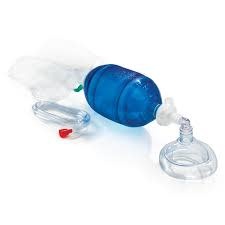
Adult bag-valve-mask resuscitator with a 1,900 mL self-inflating bag, soft cushion face mask, oxygen reservoir, and PEEP valve providing manual positive pressure ventilation during CPR, respiratory failure, and emergency airway resuscitation.
Loading…
The Medline adult manual resuscitator serves two structurally distinct functions that are both essential to effective emergency ventilatory support, and that a single BVM system must satisfy simultaneously. The first function is ventilation delivery: the bag-valve-mask is the manual device through which the clinician or responder delivers tidal volume to the patient's lungs during a ventilation emergency. A patient in respiratory arrest or severe respiratory failure cannot generate the diaphragmatic contraction required to draw air into the lungs — the BVM is the external mechanism that replaces this function by manually compressing a self-inflating reservoir bag to create the positive pressure that drives a ventilation volume into the airway through the mask seal. The self-inflating design of the bag is the feature that distinguishes a manual resuscitator from a simple breathing bag — the self-inflating material returns the bag to its expanded volume between compressions by drawing ambient or supplemental oxygen through the inlet valve, making the device immediately ready for the next breath delivery without the operator needing to actively re-expand the bag. The 1,900 mL bag volume provides the full tidal volume range recommended for adult manual ventilation — typically 500–600 mL per compression for a two-handed technique with visible chest rise — with sufficient reserve volume that the operator can adjust the compression depth to deliver the correct volume for the patient's body weight and compliance without the bag volume becoming the limiting factor. The BVM is therefore not an emergency respiratory accessory — it is the ventilation delivery boundary that determines whether a patient without spontaneous breathing can receive the respiratory support required to maintain viable oxygenation while the cause of the respiratory failure is addressed.
The second function the BVM must satisfy simultaneously is oxygenation maintenance — ensuring that the ventilation volumes delivered to the patient's lungs contain the highest practicable oxygen fraction, not merely ambient air at 21% oxygen. The oxygen reservoir attached to the bag inlet allows supplemental oxygen flow from a cylinder or wall supply to accumulate in the reservoir between bag compressions, so that each manual compression draws primarily from the oxygen-enriched reservoir rather than from ambient air. A BVM without an oxygen reservoir connected to supplemental oxygen delivers approximately 21% FiO₂ — room air fraction — to the patient's lungs with each compression. With an oxygen reservoir and supplemental oxygen flow at 10–15 L/min, the BVM can deliver FiO₂ approaching 90% or higher to the patient, significantly increasing the oxygen delivery per breath and the rate at which arterial oxygen saturation can be restored or maintained in a hypoxic patient. In cardiac arrest, where the metabolic oxygen debt accumulated during the arrest must be addressed as rapidly as possible during resuscitation, the difference between 21% and 90% FiO₂ delivery per manual breath is clinically significant for the rate of saturation recovery.
The PEEP valve integrated into the expiratory port of the Medline BVM addresses the specific respiratory failure presentation in which the patient's alveoli are collapsing at end-expiration — a condition in which positive end-expiratory pressure applied at the airway maintains alveolar recruitment between manual breaths. Conditions including acute respiratory distress syndrome, pulmonary oedema, and severe pneumonia reduce the lung's compliance and functional residual capacity to the point where alveoli that are opened by a positive pressure inflation collapse again during the expiratory phase, requiring the next breath delivery to re-recruit the same alveoli with each compression. The PEEP valve maintains a defined positive pressure at the airway throughout the expiratory phase, preventing this alveolar collapse and maintaining the recruited lung volume that allows each subsequent manual breath to deliver tidal volume to alveoli that are already open rather than spending the compression volume re-recruiting collapsed tissue. The PEEP valve is not a routine BVM component for all emergency uses — it is a clinician-selected addition for the specific respiratory failure presentations where end-expiratory alveolar recruitment is a therapeutic goal.
The textured translucent bag material of the Medline resuscitator addresses two simultaneous usability requirements of emergency manual ventilation. The texture provides the grip security that allows the operator to maintain consistent bag compression force and technique during the physical exertion and stress conditions of prolonged resuscitation — a smooth bag surface becomes slippery under the perspiration that extended resuscitation generates. The translucency allows the operator to observe the bag's refill behaviour between compressions and the presence of any material within the bag that would indicate a device integrity issue, providing a visual confirmation of correct device function that an opaque bag does not allow.
✓ Cardiac arrest resuscitation — primary ventilation device during CPR for patients in cardiac arrest, delivering manual breaths coordinated with chest compressions as part of the advanced cardiac life support sequence
✓ Respiratory failure bridging ventilation — manual ventilation support for patients in acute respiratory failure during emergency department assessment, patient transfer, or the interval before mechanical ventilation is established
✓ Pre-intubation oxygenation — BVM use for pre-oxygenation before endotracheal intubation, maximising arterial oxygen saturation before the apnoeic period of laryngoscopy and intubation
✓ Transport and transfer ventilation — manual resuscitator used during intra-hospital and inter-facility patient transport for patients who require ventilatory support but are not yet connected to transport ventilator
✓ Emergency kit and crash trolley component — BVM as a standard component of emergency response kits, crash trolleys, and ambulance equipment, available for immediate deployment at the point of respiratory emergency
Carousel items
Testimonial items
Very welcoming and informative. We went in to rent a Walker for my mom to see if she would use it. They had no rentals left so he gave us a brand new one on rental. Highly recommend this company for all your ADL needs.
Tara Maye
The rating of this product is 5 out of 5
Fantastic service and experience, from delivery to pickup we could not have asked for anything more! We rented a hospital bed, and I do not believe you would get better service anywhere. Highly recommended!
Shawn Dillon
The rating of this product is 5 out of 5
Super friendly and very helpful! Delivered the wheelchair for me, special ordered other parts and took the time to show me how to install. I recommend!
Fiona Haines
The rating of this product is 5 out of 5
Can not thank the team at Med Supplies enough for their amazing service. We were in a tough spot till we got their help. Amazing service. Kind and respectful delivery. First class all the way. Thank you again.
Jon Beatty
The rating of this product is 5 out of 5
Ordered the chair on Sunday and it arrived Monday morning. Spoke to customer service to follow up on delivery times. It was already on my front door. Excellent and helpful staff. The product is sturdy and of good quality. Thank you for your help.
H D
The rating of this product is 5 out of 5
Excellent experience - website faithfully represented what was in stock (which hasn't always been my experience with other vendors sadly), and local shipping was really fast - ordered on the weekend, received it on Monday in my case. Thank you for being
Jason Hudson
The rating of this product is 5 out of 5
0/0
You cart is currently empty
780 409-1509
Get directions