Slideshow Items

  • Infection, Skin & Wound Care
  • infection-skin-wound-care
  • Needles, Syringes & IV's
  • needles-syringes-ivs
MedPro

  |  

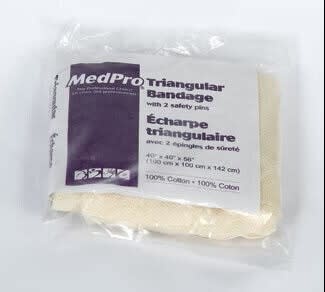
MedPro Triangular Bandage 40" x 40"

C$3.00
3+ Day Shipping
In store: Check availability

Available in store

UPC Code: 057565184409
SKU: 118-440

Deliver versatile emergency care with 40" × 40" size accommodating multiple folding configurations, cotton fabric providing breathable comfort, triangular geometry enabling arm slings and head dressings, durable construction withstanding field use.

    • Why 40" × 40" Triangular Design in Breathable Cotton for Multipurpose First Aid Applications

      The 40-inch × 40-inch (102 cm × 102 cm) dimensions with triangular geometry provide the critical versatility for emergency bandaging applications ranging from arm sling construction requiring substantial fabric to wrap around shoulders and tie securely at the neck, to large head dressings needing adequate material to completely cover scalp wounds while anchoring around the head, to full-width cravat bandages formed by folding the triangle into strips capable of securing splints along the entire length of adult extremities—this generous sizing ensures sufficient material for proper technique execution across diverse patient sizes from children to large adults, eliminating the inadequacy of smaller bandages that force improvisation or multiple bandage use when single-bandage standard first aid protocols specify triangular application. The triangular shape with three distinct edges (base, sides) and three points (apex, ends) enables multiple folding configurations transforming the same bandage into functionally different tools: the full triangle creates arm slings and head dressings exploiting the shape's natural draping properties, narrow cravat folds produce long strips for securing splints or creating pressure bandages, and broad cravat folds generate wider bands for immobilizing joints or supporting large dressings, while the three tie points provide anatomically strategic anchoring locations whether securing fabric around necks for slings, behind heads for scalp coverage, or around limbs for extremity bandaging. The lightweight breathable cotton or cotton-blend fabric construction delivers patient comfort during extended wear periods common in field emergencies where evacuation delays or disaster scenarios require bandages to remain in place for hours before definitive care—the natural fiber composition prevents the moisture accumulation and skin maceration that synthetic materials cause during prolonged contact, while maintaining sufficient strength to support injured limbs and secure dressings without tearing under the forces applied during emergency transport over rough terrain or during patient movement.

      Key Features & Benefits

      Key Features:

      • 40 inches × 40 inches (102 cm × 102 cm) size
      • Triangular geometry (right-angled triangle)
      • Three edges: One long base (~57"), two shorter sides (~40" each)
      • Three points: Apex (right angle), two base ends
      • Cotton or cotton-blend fabric
      • Lightweight material
      • Breathable weave
      • Durable construction
      • White or unbleached natural color (typically)
      • Hemmed or finished edges (prevents fraying)
      • Multipurpose design (multiple folding configurations)
      • Washable and reusable (if not contaminated)
      • Compact when folded for storage
      • Non-sterile (standard first aid use)

      Benefits:

      • 40" × 40" size adequate for most applications
      • Fits children through large adults
      • Triangular shape enables multiple configurations:
        • Full triangle (arm sling, head dressing)
        • Narrow cravat (splint ties, pressure bands)
        • Broad cravat (joint immobilization)
      • Versatile for numerous injuries:
        • Fractures (arm sling support)
        • Head wounds (dressing retention)
        • Bleeding (pressure application)
        • Splint securing
      • Cotton fabric breathable and comfortable
      • Suitable for extended wear
      • Prevents moisture buildup
      • Durable withstands field use and adjustment
      • Lightweight for easy carrying
      • Essential first aid kit component
      • Can be improvised for various needs
      • Washable for training/reuse scenarios
      • Cost-effective multipurpose tool

      Clinical Applications

      Triangular Bandage 40" × 40" is appropriate for:

      Arm sling (shoulder/clavicle/arm injuries) ✓ Head and scalp dressings (wound coverage) ✓ Securing splints (extremity immobilization) ✓ Pressure bandages (bleeding control) ✓ Joint immobilization (shoulder, elbow, knee) ✓ Wound dressing retention (holds pads in place) ✓ Emergency tourniquet (when proper equipment unavailable) ✓ Foot/ankle supportHand/wrist bandagingHip/pelvis dressing coverageChest wound dressingAbdominal wound coverageBurn coverage (initial field treatment) ✓ Emergency childbirth (multiple uses) ✓ Improvised carry devices (rescue scenarios) ✓ General emergency first aid

      Usage & Application

      IMPORTANT: Proper first aid training recommended. For external use only. Seek professional medical care for serious injuries.

      Understanding Triangular Bandage Configurations:

      Three main uses:

      1. Full triangle:
        • Bandage fully opened
        • Used for: Arm slings, head dressings, large wound coverage
      2. Broad cravat:
        • Triangle folded in half lengthwise
        • Creates ~10-12" wide band
        • Used for: Joint immobilization, wide pressure bandages
      3. Narrow cravat:
        • Triangle folded multiple times into strip
        • Creates ~2-4" wide band
        • Used for: Splint ties, figure-8 bandages, pressure points

      Arm Sling Application:

      Purpose:

      • Support injured arm, wrist, hand
      • Immobilize shoulder injuries
      • Support clavicle fractures
      • Reduce pain and further injury

      Standard Arm Sling:

      1. Prepare bandage:
        • Open fully (triangular shape)
        • Point (apex) toward injured side elbow
        • Base along center of body
      2. Position arm:
        • Injured arm bent at 90 degrees
        • Forearm across chest
        • Hand slightly elevated (fingers higher than elbow)
        • This position reduces swelling
      3. Place bandage:
        • Slide bandage under injured arm
        • Apex at elbow
        • Upper end over uninjured shoulder
        • Lower end hangs down
      4. Bring lower end up:
        • Pull lower end up and over injured shoulder
        • Both ends now behind neck
      5. Tie at side of neck:
        • Tie square knot at side of neck (NOT back—uncomfortable)
        • On uninjured side typically
        • Adjust for comfort
        • Not too tight (check circulation)
      6. Secure elbow:
        • Fold apex fabric around elbow
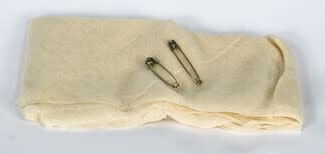
        • Pin or twist and tuck to secure
        • Prevents arm slipping out
      7. Check circulation:
        • Fingertips visible and accessible
        • Check color (should be pink)
        • Check warmth
        • Check sensation
        • Loosen if blue, cold, numb

      Variations:

      Elevated arm sling:

      • For severe swelling, hand injuries
      • Hand positioned higher (near opposite shoulder)
      • Provides maximum elevation

      Collar and cuff:

      • For elbow injuries needing elbow mobility
      • Supports wrist only
      • Allows elbow flexion/extension

      Head and Scalp Dressing:

      Purpose:

      • Hold dressing on head wounds
      • Provide pressure for bleeding control
      • Protect scalp injuries

      Procedure:

      1. Apply sterile dressing to wound first
      2. Fold narrow hem along base (2-3 inches)
      3. Position bandage:
        • Place over head
        • Base across forehead (just above eyebrows)
        • Point (apex) hanging down back
      4. Bring ends around head:
        • Cross ends behind head
        • Bring forward around head
      5. Tie at forehead:
        • Secure with square knot
        • Over folded hem
        • Not too tight
      6. Secure point:
        • Pull apex up and over top of head
        • Tuck under bandage at forehead
        • OR pin to secure

      Securing Splints:

      Purpose:

      • Hold rigid splint in place
      • Prevent movement
      • Maintain alignment

      Narrow Cravat Method:

      1. Fold triangular bandage:
        • Bring point to base center
        • Fold in half lengthwise
        • Continue folding until 2-4" wide strip
      2. Position cravat:
        • Under splinted extremity
        • Center of cravat under injury site
      3. Wrap around:
        • Bring ends up and around splint
        • Cross over top
        • Tie on side (not over injury or bone)
        • Not too tight (check circulation)
      4. Multiple ties:
        • Use 3+ cravats per splint typically
        • One above injury, one below, one at injury
        • Secure joints above and below fracture

      Pressure Bandage for Bleeding:

      Purpose:

      • Apply direct pressure to control bleeding
      • Hold hemostatic dressings in place

      Procedure:

      1. Apply dressing pad to wound
      2. Use broad cravat:
        • Fold bandage to 10-12" width
      3. Wrap around limb:
        • Cover dressing
        • Apply firm pressure
        • Wrap spiral around limb
      4. Tie securely:
        • Maintain pressure
        • Check circulation below bandage

      Emergency Tourniquet:

      CRITICAL: Use ONLY when:

      • Life-threatening extremity hemorrhage
      • Direct pressure ineffective
      • Proper tourniquet unavailable
      • Last resort measure

      Procedure:

      1. Fold to narrow cravat (2-4" wide)
      2. Position high on limb:
        • 2-3 inches above wound
        • NOT over joint
        • As high as possible on extremity
      3. Wrap twice around limb
      4. Tie overhand knot
      5. Place stick or rod on knot
      6. Tie another knot over stick
      7. Twist stick to tighten
      8. Secure stick in place
      9. Mark time applied (write on patient or bandage)
      10. Do NOT remove until medical care available
      11. Monitor for shock

      CRITICAL: Modern commercial tourniquets FAR superior. Use triangular bandage tourniquet ONLY as last resort.

      Post-Application Assessment:

      Check circulation:

      • Every 15-30 minutes
      • Below any bandage or sling
      • Assess:
        • Color (pink normal, blue/pale concerning)
        • Temperature (warm normal, cold concerning)
        • Sensation (normal feeling, numbness concerning)
        • Movement (can move fingers/toes)
        • Capillary refill (<2 seconds normal)

      If circulation compromised:

      • Loosen bandage immediately
      • Reapply less tightly
      • Seek medical care urgently

      Troubleshooting:

      Arm sling too loose:

      • Arm slipping out
      • Retie more snugly
      • Ensure apex secured around elbow

      Arm sling too tight:

      • Fingertips blue, cold, numb
      • Loosen immediately
      • Retie appropriately

      Bandage slipping:

      • May need additional securing
      • Pin or tape loose ends
      • Ensure proper tension

      Insufficient length:

      • Patient very large
      • May need 2 bandages tied together
      • Or use alternative bandaging

      Bandage too bulky:

      • Excessive fabric
      • Fold more to reduce bulk
      • Tuck excess neatly

      Special Considerations:

      Pediatric patients:

      • 40" × 40" may be large for small children
      • Fold or trim as needed
      • Gentler tension (circulation more easily compromised)
      • Reassure child throughout

      Geriatric patients:

      • Fragile skin (gentle handling)
      • May have limited mobility (assistance needed)
      • Check circulation frequently

      Pregnant patients:

      • Avoid pressure on abdomen
      • Modify as needed for comfort

      Cold weather:

      • Check circulation more frequently
      • Cold reduces perfusion
      • Ensure extremities kept warm

      Mass casualty scenarios:

      • Triage priority determines application detail
      • Quick application may be necessary
      • Document if possible

      Field/wilderness use:

      • May need prolonged wear
      • Monitor closely for complications
      • Consider infection risk (keep clean if possible)

      Training and practice:

      • Practice application before emergencies
      • Understand multiple configurations
      • Take first aid courses
      • Refresh skills regularly

      Infection Control:

      Single-use contaminated bandages:

      • If blood/body fluid contaminated: Dispose after use
      • Follow biohazard waste protocols

      Reusable (training):

      • Wash in hot water with detergent
      • Dry thoroughly
      • Inspect for damage before reuse

      Storage:

      • Store in cool, dry place
      • Keep in sealed bag or container
      • Protect from moisture and dirt
      • Fold compactly for emergency kits:
        • Fold point to base
        • Fold in half again
        • Roll or fold into small package
      • Check periodically for damage

      First Aid Kit Inclusion:

      Recommended quantity:

      • Minimum 2 per basic first aid kit
      • More for wilderness/disaster kits
      • Consider patient population size

      Storage in kit:

      • Individual sealed bags
      • Easily accessible
      • Labeled clearly

      Advantages:

      Triangular Bandage vs. Elastic Bandage:

      • Triangular advantages:
        • More versatile (multiple configurations)
        • Better for slings
        • Good for head dressings
        • Breathable cotton
        • Inexpensive
      • Elastic advantages:
        • Better compression
        • Conforms to joints better
        • Reusable easily

      Triangular Bandage vs. Roller Gauze:

      • Triangular advantages:
        • Better for slings and large coverage
        • Faster application for some uses
        • More stable (doesn't unroll)
      • Roller gauze advantages:
        • Better for circumferential wrapping
        • More compact storage

      40" × 40" vs. Smaller Sizes:

      • 40" × 40" appropriate for:
        • Adults
        • Large coverage needs
        • Standard first aid applications
      • Smaller sizes:
        • Pediatric use
        • Compact kits
        • May be inadequate for adults

      When to Seek Professional Care:

      Immediate (call 911):

      • Severe bleeding not controlled
      • Loss of consciousness
      • Difficulty breathing
      • Severe pain
      • Signs of shock
      • Suspected spinal injury

      Urgent:

      • Fractures
      • Dislocations
      • Deep wounds
      • Head injuries
      • Any serious injury

      Follow-up:

      • Circulation problems
      • Increasing pain
      • Signs of infection

      Technical Specifications

      Product Details:

      • Product Type: Multipurpose triangular first aid bandage
      • Size: 40 inches × 40 inches (102 cm × 102 cm)
      • Shape: Right-angled triangle
      • Dimensions:
        • Base (hypotenuse): Approximately 57 inches (145 cm)
        • Two equal sides: 40 inches each (102 cm)
        • Right angle at apex
      • Material: Cotton or cotton-blend fabric
      • Fabric Weight: Lightweight (exact weight varies)
      • Weave: Breathable open weave
      • Color: White or unbleached natural (typically)
      • Edge Finish: Hemmed or finished edges (prevents fraying)
      • Sterility: Non-sterile (standard first aid use)
      • Reusability: Washable and reusable if not contaminated
      • Intended Use:
        • Arm slings
        • Head/scalp dressings
        • Splint securing
        • Pressure bandages
        • Emergency bandaging
      • Patient Population: All ages
      • Storage: Fold compactly, keep dry
      • Shelf Life: Indefinite if stored properly (check for damage/wear)
    • No reviews yet

      Add yours

    Testimonials from Google

    See all reviews

    Your cart — 0

    You cart is currently empty

    Login

    By using our website, you agree to the use of cookies. These cookies help us understand how customers arrive at and use our site and help us make improvements. Hide this message More on cookies »