Why Pediatric-Specific Ankle Bracing for Young Athletes
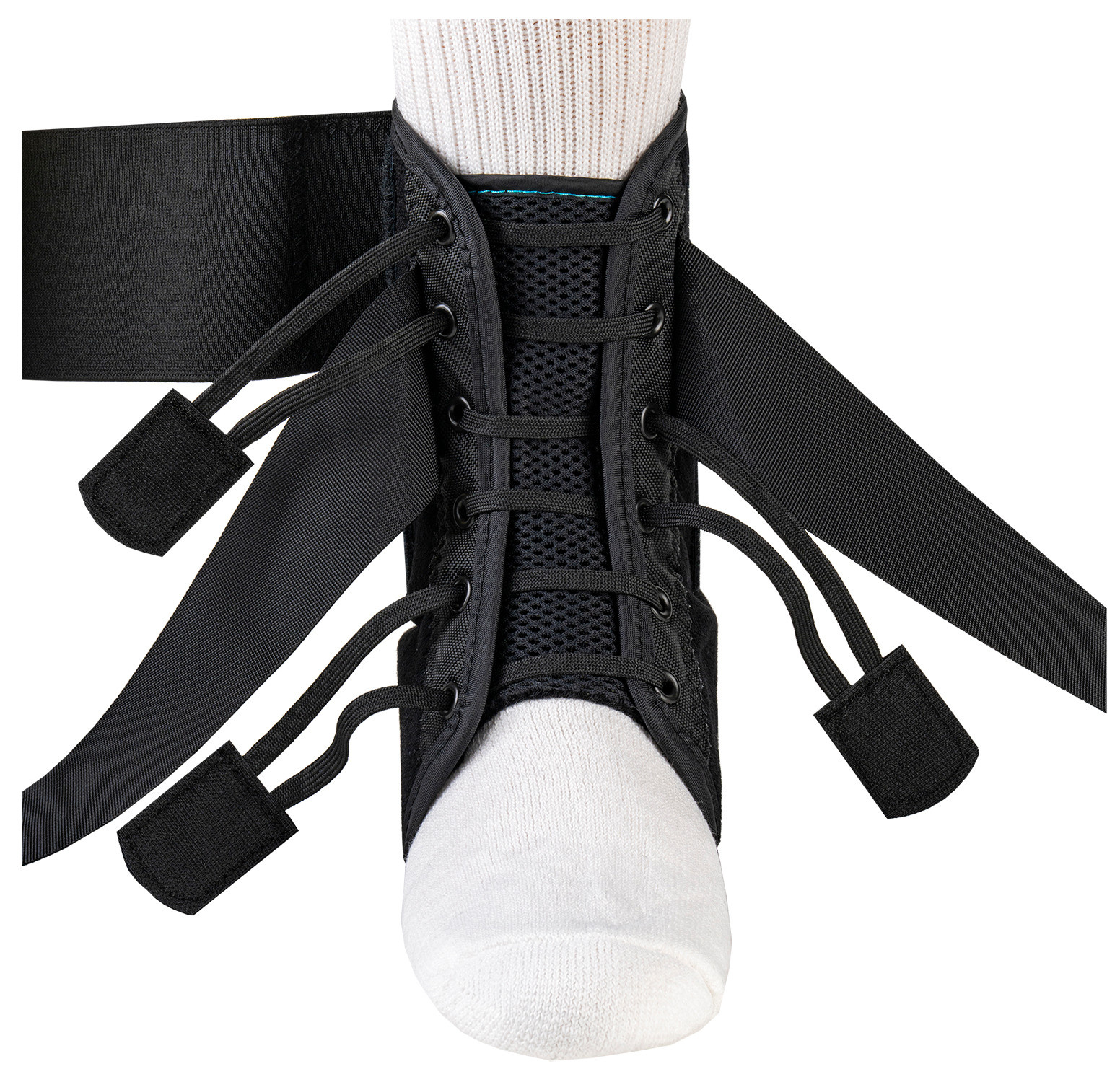
Children and adolescents experience ankle injuries at high rates during sports participation, with ankle sprains representing one of the most common youth sports injuries across basketball, soccer, football, gymnastics, and other activities. Pediatric ankles differ from adult ankles in critical ways: growth plates remain open until mid-to-late teens, ligaments and bones are still developing, and proprioception (balance and position awareness) is less refined, all contributing to higher injury risk and recurrence rates. Generic adult ankle braces don't fit smaller pediatric feet properly, leading to inadequate support, uncomfortable pressure points, and poor compliance—children simply won't wear braces that don't fit well. The pediatric ASO Speed Lacer addresses these unique needs with appropriately scaled dimensions for youth shoe sizes, maintaining the clinical-grade figure-8 stabilization and Speed Lacer convenience of the adult version while fitting the anatomical proportions of growing feet. The quick-pull lacing system is especially valuable for children who lack the fine motor skills or patience for traditional lace-tying, and for parents and coaches who need to apply braces quickly and consistently across multiple young athletes.
Key Features
- Pediatric sizing scaled for youth feet and shoe sizes
- MedSpec ASO Speed Lacer design (clinical-grade standard adapted for kids)
- Universal design fits both left and right ankle
- Speed Lacer quick-pull tightening system for rapid application
- Figure-8 internal strap configuration for anatomical ankle lock
- Bilateral plastic stays (medial and lateral) prevent inversion/eversion
- Ballistic nylon shell for durability through active play
- Elastic cuff closure at top for additional security
- Low-profile design fits inside kids' athletic shoes
- Lightweight construction appropriate for youth
- Breathable materials for comfort during extended wear
- Child-friendly application without complex strapping
Benefits
- Properly sized for pediatric anatomy (not downsized adult brace)
- Quick 30-60 second application by parents, coaches, or child
- Provides adult-level support in child-appropriate sizing
- Prevents ankle rolling during sports and play
- Builds confidence for return to activity after injury
- Comfortable enough for all-day school wear if needed
- Durable through rough play and frequent use
- Easy for children to understand and apply independently (older kids)
- Reduces re-injury risk during critical growth years
- Cost-effective compared to repeated athletic taping
Clinical Applications
✓ Acute pediatric ankle sprains (Grade I, II, or III)
✓ Chronic ankle instability in youth athletes
✓ Lateral ankle ligament injuries (ATFL, CFL) in children
✓ Return-to-sport after ankle injury (clearance protocols)
✓ Preventive support for high-risk youth sports
✓ Post-injury rehabilitation and physical therapy
✓ Weak ankles with history of multiple sprains
✓ Pediatric sports medicine injury prevention programs
✓ School sports team injury management
✓ Congenital ligament laxity or hypermobility in children
Usage & Application
Understanding Pediatric Ankle Injury Patterns
Why Children Get Ankle Sprains:
Youth ankle injury risk factors:
- Rapid growth: Bones grow faster than muscles/ligaments adapt
- Developing proprioception: Balance and coordination still maturing
- High activity levels: Sports participation, playground activities
- Insufficient conditioning: Young athletes may lack strength training
- Growth spurts: Temporary coordination challenges during rapid growth
- Peer pressure: Return to play too quickly to stay with team
Common Injury Scenarios:
- Basketball: Landing from jump, changing direction
- Soccer: Stepping in hole, contact with another player
- Gymnastics/Cheerleading: Landings from height
- Football: Tackling, getting hit while planted
- Playground: Uneven surfaces, climbing equipment falls
Recurrence Risk:
- Children with one ankle sprain: 70-80% chance of re-injury without intervention
- Proper bracing reduces recurrence by 50-70%
- Critical intervention during growth years prevents chronic instability
When Pediatric ASO is Appropriate
Ideal Candidates:
- Children/adolescents ages 8-16 (typical age range for pediatric sizing)
- Youth with acute ankle sprain recovering from injury
- Young athletes with history of multiple ankle sprains
- Returning to sports after ankle injury (clearance from provider)
- Preventive use for high-risk sports
- Chronic ankle instability in youth
- Ligament laxity or hypermobility syndromes
Not Appropriate If:
- Severe acute fracture requiring immobilization (need boot or cast)
- Very young children (under 6-7 years) who may not tolerate brace
- Open growth plate injuries requiring specialized management
- Child cannot tolerate brace (sensory issues, severe discomfort)
- Foot too small or too large for pediatric sizing range
Always involve pediatrician, pediatric orthopedist, or sports medicine physician in ankle injury management for children.
Understanding Pediatric Sizing
Pediatric vs. Adult ASO Sizing:
Pediatric ASO:
- Designed for youth shoe sizes (typically Youth 2-6 or similar range—verify specific product specs)
- Shorter length proportions (kids have smaller feet)
- Narrower width proportions
- Lighter weight materials appropriate for smaller body mass
- Usually one "pediatric" size or size range
Adult ASO:
- Designed for adult shoe sizes (Women's 6+ / Men's 5+)
- Would be excessively large on pediatric feet
- Wouldn't provide proper support due to poor fit
Measuring for Pediatric Size:
By Shoe Size (Easiest): Check product specifications for exact shoe size range, typically:
- Pediatric ASO: Youth shoe sizes approximately 2-6
- If child wears size outside this range, may need different size brace
By Ankle Circumference:
- Measure around narrowest part of child's ankle
- Pediatric typically fits: 7-9 inches circumference (approximate—verify specs)
Signs of Proper Fit:
- Speed laces pull to comfortable tightness
- Figure-8 straps wrap with adequate overlap
- Brace doesn't slide down or rotate
- Fits comfortably in child's athletic shoes
- Child can move ankle up-down but side-to-side restricted
Signs of Wrong Size:
- Too Small: Can't close laces, straps don't overlap, excessive pressure, child complains
- Too Large: Laces pull to maximum but still loose, slides around, inadequate support
Transition Sizing:
- Children growing out of pediatric size (Youth 7+): May need adult Small
- Children with large feet for age: May need adult sizing earlier
- Consult product size chart and consider child's actual foot size, not just age
Pre-Application Preparation
Parent/Caregiver Education: Essential that adults understand proper application:
- Read all instructions provided with brace
- Watch manufacturer videos if available
- Practice application before first use in sports
- Teach child about brace purpose and proper feel
Sock Selection:
- Athletic sock of moderate thickness
- Not too thin (may cause irritation)
- Not too thick (may not fit in shoe)
- Moisture-wicking preferred for sports
Shoe Selection:
- Athletic shoes with adequate width and volume
- May need to size up 1/2 size to accommodate brace
- High-top athletic shoes provide additional support but not required
- Avoid narrow or tight-fitting shoes
Child Preparation:
- Explain to child why they're wearing brace
- Emphasize protection and return to favorite activities
- Make application part of "getting ready" routine
- Positive reinforcement for compliance
Applying Pediatric ASO Speed Lacer
Initial Setup (First-Time Use):
- Orient brace:
- Show child the brace
- Explain it helps protect ankle
- Identify inside/outside, top/bottom
- Universal design works on either left or right ankle
- Loosen all components:
- Pull Speed Lacer to maximum looseness
- Open elastic cuff strap
- Loosen figure-8 straps completely
- Brace should be wide open
Application by Parent/Caregiver:
- Position child:
- Seated in chair, foot off floor
- Knee bent
- Good lighting
- Calm, positive environment
- Insert child's foot:
- Slide foot into brace over sock
- Ensure heel fully seated in heel cup
- Sock should be smooth without wrinkles
- Position brace on ankle:
- Ankle bones in proper openings
- Medial stay on inside, lateral stay on outside
- Top of brace on lower leg above ankle joint
- Apply figure-8 straps:
- Start with lateral (outside) strap
- Pull across foot, under arch, around heel
- Attach to opposite side creating figure-8
- Pull firmly but not excessively tight
- Repeat with medial (inside) strap
- Should create X-pattern over top of foot
- Engage Speed Lacer:
- Pull Speed Lacer tabs upward
- Continue pulling until snug compression achieved
- Child should feel supported but not painful
- Engage lace-lock mechanism
- Close elastic cuff:
- Wrap around top of brace
- Secure with closure
- Provides additional security
- Final check:
- Ask child to stand and walk
- Rock ankle side-to-side (should feel restricted)
- Point toes up and down (should move relatively freely)
- Ask child about comfort level
- Adjust if needed
Teaching Child Independent Application:
For older children (typically 10-12+ years):
- Demonstrate application multiple times
- Supervise initial independent attempts
- Check fit each time initially
- Gradually allow independence
- Spot-check periodically to ensure proper application
Younger children (under 10):
- Typically require adult assistance
- Can learn to help (positioning foot, holding straps)
- Full independent application usually too complex
Fitting in Kids' Shoes
Shoe Insertion:
- Loosen shoe laces completely
- Insert braced foot into shoe
- May need shoehorn
- Ensure brace positioned correctly
- Tighten shoe laces over brace
Kids' Shoe Considerations:
- Children's athletic shoes often have less volume than adult shoes
- May need to size up 1/2 to 1 full size
- Width often more important than length for brace accommodation
- Basketball shoes, running shoes typically work well
- Casual shoes and dress shoes usually too narrow
If Brace Doesn't Fit:
- Try larger shoe size
- Try different shoe style
- Consider high-top athletic shoes (more volume)
- May need new athletic shoes to accommodate brace properly
Adaptation Period
Gradual Introduction Important for Kids:
Day 1-2:
- Wear 1-2 hours during calm activities (watching TV, homework)
- Let child adjust to sensation
- Monitor for complaints of discomfort
- Remove if excessive discomfort
Day 3-5:
- Increase to 2-4 hours
- Include light walking and movement
- Play in backyard wearing brace
- Continue monitoring comfort
Week 2:
- Progress to half-day wear
- Can wear to school if needed
- Begin wearing during light sports activities (passing ball, shooting baskets)
- Not yet for full competition or practice
Week 3+:
- Full-day wear if comfortable
- Full sports participation (if medically cleared)
- Remove for rest periods
- Wear during all high-risk activities
Why Gradual for Children:
- Kids less able to communicate discomfort clearly
- Prevents blisters before they occur
- Builds acceptance and compliance
- Identifies fit issues early
Compliance Strategies for Children
Common Compliance Challenges:
- Children may resist wearing brace (uncomfortable, looks different, slows them down)
- Forget to put on before practice
- Remove during activity without telling adults
- Lose or misplace brace
Improving Compliance:
Make It Routine:
- Brace application part of getting ready for sports (like putting on shin guards)
- Keep brace in sports bag with other gear
- Check brace on before leaving for practice/game
Positive Reinforcement:
- Praise child for wearing brace properly
- Explain how brace helps them play their sport
- Avoid punishment for resistance (address underlying concerns)
Peer Acceptance:
- Explain that many professional athletes wear ankle braces
- Point out teammates or opponents also wearing braces
- Normalize brace as sports equipment, not medical device
Involve Child in Care:
- Let child help with application (older kids)
- Child responsible for cleaning brace
- Give ownership over brace care
Address Concerns:
- Listen to child's complaints (may indicate real fit issue)
- Adjust fit if truly uncomfortable
- Balance protection vs. comfort/function
Parental Monitoring:
- Check that child wearing brace before sports
- Verify proper application periodically
- Don't assume compliance without checking
Activity-Specific Guidance for Youth Sports
Basketball:
- ASO originally designed for basketball
- Excellent support for jumping, landing, cutting
- Fits in basketball shoes (high-tops or low-tops)
- Wear during practices, games, and pick-up play
- Many youth basketball programs require ankle bracing after injury
Soccer:
- Good support for running, cutting, kicking
- Fits in soccer cleats (may need larger size)
- Protects against common inversion injuries
- Doesn't restrict kicking motion
- Some leagues allow, some restrict—check rules
Football:
- Provides support for cutting and planting
- Fits in football cleats
- May need additional taping for contact sports
- Used at youth through professional levels
Gymnastics/Cheerleading:
- Supports landings from tumbling and stunts
- May restrict range of motion for pointing toes (aesthetic)
- Some gymnasts remove for competition, wear during practice
- Coaches can advise on specific use
Volleyball:
- Excellent for jumping and landing protection
- Fits in volleyball shoes
- Common injury prevention tool in youth volleyball
Track and Field:
- Running events: Minimal interference
- Jumping events: Provides landing protection
- Some athletes feel brace affects performance—individual decision
School Sports and PE Class:
- Can wear during physical education class
- Protects during varied activities
- May wear throughout school day if comfortable
Monitoring and Troubleshooting
Normal Sensations Child Should Report:
- Firm feeling around ankle
- Restricted side-to-side movement
- Can still move ankle up and down
- Mild adjustment period (few days)
Concerning Symptoms (Remove Immediately):
- Numbness or tingling in foot or toes
- Pain that gets worse, not better
- Child says "too tight" persistently
- Skin discoloration
- Swelling in foot below brace
- Child limping more with brace than without
Teaching Child to Communicate:
- Ask child regularly: "How does brace feel?"
- Teach child to report numbness, pain, or "too tight"
- Explain it should feel "snug" but not "hurt"
- Create open communication (child shouldn't fear telling parent about problems)
Common Issues with Pediatric Use:
Brace Slides Down:
- Elastic cuff not secured properly
- May need smaller size (child growing out of pediatric size)
- Sock too slippery
- Speed Lacer not tight enough
Complaints of Discomfort:
- Verify proper fit (most common cause)
- Check for pressure points
- May need adjustment period
- Distinguish "feels different" from "hurts"
Can't Get Brace On:
- Loosen all straps completely first
- May need adult assistance
- Practice makes easier
- Ensure correct size
Doesn't Fit in Shoes:
- Try larger shoe size
- Try different shoe style
- May need new athletic shoes for sports
Skin Care and Hygiene
Daily Skin Checks: Parents should check child's skin daily:
- Redness (mild temporary okay, persistent concerning)
- Blisters or raw areas
- Pressure points
- Any breakdown
Skin Protection:
- Clean, dry skin before application
- Appropriate sock thickness
- Apply moleskin to known pressure points
- Address hotspots immediately
Brace Hygiene: Especially important with active children:
- Wash weekly minimum (more for heavy use)
- Kids' sweat and dirt accumulate quickly
- Clean brace = better compliance (kids won't want to wear smelly brace)
- Teach child to help with cleaning (responsibility)
Care and Cleaning Instructions
Hand Washing:
- Remove from foot
- Submerge in lukewarm water with mild detergent
- Scrub gently, paying attention to inside surfaces
- Rinse thoroughly
- Squeeze out excess water
- Air dry completely (12-24 hours)
Drying Important:
- Children need brace ready for next practice/game
- Plan washing timing (not night before game)
- May need two braces for frequent use (one washing, one wearing)
Frequency:
- Heavy sports use: Wash 2-3 times per week
- Moderate use: Weekly
- Anytime visibly dirty or odorous
What to Avoid:
- Dryer heat (damages brace)
- Bleach
- Harsh chemicals
When to Replace Pediatric Brace
Signs of Wear:
- Loss of elasticity
- Figure-8 straps stretched or worn
- Plastic stays cracked
- Speed Lacer mechanism broken
- Persistent sliding despite proper application
Growth Considerations:
- Child may outgrow brace before it wears out
- Monitor fit as child grows
- When child's foot no longer fits properly, size up
- Don't force child into too-small brace
Typical Lifespan:
- 6-12 months with active sports use
- May outgrow before wearing out
- Heavy sports use may wear faster than occasional use
Comparing Pediatric Bracing Options
Pediatric ASO Speed Lacer (This Product):
- Clinical-grade support
- Speed Lacer convenience
- Moderate-high support level
- Appropriate for active sports
Basic Compression Ankle Sleeve:
- Less support than ASO
- Easier for kids to apply independently
- Suitable for very mild issues only
- Less expensive
Stirrup/Hinged Pediatric Brace:
- Maximum support (rigid sides)
- More restrictive
- Bulkier than ASO
- For severe injuries
Athletic Tape:
- Single-use application
- Requires skilled taper (coach, athletic trainer)
- Maximum support when fresh
- Less practical for youth sports (cost, time, availability)
Pediatric ASO Advantages:
- Balance of support and mobility
- Reusable and cost-effective
- Quick application
- Proven design
- Appropriate for most pediatric ankle injuries
Working with Pediatric Healthcare Providers
Pediatrician:
- First stop for ankle injury evaluation
- Determines if x-rays or specialist needed
- Provides return-to-play clearance
- May prescribe brace
Pediatric Orthopedist:
- Specialized care for severe or persistent ankle problems
- Determines if growth plates involved
- Surgical consultation if needed
Sports Medicine Physician:
- Specialized in pediatric sports injuries
- Return-to-play protocols
- Injury prevention strategies
Athletic Trainer:
- School or club sports may have athletic trainer
- Can verify proper brace application
- Monitors athlete during practices and games
- Coordinates with parents and physicians
Physical Therapist:
- Pediatric ankle injury rehabilitation
- Strengthening and balance training
- Brace use during therapy sessions
- Progression toward independent ankle stability
When to Consult Provider:
- Any new ankle injury (before starting brace use)
- Persistent pain despite bracing
- Re-injury while wearing brace properly
- Child complains of severe discomfort
- Questions about return to sports
- Concerns about growth or development
Return-to-Sport Protocols for Youth
Standard Progression:
Phase 1 - Acute Injury (0-3 days):
- Rest, ice, compression, elevation (RICE)
- Medical evaluation
- No sports participation
- May begin walking in brace if comfortable
Phase 2 - Early Recovery (3-14 days):
- Walking in brace without limp
- Beginning physical therapy exercises
- No running or jumping yet
- School attendance okay
Phase 3 - Controlled Return (2-4 weeks):
- Straight-line jogging in brace
- Sport-specific drills (modified)
- Non-contact practice participation
- Continued strengthening exercises
Phase 4 - Full Return (4-6+ weeks):
- Full practice participation in brace
- Cleared by physician for competition
- Brace worn during all sports activities
- Ongoing injury prevention work
Progression Varies:
- Depends on injury severity
- Individual healing rates
- Sport demands
- Child's age and maturity
Red Flags (Return Too Soon):
- Pain during activity
- Limping
- Decreased performance
- Fear or hesitation
- Swelling after activity
Insurance and Cost Considerations
Insurance Coverage:
- Pediatric ankle braces often covered with prescription
- Document medical necessity (diagnosis, injury)
- May require trial of conservative treatment first
- Check with insurance provider
Out-of-Pocket Cost:
- Pediatric ASO: Similar to adult pricing ($50-90 typical)
- Less expensive than repeated athletic taping
- Less expensive than surgical intervention if prevention works
- Good value for active youth athletes
School and Sports Program Coverage:
- Some schools provide braces for injured athletes
- Club sports teams may have equipment programs
- Ask athletic trainer or coach about availability
Long-Term Pediatric Ankle Health
Importance of Early Intervention:
Proper ankle injury management in youth:
- Reduces chronic instability risk into adulthood
- Prevents compensatory movement patterns
- Maintains athletic participation and development
- Protects during critical growth years
Beyond Bracing:
Comprehensive Approach:
- Strengthening exercises (peroneal muscles, calf, foot)
- Balance and proprioception training
- Appropriate footwear for activities
- Proper warm-up and cool-down routines
- Good nutrition for bone and tissue health
Avoiding Brace Dependence:
- Use brace during healing and return-to-sport
- Continue strengthening even while wearing brace
- Gradual weaning as ankle stability improves
- Goal: Independent ankle stability without brace eventually
Lifetime Habits:
- Teach child proper injury prevention
- Establish good athletic training habits early
- Respect body signals (pain = stop)
- Long-term health more important than single game or season
Parental Role:
Support Without Pressure:
- Prioritize child's health over performance
- Don't push return before ready
- Encourage proper brace use
- Balance protection with allowing age-appropriate risks
- Model good injury management practices
Technical Specifications
- Brand: MedSpec
- Model: ASO Speed Lacer Pediatric with Stays
- Size: Pediatric (verify specific shoe size range on product packaging)
- Typical Range: Youth shoe sizes approximately 2-6 (confirm with specifications)
- Fit: Universal (works on left or right ankle)
- Lacing System: Speed Lacer quick-pull tightening with lace-lock
- Strap Design: Figure-8 internal strapping for inversion/eversion control
- Stabilizing Components: Bilateral plastic stays (medial and lateral)
- Construction: Ballistic nylon shell for durability
- Cuff Closure: Elastic cuff with Velcro or hook-and-loop closure
- Profile: Low-profile design fits in kids' athletic shoes
- Weight: Lightweight construction appropriate for pediatric use
- Range of Motion: Full dorsiflexion/plantarflexion allowed; restricted inversion/eversion
- Support Level: High-moderate (clinical-grade)
- Age Range: Typically 8-16 years (depends on foot size)
- Intended Use: Pediatric ankle sprains, chronic instability, return-to-sport support, injury prevention
- Activity Level: High—suitable for youth sports, school activities, play
- Color: Typically black (check specific SKU)
- Care: Machine washable (gentle cycle, cold water), air dry only
- Materials: Latex-free construction
- Durability: 6-12 months with active youth sports use; may outgrow before wearing out
- Clinical Standard: Pediatric adaptation of clinical-grade adult ASO design
- Certifications: Medical-grade device

 780 409-1509
 Get directions