
Slideshow Items

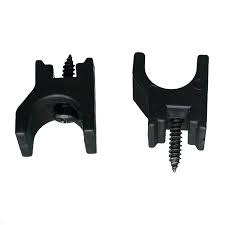
The Rear Armrest Latch (STDS5D2499) is the OEM replacement latch mechanism for Drive Medical Cruiser III and Cruiser X3 wheelchairs, restoring secure armrest lockout to the frame when the original latch wears, loosens, or breaks in service.
Loading…
The armrest’s role during a wheelchair transfer is not passive support — it is an active load-bearing component that the user pushes against, grips for stability, and positions their body weight through at the most mechanically demanding moment of the transfer sequence. During a standard wheelchair-to-surface transfer, the user applies downward and forward force through both armrests simultaneously as they push to standing, or in an assisted transfer, the caregiver positions the user against the armrest as the pivot point for moving the user from chair to bed or surface. In both scenarios, the armrest must be rigidly secured to the frame — any movement of the armrest under this load is transmitted directly to the user’s balance and to the caregiver’s controlled motion path. The rear armrest latch is the posterior securing point in this rigid connection: it is the latch that prevents the armrest from pivoting away from the frame when forward force is applied to the front of the armrest during push-off. A latch that has worn to the point where it no longer holds the armrest securely allows the armrest to rock forward under push-off force, shifting the user’s supported weight unexpectedly and converting a controlled transfer into an uncontrolled fall event.
The Cruiser III and Cruiser X3 use a flip-back armrest design — armrests that can be rotated rearward to allow lateral transfers where the user slides sideways from the wheelchair to a bed, commode, or car seat without the armrest obstructing the transfer path. The flip-back function requires the latch to serve two opposing mechanical requirements: it must hold the armrest completely rigid when engaged for seated use and weight-bearing transfers, and it must release cleanly and without binding when disengaged intentionally for a lateral transfer. A latch that is partially worn satisfies neither requirement fully — in the engaged position it may hold under light seated-use loading but release under the higher dynamic force of a transfer push-off; in the disengaged position for a lateral transfer, a partially worn latch mechanism may not fully clear the armrest detent, causing the armrest to snap back into the partial-lock position during the transfer and obstructing the user’s or caregiver’s intended lateral slide path. The latch’s condition is therefore binary from a safety standpoint: it either functions correctly at both engagement and release, or it should be replaced before transfer activity.
The STDS5D2499 part number specifies the rear latch in the two-point armrest attachment system of the Cruiser III and Cruiser X3. These wheelchairs use separate front and rear latch components at the two attachment points of each armrest — the front latch secures the forward end of the armrest tube at the front of the frame, and the rear latch (STDS5D2499) secures the posterior end. Because the latch positions are not interchangeable and are not mirror-symmetric, confirming the rear position before ordering is necessary. The rear latch geometry is designed to interact with the posterior attachment point on the Cruiser frame rail — the specific engagement depth, latch cam angle, and detent profile that produce secure engagement at the rear position. Installing a front latch at the rear position — or an armrest latch from a different Drive Medical wheelchair model — produces a mechanical mismatch at the engagement interface: the latch cam may not fully capture the frame detent, producing a false-engaged state in which the armrest appears locked but is retained only by partial cam contact rather than full detent engagement.
Latch wear on the Cruiser III and Cruiser X3 follows a pattern driven by the frequency and loading of armrest removal and reinstallation events. In homecare use, armrests are typically removed for transfer setup and reinstalled after the transfer — a cycle that may occur multiple times daily for users who transfer to a bed, commode, shower chair, or vehicle seat each day. Each removal and reinstallation event cycles the latch through its engagement sequence, and the cam or detent contact surfaces accumulate wear with each cycle. The wear is concentrated at the specific angular position of peak cam-to-detent contact force during the engagement sequence — a small area of the latch surface that carries the full engagement load every cycle. Wear at this contact point reduces the detent depth the latch achieves in the engaged position, progressively reducing armrest retention force until the latch no longer holds against transfer-level push-off loads. Identifying latch wear before complete failure — by testing armrest retention under firm hand pressure before each transfer — allows component-level latch replacement to resolve the issue before a transfer-event failure occurs.
✓ Transfer-load retention failure — Cruiser III or X3 armrests that hold under seated use loading but release or shift under the forward push-off force of a seated-to-standing or assisted transfer ✓ False-engagement correction — armrests that appear locked but show detectable movement under firm hand pressure, indicating partial cam-to-detent contact rather than full latch engagement ✓ Flip-back binding on release — latches that do not fully clear the detent during intentional disengagement for a lateral transfer, causing the armrest to resist rotation or snap back during the transfer ✓ Preventive replacement on high-cycle chairs — Cruiser III or X3 wheelchairs used by users who perform multiple daily transfers with armrest removal and reinstallation, where latch wear from cycle accumulation warrants scheduled replacement ✓ Wheelchair refurbishment — armrest latch inspection and replacement on second-hand or reconditioned Cruiser III or X3 chairs being returned to service, confirming full engagement and release function before patient use ✓ Long-term care and homecare maintenance — rear armrest latch inspection during periodic wheelchair service, with replacement when retention testing under firm hand pressure reveals detectable armrest movement in the locked position
Testimonial items
Very welcoming and informative. We went in to rent a Walker for my mom to see if she would use it. They had no rentals left so he gave us a brand new one on rental. Highly recommend this company for all your ADL needs.
Tara Maye
The rating of this product is 5 out of 5
Fantastic service and experience, from delivery to pickup we could not have asked for anything more! We rented a hospital bed, and I do not believe you would get better service anywhere. Highly recommended!
Shawn Dillon
The rating of this product is 5 out of 5
Super friendly and very helpful! Delivered the wheelchair for me, special ordered other parts and took the time to show me how to install. I recommend!
Fiona Haines
The rating of this product is 5 out of 5
Can not thank the team at Med Supplies enough for their amazing service. We were in a tough spot till we got their help. Amazing service. Kind and respectful delivery. First class all the way. Thank you again.
Jon Beatty
The rating of this product is 5 out of 5
Ordered the chair on Sunday and it arrived Monday morning. Spoke to customer service to follow up on delivery times. It was already on my front door. Excellent and helpful staff. The product is sturdy and of good quality. Thank you for your help.
H D
The rating of this product is 5 out of 5
Excellent experience - website faithfully represented what was in stock (which hasn't always been my experience with other vendors sadly), and local shipping was really fast - ordered on the weekend, received it on Monday in my case. Thank you for being
Jason Hudson
The rating of this product is 5 out of 5
0/0
You cart is currently empty
780 409-1509
Get directions