
Slideshow Items

The reinforced steel seat base with pre-aligned mounting holes delivers stable support for Trillium rollators while powder-coated finish maintains correct folding geometry eliminating seat wobble, sagging, or binding during folding and use.
Loading…
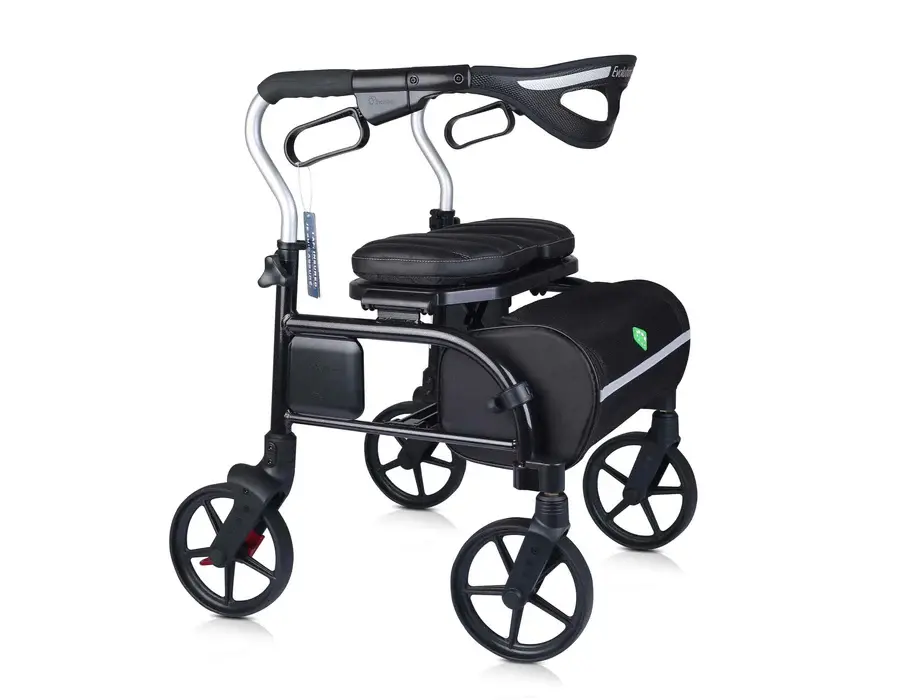
The Evolution Trillium rollator's distinctive triangular frame geometry and integrated airless wheel system create unique load distribution patterns that place substantial stress on the seat base platform compared to conventional four-wheeled rollators with pneumatic tires. The triangular frame concentrates user weight on fewer structural points, while the solid airless wheels transmit more impact vibration directly to the frame versus pneumatic wheels that absorb shock. This combination subjects the seat base to higher cyclic loading during normal use, causing premature fatigue, deformation, or cracking in standard seat bases not engineered for Trillium-specific stress patterns. This OEM replacement seat base incorporates reinforced construction with material thickness and strategic reinforcement ribs positioned to handle Trillium's concentrated load paths, maintaining rigid structural support under the full 300-pound user capacity without flexing, bending, or permanent deformation. The pre-aligned mounting holes correspond exactly to Trillium frame attachment points in Mini, Regular, and Tall size variants, ensuring proper geometric relationship between seat platform and frame that preserves the critical folding mechanism alignment—misaligned aftermarket bases cause binding, uneven folding action, or incomplete collapse compromising portability.
✓ Replacing cracked or bent bases on aging Trillium rollators (3+ years service)
✓ Repairing wobbly seats affecting user confidence and sitting stability
✓ Restoring misaligned folding mechanisms binding or catching during collapse
✓ Refurbishment of rental equipment between users in home health agencies
✓ Fleet maintenance programs in nursing homes and assisted living facilities
✓ Medical equipment retail repair services offering rollator restoration
✓ Replacement of damaged bases following drops, impacts, or accidents
✓ Upgrade from deformed bases preventing proper weight distribution
✓ Preventive maintenance before base failure creates safety hazard
✓ Professional maintenance for long-term care facility equipment programs
✓ Home user self-maintenance extending personally-owned rollator service life
Compatibility Verification: Before purchase, confirm rollator model is Evolution Trillium type by verifying triangular frame geometry and Trillium branding. Check size designation (Mini, Regular, or Tall)—most OEM seat bases fit all three sizes universally, but verify with supplier if uncertain. Inspect existing seat base to confirm similar mounting hole pattern and overall dimensions—if uncertainty exists, photograph existing base and consult supplier before ordering.
Damage Assessment & Replacement Decision: Inspect existing seat base for replacement indicators including visible cracks in base material or welds, permanent bending or warping preventing level seat surface, mounting holes elongated or stripped from hardware over-tightening, severe rust or corrosion compromising structural integrity, seat wobbling or shifting despite tight mounting hardware, uneven folding action or binding during collapse, gaps between base and frame indicating separation or failure. If any structural damage detected, replace base immediately—compromised base can fail suddenly causing user fall from seated position creating serious injury risk.
Parts & Tools Required: New Evolution Trillium seat base, mounting hardware (screws, bolts, or clips—may be included with base or reuse original hardware if in good condition), appropriate tools (typically Phillips screwdriver, metric wrenches 10mm/13mm, or hex keys depending on fastener type), wire brush for cleaning frame mounting surfaces, clean cloth for wiping debris, thread locker compound (optional for permanent installation), penetrating oil if existing hardware corroded. If replacing padded seat simultaneously, have new seat ready before disassembly to minimize rollator downtime.
Seat & Old Base Removal: Position rollator on stable, flat surface and engage parking brakes. Remove padded seat from existing base—attachment method varies by model but typically involves: (1) Fabric seat with Velcro attachment—peel Velcro strips separating seat from base; (2) Seat with snap clips—press release tabs and lift seat off clips; (3) Seat with screw attachment—remove screws securing seat to base. Set seat aside on clean surface taking care not to soil fabric. Locate and remove fasteners securing base to rollator frame—count fasteners during removal to ensure same quantity reinstalled. Note fastener locations, types, and any washers or spacers present for correct reassembly. If fasteners corroded, apply penetrating oil and allow 10-15 minutes before retry. Remove old base completely. Clean frame mounting surfaces with wire brush removing rust, debris, and old thread locker. Wipe clean with cloth.
Frame Condition Assessment: With base removed, inspect frame mounting areas for damage requiring professional evaluation: cracks in frame tubing near mounting points indicate structural compromise; elongated mounting holes from excessive wear prevent secure base attachment; severe corrosion represents metal loss affecting load capacity; bent or twisted frame prevents proper base alignment. If significant frame damage detected, consult professional repair service or consider rollator replacement—new base cannot correct compromised frame structure.
New Base Installation & Alignment: Position new seat base on frame, aligning pre-drilled mounting holes with frame attachment points. Verify base orientation—base should center on frame with equal overhang left and right, front edge should align with frame geometry allowing proper seat pad placement. Insert fasteners through base holes into frame mounting points ensuring any washers or spacers positioned correctly based on original configuration. Hand-tighten all fasteners before fully tightening any—this prevents cross-threading and allows position adjustment. Verify alignment: base should sit flat against frame without gaps or rocking, base surface should be level front-to-back and left-to-right (use small level if available), mounting holes should align naturally without forcing fasteners.
Critical Folding Mechanism Verification: Before final tightening, test folding function to ensure base doesn't interfere with mechanism. Partially fold rollator while observing base position relative to folding pivots, frame members, and wheels. Base must maintain clearance throughout full folding range of motion—no contact, rubbing, or binding should occur. If interference detected, loosen fasteners, adjust base position slightly (if adjustment possible within mounting hole tolerance), and retest. If interference cannot be eliminated, verify base is correct model for Trillium and consult supplier.
Final Tightening & Seat Reinstallation: Using appropriate tool, tighten first fastener to snug fit (moderate resistance, not final torque). Tighten remaining fasteners in alternating pattern (opposite corners) to distribute pressure evenly. After all snug, apply final torque to each fastener—target is "Hand-tight plus ¼ to ½ turn" (approximately 10-15 Nm or 7-11 lb-ft depending on fastener size). Do not overtighten—excessive torque strips threads or cracks base material. If using thread locker, apply before final tightening (note: makes future removal difficult). Reinstall padded seat onto new base using original attachment method—ensure seat centers properly with equal fabric distribution all around. If Velcro attachment, press firmly for complete engagement. If snap clips, verify all clips fully engaged. If screw attachment, tighten screws evenly.
Post-Installation Testing: Perform comprehensive testing before returning rollator to user service: (1) Seat stability—sit on seat applying full body weight while rocking side-to-side and front-to-back; no movement, wobbling, or unusual sounds should occur; (2) Folding function—fold and unfold rollator completely 3-5 times verifying smooth action without binding; (3) Frame integrity—inspect all fasteners confirming tight, check base visually for proper seating against frame; (4) Seat pad alignment—verify fabric seat centered and level with no pulling or distortion. If any issues detected, correct before allowing user operation.
Break-In Period & Retightening: New base installation may experience initial settling during first hours of use as metal-to-metal surfaces mate fully. After first day of use or 1-2 days of normal use, perform retightening check—verify all fasteners remain tight, retorque if any loosening detected. This settling is normal. After break-in period, fasteners should remain tight under normal use. Include seat base inspection in quarterly rollator maintenance routine.
User Education on Proper Use: Remind users of seat weight limit (typically 250-300 pounds—verify specific model capacity). Educate on proper sitting technique: sit centered on seat, avoid perching on front or back edge, do not rock or lean excessively while seated, ensure parking brakes engaged before sitting. Explain that seat is for brief resting, not prolonged sitting or sleeping. Teach users to visually inspect base periodically—look for cracks, check fasteners, report any wobbling immediately.
Troubleshooting Installation Issues: Problem: Base holes don't align with frame holes. Solution: Verify base is correct model for Trillium; check base orientation (may be installed backward or rotated incorrectly); inspect frame for damage or misalignment. Problem: Fasteners won't tighten. Solution: Check for cross-threading—remove and restart carefully; verify correct fastener size and thread pitch; inspect frame threads for damage requiring tap and die repair. Problem: Seat still wobbles after installation. Solution: Verify all fasteners properly torqued; check if padded seat itself is worn (seat pad wobble versus base wobble); inspect base for manufacturing defects. Problem: Folding mechanism binds. Solution: Loosen fasteners and adjust base position slightly; verify base is correct model; check for frame damage preventing proper alignment. Problem: Seat pad won't attach properly to new base. Solution: Verify attachment method compatible (Velcro, clips, or screws); check if seat pad worn requiring replacement; ensure base fully seated against frame.
Long-Term Maintenance Schedule: Monthly inspection (active use): Check fastener tightness, inspect base for cracks or deformation, verify seat pad attachment secure. Quarterly maintenance: Remove seat pad, clean base surface and frame contact area, inspect for rust or corrosion, retighten fasteners if any loosening detected. Annual inspection: Consider preventive base replacement if visible wear, cracks, or deformation developing—replace before failure rather than emergency repair. Document maintenance activities for service history tracking.
Institutional Fleet Management: For facilities maintaining multiple Trillium rollators, implement systematic seat base inspection and replacement program: Assign unique ID to each rollator for tracking; create maintenance schedule based on service hours or calendar time (recommend base inspection quarterly, replacement every 2-3 years or 500 operating hours for high-use equipment); maintain adequate base inventory; train maintenance staff on proper installation procedures; keep detailed service records tracking base replacement dates and issues discovered; consider preventive replacement during scheduled maintenance rather than reactive failure response.
Carousel items
Testimonial items
Very welcoming and informative. We went in to rent a Walker for my mom to see if she would use it. They had no rentals left so he gave us a brand new one on rental. Highly recommend this company for all your ADL needs.
Tara Maye
The rating of this product is 5 out of 5
Fantastic service and experience, from delivery to pickup we could not have asked for anything more! We rented a hospital bed, and I do not believe you would get better service anywhere. Highly recommended!
Shawn Dillon
The rating of this product is 5 out of 5
Super friendly and very helpful! Delivered the wheelchair for me, special ordered other parts and took the time to show me how to install. I recommend!
Fiona Haines
The rating of this product is 5 out of 5
Can not thank the team at Med Supplies enough for their amazing service. We were in a tough spot till we got their help. Amazing service. Kind and respectful delivery. First class all the way. Thank you again.
Jon Beatty
The rating of this product is 5 out of 5
Ordered the chair on Sunday and it arrived Monday morning. Spoke to customer service to follow up on delivery times. It was already on my front door. Excellent and helpful staff. The product is sturdy and of good quality. Thank you for your help.
H D
The rating of this product is 5 out of 5
Excellent experience - website faithfully represented what was in stock (which hasn't always been my experience with other vendors sadly), and local shipping was really fast - ordered on the weekend, received it on Monday in my case. Thank you for being
Jason Hudson
The rating of this product is 5 out of 5
0/0
You cart is currently empty
780 409-1509
Get directions