Slideshow Items

  • Arm and Leg Sleeves
  • compression-stockings-garments/arm-and-leg-sleeves
  • Compression Stockings & Garments
  • compression-stockings-garments
SGV-SIGVARIS

  |  

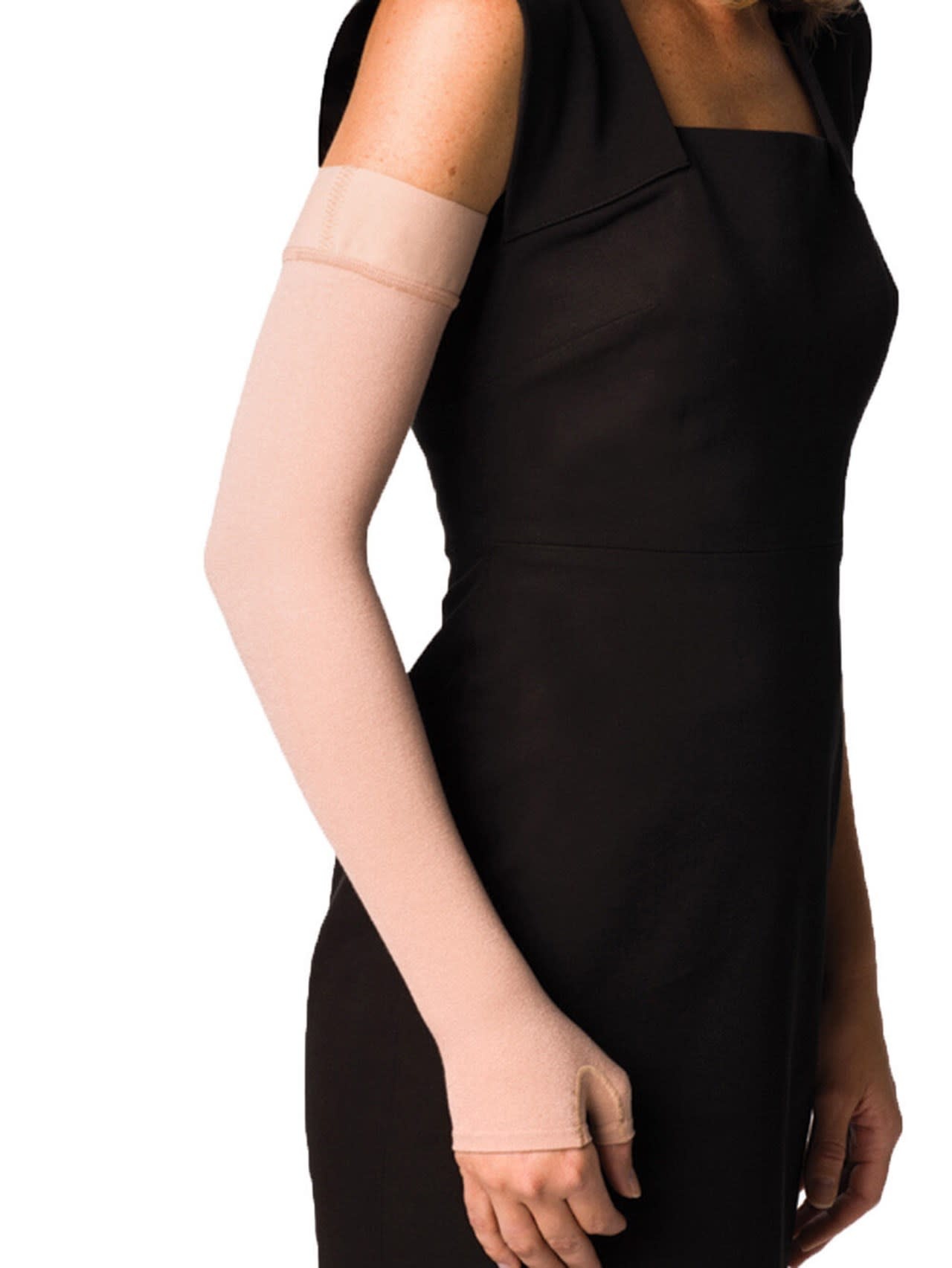
Sigvaris Advance Arm Sleeve 15-20mmHg Beige Without Gauntlet w/Grip Top

C$78.99
In stock online
In store: Check availability

Available in store

UPC Code: 745129214425
SKU: 911AMRO77/S

The Sigvaris Advance Arm Sleeve 15–20 mmHg delivers medical-grade compression designed to support upper-arm circulation, help manage swelling, and assist in lymphedema care or post-surgical recovery with breathable comfort for daily wear.

    • Why Moderate Arm Compression for Upper Extremity Lymphedema Management

      Upper extremity compression therapy addresses fundamentally different physiological challenges than leg compression, requiring specialized design considerations that account for arm anatomy, movement patterns, and the unique pathophysiology of arm lymphedema. The 15-20 mmHg compression level represents the optimal therapeutic range for early-stage lymphedema, preventive management, and mild post-surgical swelling—providing sufficient mechanical pressure to support lymphatic drainage without the excessive tightness that can restrict arm mobility and daily function. Unlike higher compression levels that may be appropriate for advanced lymphedema, this moderate range balances therapeutic efficacy with lifestyle compatibility and patient tolerance.

      Arm lymphedema presents distinct challenges compared to leg edema. Arms require full range of motion for essential daily activities—eating, dressing, working, self-care—making comfort and flexibility paramount in compression garment design. The Sigvaris Advance sleeve's 15-20 mmHg graduated compression provides the mechanical support necessary to move protein-rich lymphatic fluid from the extremity toward functioning lymph nodes, while the moderate compression level preserves the arm mobility essential for independent living. This balance is particularly critical for breast cancer survivors managing or preventing lymphedema, who need compression that supports their recovery without limiting their return to normal activities.

      The grip-top band technology (Sensinnov® or silicone) represents a crucial innovation in arm compression design. Unlike leg compression where gravity assists in keeping stockings in place, arm sleeves face constant gravitational pull downward during natural arm movement. Traditional arm sleeves without secure grip bands require constant adjustment, leading to frustration, reduced compliance, and therapeutic failure. The Sigvaris grip-top creates gentle, secure adherence to the upper arm skin without constricting circulation or causing uncomfortable pressure marks, ensuring the sleeve maintains proper position throughout active days—during reaching, lifting, exercise, and all normal arm movements.

      Breathability and moisture management become even more critical in arm compression than leg compression due to the proximity of the axilla (armpit), a high-perspiration area that can create significant moisture buildup. The Sigvaris Advance microfiber construction integrates moisture-wicking fibers that actively transport perspiration away from the skin surface, preventing the clammy discomfort that causes patients to remove compression prematurely. This is essential for lymphedema management, where consistent compression use directly correlates with therapeutic success—patients who find their sleeves comfortable wear them consistently, achieving better fluid management and reduced lymphedema progression.

      The beige color selection serves both psychological and practical purposes in arm compression therapy. Unlike legs, which are typically clothed, arms are frequently visible in short-sleeved clothing and public settings. The neutral beige tone blends naturally with various skin tones, providing discretion that reduces self-consciousness about wearing medical compression. This aesthetic consideration significantly impacts compliance, particularly for younger patients and professionals who may feel stigmatized by obviously medical-appearing garments. When compression looks less clinical and more like normal clothing, patients embrace it as part of their daily routine rather than a burden.

      Key Features & Benefits

      Medical-Grade Graduated Compression (15-20 mmHg)

      • Moderate therapeutic compression appropriate for early-stage lymphedema and prevention
      • Maximum pressure at wrist gradually decreasing toward upper arm
      • Promotes lymphatic fluid movement from extremity toward functioning drainage pathways
      • Supports venous return and reduces arm swelling
      • Prevents progression of mild lymphedema to advanced stages
      • Generally appropriate for over-the-counter use without prescription (though physician guidance recommended)
      • Comfortable compression level compatible with daily activities and arm mobility

      Sensinnov® Grip-Top Band Technology

      • Advanced silicone-based grip prevents sleeve migration during arm movement
      • Secure hold without constricting circulation or causing pressure marks
      • Gentle adherence accommodates various arm sizes and shapes
      • Eliminates constant readjustment required with traditional arm sleeves
      • Maintains proper sleeve positioning throughout active day
      • Comfortable band design prevents rolling or bunching
      • Essential for therapeutic efficacy—proper positioning ensures graduated compression maintained

      Premium Soft Microfiber Fabric

      • Lightweight construction feels comfortable against skin
      • Soft-touch microfiber texture prevents irritation during movement
      • Breathable material allows air circulation to reduce heat buildup
      • Moisture-wicking properties actively transport perspiration away from skin
      • Gentle on sensitive skin, including post-surgical or post-radiation tissue
      • Durable construction maintains compression and comfort through extended wear
      • Professional appearance suitable for workplace and social settings

      Breathable and Moisture Management

      • Enhanced airflow prevents clammy feeling in axilla (armpit) area
      • Moisture-wicking technology keeps arm dry throughout day
      • Temperature regulation suitable for various climates and seasons
      • Reduces skin maceration risk in high-perspiration areas
      • Comfortable for extended wear periods (12-16 hours daily)
      • Prevents odor buildup through moisture control
      • Essential for compliance in warm weather and active lifestyles

      Beige Color for Natural Discretion

      • Neutral tone blends with various skin tones
      • Less conspicuous than white or dark colors
      • Professional appearance appropriate for workplace wear
      • Reduces self-consciousness about medical compression garment
      • Suitable for short-sleeved clothing and visible wear
      • Other colors available through some retailers for personal preference
      • Aesthetic appeal supports consistent daily use

      Upper Extremity Specific Design

      • Anatomically shaped to follow natural arm contours
      • Accommodates full range of arm motion without restriction
      • Seamless or flat-seam construction prevents irritation during movement
      • Designed for wrist-to-upper-arm coverage
      • Proper length options ensure adequate lymphedema coverage
      • Compatible with hand/gauntlet attachments if needed (sold separately)
      • Optimized for upper extremity lymphatic anatomy

      Sigvaris Quality and Engineering

      • Premium Swiss compression garment manufacturer
      • Medical-grade construction to exacting standards
      • Consistent graduated compression verified through testing
      • Durable materials maintain therapeutic efficacy over lifespan
      • Quality control ensures reliable performance
      • Trusted brand recommended by lymphedema therapists and physicians
      • Suitable for insurance reimbursement with prescription

      Clinical Applications

      Appropriate for individuals with: ✓ Early-stage breast cancer-related lymphedema (Stage 0-1) ✓ Mild arm swelling following breast cancer surgery or radiation ✓ Post-mastectomy lymphedema prevention (at-risk arm) ✓ Lymph node removal requiring preventive compression ✓ Post-surgical arm edema following upper extremity procedures ✓ Mild primary lymphedema of the upper extremity ✓ Venous insufficiency causing arm swelling ✓ Occupational arm swelling from repetitive motion or prolonged positioning ✓ Travel-related arm swelling during flights ✓ Mild lipedema affecting upper extremities ✓ Post-trauma arm edema during recovery ✓ Chronic arm fatigue and heaviness ✓ Preventive compression for at-risk lymphedema patients ✓ Maintenance therapy following Complete Decongestive Therapy (CDT)

      Important Clinical Considerations: The 15-20 mmHg compression level is generally appropriate for mild arm swelling, early-stage lymphedema, and preventive use. While this moderate compression is often available over-the-counter, individuals with arm swelling, history of breast cancer treatment, or diagnosed lymphedema should obtain physician or lymphedema therapist guidance before beginning compression therapy. Proper measurement and fitting by certified lymphedema therapist or compression specialist ensures optimal therapeutic benefit and prevents complications. Patients with more advanced lymphedema (Stage 2-3) typically require higher compression (20-30 or 30-40 mmHg) and should not self-select lower compression levels without professional assessment.

      Contraindications for Arm Compression:

      • Acute deep vein thrombosis in affected arm
      • Severe peripheral arterial disease affecting arm circulation
      • Active infection or cellulitis in arm
      • Severe congestive heart failure with upper body edema
      • Advanced kidney disease with fluid retention
      • Known allergy to compression garment materials
      • Acute inflammatory conditions of the arm
      • Uncontrolled hypertension with compression concerns

      When Higher Compression May Be Needed:

      • Advanced lymphedema (Stage 2-3) with significant tissue changes
      • Inadequate symptom control with 15-20 mmHg compression
      • Post-Complete Decongestive Therapy requiring higher maintenance compression
      • Physician or therapist specifically recommends 20-30 or 30-40 mmHg
      • Significant volume difference between affected and unaffected arms

      Usage & Application

      For Upper Extremity Compression Under Healthcare Provider or Lymphedema Therapist Guidance: This 15-20 mmHg arm sleeve provides moderate therapeutic compression for arm swelling management. While often available over-the-counter, professional guidance ensures appropriate compression level, proper sizing, and safe use for your specific condition.

      Professional Measurement and Fitting

      1. Lymphedema Therapist Measurement Recommended:
        • Certified Lymphedema Therapist (CLT) provides expert measurement
        • Professional assessment determines appropriate compression level
        • Evaluation of arm volume and lymphedema stage
        • Consideration of medical history and treatment goals
        • Ensures proper size selection for therapeutic efficacy
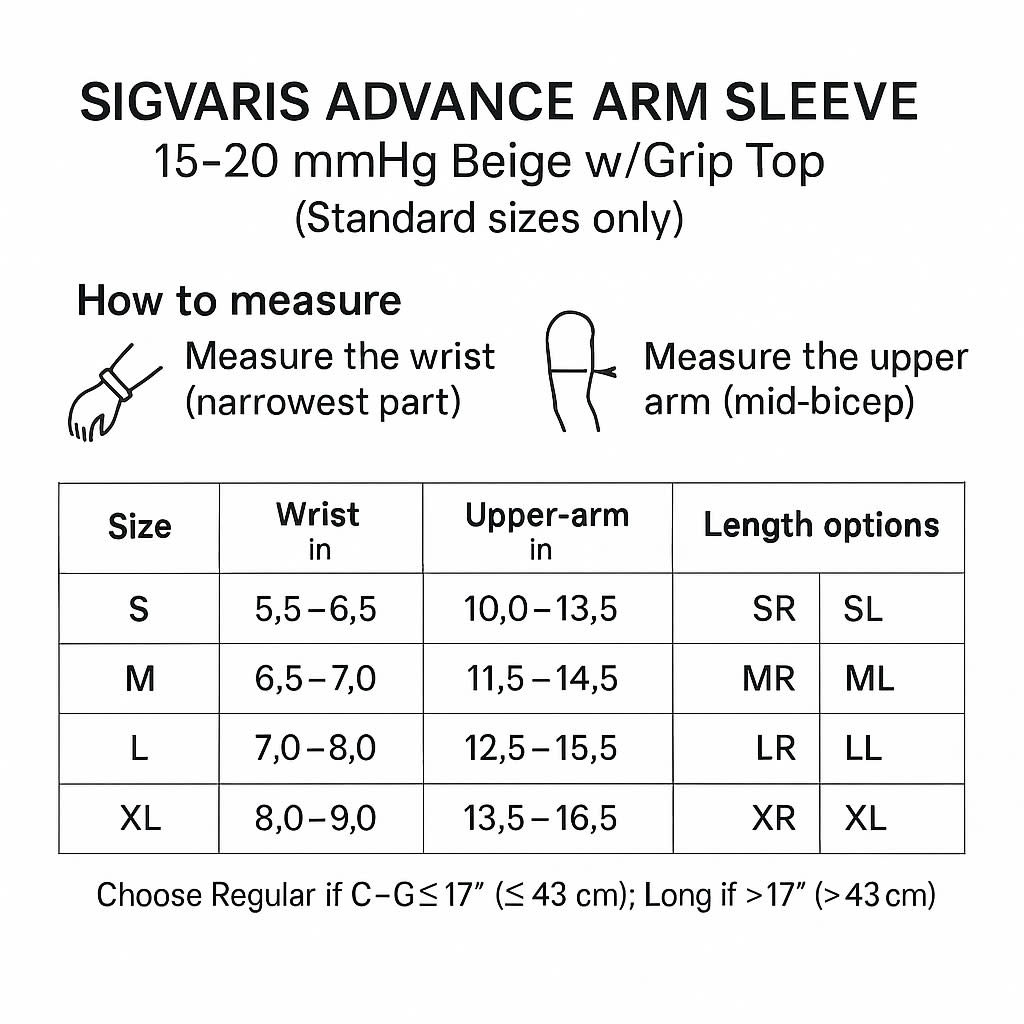
      2. Critical Measurements for Arm Sleeves:
        • Wrist circumference at smallest point
        • Forearm circumference at widest point
        • Elbow circumference
        • Upper arm circumference at widest point
        • Arm length from wrist to desired sleeve height
        • Measurements taken with arm relaxed and slightly bent
      3. Timing of Measurement:
        • Measure in morning when arm swelling typically minimal
        • If lymphedema present, measure after manual lymphatic drainage if part of treatment
        • Avoid measuring when arm significantly swollen (may require decongestive therapy first)
        • Consistent measurement technique ensures accurate sizing
      4. Size Selection:
        • Match measurements to Sigvaris Advance size chart
        • Proper fit essential for graduated compression efficacy
        • Too loose: inadequate therapeutic compression
        • Too tight: discomfort, circulation restriction, reduced compliance
        • Professional fitter can assess between-size situations

      Application Technique for Arm Sleeves

      1. Optimal Application Timing:
        • Apply in morning before arm swelling develops
        • If applying later, elevate arm 15-20 minutes first
        • Easier application when minimal swelling present
        • Establish consistent morning routine for daily compliance
      2. Preparation:
        • Ensure arm is clean and completely dry
        • Remove all jewelry (rings, bracelets, watches)
        • Trim fingernails to prevent snagging fabric
        • Avoid lotions or creams immediately before application
        • Have comfortable position for application (seated recommended)
      3. Step-by-Step Application:
        • Step 1: Turn sleeve inside-out
        • Step 2: Gather fabric and insert hand through sleeve
        • Step 3: Position sleeve at wrist level
        • Step 4: Gradually pull sleeve up forearm in small increments
        • Step 5: Work sleeve over elbow, ensuring fabric smooth
        • Step 6: Continue pulling up upper arm to final position
        • Step 7: Smooth all wrinkles and ensure even distribution
        • Step 8: Position grip-top band at desired height on upper arm
        • Step 9: Ensure grip band secure but not constricting
        • Step 10: Verify sleeve feels firm but comfortable throughout arm
      4. Application Tips:
        • Powder hands lightly if needed for easier application (cornstarch or talcum)
        • Rubber gloves can provide grip without damaging sleeve
        • Application becomes easier with practice
        • Donning aids available if difficulty persists
        • Consider compression glove/gauntlet if hand swelling present (sold separately)
      5. Proper Fit Verification:
        • Compression feels firmest at wrist, gradually decreasing up arm
        • No bunching, wrinkles, or gaps
        • Grip band stays in place without slipping
        • Full range of arm motion possible
        • Comfortable for extended wear
        • Fingers maintain normal color and sensation

      Daily Wear Guidelines

      • Recommended Duration: All waking hours for maximum lymphedema management benefit (typically 12-16 hours)
      • Removal: Remove before bedtime unless therapist specifically recommends nighttime compression
      • Activity Compatibility: Wear during all normal activities including work, exercise, household tasks
      • Exercise Use: Generally recommended to wear during exercise (consult therapist for specific activities)
      • Bathing: Remove before showering or bathing; reapply after skin completely dry
      • Consistent Use: Daily wear essential for lymphedema management and prevention
      • Arm Elevation: Combine compression with periodic arm elevation for optimal benefit

      Arm-Specific Care Considerations

      • Range of Motion: Ensure sleeve doesn't restrict normal arm movement
      • Skin Monitoring: Check arm skin daily when removing sleeve
      • Hand Swelling: If hand swells, may need compression glove/gauntlet addition
      • Axilla Care: Keep armpit area clean and dry to prevent moisture-related skin issues
      • Grip Band Position: Ensure band doesn't create tourniquet effect or visible marks
      • Activity Modifications: Avoid blood pressure measurement, blood draws, injections in affected arm

      Care and Maintenance

      1. Daily Washing Essential:
        • MUST wash after every wearing
        • Hand wash preferred for longevity
        • Gentle machine wash acceptable in lingerie bag on delicate cycle
        • Use lukewarm water (hot water damages elastic fibers)
        • Mild detergent without bleach or fabric softeners
        • Rinse thoroughly to remove all detergent residue
      2. Drying:
        • Roll in clean towel to remove excess water
        • Lay flat to air dry completely
        • NEVER tumble dry, use heat, or hang
        • Avoid direct sunlight during drying
        • Ensure completely dry before next use
        • Typically dries overnight (plan for two sleeves in rotation)
      3. Rotation System:
        • MUST have two sleeves for daily alternation
        • Allows proper drying time between wearings
        • Extends overall lifespan of sleeves
        • Ensures uninterrupted compression therapy
        • Insurance typically covers multiple sleeves annually
      4. Replacement Schedule:
        • Replace every 4-6 months with daily wear
        • Replace sooner if compression feels reduced
        • Replace if fabric shows damage, holes, or excessive wear
        • Maintain therapeutic efficacy through timely replacement
        • Worn-out compression provides inadequate lymphedema management

      Lymphedema Self-Management Integration

      Complete Decongestive Therapy (CDT) Components: Compression is one component of comprehensive lymphedema management:

      1. Manual Lymphatic Drainage (MLD): Gentle massage technique performed by therapist or self-MLD
      2. Compression Therapy: Daytime compression sleeves (this product) and nighttime bandaging if prescribed
      3. Exercise: Gentle, progressive arm exercises to promote lymphatic flow
      4. Skin Care: Meticulous hygiene and protection to prevent infection
      5. Self-Management Education: Patient education on lifelong lymphedema control

      Daily Lymphedema Management Routine:

      • Morning: Perform self-MLD if taught, apply compression sleeve
      • Throughout day: Wear sleeve during all activities, periodic arm elevation
      • Exercise: Gentle arm exercises with sleeve on
      • Evening: Remove sleeve, inspect skin, moisturize if needed
      • Night: Apply nighttime compression bandaging if prescribed by therapist

      Arm Protection Guidelines for Lymphedema Patients:

      • Avoid blood pressure measurements on affected arm
      • No blood draws, injections, or IVs in affected arm
      • Protect arm from cuts, scratches, insect bites, burns
      • Use electric razors rather than blade razors under affected arm
      • Wear gloves for gardening, cleaning, dish washing
      • Avoid extreme temperatures (hot tubs, saunas, ice packs)
      • Prevent sunburn with sunscreen or protective clothing
      • Seek immediate medical attention for any arm injury or infection signs

      Troubleshooting Common Issues

      1. Sleeve Slides Down:
        • Ensure proper size (may be too large)
        • Verify grip band making adequate contact with skin
        • Check that skin is completely dry before application
        • Arm hair may reduce grip (some patients trim arm hair in band area)
        • Consider sizing reassessment if persistent
      2. Too Tight/Uncomfortable:
        • Verify correct size with professional measurement
        • Check for wrinkles creating pressure points
        • Ensure not worn inside-out
        • May need different compression level (consult therapist)
        • Discomfort could indicate contraindication requiring evaluation
      3. Hand Swelling Develops:
        • Common issue requiring gauntlet or compression glove addition
        • Discuss with lymphedema therapist
        • Compression glove worn over or under sleeve depending on style
        • Address promptly to prevent hand lymphedema progression
      4. Skin Irritation:
        • Ensure arm completely dry before application
        • Avoid lotions before wearing sleeve
        • Check for allergic reaction to materials
        • May need barrier sleeve underneath if sensitive skin
        • Discontinue use and consult therapist if severe irritation
      5. Grip Band Marks:
        • Some marking normal and fades quickly
        • Deep or persistent marks indicate too tight or improper fit
        • Adjust band position or consult for sizing reassessment
        • Should not cause pain or numbness
      6. Difficulty Applying:
        • Use donning gloves or light powder for grip
        • Consider donning device/frame designed for arm sleeves
        • Practice improves technique
        • Seek therapist guidance if significant difficulty persists

      WHEN TO CONTACT HEALTHCARE PROVIDER OR LYMPHEDEMA THERAPIST

      Emergency - Seek Immediate Medical Attention:

      • Red streaks up arm (possible blood infection/sepsis)
      • Fever with arm redness, warmth, swelling (cellulitis)
      • Sudden severe arm swelling or pain
      • Arm becomes cold, pale, or blue
      • Signs of blood clot (sudden onset severe arm swelling, pain, warmth)

      Urgent - Contact Provider Same Day:

      • Increasing arm swelling despite compression use
      • Skin breakdown, blistering, or open wounds on arm
      • Signs of infection: warmth, redness, tenderness, flu-like symptoms
      • New numbness or tingling in arm or hand
      • Compression causing severe discomfort or pain

      Routine - Contact at Next Scheduled Appointment:

      • Questions about proper sleeve application or use
      • Need for sizing reassessment
      • Considering compression level adjustment
      • Hand swelling developing requiring gauntlet
      • General lymphedema management questions
      • Replacement sleeve needed

      Product Specifications

      Compression Parameters

      • Compression Class: Medical Grade Class I (moderate therapeutic)
      • Pressure Range: 15-20 mmHg at wrist (moderate compression)
      • Graduation Profile: Maximum pressure at wrist, decreasing gradient up arm
      • Pressure Distribution: Graduated compression optimized for upper extremity lymphatic anatomy
      • Therapeutic Level: Appropriate for early-stage lymphedema and preventive management
      • Prescription Status: Often available over-the-counter; physician/therapist guidance recommended

      Material Composition

      • Primary Fabric: Premium soft microfiber blend
      • Fiber Content: Nylon, cotton, and elastane (exact percentages may vary)
      • Compression Yarn: Medical-grade elastane for therapeutic pressure
      • Breathable Construction: Moisture-wicking fibers integrated throughout
      • Skin Contact Layer: Soft-touch microfiber gentle on sensitive skin
      • Grip Band Material: Sensinnov® silicone-based or traditional silicone grip

      Design Features

      • Style: Arm sleeve (wrist to upper arm coverage)
      • Grip-Top Band: Sensinnov® or silicone grip prevents slipping
      • Length Options: Various lengths available to accommodate different arm sizes
      • Closure: Pull-on style with grip-top band
      • Seam Construction: Seamless or flat seams minimize irritation
      • Anatomical Shape: Contoured to follow natural arm shape
      • Color: Beige (other colors may be available through select retailers)
      • Gauntlet Compatibility: Compatible with separate gauntlet/hand compression if needed

      Sizing Information

      • Size Determination: Based on wrist, forearm, elbow, and upper arm circumferences plus arm length
      • Available Sizes: Multiple sizes typically ranging from extra small through extra large (manufacturer-specific)
      • Professional Fitting Recommended: Lymphedema therapist or certified fitter for accurate measurement
      • Measurement Points: Wrist, forearm, elbow, upper arm, arm length
      • Custom Options: Some sizes may be custom-made for unusual measurements
      • Size Chart: Provided by Sigvaris and specialized medical suppliers

      Performance Characteristics

      • Breathability: Enhanced airflow for all-day comfort
      • Moisture Management: Active wicking keeps arm dry
      • Grip Performance: Secure band prevents migration during movement
      • Compression Retention: Maintains therapeutic pressure through 4-6 month lifespan
      • Durability: Quality construction withstands daily wear and washing
      • Comfort Level: High comfort rating for extended wear
      • Range of Motion: Allows full arm mobility without restriction

      Quality and Manufacturing Standards

      • Brand: Sigvaris (premium Swiss compression manufacturer)
      • Product Line: Advance
      • Medical Device Classification: Medical-grade compression garment
      • Manufacturing Standards: Produced to medical compression device standards
      • Compression Testing: Graduated pressure verified through standardized testing
      • Quality Control: Ensures consistent therapeutic efficacy
      • Latex-Free: Reduces allergic reaction risk
      • Regulatory Compliance: Meets standards for medical compression garments

      Care Requirements

      • Washing: Hand wash preferred, gentle machine wash acceptable in garment bag
      • Water Temperature: Lukewarm only
      • Detergent: Mild without bleach or fabric softeners
      • Drying: Lay flat to air dry only—NO heat, NO dryer, NO hanging
      • Frequency: Wash after every wearing
      • Lifespan: 4-6 months with daily wear and proper care
      • Replacement: When compression feels reduced or fabric shows wear

      Package Contents

      • Single Sigvaris Advance arm sleeve
      • Care instructions
      • Size information
      • Product specifications

      Patient Selection Criteria

      Ideal Candidates

      • Breast cancer survivors at risk for or with early-stage lymphedema
      • Post-mastectomy patients requiring lymphedema prevention
      • Individuals with mild arm swelling from various causes
      • Post-surgical arm edema patients in recovery phase
      • Lymph node removal patients requiring preventive compression
      • Early-stage primary lymphedema of upper extremity
      • Mild venous insufficiency affecting arm
      • Occupational arm swelling from repetitive activities
      • Individuals seeking over-the-counter moderate arm compression
      • Patients following Complete Decongestive Therapy requiring maintenance compression
      • Those preferring comfortable moderate compression over higher levels
      • Individuals with good hand dexterity for sleeve application

      Contraindications

      • Acute DVT in affected arm without anticoagulation
      • Severe peripheral arterial disease affecting arm circulation
      • Active cellulitis or infection in arm
      • Severe congestive heart failure with upper body fluid retention
      • Advanced kidney disease with fluid overload
      • Known severe allergy to compression materials
      • Acute inflammatory conditions of arm
      • Severe mobility limitations preventing safe application

      When Higher Compression Needed

      • Advanced lymphedema (Stage 2-3) with tissue changes
      • Inadequate control with 15-20 mmHg compression
      • Lymphedema therapist recommends 20-30 or 30-40 mmHg
      • Significant arm volume increase
      • Post-CDT requiring firmer maintenance compression

      Special Populations

      • Elderly Patients: May need caregiver assistance for application
      • Limited Mobility Patients: Require assessment of application capability
      • Radiation Patients: Compression beneficial but requires gentle application on sensitive skin
      • Bilateral Lymphedema: Requires sleeves for both arms
      • Pregnant Patients: Safe for use with physician approval

      Insurance and Reimbursement

      Coverage Information

      • Insurance Coverage: Often covered by health insurance with prescription and medical necessity documentation
      • Medicare Coverage: Covers compression for lymphedema with proper documentation
      • Medicaid Coverage: Varies by state; typically covers with medical necessity
      • Private Insurance: Most plans cover with prescription for diagnosed lymphedema or post-cancer treatment
      • Typical Annual Allowance: 2-4 sleeves per year when medically necessary
      • Professional Fitting: May be covered separately or included with sleeve cost

      Required Documentation

      1. Prescription:
        • Physician or lymphedema therapist prescription specifying 15-20 mmHg compression
        • Should indicate arm sleeve for upper extremity lymphedema/edema
        • Include specific length if relevant
        • Prescription typically valid for one year
      2. Medical Necessity Documentation:
        • Diagnosis codes: Lymphedema, post-mastectomy lymphedema, arm edema
        • Clinical notes supporting need for compression
        • History of breast cancer treatment if applicable
        • Documentation of lymphedema therapy if completed
      3. Professional Fitting Documentation:
        • Measurement notes from certified lymphedema therapist or fitter
        • Size selected and rationale
        • Patient education provided
        • Often required by insurance for coverage approval
      4. Itemized Receipt:
        • Detailed receipt showing product name (Sigvaris Advance Arm Sleeve)
        • Compression level (15-20 mmHg)
        • Size, color, specifications
        • Date of purchase and fitting
        • Provider information

      Reimbursement Process

      • Submit prescription and itemized receipt to insurance
      • Include fitting documentation and medical records as required
      • Allow 2-4 weeks for claim processing
      • Keep copies of all submitted documentation
      • Follow up on claim status
      • Appeal denials with additional clinical documentation

      Cost Considerations

      • With Insurance: Typically copay or coinsurance (10-50% of cost)
      • Out-of-Pocket: Full retail price varies by retailer
      • Sigvaris Advance Positioning: Premium brand with higher price point than generic
      • Value Consideration: Quality construction, durability, and therapeutic efficacy justify investment
      • Replacement Frequency: Plan for 2-4 replacements annually with insurance coverage
      • FSA/HSA Eligible: Pre-tax health account funds can cover copays and deductibles

      Cost-Savings Strategies

      • Maximize insurance annual allowance (typically 2-4 sleeves)
      • Use FSA/HSA funds for tax-advantaged purchase
      • Maintain proper care to extend sleeve lifespan
      • Two-sleeve rotation system reduces wear on each sleeve
      • Professional fitting prevents costly sizing errors
      • Appeal insurance denials with strong medical documentation
    • No reviews yet

      Add yours

    Testimonials from Google

    See all reviews

    Your cart — 0

    You cart is currently empty

    Login

    By using our website, you agree to the use of cookies. These cookies help us understand how customers arrive at and use our site and help us make improvements. Hide this message More on cookies »