Slideshow Items

  • Mobility Accessories
  • mobility/mobility-accessories
  • Mobility
  • mobility
DRV-Drive Medical

  |  

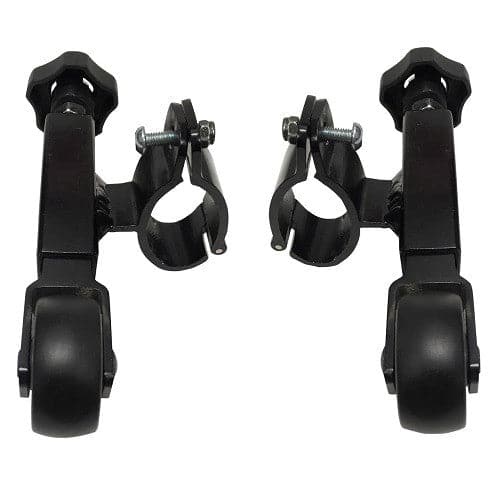
Slow-Down Brakes for Side-Fold (Excursion, Fusion, and Explore) Pair

C$114.00
In stock online
In store: Check availability

Available in store

SKU: 730-942

The adjustable tension knobs on clamp-on drag brake modules deliver independent rear wheel resistance control for Airgo side-fold rollators while low-profile design maintains folding capability preventing slope rollaway for weak grip users.

    • Why Adjustable Independent Tension Control

      The Airgo slow-down brake system's dual adjustable tension knobs enable precise customization of drag resistance on each rear wheel independently, addressing both speed control and gait asymmetry correction simultaneously. Standard hand brakes require continuous user activation and substantial grip strength to prevent rollaway on slopes, creating fatigue and fall risk for users with arthritis, Parkinson's tremor, stroke-related weakness, or age-related strength decline. This passive drag brake system applies constant adjustable friction to rear wheels without user intervention, automatically limiting rollator acceleration on inclines and smooth surfaces. The independent adjustment capability serves dual purposes: set evenly on both sides for consistent speed control, or adjusted asymmetrically (higher tension on one side) to compensate for gait imbalances from conditions like hemiparesis, leg length discrepancy, or unilateral weakness. The clamp-on installation around the rollator fork eliminates wheel removal requirements and maintains compatibility with Airgo's side-fold mechanism, ensuring the safety system integrates seamlessly without compromising the rollator's compact storage capability.

      Key Features

      • Model-Specific Compatibility: Designed exclusively for Airgo side-fold rollators (Excursion, Fusion, and Explore models)
      • Independent Tension Adjustment: Separate hand knobs control drag resistance on left and right wheels individually
      • Clamp-On Installation: Attaches around rollator fork without wheel removal or permanent modifications
      • Sold as Pair: Complete left and right brake modules for both rear wheels
      • Low-Profile Design: Compact construction doesn't interfere with side-fold mechanism or storage
      • Variable Drag Control: Tension adjustable from light resistance to significant braking force
      • Passive Safety System: Provides automatic speed limitation without user activation
      • Gait Asymmetry Compensation: Uneven tension settings help correct mild gait imbalances
      • Durable Construction: Robust materials withstand daily use and outdoor conditions
      • Black Finish: Low-profile appearance coordinates with Airgo rollator styling
      • Tool-Free Adjustment: Hand-operated tension knobs enable quick resistance changes without tools
      • Folding Mechanism Clearance: Design maintains full rollator folding and unfolding capability

      Benefits

      • Prevents Runaway Acceleration: Automatic speed control eliminates rollator "getting away" from user on slopes
      • Reduces Physical Strain: Passive braking eliminates constant grip pressure required with hand brakes alone
      • Enhances Slope Safety: Maintains controlled descent speed on ramps, driveways, and hills
      • Improves User Confidence: Predictable speed control reduces anxiety about losing rollator control
      • Accommodates Weakness: Serves users unable to operate standard hand brakes effectively
      • Corrects Gait Deviations: Asymmetric adjustment helps users with one-sided weakness maintain straight path
      • Preserves Joint Health: Reduces wrist, elbow, and shoulder stress from constant braking effort
      • Enables Longer Outings: Eliminates early fatigue from continuous brake operation on varied terrain
      • Maintains Compact Storage: Preserves side-fold capability for vehicle transport and home storage
      • Supports Independence: Allows users to navigate slopes safely without constant caregiver assistance
      • Quick Customization: Tool-free adjustment enables tension changes based on terrain or user condition
      • Cost-Effective Safety: $50-100 accessory prevents falls that could cost thousands in medical care

      Clinical Applications

      ✓ Parkinson's disease with tremor affecting hand brake control capability
      ✓ Arthritis patients with compromised grip strength in hands and wrists
      ✓ Stroke survivors with hemiparesis causing one-sided weakness or gait asymmetry
      ✓ Multiple sclerosis with progressive hand weakness and coordination deficits
      ✓ Post-operative recovery with temporary upper extremity weakness
      ✓ Elderly 75+ with age-related grip strength decline (50% reduction common)
      ✓ Cardiac patients with activity restrictions and endurance limitations
      ✓ Respiratory conditions requiring energy conservation strategies
      ✓ Cognitive impairment affecting consistent hand brake application
      ✓ Hilly neighborhood navigation where slope exposure unavoidable
      ✓ Long-term care facilities with varied resident mobility capabilities
      ✓ Rehabilitation programs transitioning patients to community mobility
      ✓ Fall prevention protocols for high-risk populations
      ✓ Gait training programs addressing asymmetric walking patterns

      Usage & Application

      Compatibility Verification: Before purchase, confirm rollator model is Airgo side-fold type (Excursion, Fusion, or Explore). Verify side-fold mechanism by observing that rollator folds laterally (sides come together) rather than front-to-back. Check rear wheel fork design to ensure adequate clearance for clamp installation—fork should have minimum ½-inch clearance around wheel axle area. Measure wheel diameter if specified by manufacturer (typically 6-8 inches for Airgo models). If uncertain about compatibility, consult with medical equipment supplier or Airgo dealer before purchase.

      Pre-Installation Assessment: Position rollator on flat, stable surface and engage parking brakes. Inspect rear wheel area for existing damage, excessive wear, or modifications that might interfere with brake installation. Check fork condition—cracks, bends, or corrosion may compromise brake mounting security. Verify rear wheels spin freely without binding or excessive wobble that could affect brake function. Test baseline rollator performance by releasing parking brakes and pushing rollator on slight incline—observe natural rolling speed to establish comparison after brake installation.

      Installation on First Rear Wheel: Select either left or right rear wheel for first installation (install order doesn't matter but install one completely before starting second). Position brake module around rollator fork near wheel, aligning clamp surfaces with fork tubing. If brake includes mounting shim or spacer, position between clamp and fork as specified in instructions. Hand-tighten clamp fastener progressively, checking alignment every few turns to ensure brake module remains centered on fork and parallel to wheel. Continue tightening until clamp is secure but don't overtighten—excessive force can deform fork or crack brake housing. Verify brake pad or friction element sits approximately 1-2mm from wheel surface (specific clearance varies by model). Test wheel rotation—wheel should spin with slight resistance but not lock up or rub significantly.

      Installation on Second Rear Wheel: Repeat installation process on opposite rear wheel, ensuring symmetrical positioning relative to first brake. Match mounting height and angle so both brakes sit at same position on their respective forks. Initial tension setting should match first brake for balanced resistance during testing phase—asymmetric settings configured later if needed for gait correction.

      Initial Tension Calibration: With both brakes installed and set to minimum tension (back tension knobs out completely), position rollator on level surface. Release parking brakes and push rollator forward—it should roll freely with minimal drag. Gradually increase tension on both knobs equally (¼ turn at a time), testing rollator rolling after each adjustment. Target initial setting: rollator should roll freely when pushed moderately but noticeably slow when allowed to roll on its own. Avoid excessive tension that makes normal flat-ground walking difficult—brakes should enhance control, not impede mobility.

      Slope Testing Protocol: After initial calibration, test brake performance on actual slope that concerns user (driveway, ramp, hilly sidewalk). User should walk with rollator on slope under supervision, evaluating speed control. If rollator still accelerates too quickly, increase tension on both brakes by ¼ turn increments until comfortable descent speed achieved. If rollator is too difficult to push, reduce tension slightly. Optimal setting: rollator maintains walking speed on downslope without "pulling" user forward or requiring constant braking. Document final tension settings (count turns from minimum position) for future reference.

      Gait Asymmetry Assessment & Correction: If user demonstrates gait deviation (veering left or right, uneven step length, one-sided weakness), asymmetric brake adjustment may help. On level surface, observe user's natural walking pattern with symmetrically-set brakes—note direction of drift. To correct rightward drift, increase tension on right brake by ¼ turn increments while maintaining left brake setting. Retest walking path after each adjustment. Goal is to add sufficient resistance on drift side to straighten walking trajectory without overcorrecting. Significant gait asymmetry (requiring >2 full turns difference) should prompt evaluation by physical therapist—may indicate underlying condition needing clinical intervention.

      User Training on Brake Function: Educate user that slow-down brakes provide passive speed control but do not replace parking brakes or hand brakes. Demonstrate: (1) Parking brakes must still be engaged when stationary—slow-down brakes don't hold rollator in place, (2) Hand brakes still needed for complete stops—slow-down brakes only control rolling speed, (3) Tension adjustments change resistance—higher settings make rollator harder to push on flat ground but safer on slopes. Practice supervised walking on flat ground, gentle slopes, and steeper inclines so user understands brake performance across varied terrain.

      Terrain-Based Tension Adjustment: For users frequenting multiple terrains, teach tension adjustment technique. Before navigating hilly areas, increase tension for enhanced control. When returning to flat areas (mall, home interior), reduce tension for easier pushing. Mark tension knob positions with tape or marker for quick reference: "indoor setting" (lower tension) and "outdoor setting" (higher tension). Some users prefer keeping higher tension permanently for consistent performance across all environments.

      Folding & Unfolding Verification: After installation, test rollator folding mechanism thoroughly. Engage parking brakes, lift side-fold release lever/mechanism, and fold rollator completely. Verify slow-down brakes don't interfere with folding—rollator should collapse to normal width. Check for brake contact with frame during folding—any rubbing or binding indicates incorrect installation requiring adjustment. Unfold rollator and verify brakes return to correct position and function normally. If brakes interfere with folding, loosen clamp slightly, adjust brake position, and retighten.

      Maintenance & Inspection Schedule: Weekly inspection: Check clamp tightness by attempting to rotate brake module on fork—no movement should occur; tighten if loose. Monthly inspection: Examine brake pad or friction element for wear; replace if significantly worn or damaged. Check fork area for stress cracks or deformation around clamp location. Quarterly maintenance: Remove brakes, clean fork area and brake mounting surfaces, apply light machine oil to tension adjustment mechanism, reinstall and recalibrate tension settings. Annual replacement consideration: Brake pads typically last 12-18 months with daily use; replace preventively if wear visible.

      Troubleshooting Common Issues: Problem: Rollator difficult to push on flat ground. Solution: Reduce tension on both brakes; verify wheels aren't binding from overtightened brakes. Problem: Rollator still accelerates on slopes. Solution: Increase tension incrementally; verify brakes are engaging wheel surface properly; check for wheel wobble affecting brake contact. Problem: Rollator veers to one side. Solution: Verify symmetric brake installation; adjust tension asymmetrically to compensate; consult PT if drift severe. Problem: Brake rattles or moves during use. Solution: Tighten clamp fastener; verify brake is positioned correctly on fork; check for worn mounting hardware. Problem: Folding mechanism stiff or binding. Solution: Loosen brake clamps slightly; adjust brake position for clearance; verify brakes aren't contacting frame during fold.

      Seasonal Adjustments: In winter conditions with ice or snow, increase brake tension to prevent slipping on slick surfaces, but recognize that even increased braking has limitations on ice—encourage users to avoid icy conditions when possible. In summer heat, materials may soften slightly affecting brake performance—monitor effectiveness and adjust tension as needed. During seasonal transitions (spring mud, fall wet leaves), increase tension temporarily when encountering slippery surfaces.

      Documentation for Continuity of Care: Record brake installation date, tension settings (both left and right), and any asymmetric adjustments made for gait correction. Document user's preferred settings for different terrain types. Share this information with caregivers, therapists, and other healthcare providers involved in user's care. If user transitions between multiple rollators (home vs. facility), replicate brake settings on all units for consistency.

      Technical Specifications

      • Compatibility: Airgo side-fold rollators including Excursion, Fusion, and Explore models (verify specific model compatibility with manufacturer)
      • Mounting Type: Clamp-on installation around rear wheel fork/frame area
      • Quantity: Pair (1 left + 1 right brake module)
      • Adjustment Mechanism: Hand-operated tension knobs with variable drag control
      • Adjustment Range: Minimum (free rolling) to maximum (significant resistance)—specific force values vary by model
      • Installation Method: Clamp tightening around fork tubing; no wheel removal required on most models
      • Tools Required: Typically Allen wrench or adjustable wrench (tool usually included or specified)
      • Brake Pad Material: Durable friction compound (rubber, synthetic, or composite)
      • Housing Material: Reinforced plastic or metal construction
      • Color: Black with low-profile finish
      • Weight: Approximately 0.5-1.0 lb per brake module (1-2 lb total)
      • Profile: Low-profile design maintains side-fold clearance
      • Position: Rear wheels only (not compatible with front casters)
      • Folding Compatibility: Maintains full side-fold functionality when properly installed
      • Expected Service Life: 12-24 months typical with daily use; varies by terrain and usage intensity
      • Maintenance: Periodic tension recalibration, annual pad replacement typical
      • Installation Time: 20-30 minutes for both brakes (experienced installer); 45-60 minutes first-time
      • Warranty: Manufacturer limited warranty against defects (verify terms with supplier)
      • Intended Use: Passive speed control accessory for Airgo side-fold rollators in home and community settings
      • Package Contents: 2 brake modules (left + right), mounting hardware, adjustment tool (if required), installation instructions
      • Model/SKU: Verify specific SKU with Airgo or authorized distributor
    • No reviews yet

      Add yours

    Testimonials from Google

    See all reviews

    Your cart — 0

    You cart is currently empty

    Login

    By using our website, you agree to the use of cookies. These cookies help us understand how customers arrive at and use our site and help us make improvements. Hide this message More on cookies »