Why 22G × 1" with Regular Bevel for Versatile Clinical Applications
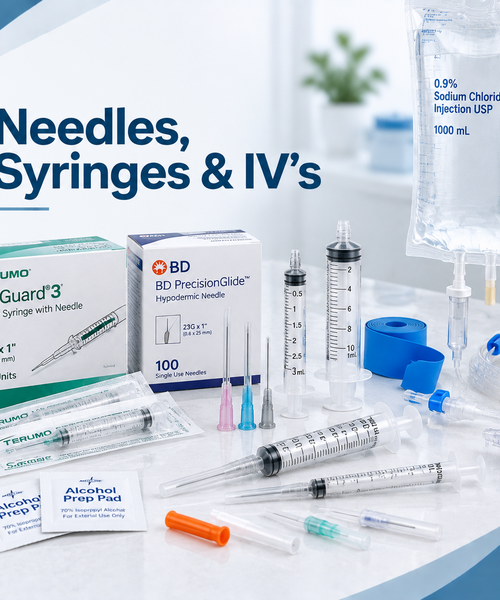
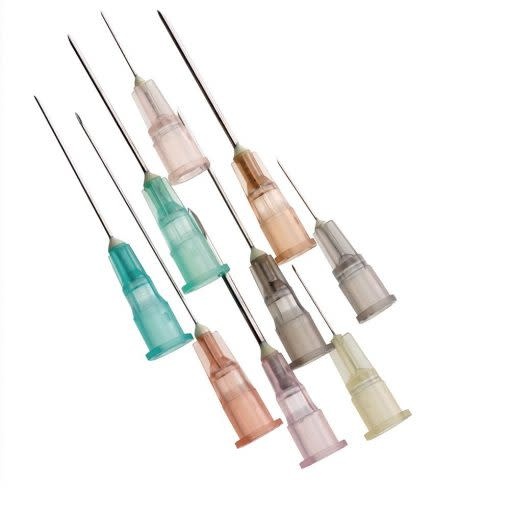
The 22-gauge needle (0.7mm outer diameter) represents the optimal balance between patient comfort and clinical versatility—fine enough to minimize injection discomfort while large enough to accommodate most non-viscous medications, blood draws, and fluid aspirations without excessive resistance or slow flow rates. The 1-inch (25mm) length is the standard for intramuscular injections in the deltoid muscle of average-sized adults and appropriate for subcutaneous injections in patients with adequate adipose tissue, making this gauge-length combination one of the most commonly used in clinical practice. The regular bevel (standard 12-15 degree angle) provides reliable skin penetration with sharp cutting edges that reduce insertion force and tissue trauma compared to blunt needles, while Terumo's triple-sharpened bevel technology with precision grinding creates ultra-sharp tips that glide through tissue smoothly. Compatible with both Luer Lock (threaded) and Luer Slip (push-on) syringes, these needles offer flexibility across different clinical workflows and equipment preferences, while the individual sterile packaging in convenient 5-needle inner packs supports both high-volume facilities and smaller clinics requiring organized inventory management.
Key Features & Benefits
Key Features:
- 22-gauge (22G) needle with 0.7mm outer diameter for balanced comfort and flow
- 1-inch (25mm) length suitable for IM and deep subcutaneous injections
- Regular bevel with precision-sharpened tip for smooth penetration
- Triple-sharpened bevel technology reduces insertion force
- Stainless steel cannula for strength and sharpness retention
- Color-coded hub (typically black for 22G per ISO standards)
- Transparent or translucent hub for blood flashback visualization
- Compatible with both Luer Lock and Luer Slip syringes
- Thin-wall construction for improved flow (product dependent)
- Sterile, individually packaged in rigid protective shields
- Inner packs of 5 needles for convenient dispensing
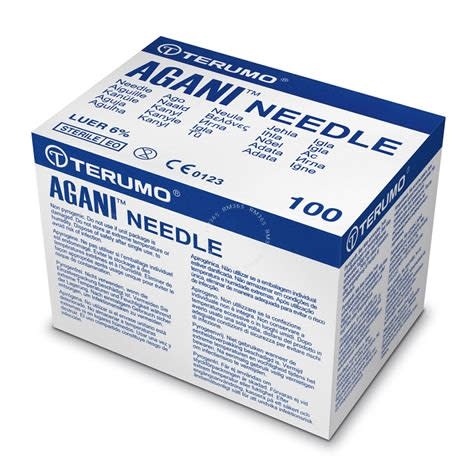
- Box of 100 needles (20 inner packs × 5 needles)
- Latex-free construction for allergy safety
- Manufactured by Terumo (trusted global medical device company)
- Meets ISO and international quality standards
- Single-use, disposable design
Benefits:
- Versatile gauge appropriate for most routine injections
- Standard length suitable for average adult IM injections
- Sharp bevel reduces injection pain and tissue trauma
- Compatible with multiple syringe types (Lock and Slip)
- Color-coded hub enables quick gauge identification
- Clear hub allows blood return visualization
- Inner packs organize inventory and reduce waste
- Sterile packaging ensures infection control
- Latex-free protects sensitive patients and healthcare workers
- Reliable Terumo quality with consistent performance
- Cost-effective bulk packaging for clinical use
- Single-use design prevents cross-contamination
Clinical Applications
Terumo 22G × 1" hypodermic needles are appropriate for:
✓ Intramuscular injections in deltoid muscle (adults) ✓ Subcutaneous injections (average to obese patients) ✓ Antibiotic IM administration (non-viscous formulations) ✓ Vaccine administration (adults and adolescents) ✓ Vitamin B12 and other vitamin injections ✓ Hormone therapy injections (non-oil-based) ✓ Blood sample collection from veins ✓ Drawing medications from vials and ampules ✓ Venipuncture for blood draws ✓ IV medication preparation and reconstitution ✓ Aspiration procedures (joint fluid, cysts) ✓ Local anesthetic administration ✓ Allergy immunotherapy injections ✓ Tuberculin testing (though 25G-27G more common) ✓ Laboratory specimen collection ✓ Veterinary medication administration ✓ Medication waste removal from multi-dose vials ✓ Research and laboratory applications
Usage & Application
Pre-Use Preparation:
- Verify clinical indication:
- Confirm medication order, dose, route, patient identity
- Check patient allergies
- Perform "5 Rights" verification
- Select appropriate equipment:
- Verify 22G × 1" appropriate for:
- Patient size and injection site
- Medication viscosity
- Injection route (IM or SubQ)
- Choose compatible syringe (Luer Lock or Luer Slip)
- Gather supplies:
- Terumo 22G × 1" needle (verify package intact, not expired)
- Appropriate syringe
- Medication
- Alcohol swabs
- Clean gloves
- Gauze pads
- Adhesive bandage
- Sharps container
- Hand hygiene:
- Wash hands thoroughly for at least 20 seconds
- Or use alcohol-based hand sanitizer
- Don clean gloves
- Inspect needle package:
- Check sterile shield for damage
- Verify expiration date
- Ensure rigid shield intact
- Discard if compromised
Attaching Needle to Syringe:
For Luer Lock Syringes:
- Remove protective cap from syringe tip
- Remove needle from protective shield by grasping hub
- Align needle hub threads with syringe tip threads
- Rotate needle clockwise while pushing gently
- Twist until firmly seated (typically 1/4 to 1/2 turn)
- Verify secure connection by gentle tug
For Luer Slip Syringes:
- Remove protective cap from syringe tip
- Remove needle from protective shield by grasping hub
- Align needle hub with syringe tip
- Push straight onto syringe tip with firm pressure
- Push until hub fully seated against barrel
- Verify secure connection by gentle tug
Drawing Medication:
- From vials:
- Clean rubber stopper with alcohol swab
- Draw air equal to medication volume into syringe
- Insert needle through stopper, inject air
- Invert vial, withdraw medication
- Remove air bubbles, verify dose
- From ampules:
- Break ampule carefully
- Insert needle and draw medication
- Remove air bubbles
- Replace needle before injection (prevents tissue trauma from glass particles)
Intramuscular Injection Technique:
Site Selection:
- Deltoid (most common for 22G × 1"): Upper arm, 2-3 finger widths below acromion
- Vastus lateralis: Anterior thigh, middle third
- Ventrogluteal: Hip, preferred for larger volumes
- Dorsogluteal: Buttock (less commonly used due to nerve proximity)
Procedure:
- Position patient with muscle relaxed
- Clean site with alcohol swab in circular motion
- Allow alcohol to air dry completely (prevents stinging)
- Stretch skin taut with non-dominant hand
- Hold syringe like dart
- Insert needle at 90-degree angle with quick, smooth motion
- Insert to full 1-inch depth to ensure medication reaches muscle
- Aspirate per protocol (pull back slightly to check for blood)
- If blood appears: withdraw, discard, prepare new injection
- If no blood: proceed with injection
- Inject medication slowly and steadily
- Withdraw needle quickly at same 90-degree angle
- Apply gentle pressure with gauze (do not massage unless indicated)
- Apply adhesive bandage if needed
Subcutaneous Injection Technique:
Site Selection:
- Abdomen (2 inches from navel)
- Anterior thigh
- Upper arm (triceps area)
- Upper buttocks
Procedure:
- Clean site with alcohol swab, allow to dry
- Pinch skin gently (for average patients) or inject without pinch (obese patients)
- Insert needle at 45-90 degree angle (depending on amount of subcutaneous tissue)
- 1-inch needle typically inserted to hub or near-hub depth for SubQ
- Release pinch if used
- Inject medication slowly
- Count to 5 after plunger depressed (ensures complete delivery)
- Withdraw needle
- Apply gentle pressure, do not massage
Blood Draw Technique:
- Apply tourniquet 3-4 inches above puncture site
- Select appropriate vein (palpate, not just visualize)
- Clean site with alcohol, allow to dry
- Anchor vein by pulling skin taut below puncture site
- Insert needle bevel up at 15-30 degree angle
- Advance until blood flashback visible in hub
- Release tourniquet once blood flow established
- Collect required sample volume
- Place gauze over site, withdraw needle
- Apply firm pressure for 2-5 minutes
- Apply pressure bandage
Post-Procedure Care:
- Do not recap needle:
- Never recap using two hands (causes needlestick injuries)
- If recapping absolutely necessary, use one-handed scoop technique only
- Activate safety device (if equipped):
- Some Terumo needles have safety shields
- Activate immediately per manufacturer instructions
- Immediate disposal:
- Dispose of entire needle-syringe assembly in sharps container
- Do not separate needle from syringe (increases injury risk)
- Remove gloves and hand hygiene:
- Remove gloves properly
- Wash hands thoroughly
- Document procedure:
- Medication, dose, route, site, time
- Patient response
- Any adverse reactions
- Monitor patient:
- Observe for adverse reactions
- Assess injection site after 10-15 minutes
Troubleshooting:
Needle won't attach to syringe:
- Verify syringe tip type matches needle hub
- For Luer Lock: ensure twisting clockwise
- Check for damaged threads
- Ensure proper alignment before twisting/pushing
Needle bends during insertion:
- May have hit bone—withdraw and reassess site
- Ensure inserting at correct angle (90° for IM)
- Don't force needle against resistance
- Replace with new needle if bent (never use bent needles)
Difficulty penetrating skin:
- Ensure needle is sharp (brand new, unopened)
- Insert with quick, dart-like motion (not slow push)
- Try different site if skin very tough
- Verify needle isn't dulled from touching surfaces
Blood appears when aspirating (IM injection):
- Withdraw needle immediately
- Apply pressure to site
- Discard syringe and medication
- Prepare new injection with fresh supplies
- Select different site
Excessive bleeding after injection:
- Apply firm pressure for 3-5 minutes
- Patients on anticoagulants may bleed more
- Elevate extremity if possible
- If bleeding doesn't stop, notify provider
Medication won't inject smoothly:
- 22G should handle most non-viscous medications well
- If viscous medication, consider larger gauge (20G)
- Ensure needle not occluded
- Verify syringe plunger moves freely
Patient reports severe pain during injection:
- May indicate wrong route (subcutaneous instead of IM)
- May have hit nerve—withdraw immediately if sharp, shooting pain
- Ensure alcohol dried before insertion
- Inject slowly (rapid injection causes discomfort)
Special Considerations:
Pediatric patients:
- 22G × 1" may be appropriate for adolescents and larger children
- Younger/smaller children typically need smaller gauge (23G-25G) and shorter length
- Calculate doses carefully (weight-based)
- Use distraction techniques
- Consider topical anesthetic for anxious children
Geriatric patients:
- May have decreased muscle mass—assess deltoid carefully
- 1-inch needle may be too long for very thin elderly patients
- Fragile skin bruises easily
- May be on anticoagulants (longer bleeding time)
- Inject slowly to reduce discomfort
Obese patients:
- 1-inch needle may be inadequate for IM injections in very obese patients
- Consider 1.5-inch needle for deltoid in obese adults
- May need longer needles for other IM sites
- SubQ injections: no pinch needed (adequate adipose tissue)
Thin/cachectic patients:
- 1-inch needle may be too long—can hit bone
- Consider shorter needle (5/8")
- Assess muscle mass at injection site
- Use smallest appropriate gauge
Patients with bleeding disorders:
- Apply pressure longer (5-10 minutes)
- Avoid IM injections when possible (higher bleeding risk than SubQ)
- Use smallest appropriate gauge
- Monitor closely for hematoma
Anticoagulated patients:
- SubQ route preferred over IM (less bleeding)
- Apply firm pressure longer after injection
- Monitor for bruising and hematoma
- Document anticoagulation status
Patients with needle anxiety:
- Explain procedure clearly
- Use distraction techniques
- Quick insertion less painful than slow
- Consider topical anesthetic
- Allow patient to look away during insertion
Medication-Specific Considerations:
Antibiotics:
- Most non-viscous antibiotics flow well through 22G
- Some painful on injection—inject slowly, use z-track technique
- Rotate sites for repeated doses
Vaccines:
- 22G appropriate for most adult vaccines
- IM route for most vaccines (check specific vaccine requirements)
- Don't aspirate for vaccines (current CDC guidelines)
- Document lot number and expiration
B12 and vitamin injections:
- IM route typically prescribed
- 22G × 1" appropriate for deltoid injection
- Rotate sites for repeated injections
Hormones (non-oil-based):
- Water-based hormone injections flow well through 22G
- For oil-based hormones, may need larger gauge (20G)
- Warm oil-based medications to body temperature (easier flow)
Blood draws:
- 22G appropriate for most adult venipuncture
- Provides good flow rate without excessive hemolysis
- May cause more discomfort than smaller gauges (23G-25G)
- Appropriate for most laboratory tests
Storage:
- Store at room temperature 15-30°C (59-86°F)
- Protect from excessive heat, cold, and humidity
- Keep in original packaging until use
- Store in clean, dry area away from contaminants
- Check expiration dates regularly
- Rotate stock using FIFO (first in, first out) method
- Do not use past expiration date (sterility not guaranteed)
Disposal:
- Dispose of needle-syringe assembly immediately in sharps container
- Never recap needles using two hands
- Do not separate needle from syringe before disposal
- Never place used needles in regular trash or recycling
- When sharps container 3/4 full, seal and dispose per local regulations
- Many pharmacies and hospitals offer sharps disposal programs
Infection Control:
- Always use aseptic technique
- Never reuse needles—single-use only
- Never use same needle for multiple patients
- Discard needles from damaged packages
- Clean injection sites with alcohol before each injection
- Use new sterile needle for each injection or blood draw
- Change needles between drawing from vial and injecting patient (especially for ampules)
When to Contact Healthcare Provider:
- Persistent pain, redness, or swelling at injection site
- Signs of infection (warmth, drainage, fever)
- Severe bruising or hematoma formation
- Needlestick injury or blood exposure
- Questions about appropriate needle size
- Difficulty performing injection despite proper technique
- Patient develops allergic reaction after injection
Regulatory Compliance:
- Terumo needles meet FDA requirements for hypodermic needles
- Manufactured in ISO-certified facilities
- Comply with ISO 7864 (sterile hypodermic needles) and ISO 9626 (needle tube dimensions)
- Meet USP standards for sterility
- Color coding follows ISO 6009 international standards (black hub for 22G)
- Latex-free to comply with healthcare safety requirements


 780 409-1509
 Get directions