
Why 25G Ă— 5/8" with Automatic Safety Shield for Protected Injection Administration
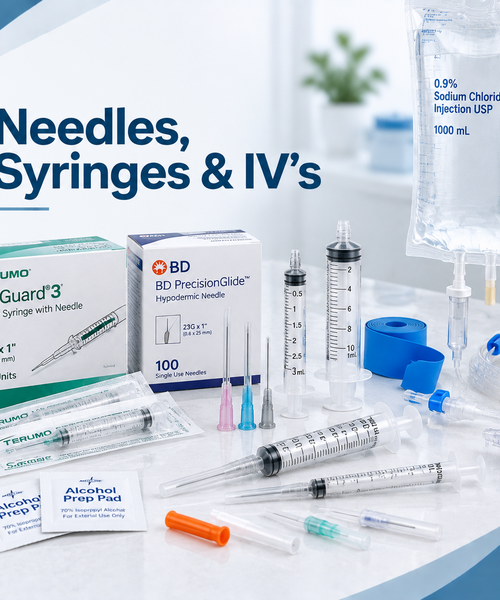
The 25-gauge needle (0.5mm outer diameter) represents one of the finest needles commonly used for routine injections—significantly thinner than standard 21-23 gauge needles, providing substantial patient comfort improvements critical for patients requiring frequent injections, those with needle anxiety, pediatric populations sensitive to injection pain, and any situation where minimizing tissue trauma improves patient acceptance and compliance with prescribed medication regimens. The 5/8-inch (16mm) needle length provides the versatile reach appropriate for both subcutaneous injections in most body sites and intramuscular injections in the deltoid muscle of average-sized adults—avoiding the excessive length that risks unintended deep muscle penetration or bone contact in thin patients, while providing adequate depth for proper medication deposition in the intended tissue layer without the shallow insertion problems that can occur with extremely short needles. The integrated SurGuard3 automatic safety shield represents critical occupational health protection that activates immediately after injection completion without requiring deliberate activation steps that could be forgotten during emergency situations or busy clinical workflows—the passive safety mechanism automatically extends a protective barrier over the contaminated needle as the plunger completes its travel, eliminating the 385,000 needlestick injuries that occur annually in U.S. healthcare settings where manual needle recapping, disposal errors, or inadvertent contact with uncapped needles expose workers to bloodborne pathogens including HIV, hepatitis B, hepatitis C, and numerous other infectious diseases that create both personal health risks and organizational liability concerns.
Key Features & Benefits
Key Features:
- 3 mL (3 cc) barrel capacity
- 25-gauge (25G) ultra-fine needle (0.5mm outer diameter)
- 5/8-inch (16mm) needle length
- Integrated permanent needle (not detachable)
- SurGuard3 automatic safety shield
- Passive safety activation (no manual step required)
- Clear transparent barrel with graduations
- Smooth-gliding plunger
- Bold graduation markings (typically 0.1 mL increments)
- Latex-free construction
- Sterile, individually packaged
- Single-use, disposable design
- Luer Lock connection not applicable (integrated needle)
- Meets OSHA Bloodborne Pathogens Standard requirements
- FDA-cleared safety-engineered device
- Manufactured by Terumo Medical Corporation
Benefits:
- Automatic safety shield prevents needlestick injuries
- Passive activation requires no additional steps
- Protects healthcare workers from bloodborne pathogen exposure
- 25G ultra-fine needle minimizes patient pain
- Improved patient comfort increases compliance
- 5/8" length appropriate for SubQ and IM deltoid
- Versatile for multiple injection routes
- 3 mL capacity suitable for most medication doses
- Integrated needle eliminates assembly step
- Cannot accidentally separate needle from syringe
- Clear barrel allows dose verification
- Bold markings improve accuracy
- Smooth plunger enables controlled injection
- Latex-free protects sensitive patients and staff
- Sterile ensures infection control
- Single-use prevents cross-contamination
- Meets regulatory safety requirements
Clinical Applications
Terumo SurGuard3 Safety Syringes 25G Ă— 5/8" are appropriate for:
âś“ Subcutaneous medication injections âś“ Insulin administration (if U-100 compatible) âś“ Vaccine administration (some vaccines) âś“ Intramuscular injections (deltoid in average adults) âś“ Allergy immunotherapy injections âś“ Hormone therapy (testosterone, estrogen if appropriate) âś“ Anticoagulant injections (enoxaparin, heparin) âś“ Biologic medication administration âś“ Fertility medication injections âś“ Pain management injections âś“ Antibiotic administration (some formulations) âś“ Vitamin supplementation (B12, others) âś“ Pediatric injections (age-appropriate) âś“ Geriatric medication delivery âś“ Home healthcare injections âś“ Outpatient clinic medication administration âś“ Long-term care facility injections âś“ Any injection requiring 25G Ă— 5/8" needle
Usage & Application
IMPORTANT: This device should be used by trained healthcare professionals or patients/caregivers specifically instructed by healthcare providers.
Pre-Use Inspection:
- Check package integrity:
- Verify sealed package intact
- Check for damage or punctures
- Discard if package compromised
- Inspect syringe:
- Check expiration date
- Verify 3 mL capacity and 25G Ă— 5/8" needle
- Ensure needle sharp and straight
- Check safety shield intact and in retracted position
- Verify barrel clear with readable graduations
- Discard if any defects
- Verify appropriate use:
- Confirm medication and dose
- Check patient allergies
- Verify injection route appropriate for 5/8" needle
Drawing Medication:
- Perform hand hygiene:
- Wash hands thoroughly
- Don clean gloves per protocol
- Prepare medication vial:
- Check medication name, concentration, expiration
- Remove cap
- Clean rubber stopper with alcohol swab
- Allow to dry
- Draw air into syringe:
- Remove needle cap (save for potential recapping)
- Pull plunger back to draw air equal to medication dose
- Air will equalize vial pressure
- Insert needle into vial:
- Hold vial on flat surface
- Insert needle through rubber stopper
- Push plunger to inject air into vial
- Invert vial and withdraw medication:
- Turn vial upside down
- Keep needle tip below fluid level
- Pull plunger slowly to withdraw medication
- Draw slightly more than needed (for air removal)
- Remove air bubbles:
- Critical: Remove all visible air bubbles
- Tap barrel to float bubbles to top
- Push plunger gently to expel air
- Adjust to exact dose
- 25G fine needle: expelling air easier than some larger gauges
- Verify dose:
- Hold at eye level
- Read at top of plunger rubber
- Should align exactly with prescribed dose
- Remove needle from vial:
- Pull straight out
- May recap using one-handed scoop technique if not injecting immediately
- Do NOT touch needle
Injection Technique:
Subcutaneous Injection:
- Select site:
- Abdomen (most common, 2+ inches from navel)
- Outer thigh
- Upper arm (back of arm)
- Rotate sites to prevent lipohypertrophy
- Clean site:
- Alcohol swab in circular motion
- Allow to dry 30 seconds
- Wet alcohol stings
- Position needle:
- Remove cap if recapped
- Hold syringe like a dart or pencil
- Pinch or not pinch:
- Most patients: No pinch needed with 5/8" needle
- Very lean patients: Pinch skin gently
- Obese patients: Usually no pinch
- Insert needle:
- 45-90 degree angle (90 degrees most common with 5/8")
- Quick, smooth motion
- Insert to full 5/8" depth
- 25G ultra-fine = minimal pain
- Inject medication:
- Push plunger slowly and steadily
- Take 5-10 seconds for full injection
- Slow injection reduces discomfort
- Count after injection:
- After plunger fully depressed, count to 5-10
- Ensures complete medication delivery
- Prevents leakage
- Remove needle and activate safety:
- Pull straight out at same angle
- SurGuard3 automatic activation:
- As needle withdrawn from skin, continue pushing plunger
- OR plunger push activates shield automatically
- Shield extends over needle
- Listen/feel for click indicating locked position
- Needle should be fully covered
- Do NOT rub site:
- Rubbing affects absorption
- Light pressure acceptable if bleeding
Intramuscular Injection (Deltoid):
- Select site:
- Deltoid muscle (upper arm)
- 5/8" appropriate for deltoid in average adults
- Measure 2-3 finger widths below acromion
- Thickest part of deltoid
- Position patient:
- Sitting or standing
- Arm relaxed
- Clean site:
- Alcohol swab
- Allow to dry
- Stretch skin taut:
- Pull skin tight (do not pinch for IM)
- Insert needle:
- 90-degree angle
- Quick, smooth motion
- Insert to full 5/8" depth
- Aspirate per protocol:
- Check for blood return
- If blood: withdraw, discard, new injection
- CDC: No aspiration for vaccines
- Inject medication:
- Slow, steady pressure
- Typical rate: 1 mL per 10 seconds
- Remove and activate safety:
- Withdraw needle straight out
- Safety shield activates automatically
- Push plunger if needed to complete activation
- Shield covers needle
- Verify locked
Safety Shield Activation:
SurGuard3 Mechanism:
- Automatic activation:
- As injection completes, continue pushing plunger OR
- As needle withdraws from patient, mechanism activates
- Passive design—no manual step required
- Verification:
- Shield fully extended over needle
- Click or audible indication (product dependent)
- Needle no longer visible
- Cannot retract shield once activated
- If shield doesn't activate:
- Rare occurrence
- Manually activate per instructions (if manual override available)
- Place in sharps container carefully
- Report device failure to facility safety officer
Disposal:
- Verify safety shield activated:
- Needle should be fully covered
- Shield locked in place
- Dispose in sharps container:
- Even with safety shield activated, use sharps container
- Do not dispose in regular trash
- Never attempt to remove needle
- Never reuse
- Remove gloves and hand hygiene
- Document:
- Medication, dose, route, site, time
- Patient tolerance
- Safety device activated successfully
Troubleshooting:
Needle bent or damaged:
- Do NOT use
- Discard in sharps container
- Use new syringe
Cannot draw medication:
- Check needle not clogged
- Ensure needle fully inserted in vial
- May need to reposition needle
- Apply steady, smooth pressure to plunger
Air bubbles difficult to remove:
- Tap barrel firmly
- Hold vertical with needle up
- Flick barrel with finger
- 25G fine needle: bubbles may take longer to expel
- Be patient, persistent
Resistance during injection:
- May be subcutaneous tissue resistance (normal)
- Do not force excessively
- If extreme resistance, may have hit muscle fascia or tendon
- Withdraw slightly and continue
Medication leaking from injection site:
- May not have counted long enough after injection
- Next time, count to 10
- Small amount normal
Safety shield won't activate:
- Push plunger completely to activate
- May need additional push after injection complete
- If still won't activate:
- Carefully place in sharps container
- Report device failure
Safety shield activated prematurely:
- If activated before injection:
- Cannot use—needle inaccessible
- Discard in sharps container
- Use new syringe
- Prevention: Handle carefully before use
Special Considerations:
Pediatric patients:
- 25G appropriate for children (reduced pain)
- 5/8" length adequate for most pediatric injections
- May need to pinch skin (less adipose tissue)
- Distraction techniques helpful
- Parent presence often beneficial
- Safety device protects pediatric nurses
Geriatric patients:
- 25G gentle on fragile tissue
- May have less adipose tissue (pinch assessment)
- Slow injection reduces discomfort
- Monitor for bleeding (anticoagulation common)
Patients with needle anxiety:
- 25G ultra-fine reduces pain significantly
- Explain safety features reassure about protection
- Topical anesthetic if appropriate
- Distraction, relaxation techniques
- Consider numbing creams (EMLA) if time permits
Diabetic patients:
- 25G appropriate for some insulin regimens
- Verify syringe U-100 compatible if used for insulin
- Rotate injection sites systematically
- Check for lipohypertrophy
Patients on anticoagulation:
- Apply pressure longer after injection
- Monitor for hematoma
- SubQ injections often preferred over IM
Obese patients:
- 5/8" adequate for SubQ in most sites
- May need longer needle for IM in some patients
- No pinch usually needed for SubQ
Very lean patients:
- Risk of IM injection even with SubQ attempt
- Pinch skin and use 45-degree angle
- 5/8" may be excessive—consider shorter needle
Home healthcare:
- Teach patients/caregivers proper technique
- Demonstrate safety shield activation
- Provide written instructions
- Emphasize sharps disposal
- Ensure adequate syringe supply
- Schedule follow-up to assess technique
Advantages of Safety-Engineered Devices:
SurGuard3 vs. Non-Safety Syringes:
- Safety advantages:
- Prevents needlestick injuries
- Protects against bloodborne pathogen exposure
- Automatic activation reduces user error
- Meets OSHA requirements
- Reduces liability
- Peace of mind for healthcare workers
- Non-safety disadvantages:
- High needlestick injury risk
- Requires careful disposal handling
- Regulatory non-compliance in many settings
Integrated Needle vs. Detachable:
- Integrated advantages:
- Cannot separate accidentally
- No assembly needed
- More secure connection
- Safety shield designed for specific needle
- Integrated considerations:
- Cannot change needle gauge or length
- Cannot replace needle after drawing from vial
Regulatory Compliance:
- OSHA Bloodborne Pathogens Standard: Requires safety-engineered sharps
- Needlestick Safety and Prevention Act: Mandates safety devices
- Most healthcare facilities require safety syringes
- Home healthcare often uses safety devices
Infection Control:
- Aseptic technique throughout
- Never reuse safety syringes
- Never share between patients
- Single-use only
- Dispose in sharps container
Storage:
- Store at room temperature
- Keep in original packaging until use
- Protect from damage (safety mechanism sensitive)
- Check expiration dates
- Rotate stock using FIFO
When to Contact Provider:
- Unable to give injection properly
- Medication reaction occurs
- Injection site complications
- Safety device malfunction
- Questions about technique
Technical Specifications
Product Details:
- Brand: Terumo SurGuard™3
- Manufacturer: Terumo Medical Corporation
- Product Type: Safety syringe with integrated needle
- Barrel Capacity: 3 mL (3 cc)
- Needle Gauge: 25G (0.5mm outer diameter)
- Needle Length: 5/8 inch (16mm)
- Needle Type: Integrated permanent needle
- Needle Material: Stainless steel
- Needle Tip: Ultra-sharp bevel
- Barrel Material: Medical-grade polypropylene (clear)
- Graduations: Bold markings, typically 0.1 mL increments
- Plunger: Smooth-gliding
- Safety Mechanism: SurGuard3 automatic safety shield
- Safety Type: Passive activation (automatic)
- Shield: Extends over needle after use, locks in place
- Activation: Push plunger fully or withdraw from patient
- Sterility: Sterile, individually packaged
- Sterilization Method: Ethylene oxide (EtO) or gamma radiation
- Latex Content: Latex-free (no natural rubber latex)
- Packaging: Individually wrapped in peel-open pouches
- Intended Use: Subcutaneous and intramuscular injections
- Patient Population: All ages with appropriate technique
- Shelf Life: Typically 5 years from manufacture
- Storage: Room temperature, dry conditions
- Regulatory Status: FDA-cleared medical device
- OSHA Compliance: Meets Bloodborne Pathogens Standard
- Standards: Needlestick Safety and Prevention Act compliant