Slideshow Items

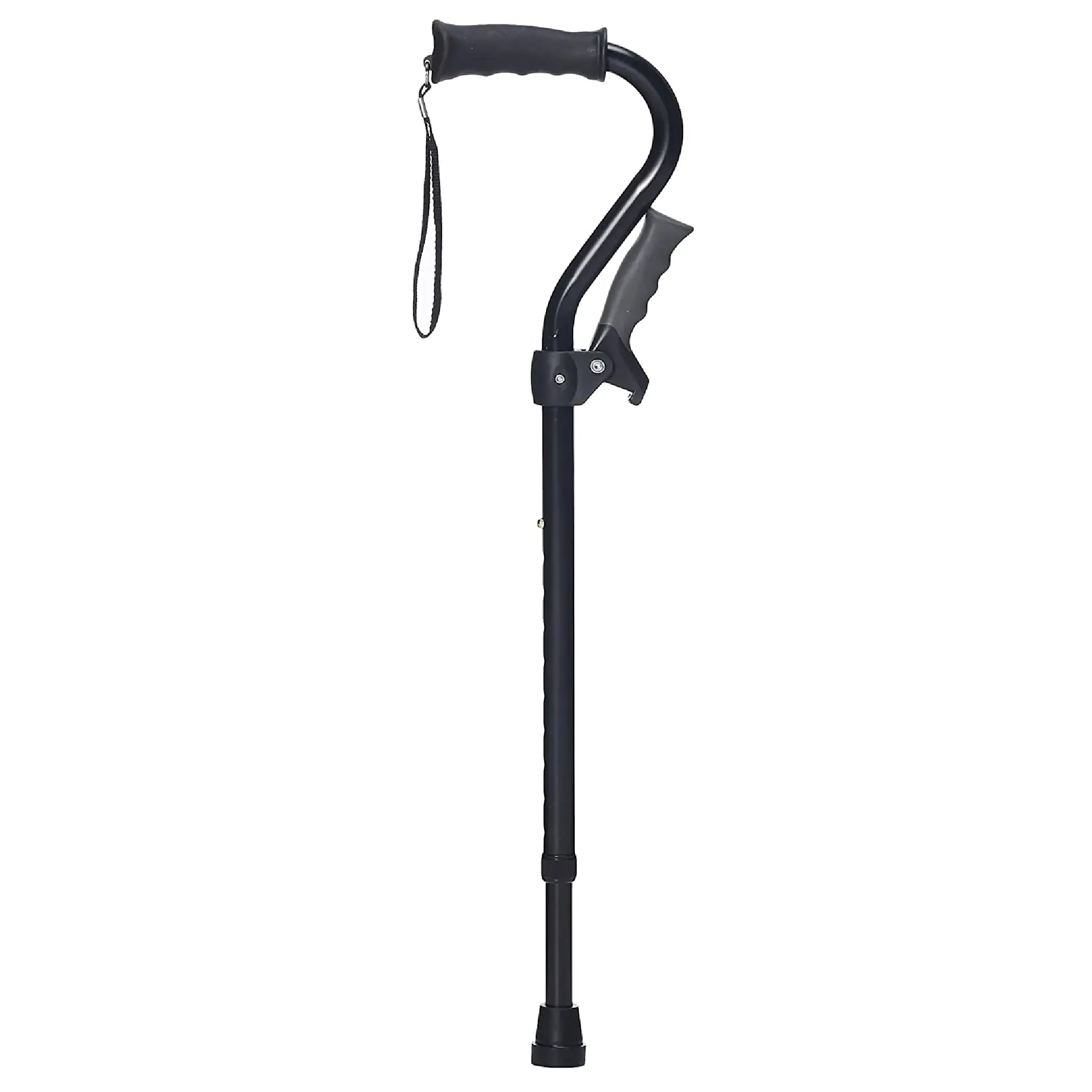
The retractable secondary assist handle with lightweight aluminum construction provides enhanced stability during standing transitions while 250-lb capacity and adjustable height accommodate varied user needs with professional black finish.
Loading…
The retractable secondary handle transforms a standard cane into a dual-support mobility aid specifically engineered for standing transitions and stability challenges. Unlike traditional single-point canes that provide minimal leverage during seated-to-standing transfers, the secondary assist handle creates a second stabilization point that users can grip when rising from chairs, toilets, or vehicle seats. This dual-handle configuration distributes weight more effectively across two points of contact, reducing upper extremity strain while providing 40-60% more leverage during the critical push-off phase of standing. The retractable design allows users to deploy the assist handle only when needed for transitions, then retract it for standard ambulation, maintaining the compact profile of a conventional cane during regular walking. This versatility addresses the common clinical scenario where patients require maximum support during transfers but prefer minimal equipment bulk during ambulation, eliminating the need to switch between different mobility devices throughout the day.
✓ Post-operative orthopedic recovery requiring enhanced transfer assistance (hip, knee replacement)
✓ Progressive neuromuscular conditions with declining lower extremity strength (Parkinson's, MS)
✓ Geriatric patients with age-related balance deficits during standing transitions
✓ Stroke survivors with hemiparesis requiring bilateral stabilization during transfers
✓ Arthritis patients with knee or hip joint pain exacerbated during standing
✓ Cardiac rehabilitation patients with exercise intolerance during exertional activities
✓ Obese patients requiring additional mechanical advantage during weight-bearing transitions
✓ Fall prevention protocols for high-risk elderly populations
✓ Post-hospitalization recovery where deconditioning affects transfer independence
✓ COPD patients with dyspnea requiring prolonged standing transition time
✓ Vestibular disorder patients with orthostatic instability
✓ Chronic pain syndromes requiring reduced loading during transfers
✓ Bridge device during progression from walker to standard cane
✓ Home health patients transitioning from caregiver-assisted to independent transfers
✓ Rehabilitation programs emphasizing functional independence in activities of daily living
Initial Setup and Height Adjustment: Stand upright wearing typical footwear and allow arms to hang naturally at sides. Position the cane vertically beside the body with the tip approximately two inches lateral to the foot. Adjust the height mechanism so the primary handle aligns with the wrist crease when the arm is relaxed. This ergonomic positioning ensures proper elbow flexion (15-20 degrees) during weight-bearing, optimizing force transmission while minimizing joint strain. Verify that all adjustment mechanisms lock securely before weight-bearing use. Test stability by applying moderate downward pressure to confirm no slippage occurs in the height adjustment system.
Retractable Handle Deployment: Before standing transitions, extend the secondary assist handle from its retracted position until it locks into the deployed configuration. The assist handle should position approximately 12-18 inches above the primary handle, creating an upper stabilization point. Ensure the locking mechanism engages completely by attempting to push the handle back toward the retracted position with moderate force. If properly locked, the handle should remain fixed. Practice deploying and retracting the handle several times while seated to develop muscle memory before using during actual transfers.
Standing Transfer Technique: When rising from a seated position (chair, toilet, vehicle seat), position the cane on the stronger side of the body or the side with better motor control. Grip the primary handle with the lower hand while placing the upper hand on the secondary assist handle. Scoot forward to the edge of the seating surface to position the center of gravity over the feet. Plant both feet firmly on the floor approximately shoulder-width apart. Lean forward from the hips to shift weight over the feet, then push downward through both hands on the cane handles while simultaneously extending the legs to rise. The dual-handle configuration allows progressive weight transfer as you rise, with the upper handle providing leverage during the initial push-off phase and the lower handle supporting balance during the final standing phase. Pause briefly in the standing position to ensure balance stability before ambulating.
Standard Ambulation: Once standing and stable, you may retract the secondary assist handle if desired for standard walking. Hold the primary handle with the hand on the side of greater weakness or instability. Advance the cane forward approximately 12-18 inches (roughly one step length) simultaneously with the weaker leg in a standard three-point gait pattern. For each step cycle, the sequence should be: cane and weaker leg advance together, then stronger leg advances past the cane position. Maintain the cane tip approximately two inches lateral to the foot during stance phase to optimize the base of support. Apply moderate downward pressure through the handle during weight-bearing phases to offload 15-20% of body weight from the lower extremities.
Seated Transitions: When preparing to sit, approach the seating surface and turn so the back is toward the seat. If the secondary handle is retracted, you may deploy it for enhanced control during the lowering phase. Position the cane on the stronger side and grip both handles if deployed. Reach back with the free hand to contact the armrest or seat edge. Lower slowly by bending the knees and hips while maintaining trunk control, using the cane handles to moderate the descent rate. The dual-handle system provides greater eccentric control during the lowering phase compared to standard canes, reducing the common problem of "dropping" into seats. Once seated, retract the secondary handle if desired for compact storage beside the chair.
Stair Navigation: When ascending stairs, lead with the stronger leg. Grip the handrail with one hand and hold the cane in the opposite hand. If the secondary handle is deployed, you may use it for additional leverage during the push-off phase of each step. Step up with the strong leg first, then bring the weaker leg and cane up to the same step. When descending stairs, reverse the pattern by leading with the cane and weaker leg first, then bringing the strong leg down to the same step. The mnemonic "up with the good, down with the bad" helps remember proper stair technique. If bilateral handrails are available and you feel unstable using the cane on stairs, consider carrying the cane and using both handrails instead, as handrails provide superior stability on stairs.
Outdoor and Uneven Terrain Use: On outdoor surfaces such as grass, gravel, or uneven pavement, maintain a wider base of support by positioning feet slightly farther apart than normal. Deploy the secondary assist handle when encountering obstacles, curbs, or significant grade changes for enhanced stability. Inspect the ground ahead to anticipate surface irregularities. Shorten step length on uneven terrain to improve balance control. The rubber tip provides reasonable traction on most surfaces, but exercise caution on wet, icy, or highly polished floors where slip risk increases. Consider using an ice pick tip attachment during winter conditions if regional climate necessitates snow and ice navigation.
Maintenance and Inspection: Before each use, inspect the rubber tip for wear patterns, cracks, or embedded debris that could compromise traction. Replace the tip when wear indicators become visible or when tread depth diminishes to less than 2mm. Check all adjustment mechanisms monthly to ensure locking systems engage properly without slippage. Examine the retractable handle mechanism for smooth deployment and retraction action; resistance or binding may indicate debris accumulation or mechanical wear requiring attention. Clean the aluminum shaft with mild soap and water; avoid abrasive cleaners that could damage the black finish. Lubricate the retractable handle mechanism every three months with silicone spray to maintain smooth operation. Store the cane in a dry location away from temperature extremes that could degrade rubber components.
Safety Monitoring: Monitor your balance confidence and transfer independence regularly. If you find yourself requiring the secondary handle deployment for all standing transitions rather than occasional use, this may indicate declining lower extremity strength warranting physical therapy evaluation or progression to a more substantial mobility device such as a walker. Conversely, if you rarely deploy the secondary handle, you may be ready to progress to a standard single-handle cane, indicating successful rehabilitation. Discuss any changes in stability, increased fall frequency, or declining confidence with your healthcare provider, as these signs may necessitate mobility aid adjustment or additional therapeutic intervention.
Model Information
Model: Uplift Enhanced Assist Cane with Retractable Secondary Handle
Color: Black
Weight Capacity: 250 lbs
Construction Materials
Frame: Lightweight aluminum alloy tubing
Handle: Ergonomic contoured grip (primary) with secondary retractable assist handle
Finish: Powder-coated black for durability and professional appearance
Tip: Standard rubber base (replaceable)
Dimensions and Adjustability
Height Range: Adjustable (typical range 32-38 inches from floor to primary handle, confirm specific model specifications)
Secondary Handle Position: Approximately 12-18 inches above primary handle when deployed
Shaft Diameter: Standard 7/8-inch to 1-inch (typical cane sizing)
Base Tip Diameter: Approximately 1-inch rubber contact surface
Functional Specifications
Handle Configuration: Dual-handle system with retractable secondary assist handle
Deployment Mechanism: Push-button or lever-activated retraction system (model-specific)
Weight: Approximately 1-1.5 lbs (lightweight aluminum construction)
Intended Use: Assisted ambulation with enhanced transfer support capability
Compliance and Standards
Intended User: Adults requiring enhanced transfer assistance beyond standard cane support
Environment: Indoor and outdoor use on stable surfaces
Maintenance: Periodic inspection of tip wear, adjustment mechanisms, and retractable handle function
Package Contents
1 Uplift Enhanced Assist Cane with retractable secondary handle (Black)
1 Standard rubber tip (installed)
Adjustment tools (if required for height mechanism)
User manual with setup and safety instructions
Carousel items
Testimonial items
Very welcoming and informative. We went in to rent a Walker for my mom to see if she would use it. They had no rentals left so he gave us a brand new one on rental. Highly recommend this company for all your ADL needs.
Tara Maye
The rating of this product is 5 out of 5
Fantastic service and experience, from delivery to pickup we could not have asked for anything more! We rented a hospital bed, and I do not believe you would get better service anywhere. Highly recommended!
Shawn Dillon
The rating of this product is 5 out of 5
Super friendly and very helpful! Delivered the wheelchair for me, special ordered other parts and took the time to show me how to install. I recommend!
Fiona Haines
The rating of this product is 5 out of 5
Can not thank the team at Med Supplies enough for their amazing service. We were in a tough spot till we got their help. Amazing service. Kind and respectful delivery. First class all the way. Thank you again.
Jon Beatty
The rating of this product is 5 out of 5
Ordered the chair on Sunday and it arrived Monday morning. Spoke to customer service to follow up on delivery times. It was already on my front door. Excellent and helpful staff. The product is sturdy and of good quality. Thank you for your help.
H D
The rating of this product is 5 out of 5
Excellent experience - website faithfully represented what was in stock (which hasn't always been my experience with other vendors sadly), and local shipping was really fast - ordered on the weekend, received it on Monday in my case. Thank you for being
Jason Hudson
The rating of this product is 5 out of 5
0/0
You cart is currently empty
780 409-1509
Get directions