Why Sterile Nitrile Gloves for Clinical and Wound Care Procedures?
The selection of sterile versus non-sterile examination gloves, and the choice of nitrile over other glove materials, reflects clinical decisions with direct implications for patient safety, practitioner protection, and procedure outcome. Non-sterile examination gloves are appropriate for routine patient contact, physical examination, and non-invasive care where the patient's intact skin serves as a natural barrier. Sterile gloves are required when a procedure involves contact with open wounds, surgically disrupted tissue, sterile body sites, or any application where aseptic technique is necessary to prevent introducing environmental microorganisms into vulnerable tissue — organisms that could initiate infection, impair healing, or cause procedural failure in patients whose tissue defenses are already compromised.
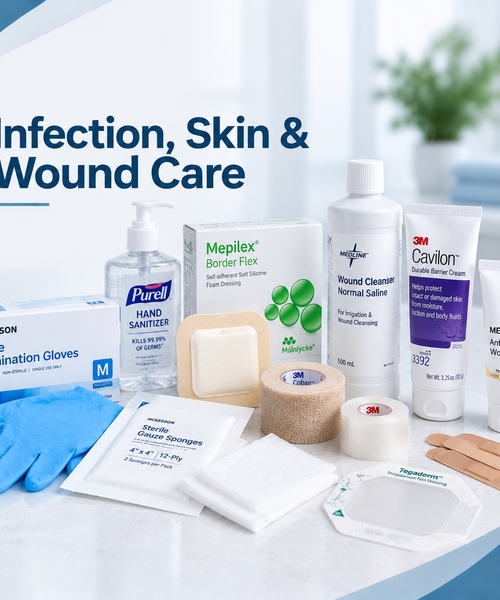
Wound dressing changes represent one of the most common indications for sterile glove use outside the operating room in hospital, long-term care, and homecare environments. Open wound beds — whether surgical incisions, chronic ulcers, pressure injuries, or traumatic lacerations — are highly susceptible to colonization by organisms introduced during the dressing change procedure. A healing wound can be set back significantly by a single introduction of new pathogenic organisms through inadequate aseptic technique. For patients with diabetes, peripheral vascular disease, immunosuppression, or malnutrition, the consequences of wound contamination during a dressing change can include chronic wound failure, systemic infection, and prolonged recovery. Sterile gloves eliminate the glove surface as a contamination vector during wound contact, preserving the aseptic integrity of the procedure environment throughout the wound exposure phase.
Nitrile offers clinically important advantages over natural rubber latex in the procedure glove context that make it the preferred material for contemporary clinical environments. Latex allergy affects approximately 1 to 6 percent of the general population and 8 to 17 percent of healthcare workers with regular occupational latex exposure — a substantially elevated prevalence reflecting cumulative sensitization from repeated latex protein contact. Type I immediate hypersensitivity reactions to latex proteins range in severity from contact urticaria to life-threatening anaphylaxis, representing a serious patient and practitioner safety concern in any healthcare environment. Nitrile gloves eliminate latex protein exposure entirely, making them the appropriate default choice for any clinical procedure where patient latex allergy status is unknown, documented, or suspected, and for practitioners managing their own occupational latex sensitization risk.
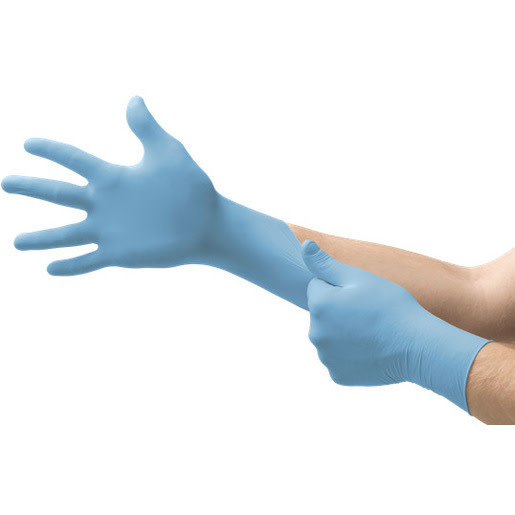
Beyond allergy prevention, nitrile provides superior puncture resistance compared to natural rubber latex at equivalent wall thickness — a meaningful advantage in procedures involving suture needles, sharp instruments, bone fragments, and other puncture hazards. The 4.3 mil thickness of the Ansell Micro-Touch Sterile Nitrile Gloves is calibrated to balance this puncture resistance with the tactile sensitivity required for precision clinical work. Suture placement, wound edge assessment, catheter positioning, and instrumentation handling all require the practitioner to sense tissue texture and resistance through the glove material, and the 4.3 mil specification preserves sufficient sensitivity for these tasks while providing the structural integrity required for reliable barrier performance. The powder-free formulation eliminates cornstarch and talc particulate contamination of wound beds — particulates that can impair healing, trigger granuloma formation, and contribute to glove allergy sensitization in patients and practitioners.
Key Features
- Sterile individually packaged glove pair for aseptic procedure and wound care applications requiring infection control
- Latex-free nitrile material eliminates latex protein allergy risk for patients and healthcare practitioners
- Extended 11.6 inch cuff provides wrist and lower forearm coverage to reduce sleeve gap contamination risk
- Approximately 4.3 mil thickness delivers puncture resistance while preserving fine tactile sensitivity
- Textured fingertips enhance grip on instruments, suture materials, and wet or slippery tissue surfaces
- Powder-free design eliminates particulate contamination of wound beds and reduces allergy sensitization risk
- Blue color provides high contrast against tissue, wound bed, and procedure drape surfaces
- Single-use disposable format prevents cross-contamination between patients and procedure episodes
- Large size accommodates practitioners with larger hand dimensions requiring full coverage without tension
Benefits
- Sterile pair packaging maintains glove sterility until the moment of donning for reliable aseptic field integrity
- Latex-free construction safe for use with patients and practitioners with known or suspected latex sensitivity
- Extended cuff reduces the gap between glove cuff and gown sleeve that can allow contamination during longer procedures
- Powder-free formulation protects wound beds from particulate contamination that could delay healing or cause complications
- Textured fingertips maintain secure instrument grip and tissue control when surfaces are wet or fluid-coated
- Nitrile puncture resistance outperforms latex at equivalent thickness for improved barrier reliability in sharp instrument procedures
- Blue glove color aids in glove integrity monitoring against procedure drapes and clinical surface backgrounds
- Large size maintains proper fit for larger-handed practitioners, preserving tactile sensitivity and reducing hand fatigue
Clinical Applications
✓ Sterile wound dressing changes for surgical incisions, chronic wounds, pressure injuries, and traumatic lacerations ✓ Minor surgical procedures outside the operating room including laceration repair, abscess drainage, and biopsy ✓ Sterile urinary catheter insertion and maintenance procedures requiring aseptic technique compliance ✓ Central line dressing changes and vascular access site care in hospital and long-term care environments ✓ Surgical and procedural drain management and drain site wound care following operative procedures ✓ Sterile aseptic medication preparation and injection procedures requiring glove barrier protection ✓ Bedside procedural interventions including lumbar puncture, bone marrow aspiration, and thoracentesis ✓ Wound irrigation and debridement procedures involving direct contact with open wound tissue ✓ Peristomal wound care and stoma revision procedures requiring sterile technique maintenance ✓ Long-term care facility wound care programs requiring accessible sterile gloves for nursing staff use ✓ Home care wound management by visiting nurses or trained family caregivers under clinical supervision ✓ Dental surgical procedures including extractions, biopsies, and implant placement requiring sterile hand protection
Usage & Application
Selecting the Correct Glove Size Proper glove fit is a clinical performance requirement with direct consequences for barrier integrity and procedural accuracy. A glove that is too small creates excessive tension across the nitrile material, reducing puncture resistance at stress points and causing progressive hand fatigue during extended procedures. A glove that is too large creates fingertip redundancy that reduces tactile sensitivity and increases the risk of inadvertent contamination from excess glove material contacting non-sterile surfaces outside the sterile field. The Large size is appropriate for practitioners with hand circumferences in the large range — typically corresponding to a hand width measured across the knuckles of approximately 8.5 to 9.5 centimeters. Practitioners uncertain of their correct glove size should verify sizing before a procedure rather than attempting adjustment during an active sterile procedure.


 780 409-1509
 Get directions