
Why 10% Dextrose Concentration in 500 mL VIAFLEX Bags for Caloric Supplementation
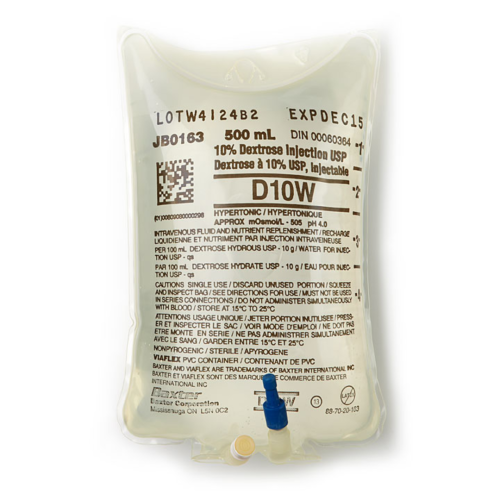
The 10% dextrose concentration (100 grams per liter, 10 grams per 100 mL) provides hypertonic glucose solution delivering substantial caloric support—340 kilocalories per liter through simple carbohydrate metabolism—essential for patients unable to meet energy requirements through enteral routes while requiring less fluid volume than lower dextrose concentrations, critical for fluid-restricted patients with cardiac, renal, or pulmonary conditions where excessive fluid administration would be detrimental. The 500 mL bag size enables precise fluid and calorie administration for short-term supplementation, pediatric dosing, and situations requiring moderate volumes without the waste associated with larger containers or the inconvenience of multiple small-volume bags—particularly valuable in perioperative settings, emergency departments, and when transitioning patients between nutritional support modalities. VIAFLEX flexible plastic containers eliminate glass breakage risks, reduce storage space requirements compared to rigid bottles, allow easier visual inspection for particulate matter or discoloration, and feature integrated medication ports that facilitate sterile additive incorporation when comprehensive parenteral nutrition formulations are needed.
Key Features & Benefits
Key Features:
- 10% dextrose concentration (100 g/L, 10 g/100 mL)
- 500 mL bag volume for moderate caloric/fluid administration
- VIAFLEX flexible plastic container (PVC or non-PVC)
- Sterile, nonpyrogenic solution
- No antimicrobial or bacteriostatic agents
- No added electrolytes or buffers
- Osmolarity approximately 505 mOsm/L (hypertonic)
- pH approximately 3.5-6.5
- 340 calories per liter (170 calories per 500 mL bag)
- Overwrap protects until ready for use
- Two ports: administration port and medication additive port
- Clear, colorless solution for easy inspection
- Graduated volume markings on bag
- Case of 24 bags for facility inventory
- Single-use container
- Latex-free construction
- DEHP-free options available (check product specifications)
Benefits:
- Provides caloric supplementation without excessive fluid
- Hypertonic concentration suitable for central or peripheral administration
- 500 mL size enables precise dosing
- Flexible container reduces storage space
- No glass breakage risk
- Easy to hang and administer
- Medication additive port enables customization
- Visual inspection through clear plastic
- Sterile ensures infection control
- Nonpyrogenic prevents fever reactions
- No preservatives avoids allergic reactions
- Case packaging convenient for facilities
- Latex-free protects sensitive patients
- Cost-effective caloric supplementation
Clinical Applications
Dextrose 10% in Water IV Solution is appropriate for:
✓ Short-term caloric supplementation when oral/enteral not feasible ✓ Peripheral parenteral nutrition (PPN) ✓ Treatment of hypoglycemia (moderate to severe) ✓ Fluid replacement with concurrent calorie needs ✓ Perioperative nutritional support ✓ Post-operative nutrition until enteral feeding resumed ✓ Emergency department caloric resuscitation ✓ NPO (nothing by mouth) patients requiring calories ✓ Transition from TPN to enteral nutrition ✓ Supplemental calories during inadequate oral intake ✓ Dehydration with increased metabolic demands ✓ Vehicle for medication administration requiring calories ✓ Pediatric caloric and fluid support (with appropriate calculations) ✓ Hyperkalemia treatment (with insulin—drives potassium intracellularly) ✓ Diabetic ketoacidosis treatment (specific protocols) ✓ Additive to TPN formulations ✓ Critical care nutritional bridge therapy
Usage & Application
IMPORTANT: Dextrose 10% must be prescribed by healthcare provider and administered by qualified clinical personnel only.
Pre-Administration Assessment:
- Verify order:
- Confirm dextrose concentration (10%)
- Check volume (500 mL)
- Verify rate of administration
- Review additives if prescribed
- Confirm patient identity
- Patient assessment:
- Check blood glucose level
- Review electrolytes (especially potassium)
- Assess fluid status
- Review medical history:
- Diabetes mellitus
- Renal function
- Cardiac function
- History of hyperglycemia
- Check for allergies
- Contraindications—Do NOT administer if patient has:
- Diabetic coma with hyperglycemia
- Intracranial or intraspinal hemorrhage
- Delirium tremens with dehydration
- Severe dehydration
- Anuria (no urine output)
- Hepatic coma
- Glucose-galactose malabsorption syndrome
- Use with caution if patient has:
- Diabetes mellitus
- Renal impairment
- Cardiac disease
- Subclinical or overt diabetes
- Electrolyte imbalances
Preparation:
- Inspect solution:
- Remove overwrap just before use
- Inspect bag for:
- Leaks (squeeze bag firmly)
- Cloudiness or discoloration (solution should be clear)
- Particulate matter
- Intact seals
- Discard if:
- Leaking
- Cloudy or discolored
- Contains particles
- Vacuum not present (bag does not expand fully after overwrap removed)
- Solution frozen (thaw at room temperature if accidentally frozen)
- Check expiration date:
- Gather supplies:
- Dextrose 10% in Water 500 mL bag
- IV administration set (appropriate for solution)
- IV pump (if precise rate required)
- Alcohol swabs
- Gloves
- IV pole
- Any prescribed additives
- Blood glucose monitoring equipment
- Adding medications (if ordered):
- Use aseptic technique
- Clean medication additive port with alcohol
- Inject medication into bag through port
- Mix thoroughly:
- Invert bag several times
- Ensure complete distribution
- Label bag with:
- Medication name and dose
- Date and time added
- Nurse/pharmacist initials
- Verify compatibility:
- Check drug compatibility with dextrose
- Some medications incompatible with dextrose solutions
Administration:
- Select IV access:
- Central venous access preferred for:
- Extended use
- Higher concentrations
- Patients with poor peripheral veins
- Peripheral IV acceptable for:
- Short-term use
- Adequate peripheral veins
- 10% concentration (though hypertonic, tolerated peripherally short-term)
- Monitor peripheral site closely (hypertonic solutions can cause phlebitis)
- Hang solution:
- Remove protective cover from administration port
- Insert administration set spike:
- Remove set from package
- Close roller clamp
- Remove protective cap from spike
- Insert spike into administration port
- Hang bag on IV pole
- Prime tubing:
- Squeeze drip chamber to fill halfway
- Open roller clamp
- Allow solution to flow through tubing
- Remove all air bubbles
- Close clamp once primed
- Connect to patient:
- Clean IV catheter hub with alcohol
- Connect tubing to IV catheter
- Secure connection
- Set infusion rate:
- Rate determined by:
- Patient's fluid needs
- Caloric requirements
- Cardiovascular status
- Blood glucose levels
- Provider order
- Typical rates:
- Adults: 2.5-5 mL/kg/hour (adjust per patient needs)
- Pediatric: weight-based calculation per provider
- Use infusion pump for:
- Precise rate control
- Pediatric patients
- Fluid-restricted patients
- Prevention of fluid overload
- Secure tubing:
- Tape or secure to prevent tension on IV site
- Label tubing with date and time
Monitoring During Administration:
- Blood glucose monitoring:
- Check frequently:
- Before starting infusion
- Every 1-4 hours during infusion (per protocol)
- When adjusting rate
- If patient shows signs of hyper/hypoglycemia
- Target range typically: 70-180 mg/dL (varies by facility/patient)
- Hyperglycemia risk: High with 10% dextrose
- May need insulin coverage per sliding scale or protocol
- Vital signs:
- Monitor regularly per facility protocol
- Watch for fluid overload signs
- Intake and output:
- Document all fluid intake
- Monitor urine output
- Daily weights if indicated
- Electrolytes:
- Monitor potassium, sodium, other electrolytes
- Dextrose administration can cause shifts
- Hypokalemia risk: Glucose drives potassium into cells
- IV site assessment:
- Check every 1-2 hours minimum
- Watch for phlebitis signs:
- Redness
- Warmth
- Pain/tenderness
- Swelling
- Palpable cord
- Watch for infiltration:
- Swelling around site
- Coolness
- Slowed infusion rate
- Pain
- Discontinue if phlebitis or infiltration occurs
- Signs of complications:
- Hyperglycemia (increased thirst, urination, confusion)
- Fluid overload (edema, dyspnea, crackles)
- Electrolyte imbalances
- Infection at IV site
Discontinuation:
- When to stop:
- Infusion complete
- Patient able to resume oral/enteral intake
- Adverse reaction occurs
- IV site compromised
- Provider orders discontinuation
- Procedure:
- Close roller clamp
- Remove tubing from IV catheter (or discontinue IV)
- Dispose of bag and tubing per facility protocol
- Document total volume infused
Post-Administration Care:
- Final documentation:
- Total volume infused
- Patient tolerance
- Blood glucose levels
- Any complications
- IV site condition
- Dispose properly:
- Place empty bags in appropriate waste
- Follow facility disposal protocols
Storage:
Before Use:
- Store at room temperature 20-25°C (68-77°F)
- Excursions permitted 15-30°C (59-86°F)
- Protect from freezing
- Protect from excessive heat
- Keep in moisture barrier overwrap until ready to use
- Do not remove from overwrap until time of use
- Brief exposure to temperatures up to 40°C does not adversely affect product
Shelf Life:
- Check expiration date on bag
- Typically 18-24 months from manufacture
Do NOT use if:
- Expired
- Solution cloudy or discolored
- Contains particulates
- Bag leaking
- Seal compromised
Troubleshooting:
Hyperglycemia during infusion:
- Check blood glucose
- Notify provider
- May need insulin administration
- May need to slow infusion rate
- Monitor closely
Infusion running too slowly:
- Check for kinks in tubing
- Verify clamps open
- Check IV site for infiltration
- Reposition patient's arm
- Verify pump settings
Phlebitis at peripheral IV site:
- Assess severity using phlebitis scale
- Grade 2+ requires IV removal
- Apply warm compress
- Document
- Restart IV in different location
- Consider central access if extended therapy needed
Infiltration:
- Stop infusion immediately
- Remove IV catheter
- Elevate extremity
- Apply warm compress (for dextrose infiltration)
- Assess tissue damage
- Document
- Restart in different location
Fluid overload:
- Slow or stop infusion
- Notify provider
- Elevate head of bed
- Assess respiratory status
- May need diuretics
- Monitor oxygen saturation
Hypoglycemia (if infusion stopped abruptly):
- Risk of rebound hypoglycemia when stopping hypertonic dextrose
- Taper infusion per protocol
- Check blood glucose
- May need D5W or D10W at slower rate
- Monitor closely
Special Considerations:
Diabetic patients:
- Require close blood glucose monitoring
- May need insulin coverage
- Check glucose hourly initially
- Adjust insulin per sliding scale or protocol
Pediatric patients:
- Doses calculated by weight
- Monitor glucose very closely (more prone to fluctuations)
- Use infusion pump mandatory
- Smaller fluid volumes appropriate
- Risk of hyperglycemia and fluid overload
Geriatric patients:
- May have reduced glucose tolerance
- Risk of fluid overload
- Monitor cardiac status closely
- May need slower infusion rates
Renal impairment:
- Reduced ability to excrete water
- Fluid overload risk
- Monitor fluid status closely
- May need reduced volume/rate
Cardiac patients:
- Fluid overload risk
- Monitor for signs of heart failure
- May need slower rates
- Daily weights important
Hepatic impairment:
- Impaired glucose metabolism
- Monitor glucose closely
- Risk of hyperglycemia
Additives commonly mixed with dextrose 10%:
- Electrolytes:
- Sodium chloride
- Potassium chloride (verify compatibility and concentration)
- Calcium gluconate
- Magnesium sulfate
- Vitamins:
- Multivitamins for TPN
- Vitamin C
- Medications:
- Insulin (for hyperglycemia management)
- Heparin (for line patency)
- Always verify compatibility before adding
Incompatibilities:
- Some medications incompatible with dextrose
- Check drug compatibility references
- Never mix incompatible substances
Advantages of 10% Dextrose:
- vs. D5W (5% dextrose):
- Twice the calories per volume
- Less fluid for same calories
- Better for fluid-restricted patients
- vs. D50W (50% dextrose):
- Less hypertonic
- Can use peripherally short-term
- Less risk of severe phlebitis
When to Use Different Concentrations:
- D5W (5%): Maintenance hydration, minimal calorie needs
- D10W (10%): Moderate calorie supplementation, fluid restriction
- D20-50W: Severe hypoglycemia treatment, central access required for sustained use
Nutritional Information:
Per 500 mL bag:
- Dextrose: 50 grams
- Calories: 170 kilocalories (3.4 kcal/mL)
- Osmolarity: ~505 mOsm/L (hypertonic)
Per 1000 mL (2 bags):
- Dextrose: 100 grams
- Calories: 340 kilocalories
Metabolic Considerations:
- Dextrose metabolized to CO2 and H2O
- Provides 3.4 kcal per gram when metabolized
- Does not provide protein, fat, vitamins, or minerals
- Not suitable as sole nutrition source long-term
When to Contact Provider:
Immediately:
- Signs of severe hyperglycemia (>300 mg/dL, confusion, altered mental status)
- Chest pain or dyspnea
- Severe allergic reaction
- Signs of fluid overload
- Significant IV site complications
Soon:
- Persistent hyperglycemia despite interventions
- Electrolyte abnormalities
- Inability to maintain IV access
- Questions about appropriate use
Regulatory Information:
- FDA-approved IV solution
- Manufactured under cGMP (current Good Manufacturing Practices)
- USP grade dextrose
- Nonpyrogenic per USP standards
- Sterile per USP standards
Technical Specifications
Product Details:
- Product Name: Dextrose 10% in Water Injection
- Concentration: 10% w/v (10 grams per 100 mL, 100 grams per liter)
- Volume: 500 mL per bag
- Container: VIAFLEX flexible plastic bag (PVC or non-PVC)
- Osmolarity: Approximately 505 mOsm/L (hypertonic)
- pH: Approximately 3.5-6.5
- Caloric Value: 340 kcal/L (3.4 kcal/mL, 170 kcal per 500 mL bag)
- Dextrose Content: 50 grams per 500 mL bag
- Sterility: Sterile
- Pyrogenicity: Nonpyrogenic
- Preservatives: None
- Antimicrobial Agents: None
- Bacteriostatic Agents: None
- Electrolytes: None (unless added)
- Buffers: None
- Solution Appearance: Clear, colorless
- Ports: Administration port and medication additive port
- Overwrap: Moisture barrier until ready for use
- Latex Content: Latex-free
- DEHP: Check specific product (DEHP-free options available)
- Packaging: Case of 24 bags (24 × 500 mL = 12 liters total)
- Intended Use: Intravenous administration only
- Single Use: Discard unused portion
- Storage: Room temperature 20-25°C (68-77°F)
- Shelf Life: Check expiration on bag (typically 18-24 months)
- Regulatory Status: FDA-approved drug product
- Manufacturer: Various (Baxter, B. Braun, Hospira, others)
- NDC: Varies by manufacturer