
Slideshow Items

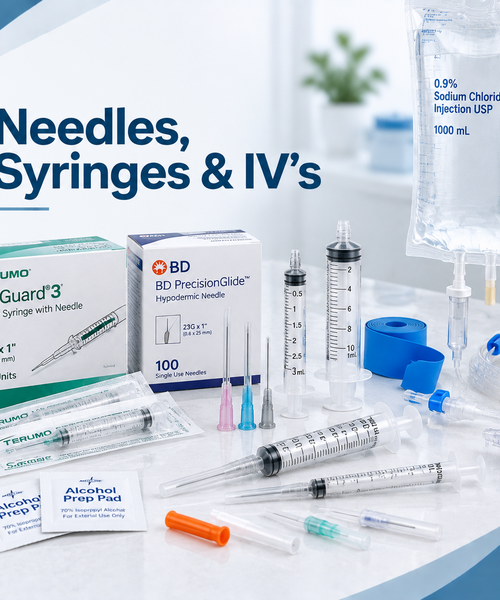
  • Needles, Syringes & IV's
  • needles-syringes-ivs
BD-BD Medical

  |  

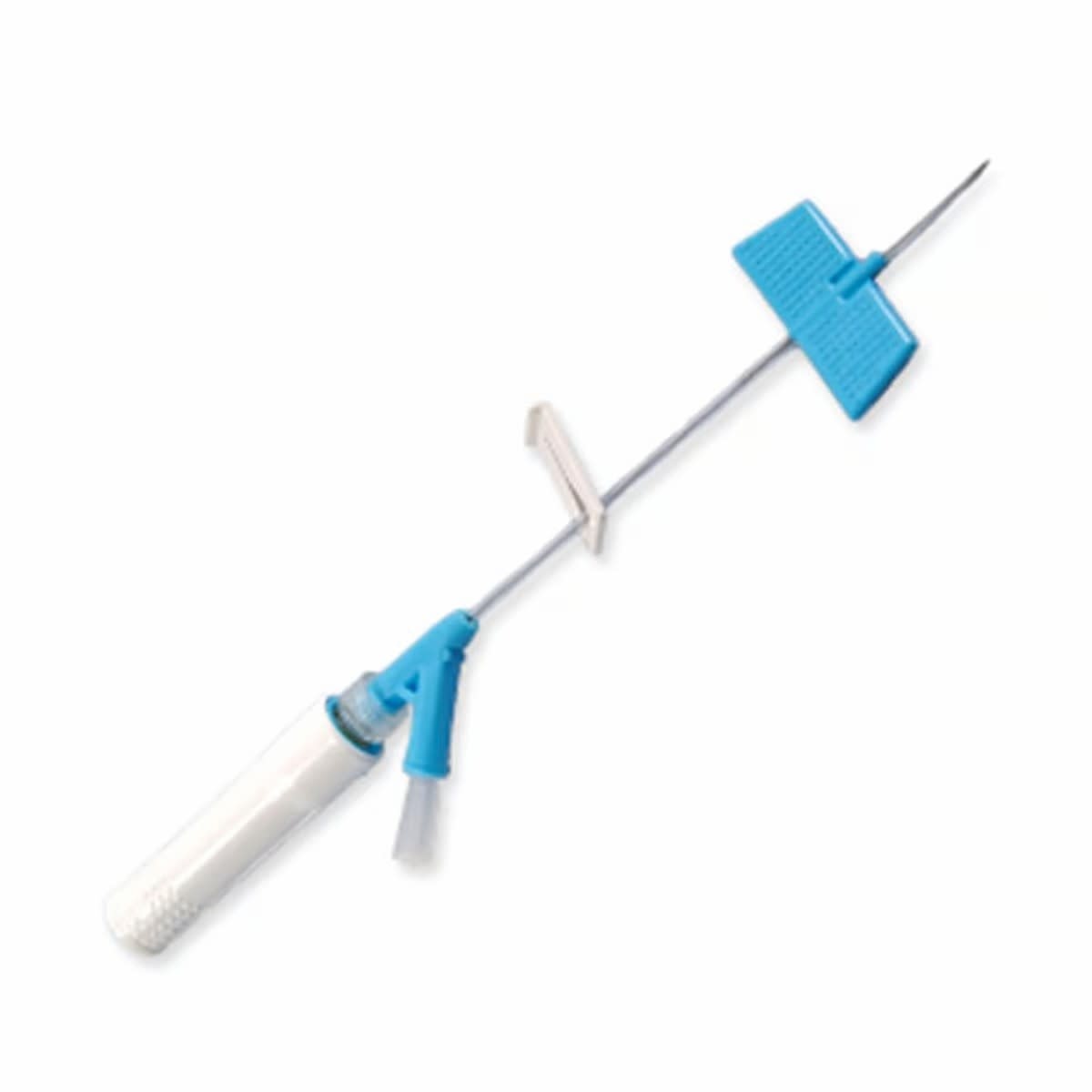
BD Saf-T-Intima Iv Catheter with Wings 22g X 3/4" Y-Adapter And Tubing Sterile Blue

C$12.00
In stock online
In store: Check availability

Available in store

SKU: 383329

BD winged IV catheters deliver gentle peripheral access with 22-gauge fine catheter for fragile veins, stabilizing wings for secure positioning, integrated Y-adapter enabling multiple connections, 3/4-inch length for superficial veins.

    • Why 22G × 3/4" Winged Design with Y-Adapter for Fragile Vein Access

      The 22-gauge catheter (0.7mm outer diameter) provides the fine profile essential for accessing small, fragile, or compromised veins commonly encountered in pediatric patients, geriatric populations with age-related vascular changes, oncology patients with chemotherapy-damaged vessels, and any clinical situation where larger 20-gauge or 18-gauge catheters would cause excessive trauma, vessel wall damage, or insertion failure—while still maintaining adequate flow rates for routine IV medications, maintenance fluids, and most clinical therapies that don't require rapid high-volume infusion, making this gauge the optimal choice when vein preservation and patient comfort must be balanced against therapeutic flow requirements. The distinctive winged hub design provides the fingertip positioning control critical when working with small-caliber veins where millimeter-level precision during insertion determines success versus vessel wall perforation, while post-insertion the flexible wings create a low-profile stabilization platform that conforms to hand and forearm contours where fragile veins are most accessible—reducing the catheter migration, dislodgement, and mechanical phlebitis that occur more frequently with standard hub designs lacking specialized securement features, particularly important for pediatric patients who move frequently and geriatric patients with thin skin providing poor taping adhesion. The integrated Y-adapter with extension tubing eliminates workflow steps by providing immediate dual-port access for simultaneous medication administration and IV fluid delivery or the ability to switch between syringe-based medication pushes and continuous infusions without disconnecting from the catheter—critical for pediatric and oncology protocols requiring multiple concurrent medications, while the extension tubing moves the connection/disconnection point away from the actual insertion site where manipulation-related contamination poses the greatest catheter-related bloodstream infection risk.

      Key Features & Benefits

      Key Features:

      • 22-gauge (22G) catheter with 0.7mm outer diameter
      • 3/4-inch (19mm) catheter length
      • Flexible stabilizing wings at catheter hub
      • Integrated Y-adapter with dual ports
      • Extension tubing between catheter and Y-adapter
      • Color-coded blue hub (22G per ISO standard)
      • Radiopaque catheter for X-ray visualization
      • Smooth tapered catheter tip
      • Back-cut bevel for easier insertion
      • Flashback chamber confirms vein entry
      • Polyurethane or FEP catheter material
      • Stainless steel introducer needle
      • Needleless connectors on Y-adapter ports
      • Sterile, individually packaged
      • Single-use, disposable design
      • Latex-free construction
      • DEHP-free materials
      • Meets ISO and FDA standards
      • Manufactured by BD (Becton, Dickinson and Company)

      Benefits:

      • 22G gentle on small and fragile veins
      • Reduced trauma compared to larger gauges
      • Appropriate flow for most routine therapies
      • 3/4" length ideal for superficial veins
      • Wings enable precise insertion control
      • Flat wing design perfect for secure taping
      • Wings reduce catheter movement
      • Integrated Y-adapter provides dual access
      • Can give medications while IV fluid running
      • Multiple medication administration without disconnection
      • Extension tubing protects insertion site from manipulation
      • Needleless ports prevent needlestick injuries
      • Blue color-coding enables instant identification
      • Radiopaque allows position verification
      • Flashback confirms successful venipuncture
      • Sterile packaging ensures infection control
      • Single-use prevents cross-contamination
      • Latex-free protects sensitive patients and staff

      Clinical Applications

      BD 22G × 3/4" Winged IV Catheters with Y-Adapter are appropriate for:

      ✓ Pediatric IV access (infants, children, adolescents) ✓ Geriatric patients with fragile veins ✓ Oncology patients with compromised vasculature ✓ Small or difficult veins requiring gentle approach ✓ Hand vein IV access ✓ Wrist and forearm small vein access ✓ IV medication administration ✓ Maintenance IV fluid therapy ✓ Intermittent IV medication (saline lock) ✓ Multiple concurrent medication protocols ✓ Chemotherapy administration (per protocol) ✓ Antibiotic therapy ✓ IV contrast administration (lower volumes) ✓ Blood transfusion (slower rates appropriate) ✓ Outpatient infusion therapy ✓ Home healthcare IV treatments ✓ Hospice and palliative care IV access ✓ Any peripheral access requiring 22G catheter

      Usage & Application

      IMPORTANT: Peripheral IV catheters should be inserted by trained healthcare professionals following facility protocols and maintaining strict aseptic technique.

      Pre-Insertion Assessment:

      1. Verify indication:
        • Confirm IV access ordered
        • Review prescribed therapies
        • Assess duration and flow requirements
      2. Assess catheter appropriateness:
        • 22G × 3/4" appropriate for:
          • Pediatric patients (most age groups)
          • Geriatric patients with fragile veins
          • Small fragile veins in any patient
          • Routine medications and maintenance fluids
          • Therapies not requiring rapid high flow
        • Consider alternatives if:
          • Rapid fluid resuscitation needed (use 18G-20G)
          • Blood transfusion requiring rapid delivery
          • Large-volume therapies
      3. Patient assessment:
        • Review medical history
        • Check allergies
        • Assess vein quality and availability
        • Evaluate patient cooperation
        • Review previous IV sites
      4. Gather supplies:
        • BD 22G × 3/4" winged catheter with Y-adapter
        • Tourniquet (use minimal pressure for fragile veins)
        • Chlorhexidine or alcohol prep
        • Transparent dressing
        • Gloves
        • Gauze pads
        • Flush syringe with normal saline
        • IV fluids or saline lock
        • Sharps container
      5. Hand hygiene and don gloves

      Vein Selection:

      1. Preferred sites for 22G:
        • Hand veins (often best option for small gauge)
        • Dorsal metacarpal veins
        • Digital veins (if adequate size)
        • Forearm veins:
          • Cephalic vein (lateral forearm)
          • Basilic vein (medial forearm)
        • Distal to proximal approach (preserve proximal veins)
      2. Vein assessment:
        • Palpate carefully (more important than visualization)
        • Look for:
          • Small but resilient vein
          • Straight path
          • Bouncy quality
        • Avoid:
          • Sclerosed, hard veins
          • Areas with scarring or bruising
          • Sites near joints if possible
      3. Tourniquet application:
        • Use minimal pressure (especially for fragile veins)
        • 4-6 inches above insertion site
        • Light tourniquet better for delicate veins
        • Should still palpate arterial pulse
        • Not on >1-2 minutes

      Device Preparation:

      1. Open sterile package:
        • Check integrity and expiration
        • Peel open aseptically
      2. Inspect catheter:
        • Check catheter and needle intact
        • Verify wings functional
        • Inspect Y-adapter and tubing
        • Ensure flashback chamber clear
      3. Prime Y-adapter and extension tubing:
        • Attach flush syringe to one Y-adapter port
        • Flush to remove air from extension tubing
        • Leave syringe attached or clamp tubing

      Insertion Technique:

      1. Position patient:
        • Comfortable, supported position
        • Arm on flat surface
        • Good lighting
        • Pediatric: May need assistant for stabilization
      2. Clean site:
        • Chlorhexidine preferred (or alcohol)
        • Gentle application (fragile skin)
        • Allow to dry completely
        • Do NOT touch site after cleaning
      3. Remove needle guard:
        • Pull sheath straight off
        • Inspect needle
      4. Grasp wings:
        • Hold wings together between thumb and forefinger
        • Wings folded (touching)
        • Provides control for delicate insertion
        • Rest hand on patient for stability
      5. Anchor vein:
        • Very gentle tension on skin below site
        • Stabilizes without excessive pressure
        • Critical for small veins
      6. Insert catheter:
        • Bevel up
        • 10-20 degree angle (very shallow for superficial small veins)
        • Slow, controlled insertion (22G requires gentle touch)
        • Watch for blood flashback (may be slower/less brisk than larger gauges)
        • 22G flashback may be subtle
      7. Advance catheter:
        • Once flashback appears:
          • Lower angle nearly parallel
          • Advance needle and catheter 1-2mm together
        • Thread catheter off needle:
          • Hold needle steady
          • Advance catheter hub forward
          • Slide catheter completely into vein
          • Should advance smoothly
          • If resistance: STOP, don't force (small veins delicate)
      8. Release tourniquet:
        • Before removing needle
        • Reduces blood backflow
      9. Apply pressure and remove needle:
        • Press over vein above catheter tip
        • Withdraw needle straight back
        • Activate safety device if applicable
        • Never reinsert needle

      Securing and Connecting:

      1. Release wings:
        • Wings open flat
        • Stable taping platform
      2. Connect and flush:
        • Y-adapter already primed
        • Attach second port if needed
        • Flush with 2-3 mL saline (smaller volume appropriate for 22G)
        • Watch carefully for swelling (small veins infiltrate easily)
      3. Secure catheter:
        • Transparent dressing preferred
        • Place over insertion site, wings, tubing
        • Gentle application (fragile skin especially in geriatric)
        • Ensure Y-adapter accessible
      4. Label:
        • Date, time, gauge, length, initials
        • On dressing
      5. Dispose of sharps:
        • Place introducer needle in sharps immediately

      Y-Adapter Use:

      1. Dual-port functionality:
        • Port 1: Primary IV infusion
        • Port 2: Medication administration, additional infusions
        • Can use both simultaneously
      2. Medication administration:
        • Clean port with alcohol before each use
        • Attach syringe to available port
        • Push medication per protocol
        • Flush after medication
      3. Switching between uses:
        • Can disconnect from one port
        • Connect to other port
        • Maintains catheter patency

      Post-Insertion Care:

      1. Assess site:
        • Every 2-4 hours minimum (more frequent for fragile veins)
        • Before each medication
        • Check for:
          • Redness, swelling
          • Patient pain
          • Infiltration signs
        • 22G catheters in small veins: Higher complication risk
      2. Monitor patency:
        • Flush per protocol (typically every 8-12 hours if not in use)
        • Before and after medications
        • Gentle flushing (small veins sensitive to pressure)
      3. Dressing care:
        • Replace if compromised
        • Change every 5-7 days
      4. Document:
        • Insertion details
        • Site assessment findings
        • Patient tolerance

      Catheter Removal:

      1. Remove when:
        • Therapy complete
        • Complications develop
        • Routine change (72-96 hours typically)
        • Catheter malfunction
      2. Removal procedure:
        • Stop infusion
        • Remove dressing gently
        • Stabilize vein carefully (fragile)
        • Withdraw catheter slowly
        • Apply gentle pressure until bleeding stops
        • Inspect catheter tip (should be intact)
        • Apply bandage
        • Dispose in sharps

      Troubleshooting:

      No or minimal flashback:

      • 22G may have subtle flashback (smaller bore)
      • Look carefully for small amount of blood
      • If unsure, advance slightly and watch
      • May need to try different angle

      Cannot advance catheter:

      • Small veins have less room for error
      • Do NOT force (will damage vein)
      • May have hit valve or vein wall
      • Remove and try different site

      Slow or difficult flushing:

      • Normal for 22G in small veins
      • Use gentle, slow pressure
      • Never force flush
      • If resistance persists, may be against wall or occluded

      Infiltration:

      • Common with 22G in small veins
      • Watch for earliest signs:
        • Slight swelling
        • Coolness
        • Slowed flow rate
      • Stop immediately if suspected
      • Remove catheter
      • Elevate, warm compress
      • Restart in different location

      Phlebitis:

      • 22G in small veins prone to phlebitis
      • Monitor closely with phlebitis scale
      • Grade 2+ remove catheter
      • Warm compress, elevate

      Y-adapter port clogged:

      • May be from medication crystallization
      • Try flushing
      • If persistently occluded, may need catheter replacement
      • Use other Y-adapter port if functional

      Special Considerations:

      Pediatric patients:

      • 22G standard for many pediatric patients
      • Age-appropriate approach and communication
      • Consider topical anesthetic (EMLA)
      • Distraction techniques
      • May need assistant to stabilize
      • Parent presence often helpful
      • Extra gentle technique (small veins delicate)
      • Smaller flush volumes (2-3 mL)

      Neonates and infants:

      • 22G may be large for tiny neonates (consider 24G)
      • Scalp veins option for infants
      • Minimal tourniquet pressure
      • Very shallow insertion angle
      • Extremely gentle handling

      Geriatric patients:

      • 22G ideal for fragile elderly veins
      • Thin, fragile skin
      • Minimal tourniquet pressure
      • Gentle tape application and removal
      • Lower insertion angle (superficial veins)
      • Monitor closely (higher complication risk)
      • May bruise easily

      Oncology patients:

      • Veins often damaged from chemotherapy
      • 22G appropriate for compromised vessels
      • Extra care selecting usable veins
      • Document vein condition
      • May need frequent IV restarts

      Patients with difficult access:

      • 22G good option for challenging veins
      • Wings provide excellent control
      • Warm compresses help
      • Good lighting essential
      • Ultrasound guidance may help
      • Consider PICC or central line if repeated failures

      Dehydrated patients:

      • Veins collapsed, small
      • 22G may be only option
      • Hydration improves vein filling
      • May improve after initial fluids

      Advantages of 22G Winged with Y-Adapter:

      22G advantages:

      • Gentle on small, fragile veins
      • Reduces trauma and phlebitis
      • Better insertion success in difficult veins
      • Appropriate flow for most routine therapy

      Winged design:

      • Superior control during insertion
      • Stable post-insertion
      • Ideal for hand and small vein access
      • Reduces dislodgement

      Y-adapter:

      • Dual-port access
      • Multiple medications without disconnection
      • Primary infusion + intermittent medications
      • Reduces catheter manipulation

      Infection Prevention:

      • Strict aseptic technique
      • Hand hygiene
      • Appropriate skin prep (chlorhexidine)
      • Sterile/clean gloves
      • Secure dressing prevents movement
      • Regular assessment
      • Remove when no longer needed

      When to Contact Provider:

      • Unable to establish access after attempts
      • Catheter complications
      • Suspected infection
      • Catheter malfunction
      • Questions about management

      Technical Specifications

      Product Details:

      • Manufacturer: BD (Becton, Dickinson and Company)
      • Product Type: Peripheral IV catheter with wings and Y-adapter
      • Catheter Gauge: 22G (0.7mm outer diameter)
      • Catheter Length: 3/4 inch (19mm)
      • Hub Design: Winged hub with flexible stabilizing wings
      • Y-Adapter: Integrated dual-port Y-adapter
      • Extension Tubing: Included between catheter and Y-adapter
      • Tubing Length: Product dependent (typically 5-7 inches)
      • Y-Adapter Ports: Two needleless access ports
      • Catheter Material: Polyurethane or FEP
      • Catheter Features: Radiopaque, smooth tapered tip
      • Introducer Needle: Stainless steel
      • Flashback Chamber: Transparent for blood visualization
      • Color Coding: Blue hub (22G per ISO 6009)
      • Flow Rate: Approximately 36-54 mL/min (varies with conditions)
      • Sterility: Sterile, individually packaged
      • Sterilization Method: EtO or gamma radiation
      • Latex Content: Latex-free
      • DEHP Content: DEHP-free
      • Intended Use: Short-term peripheral venous access (≤96 hours typically)
      • Patient Population: Pediatric, adults (especially with small veins), geriatric
      • Regulatory Status: FDA-cleared, Class II
      • Standards Compliance:
        • ISO 10555 (intravascular catheters)
        • ISO 6009 (color coding)
      • Shelf Life: Typically 5 years
      • Storage: Room temperature, dry
      • Manufacturer: BD (Becton, Dickinson and Company)
    • No reviews yet

      Add yours

    Testimonials from Google

    See all reviews

    Recently viewed

    Your cart — 0

    You cart is currently empty

    Login