
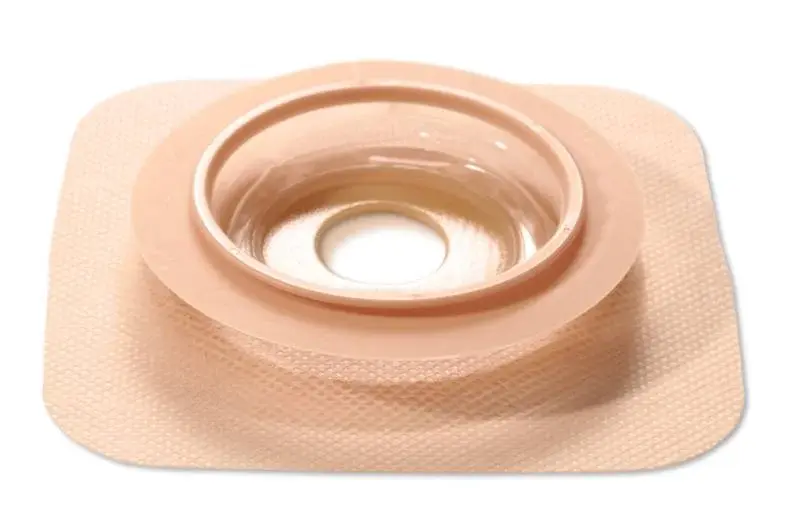
Why Moldable Durahesive for Liquid Output
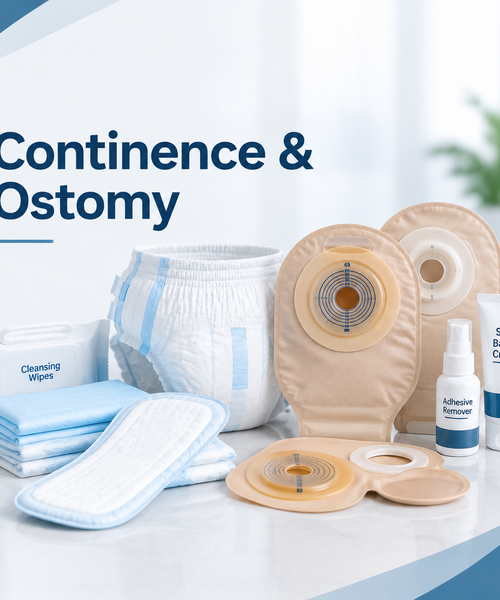
Durahesive technology provides superior protection against liquid output by swelling slightly when exposed to moisture, creating an increasingly tight seal around the stoma throughout the wear period. This makes it ideal for ileostomy and urostomy users whose consistent liquid output can erode standard hydrocolloid adhesives. The moldable opening eliminates cutting uncertainty—simply roll back the starter hole to match stoma size, creating a perfectly round, custom seal without scissors. The integrated Flex Collar provides a gentle "turtleneck" effect, following stoma contours while supporting peristomal tissue without excessive pressure. The 1¾" (44 mm) flange couples with Natura 2-piece pouches, allowing pouch changes without barrier removal while the Durahesive continues protecting skin.
Key Features & Benefits
- Moldable technology eliminates cutting—roll back opening to custom fit stoma
- Opening range 7/8" to 1¾" accommodates most stoma sizes
- Durahesive hydrocolloid swells with moisture for increasingly tight seal
- Specifically designed for liquid output (ileostomy, urostomy, liquid colostomy)
- Integrated Flex Collar gently hugs stoma for improved seal and comfort
- 1¾" (44 mm) flange compatible with Natura 2-piece pouches
- Extended wear time despite exposure to liquid output
- Protects peristomal skin from erosion and breakdown
- No cutting means consistent, round opening every time
- 2-piece system allows pouch changes without barrier removal
- Box of 10 barriers supports 4–6 weeks of management
Clinical Applications
Appropriate for:
✓ Ileostomy users with consistent liquid output ✓ Urostomy patients requiring moisture-resistant barrier ✓ Colostomy users with softer or liquid output ✓ Patients experiencing barrier erosion with standard hydrocolloid ✓ Users preferring moldable barriers over cut-to-fit ✓ Stomas within 7/8" to 1¾" size range ✓ Active individuals needing secure seal despite liquid output ✓ Patients requiring extended wear time (5–7 days) ✓ Users seeking simplified barrier application without cutting
Important: Moldable barriers require proper molding technique to achieve optimal seal. Durahesive provides excellent protection for liquid output but may feel firmer than standard hydrocolloid. Consult with ostomy nurse for proper product selection and molding instruction.
Usage & Application - Patient Guidance
For Moldable Barrier Application Under Healthcare Provider Direction: This moldable Durahesive barrier is designed for liquid output management as instructed by your healthcare provider or ostomy nurse. Proper molding technique ensures safe, effective use.
Understanding Moldable Barriers:
- No cutting required: Opening adjusts by rolling back—no scissors needed
- Durahesive advantage: Swells with moisture for progressively tighter seal
- Flex Collar benefit: Gentle support and seal enhancement around stoma
- Liquid output protection: Specifically formulated to resist erosion
Understanding Durahesive Technology:
- Durahesive hydrocolloid has unique swelling properties
- Absorbs moisture and expands slightly when wet
- Creates tighter seal over time as exposed to output
- More resistant to liquid erosion than standard hydrocolloid
- May feel firmer/less flexible than regular hydrocolloid
- Excellent for ileostomy and urostomy liquid output
When to Choose Moldable vs. Cut-to-Fit:
- Choose Moldable if: You want no-scissors convenience, round consistent openings, or have difficulty cutting accurately
- Choose Cut-to-Fit if: You have irregular stoma shape, need very precise sizing, or prefer traditional cutting method
- Moldable advantages: Faster application, consistent results, no cutting tools needed
- Moldable limitations: Round openings only, limited to 7/8"–1¾" range
Preparation:
- Gather supplies: moldable barrier, pouch, measuring guide
- Remove old barrier and pouch carefully
- Clean stoma and peristomal skin gently with warm water
- Pat skin completely dry—critical for Durahesive adhesion
- Measure stoma to verify size is within 7/8"–1¾" range
- Inspect skin for breakdown or erosion from liquid output
Understanding the Starter Hole:
- Barrier comes with small pre-formed opening (starter hole)
- Starter hole is deliberately smaller than needed
- You will expand it by rolling back to match your stoma size
- Opening expands by rolling back adhesive edges
- Creates perfectly round, smooth opening
Molding Technique:
- Remove protective backing from barrier
- Identify starter hole in center of adhesive
- Measure stoma—you'll need to expand opening to approximately this size
- Warm barrier between hands for 30–60 seconds to increase pliability
- Place fingers inside starter hole
- Gently roll back adhesive edges outward in circular motion
- Work evenly around entire circumference
- Opening should stretch to approximately stoma size (matching measured diameter)
- Opening will be slightly smaller than final—Durahesive will mold around stoma
- Create smooth, round opening—avoid tears or irregular edges
Checking Molded Opening Size:
- Hold molded barrier over stoma (without touching) to check size
- Opening should be approximately same diameter as stoma
- Too small: Continue rolling back adhesive to enlarge
- Too large: Cannot make smaller—start with fresh barrier
- Aim for opening that just fits over stoma with minimal gap
- 1/8" gap around stoma is acceptable—Durahesive will fill slight gaps
Application Technique:
- Warm molded barrier between hands again for 30 seconds
- Stand or sit in preferred position
- Center molded opening over stoma carefully
- The Flex Collar will be positioned around stoma base
- Apply from bottom up to avoid air pockets
- Press adhesive firmly starting at stoma and working outward
- Use palm pressure in circular motion
- Hold firm pressure for 2–3 minutes—critical for Durahesive adhesion
- The Flex Collar should gently hug the stoma without excessive pressure
- Ensure entire adhesive edge is well-sealed
- Run finger around perimeter to verify adhesion
- Wait 30–60 seconds before attaching pouch
Understanding the Flex Collar:
- Soft, flexible ring integrated into barrier
- Positioned at opening, surrounds stoma base
- Provides gentle "turtleneck" effect
- Follows stoma contours as it changes during peristalsis
- Adds extra seal without rigid convexity
- Should feel comfortable, not constrictive
- Helps contain output close to stoma
- Reduces undermining of adhesive
Attaching Natura Pouch:
- Ensure barrier flange (1¾"/44 mm) is clean and dry
- Align pouch flange with barrier flange
- Press firmly around entire coupling ring
- Listen/feel for secure connection (may click or snap depending on pouch type)
- Gently tug to verify attachment
- Refer to pouch-specific instructions for coupling details
Durahesive Swelling Process:
- Barrier will begin swelling slightly when exposed to moisture/output
- This is normal and beneficial—creates tighter seal
- Swelling occurs gradually over hours
- Provides progressively better seal as wear continues
- More noticeable with liquid output (ileostomy/urostomy)
- Helps explain why Durahesive resists liquid erosion
Barrier Changing Schedule:
- Change barrier every 5–7 days for optimal performance
- Durahesive supports extended wear despite liquid output
- Change sooner if adhesive begins loosening
- Change immediately if leakage occurs
- Monitor skin condition at each change
- Some users achieve 7+ days with liquid output
Removing Durahesive Barrier:
- Remove pouch first
- Support skin with one hand
- Peel barrier slowly and gently
- Durahesive may adhere more firmly than standard hydrocolloid
- Use barrier removal spray or wipes if needed
- Remove in direction of hair growth
- Clean any residue gently with warm water
- May need adhesive remover for stubborn residue
Caring for Skin with Liquid Output:
- Liquid output is more caustic to skin than formed output
- Inspect skin carefully at each change
- Look for redness, erosion, or breakdown
- Healthy skin should match surrounding skin color
- Report any skin changes to healthcare provider
- May need barrier paste/rings for extra protection
- Durahesive provides excellent baseline protection
Troubleshooting Common Issues:
- Opening too small after molding: Roll back further; if barrier already applied, may need to replace
- Opening too large: Cannot reduce size; must start fresh with new barrier
- Difficulty molding: Warm more thoroughly; ensure adequate finger pressure
- Irregular opening shape: Work more evenly around circumference
- Barrier eroding quickly: May need thicker Durahesive or additional protection products
- Flex Collar uncomfortable: May indicate stoma swelling; contact ostomy nurse
Molding Tips for Success:
- Practice molding technique on barrier before applying to skin
- Work slowly and evenly around opening
- Consistent warming improves moldability
- Roll back in small increments—easier to control
- Better to start small and enlarge than go too large
- Save discarded barriers for molding practice
When to Contact Healthcare Provider or Ostomy Nurse:
- Difficulty achieving proper molded opening size
- Persistent leakage despite proper molding
- Skin erosion or breakdown from liquid output
- Durahesive barrier eroding prematurely
- Flex Collar causing discomfort or pressure
- Questions about molding technique
- Stoma size outside 7/8"–1¾" range
- Need for different barrier type or accessories
Product Specifications
- Brand: Coloplast
- Product Line: Natura
- System Type: 2-Piece Skin Barrier
- Barrier Style: Flat with Flex Collar
- Technology: Moldable Durahesive hydrocolloid
- Opening: Moldable from 7/8" to 1¾" (22 mm to 44 mm)
- Opening Type: No cutting required—roll back to size
- Flange Size: 1¾" (44 mm)
- Flex Collar: Integrated soft collar for stoma support
- Special Feature: Durahesive swells with moisture for tighter seal
- Best For: Liquid output (ileostomy, urostomy)
- Wear Time: 5–7 days per barrier
- Materials: Durahesive hydrocolloid, latex-free
- Compatibility: Natura 2-piece pouches (1¾" flange)
- Quantity: Box of 10 skin barriers
- Stoma Types: Ileostomy, urostomy, colostomy with liquid output