Slideshow Items

  • Resuscitators, Inhalators & Airway Devices
  • resuscitators-inhalators-airway-devices
AL-AirLife

  |  

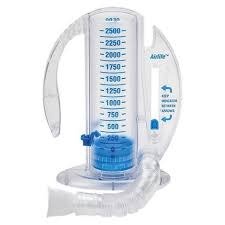
AirLife® Volumetric Incentive Spirometer, with One-Way Valve 2500ml

C$11.99
In stock online
In store: Check availability

Available in store

SKU: P001903A

Volumetric incentive spirometer with a 2,500 mL clear graduated chamber and one-way valve, providing visual volume feedback to guide slow deep-breathing exercises that expand lung capacity and prevent post-operative pulmonary complications.

    • Why the Incentive Spirometer Is the Lung Expansion Feedback Boundary and the Atelectasis Prevention Component of the Post-Operative Respiratory Therapy Programme Simultaneously

      The AirLife volumetric incentive spirometer serves two structurally distinct functions that are both essential to effective post-operative and respiratory recovery, and that a single device must satisfy simultaneously. The first function is lung expansion feedback: the spirometer is the measurement and visualisation instrument that converts the patient's deep inhalation effort into a visible, quantifiable volume reading that the patient can observe in real time during each breathing exercise. Patients recovering from surgery, prolonged bed rest, or respiratory illness tend toward shallow, low-volume breathing — a natural protective response to incisional pain, reduced respiratory muscle activity, or general debilitation. Shallow breathing does not fully inflate the distal alveoli of the lungs, allowing these alveoli to progressively collapse — a condition called atelectasis — that reduces the functional lung volume available for gas exchange and creates the conditions for post-operative pneumonia. Incentive spirometry addresses this tendency by providing the patient with a concrete, visible volume target for each breath: the graduated chamber's volume markings show the patient exactly how much air their inhalation has drawn through the device, allowing them to compare each breath to a target volume and observe whether their effort is reaching the prescribed expansion level. Without this visual feedback, the patient has no reliable way to judge the depth of their breathing effort — the subjective sense of having taken a deep breath is a poor indicator of actual lung expansion, and patients consistently underestimate the additional effort required to reach therapeutically effective tidal volumes when recovering from surgery or illness.

      The second function the spirometer must satisfy simultaneously is atelectasis prevention — the clinical purpose that incentive spirometry is prescribed to achieve. Atelectasis is the collapse of alveoli that occurs when the alveolar surface tension and external compression forces at the alveoli exceed the distending pressure that the patient's inspiratory effort generates within the alveolar airspace. Post-operative atelectasis is particularly common following thoracic and abdominal surgery, where incisional pain limits the depth of voluntary inhalation, the supine position reduces the gravitational assistance to diaphragmatic descent, and the residual effects of anaesthetic agents reduce respiratory drive. The incentive spirometer's deep inhalation coaching function addresses atelectasis by directing the patient to take a slow, sustained maximum inhalation that generates the sustained distending pressure within the alveoli that re-opens collapsed alveolar units and maintains them open through the breath-hold period that follows the peak inhalation volume. A rapid, forceful inhalation — the instinctive deep breath that patients without coaching tend to take — does not provide the sustained distending pressure duration that opens collapsed alveoli as effectively as the slow, sustained inhalation that the spirometer's visual coaching encourages. The device's design — requiring a sustained inhalation effort to raise and maintain the indicator within the graduated chamber — specifically rewards the slow, sustained inhalation technique that is most effective for atelectasis prevention.

      The one-way valve design of the AirLife spirometer addresses a specific hygiene and measurement accuracy requirement of incentive spirometer use. The one-way valve allows airflow only in the inhalation direction — from the mouthpiece into the device — and prevents the patient's exhaled breath from entering the spirometer chamber. This unidirectional flow serves two simultaneous purposes: it prevents the exhaled breath's moisture, warmth, and microorganism content from contaminating the spirometer chamber interior between breathing exercises, maintaining the device's hygienic integrity across the multiple sessions per day that post-operative spirometry protocols typically prescribe; and it ensures that the volume measured in the chamber during each exercise represents only the patient's inhaled tidal volume, not a mixture of inhaled and exhaled air that would produce a false volume reading. A device without a one-way valve would allow exhaled air to enter the measurement chamber, inflating the apparent tidal volume reading and undermining the feedback accuracy that the spirometer's coaching function depends on.

      The 2,500 mL capacity of the AirLife spirometer addresses the volume range of the adult patient population for whom incentive spirometry is most commonly prescribed. Adult tidal volume during normal breathing is approximately 500 mL, and the functional residual capacity is typically 2,000–3,000 mL above this. Deep breathing exercises targeting effective alveolar recruitment should aim to achieve inspiratory volumes significantly above the resting tidal volume — typically 1,000–2,500 mL above the resting baseline — and the 2,500 mL chamber capacity accommodates the full therapeutic volume range for most adult patients without the chamber becoming the limiting factor in the exercise before the patient's lung capacity is reached.

      KEY FEATURES

      • 2,500 mL graduated chamber — volume capacity covering the full therapeutic deep-breathing exercise range for most adult patients, with graduated markings that allow the patient to observe their inhaled volume in real time during each exercise and compare it to a prescribed target
      • One-way inhalation valve — prevents exhaled breath from entering the chamber interior, maintaining the device's hygienic integrity across multiple daily sessions and ensuring that the volume reading reflects only inhaled tidal volume for accurate feedback
      • Clear chamber construction — full visual access to the volume indicator position throughout the inhalation effort, allowing the patient to observe whether their breathing effort is sustaining the indicator in the target volume range or falling short
      • Slow inhalation design feedback — device mechanics reward the sustained, slow inhalation technique that generates effective alveolar distending pressure, rather than the rapid forced inhalation that achieves similar peak volume without the sustained pressure duration that opens collapsed alveoli
      • Flexible tubing with mouthpiece — tubing flexibility allows the patient to hold the device in a comfortable position during bed-based exercises, and the mouthpiece provides a hygienic, comfortable oral interface for each breathing session
      • Lightweight self-administration design — device weight and operation suitable for patient self-administration in hospital, rehabilitation, and home recovery settings without clinical assistance for each exercise session

      BENEFITS

      • Visual volume feedback closes the deep-breathing coaching loop — patients who cannot judge the adequacy of their breathing effort without feedback can observe their actual inhaled volume against a prescribed target during each exercise, eliminating the systematic underachievement that unguided deep breathing produces in post-operative and debilitated patients
      • Slow sustained inhalation coaching reduces atelectasis more effectively than rapid deep breathing — device mechanics encourage the inhalation technique that generates the sustained alveolar distending pressure duration required to open collapsed alveolar units and maintain them open during the breath-hold period
      • One-way valve maintains device hygiene across multiple daily sessions — exhaled breath exclusion prevents the moisture and microorganism contamination of the chamber interior that exhalation into the device would produce over a multi-session daily use protocol
      • Post-operative pulmonary complication reduction — regular incentive spirometry use at prescribed frequency and volume targets supports the alveolar recruitment that reduces the incidence of post-operative atelectasis and the pneumonia risk that atelectasis creates
      • 2,500 mL capacity accommodates the full adult therapeutic volume range — chamber volume does not become the limiting factor in the exercise before the patient's lung capacity is reached for most adult patients

      TYPICAL APPLICATIONS

      Post-operative respiratory recovery — incentive spirometry prescribed at regular intervals in the 24–48 hours following thoracic, abdominal, or other major surgery where respiratory muscle restriction and anaesthetic effects increase atelectasis risk

      Post-operative pneumonia prevention — regular deep-breathing exercises with spirometer feedback in the post-operative period, supporting alveolar recruitment and secretion mobilisation that reduces post-operative pneumonia incidence

      Prolonged bed rest rehabilitation — spirometry exercises for patients who have been confined to bed rest for extended periods, where the sustained supine position and reduced activity reduce functional residual capacity and alveolar ventilation

      Respiratory illness recovery — deep-breathing programme support for patients recovering from pneumonia, bronchitis, or other respiratory conditions where impaired respiratory muscle activity and secretion accumulation have reduced functional lung volume

      Home recovery continuation — patient-operated spirometry for home recovery following hospital discharge, maintaining the post-operative deep-breathing programme in the home environment without clinical assistance for each session

    • No reviews yet

      Add yours

    Testimonials from Google

    See all reviews

    Your cart — 0

    You cart is currently empty

    Login

    By using our website, you agree to the use of cookies. These cookies help us understand how customers arrive at and use our site and help us make improvements. Hide this message More on cookies »