Slideshow Items

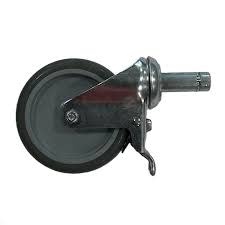
Caster without Lock 15300C

C$20.62
In stock online
In store: Check availability

Available in store

SKU: 15300C

Replacement non-locking swivel caster for Drive Medical hospital and bariatric beds including models 15300, 15302, and 15303. Enables smooth bed repositioning while locking casters at adjacent corners maintain positional stability when stationary.

    • Why the Non-Locking Caster Is the Mobility Boundary and the Load Transfer Component of the Drive 15300 Series Bed Frame Simultaneously

      The non-locking caster on a Drive Medical 15300 series bariatric bed serves two structurally distinct functions that are both essential to the bed frame's clinical and mechanical performance, and that a single wheel component must satisfy simultaneously. The first function is controlled mobility: the non-locking caster is the rolling element that allows the bed to be repositioned or transported across the care environment without requiring the caregiver to lift or drag the frame. A bariatric bed frame loaded with a patient generates a floor contact force that a seized or damaged caster cannot overcome without risk of frame instability or caregiver musculoskeletal injury. The non-locking caster is therefore not a convenience feature — it is the mobility boundary that determines whether the bed can be safely repositioned by a caregiver. A caster that has developed a mechanical failure — through wheel bearing seizure, swivel plate fracture, or wheel deformation — must be replaced before the bed is returned to active use under any patient.

      The second function the non-locking caster must satisfy simultaneously is load distribution from the bed frame corner into the floor surface. A bariatric bed frame in clinical use carries static loads that concentrate at each of the four caster mounting points. The caster stem transfers this corner load from the frame rail into the caster wheel assembly, and the wheel distributes the load across its contact patch on the floor. A caster wheel that has cracked, flattened, or delaminated reduces the contact patch area and concentrates the floor load at a smaller surface, increasing the risk of floor surface damage and reducing the rolling resistance profile that the caregiver depends on for controlled bed movement.

      The swivel plate of the non-locking caster is not a directional convenience — it is the component that allows the bed to be steered in any direction from any corner without requiring the frame to be pivoted about a fixed axis. A seized swivel plate converts the caster from an omnidirectional rolling element to a fixed-axis wheel, requiring the caregiver to lift and pivot the affected corner to change bed direction. In a bariatric care context where frame corner loads are substantial, a seized swivel plate that forces corner lifting to steer the bed presents a direct caregiver injury risk that a functioning swivel caster eliminates.

      The non-locking specification of the 15300C is not an interchangeable parameter with the locking casters in the 15300 series frame set. The frame's stability geometry depends on locking casters holding designated corners stationary while non-locking casters at the remaining corners provide rolling compliance. Replacing a locking caster position with a non-locking caster, or vice versa, alters the brake force distribution of the frame and can compromise positional stability during patient transfers. The 15300C non-locking specification must be installed only at the non-locking positions designated for the 15300 series frame geometry.

      KEY FEATURES

      • Non-locking swivel caster — rolling element at designated frame corners, providing omnidirectional bed mobility while locking casters at adjacent corners provide the braking and stability function during patient transfers and care procedures
      • Compatible with Drive Medical 15300, 15302, and 15303 beds — stem specification matches the caster socket geometry of the 15300 series frame rail, ensuring secure stem engagement without play or wobble at the mounting interface
      • Durable wheel and swivel plate construction — selected for resistance to the cyclic load and directional change cycles that bariatric bed frames accumulate across frequent repositioning and transport events in clinical and homecare environments
      • Swivel plate design — allows omnidirectional steering from the caster position without corner lifting, eliminating the caregiver injury risk that a fixed-axis or seized swivel caster creates in bariatric bed handling
      • Sold individually — allows single-caster replacement at the failed wheel position without replacing the full caster set, restoring bed mobility at component replacement cost

      BENEFITS

      • Restores the rolling mobility function at the failed caster position — replacing a seized, cracked, or deformed caster before the bed is repositioned under load, removing the caregiver injury risk that a non-rolling corner creates
      • Swivel plate function restores omnidirectional steering from the replaced corner — eliminating the corner-lifting steering method that a seized swivel plate forces on the caregiver in a bariatric care context
      • Durable construction supports the load and cycle demands of bariatric and long-term care environments where bed repositioning frequency is high and corner loads exceed standard homecare bed specifications
      • Component-level caster replacement extends the bed frame's service life without replacing the frame rail assembly, locking caster set, or drive mechanism
      • Non-locking specification maintains the brake force distribution geometry of the 15300 series frame — correct caster type at the correct frame position preserves the stability profile the frame was designed around

      TYPICAL APPLICATIONS

      ✓ Bearing seizure replacement — immediate caster replacement when wheel bearing seizure has eliminated rolling function at a non-locking frame corner, restoring bed mobility before the next repositioning event

      ✓ Wheel damage replacement — replacement of casters with cracked, flat-spotted, or delaminated wheels that have reduced the contact patch and altered the rolling resistance profile of the bed frame

      ✓ Swivel plate failure replacement — replacement of casters where the swivel plate has seized or fractured, restoring omnidirectional steering function to the affected frame corner

      ✓ Scheduled maintenance replacement — caster inspection and replacement as part of bed frame service intervals in long-term care and bariatric facilities, confirming wheel and swivel integrity before the next patient placement

      ✓ Bed refurbishment and recommissioning — caster replacement when a Drive 15300 series bed frame is recommissioned after storage or transfer, confirming rolling and load-bearing function before the frame enters active clinical or homecare use

    • No reviews yet

      Add yours

    Testimonials from Google

    See all reviews

    Your cart — 0

    You cart is currently empty

    Login

    By using our website, you agree to the use of cookies. These cookies help us understand how customers arrive at and use our site and help us make improvements. Hide this message More on cookies »