
Slideshow Items

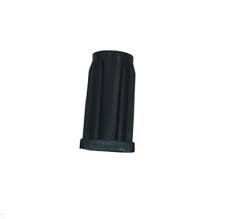
Caster Receptacle 15300EC

C$18.06
In stock online
In store: Check availability

Available in store

SKU: 15300EC

The Caster Receptacle (15300EC) is the OEM replacement mounting socket for compatible Drive Medical homecare beds, restoring secure caster stem seating and correct wheel alignment when original receptacles become worn, deformed, or damaged.

    • Why the Caster Receptacle Is the Silent Failure Point in Homecare Bed Mobility and Transfer Safety

      The caster receptacle is the component that converts the bed frame into a mobile platform — it is the interface at which every caster stem connects to the frame, and therefore the interface at which every load transmitted through the caster into the frame is concentrated. Every wheel rotation, every bed repositioning event, every patient transfer that applies lateral force to the bed frame, and every moment the bed sits stationary under the combined weight of frame, mattress, and patient — all of these load events pass through the four caster receptacles as the junction between the rigid frame and the floor-contact wheel assemblies. The receptacle is not a passive fitting; it is an active structural component that is loaded cyclically with every use event the bed experiences across its service life. This load history distinguishes the receptacle from other replacement parts: a caster wheel wears gradually at its contact surface and the degradation is visible; a receptacle wears at its internal bore surface where the caster stem contacts the socket wall, and this internal bore wear is invisible during routine visual inspection. The consequence is that receptacle wear accumulates silently — the first perceptible sign is typically caster wobble or misalignment that the caregiver notices during bed repositioning, at which point the bore has already enlarged beyond the interference fit tolerance that secure stem retention requires.

      The caster stem's retention in the receptacle bore depends entirely on the interference fit between the stem's outer diameter and the receptacle's inner bore diameter — a precisely controlled dimensional relationship in which the stem is slightly larger than the bore, requiring press-fit insertion and providing the friction resistance that holds the stem against pullout under load. As the receptacle bore wears through the repeated lateral micro-movement of the caster stem under directional loading, the bore diameter increases and the interference fit diminishes. The first effect of reduced interference fit is caster play — the caster can be moved laterally by hand with force that would not have moved the original press-fit stem. The second effect is progressive bore enlargement from the now-loose stem's continued lateral movement under use loading, accelerating bore wear. The third effect is caster tilt under load — a stem with insufficient interference fit tilts in the bore under the asymmetric force of a repositioning push or a transfer lateral load, changing the caster's rolling axis from vertical to angled and producing the characteristic wheel scrub and rolling resistance of a misaligned caster. Replacing the receptacle at the first sign of caster play — before the bore has progressed to the third failure stage — is the maintenance approach that prevents the compounding degradation from driving bore damage deep enough to require frame repair.

      The structural consequence of a damaged or deformed receptacle extends beyond caster alignment. The receptacle is welded or mechanically fastened to the bed frame tube at the bed's four corners — the structural connection points at which the frame's weight is transferred to the floor. A receptacle that has been deformed by impact — from a collision with a door frame, furniture, or building threshold — no longer presents a circular bore to the caster stem, and the resulting non-circular contact pattern concentrates stem-to-bore loading at the deformation points rather than distributing it around the full bore circumference as the original circular bore geometry was designed to do. This load concentration accelerates bore wear at the deformation points and introduces an asymmetric lateral force component into every repositioning load event. A deformed receptacle is also a visual indicator that the frame attachment at that corner may have experienced the same impact load — the receptacle-to-frame weld or fastener should be inspected for fracture or loosening whenever a deformed receptacle is identified, because replacing the receptacle without inspecting the frame attachment leaves a potentially compromised structural joint in service.

      The 15300EC receptacle specification identifies the specific bore diameter and frame-mounting interface that is compatible with Drive Medical beds designed for this caster system. Aftermarket receptacles with nominally similar bore dimensions frequently deviate from the 15300EC specification at the frame-mounting interface — the flange geometry, the fastener hole pattern, or the wall thickness that determines how the receptacle seats against the frame tube. A receptacle that does not seat flush against the frame tube transfers caster stem loading through a partial-contact flange interface, concentrating load at the contact points and applying a bending moment to the frame tube attachment that the full-flange OEM interface was designed to avoid. The 15300EC OEM specification ensures correct flange geometry, bore diameter, and wall thickness — the three dimensional parameters that together determine whether the receptacle performs as a secure, load-distributing interface or as a stress-concentrating partial-contact fitting.


      Key Features

      • OEM Drive Medical replacement receptacle — part number 15300EC, matching the bore diameter, wall thickness, and frame-mounting interface geometry of the original installation
      • Metal construction provides the structural strength to sustain the cyclical loading of repeated bed repositioning events and patient weight transfer forces across the receptacle's service life
      • Correct bore diameter maintains the interference fit with compatible Drive caster stems — the dimensional relationship that provides secure stem retention without play or tilt under use loading
      • Full-flange frame-mounting interface distributes caster stem loads across the complete receptacle-to-frame contact area, avoiding the load concentration of partial-contact aftermarket alternatives
      • Designed for direct installation into compatible Drive Medical bed frames using the 15300EC mounting interface specification
      • Restores secure caster function at the frame level — the replacement that resolves caster wobble, misalignment, and stem play when these symptoms originate at the receptacle rather than at the caster itself

      Benefits

      • Eliminates caster play and tilt caused by worn or enlarged receptacle bores — restoring the interference fit stem retention that holds casters in correct vertical rolling alignment under use loading
      • Restores correct wheel alignment at all four frame corners — eliminating the asymmetric rolling resistance and wheel scrub produced by tilted casters in worn or deformed receptacles
      • Structural deformation correction — replaces impact-deformed receptacles whose non-circular bore geometry concentrates stem loading and produces progressive bore wear at deformation points
      • OEM bore and flange specification prevents the partial-contact loading and bending moment that non-specification aftermarket receptacles introduce at the frame-mounting interface
      • Component-level receptacle replacement resolves caster wobble without requiring caster replacement when inspection confirms the caster stem is undamaged and the receptacle bore is the origin of the alignment failure

      Typical Applications

      ✓ Bore wear replacement — receptacles whose bore has enlarged beyond interference fit tolerance, producing caster play, lateral stem movement, or visible caster tilt under load ✓ Impact deformation replacement — receptacles with visible bore deformation from frame collision with door frames, furniture, or building thresholds, whose non-circular bore produces asymmetric loading and accelerated wear ✓ Caster wobble diagnosis and repair — beds exhibiting caster wobble or misalignment where inspection confirms the caster stem is undamaged and the receptacle bore is the source of the alignment failure ✓ Preventive maintenance — scheduled receptacle inspection and replacement on high-use Drive Medical beds in long-term care environments where frequent repositioning accelerates bore wear beyond the service life of routine caster replacement intervals ✓ Bed refurbishment — complete frame inspection and receptacle replacement on second-hand or reconditioned Drive Medical beds being returned to service, ensuring secure caster stem retention before patient use ✓ Post-impact service — receptacle inspection and replacement following a bed frame impact event, combined with inspection of the receptacle-to-frame weld or fastener for structural compromise at the same corner

    • No reviews yet

      Add yours

    Testimonials from Google

    See all reviews

    Your cart — 0

    You cart is currently empty

    Login