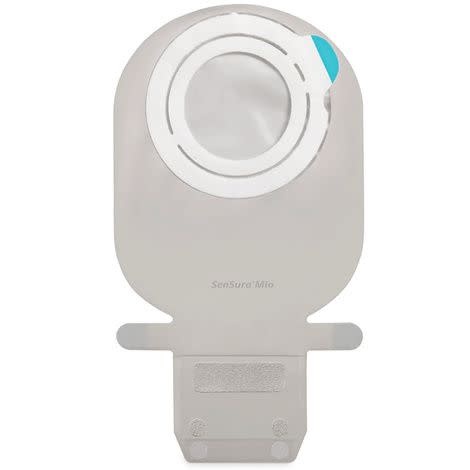
Why Larger Flange Sizes Matter for Proper Ostomy Care
Stoma size varies significantly among ostomy patients requiring appropriately sized flanges for secure seal and skin protection. Standard 35-50mm flanges serve most patients, but approximately 20-25% require larger 60-80mm flanges due to larger stomas from surgical technique, stoma retraction, peristomal hernias, or patient anatomy. Using undersized flanges causes critical problems: adhesive seals inadequately around larger stomas creating gaps where output leaks onto skin, adhesive stretches beyond design limits causing premature failure, and insufficient barrier clearance allows stoma to contact pouch coupling causing trauma. The 70mm flange addresses these challenges providing generous clearance for larger stomas, adequate adhesive surface area for secure sealing, proper barrier fit preventing leakage and skin breakdown, and appropriate coupling size supporting larger pouch volumes.
Key Features
- 70mm Flex coupling system providing large-diameter soft, flexible adhesive ring for comfort with larger stomas
- Closed-end pouch design intended for single-use disposal after filling promoting hygiene and convenience
- Neutral grey textile cover matching diverse skin tones for discretion under white, beige, and colored clothing
- Full-circle filter technology (360-degree carbon filter placement) preventing ballooning and continuously neutralizing odors
- Flexible elastic material conforming to body contours even with larger flange diameter maintaining low profile
- Whisper-quiet construction with non-rustling soft textile eliminating embarrassing sounds during movement
- Transparent inspection window (back side) allowing visual monitoring of output and pouch fullness
- Latex-free hypoallergenic materials safe for sensitive skin and latex allergies
- Large-diameter compatibility designed specifically for SenSura Mio Flex 70mm skin barriers
- Sterile individual packaging each pouch sealed maintaining hygiene until use
- Box of 30 pouches providing approximately 10-30 day supply depending on output frequency
Benefits
- Accommodates larger stomas safely with generous flange diameter preventing coupling-stoma contact and trauma
- Provides secure seal with adequate adhesive surface area matching larger stoma circumference preventing leaks
- Enables natural movement through flexible Flex coupling following body motion despite larger flange size
- Maintains low profile despite larger diameter through flexible materials lying flat against body
- Superior odor management with full-circle carbon filter continuously absorbing gases before escape
- Eliminates ballooning as filter releases gas buildup preventing pouch inflation and visible bulging
- Enhances confidence with ultra-discreet design and neutral grey fabric creating invisible wear under clothing
- Protects peristomal skin using soft materials reducing irritation around larger stomas
- Simplifies routine with easy Flex attachment enabling quick pouch changes without barrier removal
- Cost-effective allowing barrier reuse multiple days while changing pouches as needed reducing supply costs
Clinical Applications
✓ Patients with larger stomas (over 60mm diameter) requiring appropriately sized flanges for secure sealing
✓ Stoma prolapse or retraction patients with variable stoma sizes needing larger flange clearance
✓ Peristomal hernia patients where stoma protrudes requiring additional space around stoma site
✓ Post-operative edema patients with temporarily enlarged stomas during initial healing phase
✓ Revision surgery patients where repeat procedures resulted in larger stoma creation
✓ Bariatric ostomy patients with unique abdominal contours requiring larger flange systems
✓ Patients experiencing leakage with smaller flanges due to inadequate stoma clearance
✓ Ileostomy patients with high liquid output requiring larger coupling for volume accommodation
✓ Colostomy patients with formed stool preferring closed pouches for convenient disposal
✓ Active adults with larger stomas requiring secure, flexible systems during work and exercise
✓ Elderly patients with arthritis finding larger flanges easier to visualize and manipulate
✓ Patients with compromised vision benefiting from larger coupling target for attachment
Usage & Application
Critical Sizing and Compatibility Requirements
Understanding Flange Size Importance: The 70mm measurement refers to the OUTER DIAMETER of the coupling ring. This must match the skin barrier flange size EXACTLY for proper attachment. Using mismatched sizes causes:
- Won't attach: 70mm pouch cannot connect to 35mm, 40mm, 50mm, or 60mm barriers
- Safety risk: Forcing incompatible sizes creates insecure connections risking pouch detachment
- Wasted expense: Ordering wrong size means unusable pouches
Before Ordering - Verify Compatibility:
- Check current skin barrier brand: Must be Coloplast SenSura Mio FLEX (not standard SenSura, not other brands)
- Verify barrier flange size: Measure or check barrier packaging - must say "70mm" or "70"
- Confirm coupling type: Must be Flex (soft adhesive), not Click (rigid ring)
- If unsure: Contact ET nurse or measure stoma - typically 55-65mm stoma needs 70mm flange
When 70mm Flange is Appropriate:
- Stoma diameter: 55-65mm (requires 5-10mm clearance around entire stoma)
- Stoma prolapse: Variable projection requiring larger clearance
- Peristomal hernia: Bulging requiring extra space
- Post-op swelling: Temporary edema expanding stoma size
- Previous leakage: Smaller flanges inadequate for current anatomy
When 70mm Flange is NOT Appropriate:
- Stoma diameter: Under 50mm (use 35mm, 40mm, or 50mm flanges for better fit)
- Excessive adhesive surface: Larger flange may not adhere well to irregular contours
- Unnecessary bulk: Larger flange creates bigger profile under clothing if smaller would work
Attaching Pouch to 70mm Skin Barrier
Pre-Attachment Preparation:
- Ensure 70mm SenSura Mio Flex skin barrier already applied to peristomal skin with secure adhesive bond
- Verify barrier has been in place 15-30 minutes allowing adhesive to warm and activate
- Empty existing pouch if present (remove by pulling downward while supporting barrier)
- Inspect barrier adhesive - if loose, wrinkled, or leaking, replace entire barrier before attaching new pouch
- Clean barrier flange surface with dry tissue removing any stool residue (must be completely dry)
Handling Larger Flange Attachment: The 70mm coupling is notably larger than standard sizes requiring adapted technique:
- Remove pouch from sterile packaging
- Hold pouch with opening facing down toward barrier flange
- Important: With larger flanges, align carefully using both hands to manage size
- Position top edge of pouch coupling ring against top edge of barrier flange
- Press top section firmly feeling/hearing initial "clicks" as Flex adhesive engages
- Work downward around circumference (left side, bottom, right side) in smooth motion
- Larger diameter requires more deliberate pressure - don't rush the process
- Complete full circle ensuring ENTIRE 70mm circumference securely attached
- Run finger around entire coupling verifying no gaps or loose sections
- Gently tug pouch downward testing secure attachment
Attachment Tips for Larger Flanges:
- Use two hands: Larger diameter more stable with both hands guiding attachment
- Work in sections: Top first, then sides, then bottom (systematic approach)
- Press firmly: Larger surface area requires deliberate pressure for complete adhesive contact
- Visual verification: Larger coupling easier to see gaps - inspect carefully after attachment
- Practice: First few attachments may feel awkward but becomes routine quickly
Daily Wearing with Larger Flange Systems
Positioning Considerations: Larger flanges create slightly different wearing dynamics:
- More surface area: 70mm diameter covers more abdomen but Flex design maintains flexibility
- Comfortable placement: Position pouch slightly to side if sitting compresses centrally
- Clothing accommodation: Loose-fitting shirts comfortable, but fabric still conceals well
- Lying down: Larger flange lies flat during sleep - no special positioning needed
When to Change Closed Pouches: Same guidelines as smaller flanges:
- Approximately 1/3 to 1/2 full: Optimal changing point before weight becomes uncomfortable
- Every 8-12 hours minimum: Regular changing maintains hygiene and filter effectiveness
- Before social/work activities: Fresh pouch provides confidence in odor control
- Any signs of leakage: Immediately change if detecting output around flange
Typical Change Frequency:
- Colostomy patients (formed stool): 2-4 pouches daily average
- Ileostomy patients (liquid output): May use drainable pouches primarily, closed for specific situations
- Larger stomas: May fill pouches slightly faster requiring more frequent changes
Removing and Disposing Pouch from 70mm Flange
Removal Technique:
- Support 70mm barrier with one hand (larger barrier requires firmer support during removal)
- Grasp bottom of pouch with other hand
- Pull pouch straight downward with steady gentle pressure
- Flex coupling releases smoothly - do NOT twist or force
- Larger coupling may require slightly more deliberate pull but should not be difficult
- Barrier remains in place on skin
Disposal: Same as smaller pouches - fold, wrap, and dispose in household trash.
Troubleshooting Larger Flange Issues
Pouch Won't Attach Fully: Cause: Incomplete pressure around large 70mm circumference during attachment Solution: Use systematic approach - work in sections ensuring each segment clicks before moving to next Prevention: Take time with larger flanges - don't rush attachment process
Visible Bulging Under Clothing: Cause: Larger 70mm flange diameter creates slightly larger profile than smaller sizes Solution: Looser-fitting tops, patterns, or darker colors provide better concealment Note: Flex design minimizes bulk - rigid 70mm flanges would bulge much more
Adhesive Failure Around Edges: Cause: Larger adhesive surface area may not conform to irregular contours as easily Solution: Consider switching to convex barrier if abdomen very irregular Prevention: Ensure skin completely clean and dry before barrier application
Pouch Feels Heavy When Full: Cause: Larger flanges sometimes allow larger volumes accumulating before discomfort noticed Solution: Change pouches at 1/3 full rather than waiting for 1/2 full Prevention: Monitor fullness more frequently when learning larger flange system
Special Considerations for 70mm Flange Users
Barrier Selection:
- Pre-cut 70mm barriers: Convenient but fixed size (no adjustment)
- Cut-to-fit barriers: Allow minor adjustment around 65-75mm range if stoma size varies
- Convex barriers: Sometimes needed with larger stomas that are flush or retracted
- Flat barriers: Work well for protruding larger stomas
Long-Term Management:
- Stoma size can change: Regular measuring every 3-6 months ensures proper fit
- Weight changes: Gain/loss affects abdomen contours and flange fit
- Hernia development: May require flange size increase if hernia enlarges
- Regular reassessment: ET nurse visits annually verify optimal product selection
Technical Specifications
Product Identification:
- Brand: Coloplast
- Product Line: SenSura Mio Flex 2-Piece System
- Component: Pouch (requires separate matching 70mm skin barrier)
- Pouch Type: Closed-end (non-drainable, disposal when full)
- Flange Size: 70mm (large diameter for larger stomas)
- Coupling Type: Flex (soft, flexible adhesive ring, NOT rigid Click system)
Physical Specifications:
- Pouch Capacity: Approximately 250-350 mL (closed pouches not filled to absolute capacity)
- Pouch Dimensions: Approximately 230mm length × 150mm width when empty
- Flange Outer Diameter: 70mm (inner clearance approximately 60-65mm depending on barrier cut size)
- Filter Type: Full-circle (360-degree) integrated carbon filter with moisture-resistant covering
- Filter Lifespan: Approximately 8-12 hours under normal conditions before saturation
- Coupling Material: Soft elastic adhesive (latex-free, hypoallergenic)
- Outer Cover Material: Textile fabric (soft cloth-like finish, neutral grey color)
- Inner Film: Medical-grade plastic (odor-barrier film containing output)
- Transparency: Transparent back panel for output monitoring
- Weight (Empty): Approximately 20-25 grams per pouch (slightly heavier than smaller flanges due to larger coupling)
Packaging & Storage:
- Quantity per Box: 30 individually sealed pouches
- Sterility: Each pouch individually packaged in clean environment
- Shelf Life: Typically 5 years from manufacture date (check lot code)
- Box Dimensions: Approximately 10" × 8" × 4" (larger than 35mm box due to larger flanges)
- Storage Requirements: Cool, dry environment away from direct heat and sunlight (15-25°C / 59-77°F optimal)
Clinical & Regulatory:
- Device Classification: Class II Medical Device (FDA) / CE Marked (European standards)
- Latex Content: Latex-free (safe for latex-sensitive patients)
- DEHP Content: DEHP-free materials (phthalate-free for patient safety)
- Standards Compliance: Meets ISO 8670 standards for ostomy collection pouches
- Intended Use: External collection of intestinal output from colostomy or ileostomy
- Single Use: Disposable, non-reusable device intended for one-time use and disposal
Compatibility:
- Compatible Skin Barriers: SenSura Mio Flex 70mm skin barriers ONLY (Coloplast product line)
- NOT Compatible With:
- SenSura Mio Flex smaller sizes (35mm, 40mm, 50mm, 60mm)
- SenSura standard (non-Flex) barriers
- SenSura Mio Click systems (rigid coupling)
- Other brands (Hollister, ConvaTec, etc.)
- Critical: Verify 70mm flange size before ordering - most common error is ordering wrong size
Usage Guidelines:
- Recommended Wear Time: 8-12 hours maximum per pouch (filter lifespan and hygiene)
- Maximum Capacity Use: Change when approximately 1/3 to 1/2 full for comfort
- Skin Barrier Coordination: 70mm barrier typically lasts 3-5 days with multiple pouch changes
- Change Frequency: Average 2-5 pouches daily depending on output volume and frequency