Slideshow Items

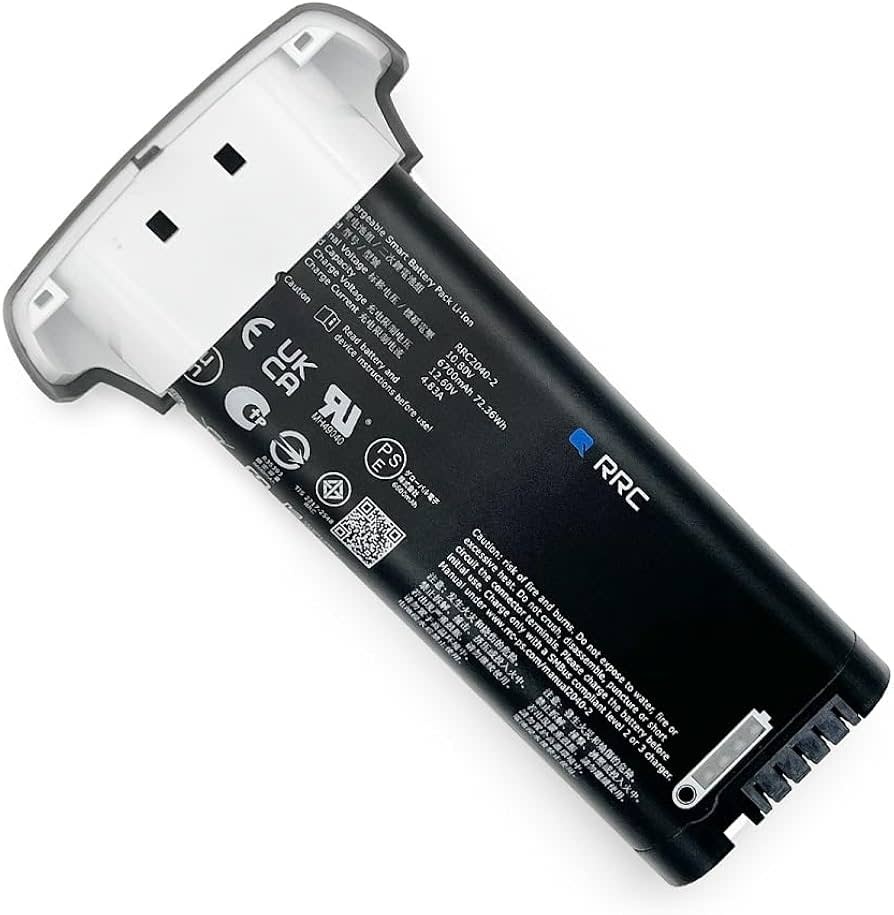
Drive iGO2 Battery Pack

C$461.68
In stock online
In store: Check availability

Available in store

SKU: 125D-613

The Drive iGO2 Battery Pack is a lightweight rechargeable 14.4V lithium-ion battery for the Drive DeVilbiss iGO2 Portable Oxygen Concentrator extending mobile oxygen therapy runtimes for travel, extended outings, and emergency preparedness.

    • Why the iGO2 Battery Pack Is the Critical Runtime Component of a Mobile Oxygen Program?

      The Drive DeVilbiss iGO2 Portable Oxygen Concentrator is a pulse-dose oxygen delivery system — it delivers a bolus of concentrated oxygen at the beginning of each detected inhalation, triggered by the patient's inspiratory flow, rather than delivering a continuous flow of oxygen throughout each breath cycle. This pulse-dose delivery mode is a significant engineering achievement in portable oxygen concentrator design because it dramatically reduces the oxygen volume delivered per minute compared to continuous flow, and consequently reduces the power required to operate the concentrator's compressor and molecular sieve system to produce that oxygen volume. The reduction in per-minute power consumption is the direct reason that a portable oxygen concentrator operating in pulse-dose mode can deliver clinically adequate supplemental oxygen for several hours on a battery of practical size and weight — a runtime that continuous-flow delivery at the same setting would reduce to a fraction of the pulse-dose duration. The iGO2 Battery Pack is designed to the specific voltage and capacity requirements of the iGO2's pulse-dose power delivery system, and its compatibility is not incidental: a generic lithium-ion battery of similar nominal voltage will not deliver the current profile, the battery management system communication, or the physical interface geometry that the iGO2's power management hardware requires for safe and reliable operation.

      The runtime that the iGO2 Battery Pack delivers varies as a direct function of the prescribed pulse-dose setting — and understanding this relationship is essential for the mobile oxygen user planning excursions that depend on battery power. At a lower pulse-dose setting such as setting 1 or 2, the concentrator delivers a smaller oxygen bolus per breath at a lower per-bolus energy cost, and the battery's available energy capacity is divided across a larger number of breath cycles before depletion — producing longer runtime. At higher pulse-dose settings such as setting 4 or 5, each breath triggers a larger bolus delivery that demands more compressor work and more electrical power per breath cycle, reducing runtime proportionally. The practical implication for the mobile oxygen user is that runtime estimates published in the iGO2 specification are setting-specific: a user prescribed at setting 2 has materially longer battery range than a user prescribed at setting 5 on the same charged battery, and planning any excursion that depends on battery power must account for the user's actual prescribed setting rather than the longest-published runtime figure. Carrying a spare iGO2 Battery Pack is the clinical standard recommended for any outing where the estimated battery duration at the user's prescribed setting does not provide adequate margin above the planned outing duration.

      The lithium-ion chemistry of the iGO2 Battery Pack is the battery technology that enables the combination of energy density, weight, and recharge cycle performance that a medical oxygen mobility program requires — and it has specific handling and storage characteristics that distinguish it from the lead-acid or nickel-metal hydride batteries used in older portable medical equipment. Lithium-ion cells store approximately two to three times more energy per unit weight than nickel-metal hydride chemistry at equivalent cell size, which is the fundamental reason that a lithium-ion battery of practical carry weight can power a portable oxygen concentrator for several hours while a nickel-metal hydride battery of the same weight would provide a fraction of that runtime. Lithium-ion cells maintain a relatively flat discharge voltage profile — the battery delivers close to its nominal voltage throughout most of the discharge cycle rather than declining steadily from the start of discharge — which means the iGO2 operates at consistent performance until the battery approaches depletion, rather than producing reduced oxygen bolus volume as the battery gradually discharges. The lithium-ion chemistry's sensitivity to deep discharge — allowing the battery to discharge completely before recharging damages cell chemistry and progressively reduces capacity — makes the iGO2's built-in low-battery alert and automatic shutdown function a battery-protection mechanism as much as a safety feature: the alert prompts the user to swap or charge the battery before the deep-discharge threshold is reached.

      Airline travel with the iGO2 and its battery packs is subject to specific regulatory and airline policy requirements that are distinct from the requirements applying to other portable electronic devices — and understanding these requirements before travel is a clinical preparedness responsibility, not a discretionary planning consideration. The U.S. Department of Transportation and Transport Canada classify the iGO2 as an FAA-approved portable oxygen concentrator, and the iGO2's battery packs as lithium-ion batteries subject to both the FAA lithium-ion battery watt-hour limit for carry-on items and the airline's own equipment approval policies for medical oxygen devices. The iGO2 Battery Pack must travel as carry-on — lithium-ion batteries are not permitted in checked baggage under current regulations — and the airline must be notified in advance that a medical oxygen concentrator will be used in flight. Bringing spare battery packs provides the flight-duration runtime margin required by most airlines that mandate sufficient battery capacity for 150% of the flight time — confirming the watt-hour rating of the iGO2 battery against the airline's specific spare-battery policy is part of the preflight planning process for any iGO2 user traveling by commercial air.

      Key Features

      • Designed exclusively for the Drive DeVilbiss iGO2 Portable Oxygen Concentrator — precise voltage, current profile, and battery management system compatibility for reliable pulse-dose power delivery
      • Rechargeable lithium-ion chemistry provides the energy-density-to-weight ratio that makes multi-hour mobile oxygen runtime achievable at a practical carry weight
      • 14.4V nominal voltage matched to the iGO2's power management hardware requirements
      • Lightweight and compact form factor maintains the iGO2's portability without adding excessive carry weight
      • Quick-release design allows battery swapping without tools, enabling continuous therapy transition from a depleted to a charged battery during extended outings
      • Charges installed in the iGO2 unit via the AC or DC power adapter, or via a compatible external charger when a second charged battery is needed without recharging through the unit
      • Built-in battery management system communication with the iGO2's low-battery alert and automatic shutdown function protects cell chemistry from deep-discharge damage

      Benefits

      • Extends mobile oxygen therapy range beyond the duration of a single battery charge — enabling full-day outings, long travel days, and multi-leg journeys at the user's prescribed flow setting
      • Spare battery availability provides the runtime margin safety buffer that clinical oxygen therapy protocols and airline regulations both recommend for battery-dependent oxygen users
      • Quick-release swap design eliminates the oxygen supply interruption that a fixed battery would require at depletion — the user transitions from depleted to charged battery in seconds
      • Lithium-ion flat discharge voltage profile ensures the iGO2 delivers consistent oxygen bolus volume throughout the battery's discharge cycle rather than declining performance as voltage drops
      • Lightweight construction maintains the iGO2's portability advantage — the concentrator and spare battery combination remains a practical carry weight for extended outings
      • Emergency preparedness value — a charged spare battery ensures oxygen supply continuity during power outages, equipment charging access loss, or extended emergency situations

      Ideal Situations for Spare iGO2 Battery

      ✓ Full-day outings — shopping, social events, recreational activities, and family gatherings where return-to-charger access is not available for the full outing duration ✓ Air travel — commercial flights where battery capacity must cover 150% of flight time per most airline medical oxygen policies, plus transit time between gates and ground transport ✓ Long-distance road travel — vehicle travel where AC power adapter use through a vehicle inverter is not practical or available for the full journey ✓ Active or outdoor activities — parks, hiking, outdoor events, or garden visits where oxygen equipment must function reliably away from power access ✓ Medical appointments and hospital visits — extended away-from-home time including waiting and transport where charger access is uncertain ✓ Emergency preparedness kit — a charged spare battery stored with the iGO2 provides oxygen supply continuity during home power outages or emergency evacuation situations ✓ Work environments — patients who maintain employment and require oxygen therapy throughout their working day where workplace charging access may be limited ✓ International travel — multi-leg flights, hotel stays, and travel days where total away-from-charger time requires multiple battery charges' worth of runtime

      Usage & Battery Management

      Charging the Battery The iGO2 Battery Pack charges while installed in the iGO2 unit when the AC power adapter or DC car adapter is connected — the iGO2 charges the installed battery while simultaneously powering the concentrator, allowing overnight charging to prepare the battery for the following day's use. For charging a spare battery separately, use a compatible external charger — confirm the external charger is specifically approved for the iGO2 battery chemistry and connector to avoid charging incompatibilities that can damage lithium-ion cell chemistry. Allow a full charge cycle to complete before using the battery for an outing — partial charges reduce available runtime proportionally. Recharge time is typically several hours from a depleted state on the standard AC adapter — consult the iGO2 user manual for the current-specific recharge duration at your adapter type.

    • No reviews yet

      Add yours

    Testimonials from Google

    See all reviews

    Your cart — 0

    You cart is currently empty

    Login

    By using our website, you agree to the use of cookies. These cookies help us understand how customers arrive at and use our site and help us make improvements. Hide this message More on cookies »