
Slideshow Items

Evolution Replacement Rear Fork Evolution Trillium Walker Right

C$38.99
In stock online
In store: Check availability

Available in store

UPC Code: 2100000030712
SKU: B10IRR

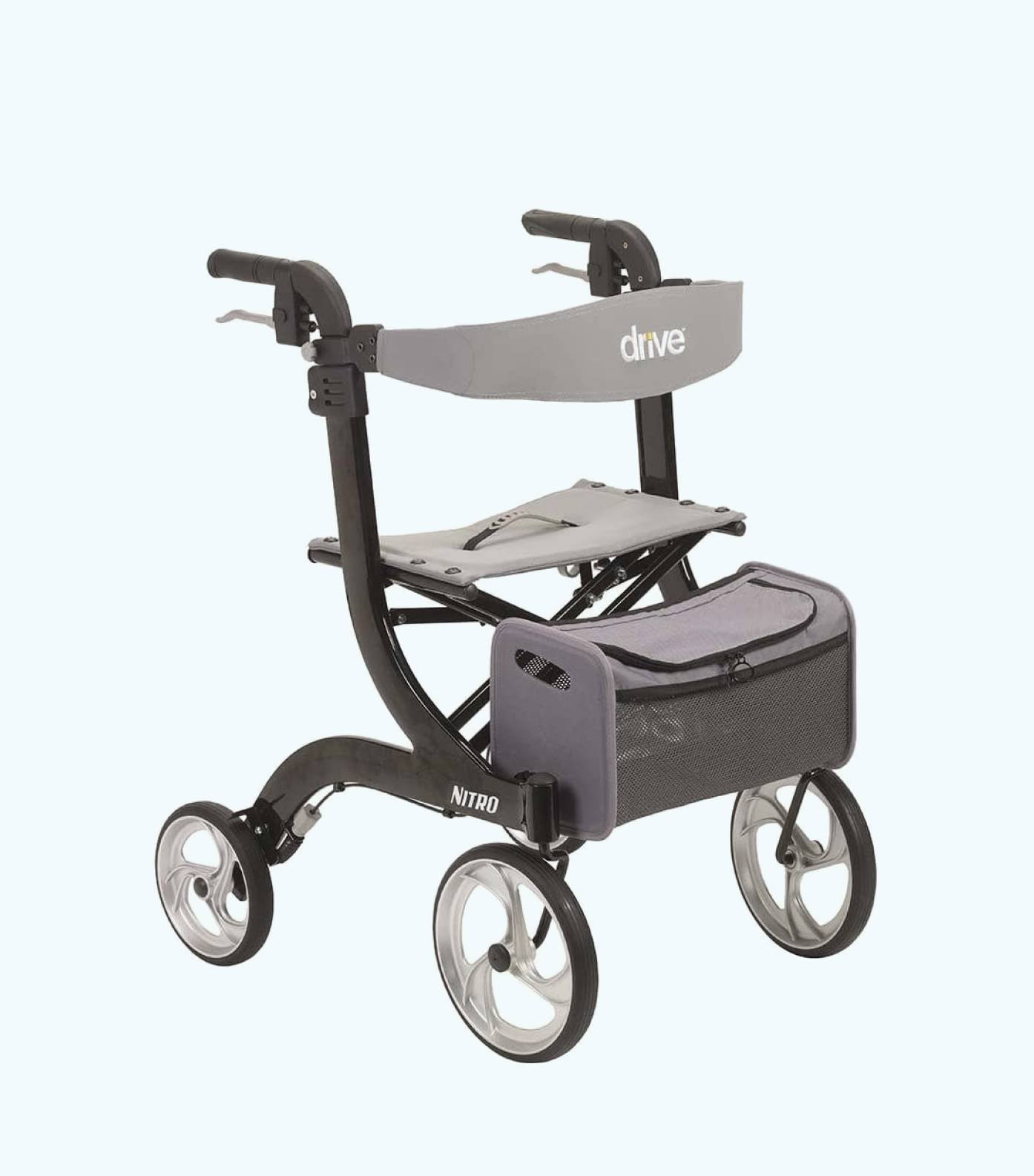
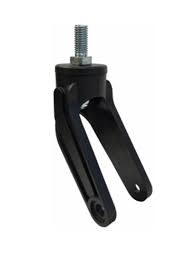
The Evolution Replacement Rear Fork — Left is the correct-specification left rear fork for Evolution Trillium walkers, restoring secure rear wheel mounting, correct axle alignment, and stable rolling performance after fork damage or wear.

    • Why the Left Rear Fork’s Condition Has Asymmetric Clinical Consequences for the Trillium’s Primary User Population

      The left rear fork’s structural failure or deformation produces consequences that are not symmetrical with right rear fork failure — because the patient population for whom the Evolution Trillium is prescribed interacts with the left side of the rollator differently than the right during the activities that most load the rear fork. For right-handed users — the majority of the rollator-prescribed population — the right hand provides the primary push-off force during forward ambulation, while the left hand provides a secondary stabilizing grip. The left rear fork is therefore loaded at a lower mean force during typical use but at a more variable force pattern — the secondary stabilizing role means the left rear fork absorbs the lateral and rotational corrections the user makes during walking rather than the primary linear push-off loads the right rear fork primarily carries. This means left rear fork fatigue accumulates through a high-variability load spectrum rather than a high-magnitude consistent one, and the resulting failure mode often manifests as frame attachment loosening or crack initiation at the frame interface before visible blade deformation occurs.

      For users with left hemiplegia — a significant proportion of the rollator-prescribed population following stroke — the clinical consequence of left rear fork failure is more direct. In left-hemiplegia mobility protocols, the rollator’s left side is the assisted side: the affected left arm rests on or near the left handle while the right arm provides active propulsion. When a left-hemiplegia user pauses to rest on the rollator seat, the affected left leg has limited ability to provide balance recovery if the rollator shifts unexpectedly — the user’s fall-recovery response is reduced on the left side precisely because hemiplegia affects the side where fork failure is most consequential. Inspecting the left rear fork condition is therefore a priority assessment for any Trillium used by a hemiplegic user, not a symmetrical check conducted after the more heavily loaded right fork.

      The left rear fork’s axle housing geometry is mirror-specific — the axle bore is oriented to position the left rear wheel at the correct lateral distance from the frame centreline and at the correct toe alignment for the left side of the Trillium’s four-wheel geometry. Installing a right rear fork at the left position — a substitution sometimes attempted when the correct left fork is not immediately available — produces a left rear wheel that sits at the mirror-wrong lateral offset, pushing the wheel inward from its designed track width position. A narrowed rear track width on the left side reduces the Trillium’s lateral stability footprint on that side: the rollator is more easily tipped to the left when a user leans left during a seated rest or weight shift, because the left rear wheel is closer to the centreline than the design intended. For hemiplegic users or those with left-side balance deficits, this is a direct and immediately consequential safety compromise. The correct left-side mirror geometry is not a labeling formality — it is the dimensional specification that maintains the Trillium’s designed lateral stability envelope.

      The Evolution Trillium places both rear forks in the primary load path during the most demanding structural event of rollator use: a sit-to-stand transfer from the rollator seat by a user with limited lower limb strength. In this transfer sequence, both rear forks carry the user’s body weight as the user pivots from seated to standing — the rear wheel base provides primary ground contact while the user’s arms apply forward and upward push-off forces through the handles. The rear forks are loaded simultaneously in axial compression (downward body weight) and bending (forward push-off force component). Unlike a rolling load event where fork loading is brief and dynamic, the sit-to-stand transfer applies sustained multi-axis load for the full duration of the standing movement — typically three to five seconds of combined compressive and bending stress at the fork’s frame attachment point. A left rear fork weakened by prior impact or progressive fatigue crack development carries reduced capacity for this load mode, and the combined axial and bending stress at the attachment point is the exact condition that drives crack propagation to fracture in a weakened component.


      Key Features

      • Correct-specification left rear fork for Evolution Trillium walkers — mirror geometry specific to the left rear wheel position, with axle housing orientation, blade curvature, and frame attachment interface angle distinct from the right rear fork
      • Heavy-duty construction sustains the high-variability load spectrum of the left fork’s secondary stabilizing role — resisting the frame attachment fatigue that variable-direction loading produces at the left rear fork interface
      • Precision axle housing geometry maintains the Trillium’s designed left rear track width — preserving the lateral stability footprint that prevents increased left-side tip risk from a narrowed track
      • Compatible with standard Trillium rear wheel and axle assembly hardware — installs with original axle hardware and wheel bearings without requiring complete rear wheel assembly replacement
      • Left-side mirror geometry — the correct component for the left rear position; the right rear fork is a separate component with reversed geometry that cannot be substituted
      • Restores full sit-to-stand transfer load capacity at the left rear fork — the sustained multi-axis load event that is most structurally demanding for the rear fork

      Benefits

      • Eliminates the lateral stability reduction caused by a bent or incorrectly substituted left rear fork that has narrowed the Trillium’s rear track width on the left side — particularly critical for hemiplegic users with reduced left-side fall-recovery response
      • Restores correct left rear axle alignment — eliminating the rolling asymmetry and directional drift produced by a damaged or misaligned left rear fork
      • Correct left-side mirror geometry prevents the track width narrowing and lateral stability compromise that installing a right fork at the left position produces
      • Heavy-duty construction addresses the variable-direction fatigue loading of the left fork’s stabilizing role — resisting frame attachment loosening and crack initiation from high-variability load cycling
      • Component-level left rear fork replacement restores full structural and rolling function without replacing the complete rear wheel assembly or frame

      Typical Applications

      ✓ Impact damage replacement — Trillium walkers with a visibly bent, twisted, or cracked left rear fork following a tip-over, kerb impact, or collision ✓ Left-side tracking correction — persistent drift to the left during straight-line walking that inspection traces to left rear wheel misalignment at the fork rather than at the wheel bearing or axle ✓ Clinical priority inspection — left rear fork condition assessment for Trillium rollators used by left-hemiplegic users, for whom left-side fork integrity has direct fall-consequence asymmetry ✓ Lateral stability assessment — left rear fork inspection when a user reports increased left-side tip tendency during seated rest, indicating possible track width narrowing from fork deformation or incorrect substitution ✓ Rollator refurbishment — second-hand or reconditioned Trillium walkers being returned to service with complete rear fork inspection, confirming side-correct geometry at both rear positions ✓ Long-term care and homecare equipment maintenance — scheduled left rear fork inspection during annual service, with priority assessment for hemiplegic or left-side-balance-deficit users

    • No reviews yet

      Add yours

    Testimonials from Google

    See all reviews

    Your cart — 0

    You cart is currently empty

    Login

    By using our website, you agree to the use of cookies. These cookies help us understand how customers arrive at and use our site and help us make improvements. Hide this message More on cookies »