Slideshow Items

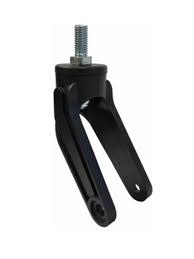
Evolution Replacement Rear Fork Evolution Trillium Walker Left

C$38.99
In stock online
In store: Check availability

Available in store

UPC Code: 2100000030705
SKU: B10IRL

Replacement left-side rear fork for Evolution Trillium series rollators. Connects the left rear wheel and axle assembly to the walker frame, maintaining wheel alignment, lateral stability, and smooth rolling performance during active mobility use.

    • Why the Rear Fork Is the Wheel Retention Boundary and the Structural Load Path of the Evolution Trillium Rollator Simultaneously

      The rear fork on an Evolution Trillium rollator serves two structurally distinct functions that are both essential to the rollator's mechanical and clinical performance, and that a single fork component must satisfy simultaneously. The first function is wheel retention: the rear fork is the structural element that holds the rear wheel axle at the manufacturer-specified position relative to the rollator frame. The rear wheel cannot provide rolling support or braking function unless the axle is held in correct alignment within the fork — a fork that has cracked, bent, or fractured at the axle mounting point allows the rear wheel to shift laterally or rearward from its specified position, introducing wheel wobble, uneven rolling resistance, and brake misalignment that the user cannot compensate for through walking technique. A rear fork that has failed structurally must be replaced before the rollator is returned to use, because a wheel whose axle retention is compromised cannot provide the stable rolling support that safe rollator use requires.

      The second function the rear fork must satisfy simultaneously is load transfer from the rollator frame into the rear wheel axle and from the axle back into the frame during braking. The fork is the structural load path between the frame rail and the rear wheel assembly — it carries the vertical load share allocated to the rear wheel by the rollator's weight distribution geometry, and it transfers the braking reaction force from the wheel axle into the frame when the brake mechanism is engaged. A fork that has developed a crack or deformation at the frame rail attachment point or at the axle mounting bore introduces a compliance into this load path that reduces braking effectiveness and allows the rear of the frame to flex under braking load. In a rollator user population where balance and fall risk are already elevated, reduced rear braking effectiveness caused by fork structural compromise presents a direct safety risk that a correctly functioning fork eliminates.

      The left-side designation of this fork is not an arbitrary label — it reflects the directional geometry of the brake cable routing, axle retention feature orientation, and frame rail attachment profile that are specific to the left rear position of the Trillium frame. The left and right rear forks are mirror-image components whose mounting geometry is matched to the frame rail profile at each side. Installing a right fork in the left position produces an axle retention geometry that does not align the wheel correctly within the left rear wheel well, resulting in lateral wheel offset, uneven tyre wear, and brake pad contact asymmetry that alters braking performance at the left rear wheel. The left fork must be replaced with the correct left-side component to restore the manufacturer-specified rear wheel geometry.

      The OEM replacement specification of the Evolution Trillium left rear fork addresses the specific dimensional requirements of the Trillium frame rail attachment interface and rear axle bore geometry. The fork's frame mounting profile, axle bore diameter, and brake cable attachment point are all specified to the OEM dimensions that position the rear wheel at the correct lateral offset, height, and alignment angle for the Trillium frame geometry. A non-OEM fork that does not match these dimensions cannot guarantee correct wheel alignment after installation and cannot be considered a like-for-like functional replacement for the original fork.

      KEY FEATURES

      • Left-side rear frame fork — mirror-image geometry specified for the left rear position of the Evolution Trillium frame, ensuring correct axle retention, wheel alignment, and brake cable routing at the left rear wheel assembly
      • OEM axle bore and frame mounting specification — bore diameter, frame rail attachment profile, and brake attachment point match the original Trillium fork dimensions, restoring manufacturer-specified rear wheel geometry after replacement
      • Durable construction — selected for resistance to the cyclic vertical load, braking reaction force, and lateral impact loads that rear rollator forks accumulate across active daily mobility use
      • Axle retention feature — secures the rear wheel axle at the correct position within the fork without lateral play or longitudinal shift under rolling and braking loads, maintaining wheel alignment across the rollator's service life
      • OEM replacement design for easy installation — mounting geometry matches the Trillium frame rail attachment interface, allowing fork replacement without frame modification or custom fitting

      BENEFITS

      • Restores the wheel retention function at the left rear axle position — replacing a cracked, bent, or fractured fork before the rollator is used under walking load, removing the wheel wobble and instability that a structurally compromised fork creates
      • OEM dimensional specification ensures correct left rear wheel alignment after replacement — restoring the lateral offset and alignment angle that a non-OEM or incorrectly sided fork cannot guarantee
      • Structural load path integrity restored at the left rear frame corner — eliminating the frame compliance under braking load that a cracked or deformed fork introduces and restoring full left rear braking effectiveness
      • Left-side specific geometry eliminates the wheel offset and brake contact asymmetry that installing an incorrect fork side produces — maintaining symmetric rolling and braking performance across both rear wheels
      • Component-level fork replacement extends the rollator's service life without replacing the rear axle, wheel set, brake assembly, or frame

      TYPICAL APPLICATIONS

      ✓ Impact damage replacement — immediate left rear fork replacement when collision or drop impact has cracked or bent the fork at the axle mounting point or frame rail attachment, restoring wheel retention and load path integrity before the rollator is returned to use

      ✓ Fatigue fracture replacement — replacement when cyclic load accumulation has produced a fatigue crack at the fork's high-stress geometry points, identified by visible cracking, wheel wobble, or lateral play at the left rear axle

      ✓ Axle bore wear replacement — replacement when axle bore wear has introduced lateral play at the left rear wheel axle, allowing wheel shift under rolling and braking loads that a correctly dimensioned bore eliminates

      ✓ Clinic and rental fleet maintenance — fork inspection and replacement as part of rollator service intervals in long-term care facilities and rental programs, confirming axle retention integrity and frame attachment security at both rear fork positions

      ✓ Rollator recommissioning — left rear fork inspection and replacement when an Evolution Trillium rollator is transferred to a new user or returned from storage, confirming structural integrity and wheel alignment before the rollator enters active mobility use

    • No reviews yet

      Add yours

    Testimonials from Google

    See all reviews

    Your cart — 0

    You cart is currently empty

    Login