
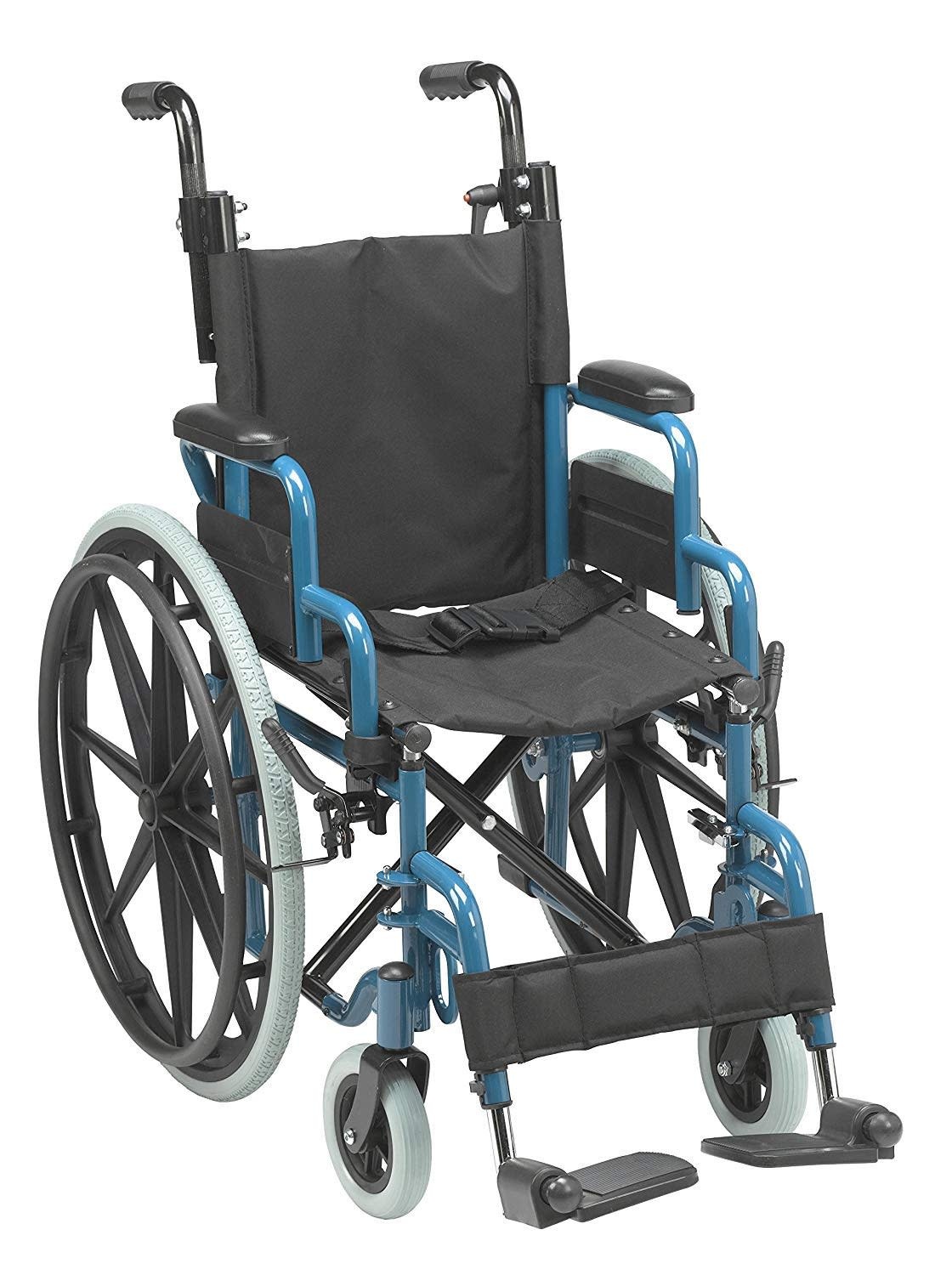
Why Child-Specific Wheelchairs Matter
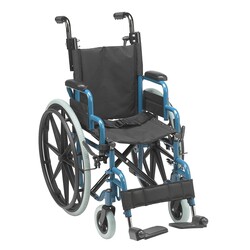
Adult wheelchairs scaled down for children create serious developmental and safety problems that families and healthcare providers often don't recognize until complications develop. Standard adult chairs force children into ergonomically inappropriate postures: seats too deep cause sacral sitting (sliding forward, spine curved improperly), armrests at wrong heights prevent proper table/desk positioning for schoolwork, footrests poorly positioned create hip/knee contractures over time, and overall proportions too large make self-propulsion impossible requiring constant adult pushing which delays independence development. The Wallaby pediatric line addresses these critical issues with child-specific engineering: 14-inch seat width fits average 4-10 year old body dimensions, seat depth shorter preventing sacral sitting and promoting upright posture crucial for respiratory function, armrest height scaled for proper shoulder positioning during wheeling, and overall frame geometry designed for child's arm length and strength capabilities enabling self-propulsion building independence and upper body strength. The Jet Fighter Blue color specifically addresses psychological needs: children already dealing with disability-related stigma benefit from "cool" equipment looking less medical and more like a toy or sports equipment, bright colors reduce institutional appearance helping integration in schools and social settings, and distinctive styling gives children ownership and pride in their mobility device vs. shame or reluctance to use "medical equipment." This isn't superficial—studies show children using appealing mobility equipment demonstrate higher usage compliance, better social integration, and improved self-esteem compared to those using institutional-appearing devices.
Key Features
- 14-inch seat width appropriately sized for children ages 4-10 (approximately) with typical body dimensions
- Jet Fighter Blue frame vibrant, child-appealing color reducing medical equipment stigma
- Flip-back padded desk arms enabling close wheelchair positioning to school desks, dining tables, and activity surfaces
- Swing-away elevating footrests removable for transfers and repositionable for growth accommodation
- Lightweight folding frame easy for parents/caregivers to transport in standard vehicles
- 150 lb weight capacity accommodates growing children through multiple years before replacement needed
- Padded armrests providing comfort during extended sitting and protecting from frame contact injuries
- Desk-length arms shorter arm design preventing interference with table edges during classroom activities
- 8" front casters providing maneuverability in tight indoor spaces (homes, classrooms, hallways)
- 24" rear wheels with hand rims enabling self-propulsion for children with sufficient upper body strength
- Standard manual wheelchair design familiar to healthcare providers, therapists, and school staff
- Durable carbon steel frame withstanding rough handling typical of pediatric use environments
- Push handles integrated into backrest allowing parent/caregiver propulsion when needed
- Adjustable footrest height accommodating growth and different leg lengths within sizing range
- Tool-free folding mechanism parents can fold/unfold without specialized equipment
Benefits
- Promotes proper posture and spine alignment through child-specific ergonomic proportions preventing contractures
- Enables independent self-propulsion building upper body strength, coordination, and confidence
- Reduces stigma through appealing color scheme helping social integration with peers
- Facilitates classroom participation with desk-compatible arm design for schoolwork and activities
- Prevents developmental delays by providing age-appropriate mobility fostering exploration and independence
- Easy transport in standard vehicles supporting family outings, medical appointments, and school attendance
- Grows with child through weight capacity and adjustment features maximizing equipment investment lifespan
- Supports inclusion in regular education environments with school-appropriate design and sizing
- Reduces caregiver strain through lightweight construction and easy folding for daily handling
- Enables peer interaction and play through mobility access to playgrounds, recreational areas, and social spaces
- Promotes respiratory health through proper positioning crucial for children with reduced trunk control
- Facilitates feeding and swallowing safety with appropriate seated posture during meals
- Provides security for parents knowing equipment specifically designed for child's size and developmental needs
Clinical Applications & Ideal Users
✓ Cerebral palsy with impaired ambulation requiring full-time or part-time wheelchair mobility
✓ Spina bifida with lower extremity paralysis or weakness preventing independent walking
✓ Muscular dystrophy in early stages before transitioning to power wheelchair for energy conservation
✓ Spinal cord injury (congenital or acquired) resulting in paraplegia or significant weakness
✓ Limb differences or amputations affecting ability to ambulate functionally in community settings
✓ Severe developmental delays with motor impairment preventing age-appropriate independent walking
✓ Congenital conditions (osteogenesis imperfecta, arthrogryposis) limiting safe ambulation
✓ Post-surgical recovery requiring temporary non-weight-bearing mobility (fractures, orthopedic procedures)
✓ Progressive neurological conditions requiring increasing mobility support over time
✓ Cardiac or respiratory conditions where energy conservation critical for health management
✓ Temporary mobility impairment from injuries, casts, or medical restrictions (6-12 week recoveries)
✓ Obesity with mobility limitations requiring bariatric-capable pediatric equipment
✓ Multiple disabilities where wheelchair provides safe, consistent positioning for activities
✓ School-age children (typically 4-10 years) within 14" seat width and 150 lb capacity parameters
Usage & Application
Pediatric Wheelchair Sizing Assessment:
Proper wheelchair sizing is CRITICAL for children to prevent developmental complications, postural deformities, and equipment abandonment. Unlike adults whose dimensions remain stable, children grow rapidly requiring different sizing considerations:
Seat Width Measurement:
- Have child sit upright with hips fully back in chair
- Measure widest point across hips/thighs
- Add 1-2 inches for growth and seasonal clothing (winter coats)
- 14" seat width typically fits children ages 4-10 with average body size
Seat Depth Assessment:
- Measure from back of buttocks to back of knee (popliteal fold)
- Subtract 2-3 inches to prevent seat edge compressing back of knee
- Proper depth: 2-3 inches clearance between seat edge and back of knee
- Too deep = sacral sitting (child slides forward, poor posture)
- Too shallow = insufficient thigh support, pressure on buttocks
Armrest Height Verification:
- Child seated, shoulders relaxed, elbows bent 90°
- Armrest should support forearms at this natural position
- Too high = shoulder elevation, neck strain, discomfort
- Too low = slouching, lateral trunk instability
Footrest Positioning:
- Hips and knees should be at approximately 90° angles
- Feet flat on footrests, ankles neutral position
- Thighs parallel to floor, evenly supported across seat
- Improper positioning causes hip flexion contractures over time
Growth Accommodation Planning: Expect 6-18 month equipment lifespan before size replacement needed (children grow faster than adults). Plan for growth through:
- Footrest height adjustment (most adjustable)
- Weight capacity buffer (150 lb allows growth headroom)
- Seat depth grows naturally as child gets taller
Initial Wheelchair Setup & Assembly:
Unboxing & Inspection:
- Remove wheelchair from packaging
- Inspect frame for shipping damage: dents, scratches, sharp edges
- Verify all components present: footrests (both sides), armrests (both sides), rear wheels (both), casters (both front)
- Check tire inflation if pneumatic tires (typically solid urethane on pediatric chairs)
Frame Unfolding:
- Place folded wheelchair on stable surface
- Push down on both seat rails simultaneously (center of seat)
- Frame should unfold smoothly and lock into open position
- Verify locking mechanism engaged (seat rigid, doesn't collapse when pressed)
Armrest Installation:
- Align armrest receiver tubes on wheelchair frame sides
- Slide flip-back armrests into receivers until clicking sound (locked)
- Test flip-back function: should stay upright when down, flip back smoothly when button pressed
- Verify both armrests same height (adjust if height-adjustable model)
Footrest Installation & Adjustment:
- Swing-away mechanism: Footrests have pivot point on frame, swing outward to side
- Align footrest mounting bracket with frame receiver
- Insert and secure (typically spring-loaded locking pin)
- Adjust footrest height: Loosen adjustment bolt, slide footrest tube up/down, retighten at correct height
- Height setting: Child seated, feet flat on footrests, thighs parallel to floor, 2-3" clearance under thighs
- Angle footrest plates: Should be horizontal or slightly angled up at toes (prevents feet sliding forward)
Rear Wheel Installation:
- Most Wallaby models have quick-release axles for easy wheel removal
- Align axle button with frame receiver hole
- Push firmly until click sound (wheel locked onto frame)
- Pull wheel outward testing lock engagement (should not release)
- Repeat for opposite wheel
- Verify both wheels aligned (equal distance from frame, tracks straight when pushed)
Safety Check Before First Use:
Teaching Child Wheelchair Skills (Age-Appropriate):
For Children 5-7 Years (Beginning Self-Propulsion):
Forward Propulsion:
- Teach "push and glide" rhythm vs. continuous pushing (conserves energy)
- Short pushes: "Push the wheels, then let them roll"
- Practice straight line first (hallway, driveway) before turns
- Goal: 20-30 feet distance independently
Turning:
- Wide turns initially: "Push one wheel harder to turn toward other side"
- Left turn = push right wheel more, left wheel less
- Gradual progression to tighter turns as coordination improves
- Use cones or chalk markers for target practice
Braking:
- Teach hand brake use: "Squeeze both brakes to stop"
- Practice stopping at target (line on floor, colored tape)
- Emphasize BOTH brakes (one brake alone causes turning)
For Children 8-10 Years (Advanced Skills):
Curb Navigation:
- Ascending curb: Approach straight, lean forward, quick powerful push on wheels lifting front casters onto curb, immediately shift weight back and pull wheels up
- Descending curb: Backward descent recommended (safer) - back up to curb, lower rear wheels down first, then carefully lower front casters
- Adult supervision REQUIRED until proficient
Uneven Terrain:
- Grass, gravel, carpet: Teach to maintain momentum (stop in middle = getting stuck)
- Lean slightly forward over front casters for better traction
- Short, quick pushes vs. long slow pushes
Wheelies (Optional - Advanced):
- Some children master wheelchair wheelies (balancing on rear wheels)
- Useful for curbs and obstacles
- ONLY teach if child demonstrates good balance, control, and judgment
- Adult supervision mandatory during learning phase
Transfers (Getting In/Out of Wheelchair):
Standard Transfer (For Ambulatory Children Using Wheelchair Intermittently):
From Wheelchair to Chair/Couch:
- Position wheelchair parallel to destination surface at 45° angle
- Engage wheel locks (both brakes!)
- Flip armrest back on transfer side (removes obstacle)
- Swing footrest away (prevents tripping)
- Child scoots forward to front edge of wheelchair seat
- Places hands on transfer destination surface
- Stands/pivots on weight-bearing leg, rotates body toward destination
- Lowers into seated position on destination surface
- Caregiver assist: Stand in front, offer hands for stability, DO NOT lift child
From Chair/Couch to Wheelchair:
- Position wheelchair same angle as above
- Engage brakes, flip armrest back, swing footrest away
- Child at edge of origin surface
- Stands/pivots, rotates toward wheelchair
- Backs up until feeling wheelchair seat behind knees
- Reaches back feeling for armrests or seat
- Lowers carefully into wheelchair seat
- Caregiver repositions footrests, flips armrest down
Dependent Transfers (For Non-Ambulatory Children):
Requires adult physical lifting—proper body mechanics CRITICAL:
- Caregiver faces child
- Child wraps arms around caregiver's neck (if able)
- Caregiver places arms under child's thighs, other arm supporting back/trunk
- Lift with legs (not back!), keeping child close to body
- Pivot and lower into wheelchair
- Position child's hips fully back in seat (prevents sacral sitting)
Alternative: Two-Person Transfers For larger children approaching 150 lb capacity, two-person transfers safer for caregivers
School Use Considerations:
Classroom Accommodations:
Desk Positioning:
- Flip-back desk arms allow close wheelchair positioning to standard school desks
- Request height-adjustable desk if available (matches wheelchair seat height)
- Ensure 32-36" aisles between desks for wheelchair navigation
- Position near classroom door for evacuation ease
Physical Education Participation:
- Many children in wheelchairs can participate in adapted PE
- Wheelchair basketball, relay races, parachute activities
- Teacher education needed: Child CAN be active in wheelchair!
- Wheelchair sports programs available in many communities
Playground Access:
- Modern playgrounds often have wheelchair-accessible equipment
- Ramps, transfer platforms, sensory panels at wheelchair height
- Ensure playground surface suitable (hard-packed rubber, concrete) not loose wood chips/sand
Restroom Accessibility:
- Verify school restroom has wheelchair-accessible stall (60" × 60" minimum)
- Grab bars for transfer assistance
- May need adult aide assistance depending on child's independence level
Transportation Accommodations:
- School bus with wheelchair lift or ramp
- Tie-down system securing wheelchair during transport
- IEP (Individualized Education Program) should document transportation needs
Home Use & Daily Living:
Home Accessibility Assessment:
Doorways:
- Measure interior doorways: 32" minimum for 14" wheelchair (allows 2" clearance each side)
- Remove door thresholds creating trip hazards
- Offset hinges can widen doorway 2" without reconstruction
Bathroom:
- Roll-in shower or tub transfer bench
- Raised toilet seat with grab bars
- Lower sink or provide step stool for reaching (if child transfers out for standing)
Bedroom:
- Lower bed height for easier transfers (12-18" from floor to mattress top)
- Clear floor space around bed (60" diameter for turning wheelchair)
- Accessible closet (lower hanging rods, pull-out drawers vs. high shelves)
Kitchen:
- Lower countertop section (28-32" height) for child to participate in meal prep
- Accessible refrigerator (side-by-side model easier than top/bottom freezer)
- Ensure sufficient turnaround space (60" diameter)
Daily Living Skills Training:
Dressing:
- Teach while seated in wheelchair (stable surface)
- Loose-fitting clothing easier than tight
- Elastic waists vs. buttons/zippers initially
- Front-opening shirts easier than over-head pullovers
- Occupational therapy can provide specialized adaptive techniques
Grooming:
- Lower bathroom sink or provide mirror at wheelchair height
- Electric toothbrush easier grip than manual
- Long-handled brush/comb for hair
- Accessible storage (toothpaste, soap within reach)
Feeding:
- Proper wheelchair positioning at table (armrest height allows elbows on table)
- Desk arms enable close table positioning
- Consider plate guards, adapted utensils if hand control limited
Outdoor Use & Transportation:
Vehicle Transport:
Folding Wheelchair for Car Trunk:
- Remove both footrests (swing away and lift off)
- Fold wheelchair: lift seat center, frame folds in half
- Place folded wheelchair in trunk standing upright
- Secure with bungee cords preventing rolling during drive
- Place footrests in trunk separately (avoid loss)
Van with Wheelchair Lift:
- For heavier children or families preferring non-lifting option
- Child remains seated in wheelchair
- Wheelchair rolled onto lift platform, secured, lifted into van
- Wheelchair then secured with tie-down straps during transport
- More expensive vehicle modification but reduces caregiver lifting
Outdoor Terrain Challenges:
Grass & Uneven Ground:
- Wheelchair may sink into soft ground (lawn, beach sand)
- Solution: Maintain momentum, don't stop in middle of difficult terrain
- Larger rear wheels help (24" on Wallaby better than smaller pediatric models)
- Adult pushing assistance may be needed in very soft/uneven terrain
Weather Considerations:
- Rain: Wheelchair gets wet but doesn't damage (dry after use)
- Snow/Ice: Small casters struggle in snow, avoid if possible or adult push assistance
- Heat: Metal frame can get hot in direct sun (use towel on armrests/seat)
- Cold: Metal frame cold to touch (gloves for child, blanket for lap)
Maintenance & Care:
Weekly Maintenance Checks:
Tire Inspection:
- Check tire wear (tread depth if pneumatic tires)
- Pneumatic tires: Maintain proper inflation (PSI listed on tire sidewall, typically 80-120 PSI)
- Solid urethane tires: Inspect for chunks missing, cracks, or uneven wear
- Replace tires when tread worn smooth or damage present
Wheel Alignment:
- Push wheelchair straight on flat surface without steering
- Should track straight (not pulling left or right)
- If pulling to side: Likely wheel loosened, bearing worn, or axle bent
- Check wheel quick-release axles: Should click firmly into place
Brake Function:
- Engage both wheel locks on flat surface
- Attempt to push wheelchair (should not roll)
- If wheelchair rolls despite brakes engaged: Brake pads worn or misaligned
- Adjust brake pad position or replace pads as needed
Fastener Tightness:
- Check all bolts, screws, nuts remain tight
- Vibration from daily use gradually loosens fasteners
- Use appropriate wrenches/screwdrivers to snug (don't over-tighten)
- Focus on armrest mounts, footrest pivots, backrest attachments
Upholstery Condition:
- Inspect seat/back upholstery for tears, worn areas, loose seams
- Small tears can be repaired with upholstery tape (prevents worsening)
- Extensive damage requires professional reupholstering or replacement
Monthly Cleaning:
Frame Cleaning:
- Wipe down frame with damp cloth removing dirt, food debris
- Mild soap solution for stubborn grime
- Dry thoroughly (prevents rust on metal components)
- Check for rust spots: Sand lightly, touch up with rust-resistant spray paint
Upholstery Cleaning:
- Remove loose cushions if applicable
- Vacuum upholstery removing crumbs, debris
- Spot-clean stains with mild upholstery cleaner
- Air dry completely before use
- For heavy soiling: Remove upholstery, machine wash cold gentle cycle, air dry
Wheel Cleaning:
- Clean wheels especially if used outdoors (mud, grass, sand accumulation)
- Remove debris wrapped around axles (hair, threads cause wheel binding)
- Lubricate bearings if wheels spinning sluggishly (light machine oil)
Growth Tracking & Equipment Replacement Planning:
Signs Child Outgrowing Wheelchair:
Replacement Timeline:
- Typical pediatric wheelchair lifespan: 12-36 months depending on growth rate
- Rapid growth spurts (puberty): May need replacement annually
- Insurance typically covers new pediatric wheelchair every 2-3 years
- Start replacement process 3-6 months before urgent need (insurance approval delays)
Transition to Adult Wheelchair:
- When child exceeds 150 lb capacity or outgrows 14" seat dimensions
- Adult wheelchairs typically 16"-20" seat widths
- Transition usually occurs ages 10-14 depending on body size
- May require different wheelchair style (standard vs. lightweight vs. active)
Technical Specifications
Product Name: Drive Medical Wallaby Pediatric Wheelchair, Jet Fighter Blue
Model: Wallaby 14" (specific model number varies by supplier)
Color: Jet Fighter Blue (vibrant blue frame with coordinating upholstery)
Seat Width: 14 inches (36 cm)
Seat Depth: Approximately 14 inches (typical for pediatric proportion, verify with manufacturer)
Seat-to-Floor Height: Approximately 18-19 inches (adjustable with footrest positioning)
Overall Width: Approximately 24-25 inches (seat width + wheels + armrests)
Overall Length: Approximately 36-38 inches (front casters to push handles, varies with footrest position)
Backrest Height: Approximately 16-18 inches from seat (provides trunk support without restricting shoulder movement)
Armrest Height: Approximately 7-9 inches above seat (adjustable if height-adjustable armrests)
Armrest Style: Flip-back padded desk arms (removable for transfers, desk-compatible for tables)
Armrest Length: Desk-length (shorter than full-length arms, accommodates close table positioning)
Footrests: Swing-away elevating leg rests with adjustable height
Footrest Clearance: Minimum 2 inches from floor when properly adjusted (prevents dragging)
Front Casters: 8-inch diameter solid urethane or pneumatic (maintenance-free vs. air-filled)
Rear Wheels: 24-inch diameter with hand rims for self-propulsion
Rear Wheel Type: Spoke wheels or mag wheels (lightweight vs. solid plastic)
Tires: Solid urethane (maintenance-free) or pneumatic (air-filled, smoother ride)
Frame Material: Carbon steel (durable, cost-effective) or aluminum (lighter weight, higher cost)
Frame Weight: Approximately 30-35 lbs without footrests (lightweight for caregivers to lift)
Total Weight with Footrests: Approximately 35-40 lbs
Weight Capacity: 150 lbs (68 kg) maximum user weight
Folded Dimensions: Approximately 28" × 12" × 30" (W × D × H) for compact vehicle storage
Brakes: Push-to-lock wheel locks on both rear wheels (caregiver or child operated)
Push Handles: Integrated into backrest for caregiver propulsion assistance
Upholstery: Nylon or vinyl in coordinating blue color (easy-clean, durable)
Warranty: Limited lifetime warranty on frame; 1-year warranty on parts (typical Drive Medical coverage)
FDA Classification: Class I medical device - Manually operated wheelchair
Assembly Required: Minimal (unfold frame, attach armrests and footrests)
Replacement Parts Availability: Drive Medical wide distribution network, parts readily available
Age Range: Typically 4-10 years (varies with child's size and growth rate)
Intended Use: Indoor and outdoor mobility for children requiring full-time or part-time wheelchair use
Care Environment: Home, school, community, recreational settings
Cleaning: Frame: damp cloth; Upholstery: spot clean or remove for machine washing
Storage: Store indoors when possible; if outdoor storage necessary, use waterproof cover