
Slideshow Items

  • Resuscitators, Inhalators & Airway Devices
  • resuscitators-inhalators-airway-devices
Salter Labs

  |  

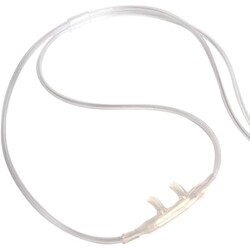
Salter Labs Soft Nasal Cannula 7′

C$8.99
In stock online
In store: Check availability

Available in store

SKU: 16SOFT-7

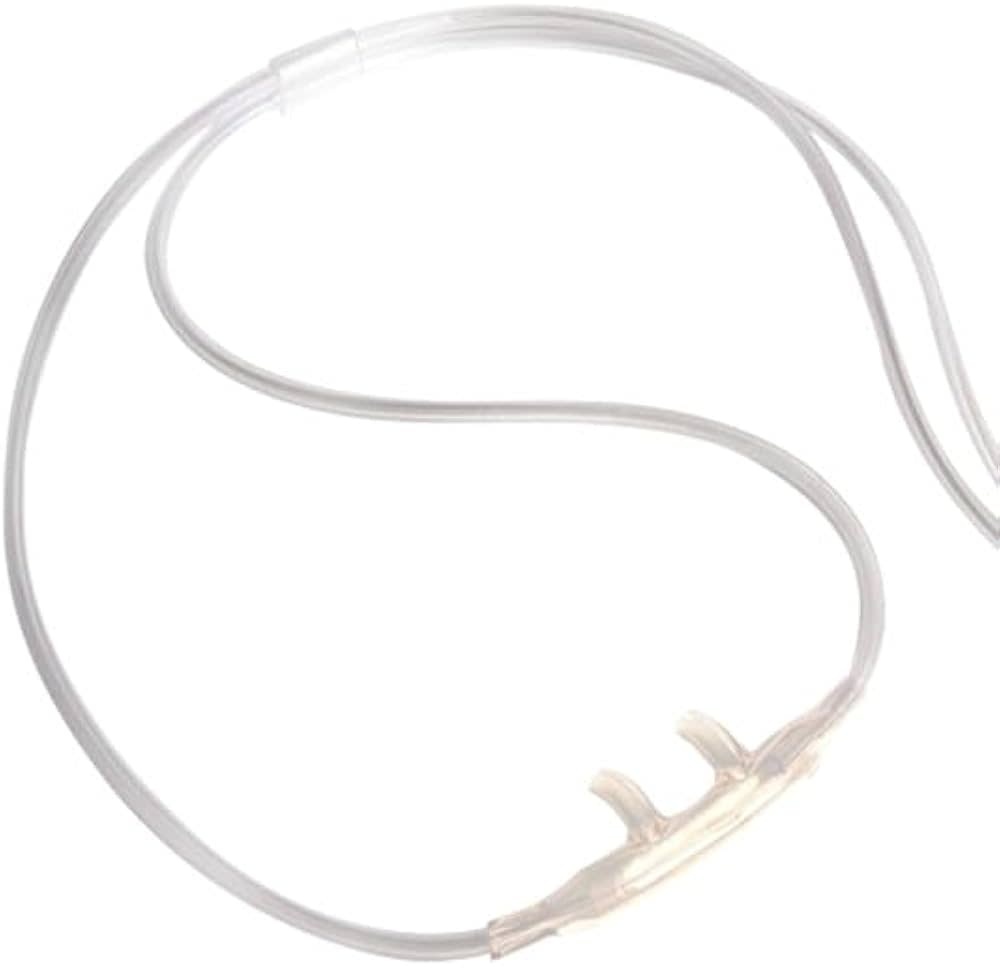
Soft curved nasal cannula with 7-foot three-channel kink-resistant tubing and standard oxygen connector, delivering supplemental oxygen up to 6 LPM from concentrators or cylinders with minimal nasal and facial pressure during extended wear.

    • Why the Soft Nasal Cannula Is the Oxygen Delivery Interface Boundary and the Extended Wear Comfort Component of the Low-Flow Supplemental Oxygen System Simultaneously

      The Salter Labs 7-foot soft nasal cannula serves two structurally distinct functions that are both essential to effective and sustained low-flow supplemental oxygen therapy, and that a single cannula must satisfy simultaneously. The first function is oxygen delivery: the nasal cannula is the patient interface that transfers the oxygen output from the concentrator or cylinder into the patient's respiratory tract, directing the oxygen flow into the nasal passages from which it mixes with the ambient air inhaled with each breath to produce the elevated fractional inspired oxygen concentration the patient's respiratory condition requires. The nasal cannula delivers oxygen at flow rates from 1–6 LPM, producing an estimated fractional inspired oxygen concentration (FiO₂) of approximately 24–44% depending on the set flow rate and the patient's respiratory rate and tidal volume. The cannula's two curved prongs insert approximately 1 cm into the nasal vestibules, positioning the oxygen outlets at the entrance to the nasal airway where the delivered oxygen is drawn into the nasal passages with each inhalation. The standard oxygen connector at the supply end of the 7-foot tubing connects to the DISS oxygen outlet fittings used on most oxygen concentrators, compressed oxygen regulators, and flowmeters without additional adapters, providing the compatibility range required for use across the variety of oxygen delivery equipment encountered in home, clinical, and ambulatory contexts.

      The second function the cannula must satisfy simultaneously is extended wear comfort — maintaining the nasal and facial contact geometry required for oxygen delivery at acceptable comfort levels throughout the multi-hour or continuous daily wear that chronic respiratory conditions typically require. Patients who require supplemental oxygen for chronic obstructive pulmonary disease, interstitial lung disease, pulmonary hypertension, or heart failure may wear their nasal cannula for 16–24 hours per day as their prescribed therapy. At this wear duration, the mechanical properties of the prong and tubing materials at the patient contact points accumulate into significant comfort effects that shorter-duration medical devices do not encounter. Conventional cannula prongs in stiffer materials generate concentrated pressure at the inner nasal vestibule walls after extended wear — a pressure that initially registers as mild discomfort and progressively develops into nasal soreness that motivates the patient to remove or loosen the cannula below the insertion depth required for effective oxygen delivery. The soft curved prongs of the Salter Labs cannula address this mechanism by using a softer, more conformable material that distributes the contact force across a larger nasal vestibule surface area rather than concentrating it at a single contact point, and by curving the prong geometry to align with the natural anterior angle of the nasal vestibule rather than inserting at a geometry that creates a point-loading contact against the nasal floor.

      The 7-foot tubing length addresses the specific mobility requirement of home oxygen therapy users who need to move between rooms during daily activities without disconnecting from the oxygen source. A standard 4-foot cannula tubing restricts the patient to within 4 feet of the oxygen concentrator — a radius that may encompass a chair adjacent to the concentrator but does not extend to the kitchen, bathroom, or most other areas of a typical home. The 7-foot tubing extends this radius to a range that allows movement between adjacent rooms and across the larger spaces of most rooms without disconnection, supporting the level of daily activity that home oxygen therapy is prescribed to enable. The three-channel kink-resistant tubing construction maintains this mobility function by preventing the tube from occluding at the bend points that form when the 7-foot length is draped over furniture edges, doorways, or the patient's body during movement — a kink that would interrupt the oxygen flow in a single-lumen tube does not fully occlude the three-channel structure, because the remaining channels continue to carry flow past the partial compression of the bent section.

      The three-channel tubing design addresses the flow interruption risk that nasal cannula oxygen delivery presents when the tubing is compressed or kinked during the patient's movement or while the patient is seated on or against the tubing. In a standard single-lumen oxygen tube, compression of the tube at any point along its length creates a complete or near-complete flow interruption — the tube wall collapses and the single lumen is occluded. The three-channel design subdivides the tube's internal lumen into three parallel channels, each of which must be independently compressed to fully occlude the cross-section. External compression sufficient to collapse one or two channels still allows flow through the remaining channels, maintaining partial or full oxygen delivery even when the tube is draped over a hard edge or sat upon briefly during normal daily activities.

      KEY FEATURES

      • Soft curved nasal prongs — conformable prong material and curved geometry distributes contact force across the nasal vestibule wall surface rather than concentrating it at a point, reducing the nasal soreness that extended daily wear with stiffer-prong cannulas produces
      • 7-foot three-channel kink-resistant tubing — 7-foot length extends the patient's mobility radius to adjacent rooms without disconnection; three-channel construction maintains oxygen flow through partial compressions that would fully occlude a single-lumen tube
      • Up to 6 LPM low-flow delivery — flow rate range covering the standard supplemental oxygen prescription range for COPD, heart failure, and other chronic respiratory conditions in the home and ambulatory setting
      • Standard oxygen connector — DISS-compatible connection for use with most oxygen concentrators, compressed oxygen regulators, and flowmeters without additional adapters across the range of home and clinical oxygen delivery equipment
      • Flexible lightweight construction — tubing flexibility and low weight reduce the ear and cheek loading from tubing weight during extended daily wear, supporting the cannula's comfort function at the continuous wear durations that chronic supplemental oxygen therapy requires

      BENEFITS

      • Soft prongs reduce nasal soreness during extended daily wear — conformable prong material distributes vestibule contact force to prevent the concentrated pressure that stiffer-prong cannulas generate during the 16–24 hour daily wear durations of chronic oxygen therapy
      • 7-foot length allows room-to-room mobility without oxygen source disconnection — extends the patient's activity radius to a range compatible with normal daily household movement, supporting the activity level that supplemental oxygen therapy is prescribed to enable
      • Three-channel kink resistance maintains flow continuity during movement — partial tube compression during normal activity does not interrupt oxygen delivery, preventing the flow interruption that a single-lumen tube would produce at the same compression
      • Standard connector ensures compatibility across home and clinical oxygen equipment — no adapter required for connection to most concentrators, regulators, and flowmeters encountered in the home and clinical settings where low-flow oxygen therapy is delivered
      • Flexible construction reduces ear and cheek tubing weight loading — lightweight tubing minimises the downward loading on the ear loops and cheeks from tubing weight over the full daily wear duration

      TYPICAL APPLICATIONS

      Chronic home supplemental oxygen therapy — daily cannula for patients receiving long-term home oxygen therapy for COPD, pulmonary fibrosis, pulmonary hypertension, or heart failure at prescribed low-flow rates, with soft prongs and 7-foot length supporting the continuous wear and mobility of daily home use

      Ambulatory oxygen use with concentrators — 7-foot cannula allowing movement within the home environment during activities of daily living without disconnecting from a stationary home oxygen concentrator

      Post-operative or hospital supplemental oxygen — cannula for short-term supplemental oxygen delivery in recovery or hospital ward settings, with soft prongs providing acceptable nasal comfort for the periods of supplemental oxygen that post-operative care requires

      Palliative and comfort oxygen care — soft-prong design appropriate for patients receiving supplemental oxygen for comfort and dyspnoea relief in palliative care settings, where nasal comfort at extended wear durations is a priority alongside oxygen delivery

      Sleep oxygen therapy — soft curved prongs reduce the positional nasal discomfort that stiffer-prong cannulas produce when the prong geometry is modified by sleeping position changes, supporting acceptable nocturnal cannula comfort during overnight supplemental oxygen use

    • No reviews yet

      Add yours

    Testimonials from Google

    See all reviews

    Your cart — 0

    You cart is currently empty

    Login