Slideshow Items

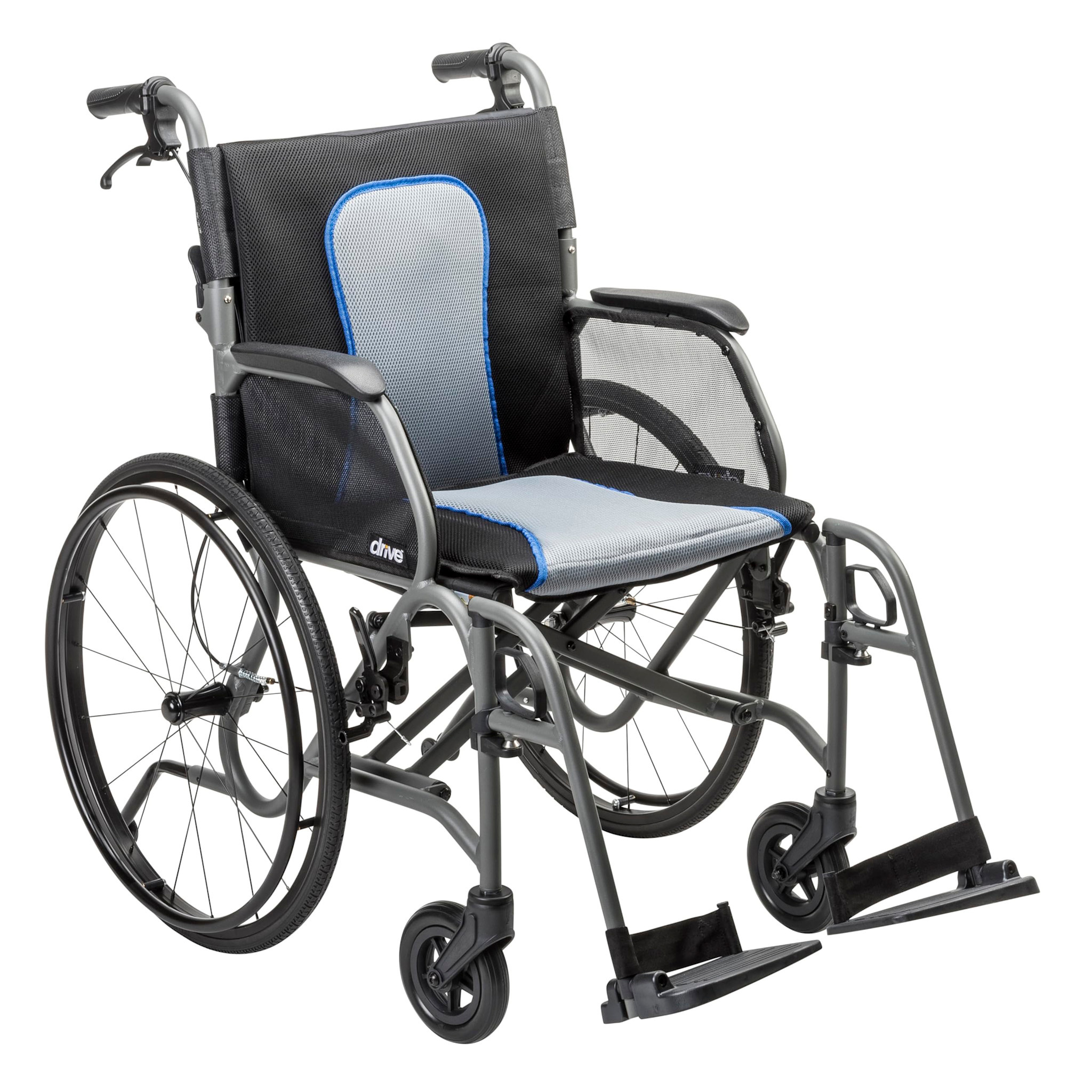
The 13.3-pound magnesium frame with 250-pound capacity delivers ultralight mobility while quick-release axles, fold-down backrest, and carry handles enable vehicle loading and flat-free tires with dual braking ensure safe indoor-outdoor ambulation.
Loading…
Magnesium-alloy frame technology provides exceptional strength-to-weight ratio unmatched by traditional steel or aluminum wheelchairs, enabling a featherweight 13.3-pound frame that supports 250 pounds safely. This dramatic weight reduction transforms caregiver experience by eliminating strain during vehicle transfers, lifting, and daily maneuvering while maintaining structural integrity for long-term durability. The ultralight design specifically benefits users requiring frequent transportation, those with caregivers managing physical limitations, and active individuals prioritizing independence without sacrificing the self-propulsion advantages of full-size 22-inch rear wheels.
✓ Everyday home and community mobility for independent users ✓ Travel and transportation requiring frequent vehicle loading ✓ Active users prioritizing lightweight self-propulsion ✓ Caregivers managing physical limitations during patient transfers ✓ Clinical and medical facility patient transport ✓ Rehabilitation facility mobility during therapy sessions ✓ Post-hospitalization home mobility transition ✓ Temporary mobility needs during injury recovery ✓ Elderly users requiring lightweight wheelchair option ✓ Multi-user household needing versatile wheelchair ✓ Workplace accommodation for mobility-impaired employees ✓ Educational institution student mobility support ✓ Retail and public facility accessibility compliance
Initial Assembly and Setup: The wheelchair arrives mostly assembled requiring minimal setup. Attach the rear wheels by aligning the quick-release axles with the frame receptacles and pushing firmly until the release button clicks into the locked position. Verify both wheels are securely attached by attempting to pull them away from the frame—properly installed wheels should not disengage. Unfold the backrest to upright position and ensure it locks into place. Install the removable seat and back cushions by positioning them on the frame and securing any attachment straps or Velcro closures.
Size Verification and Fit: The 18-inch seat width accommodates users with hip widths up to approximately 16-17 inches to allow adequate clearance for comfortable seating without excessive pressure. Verify proper fit by having the user sit in the wheelchair and checking for: adequate space on both sides (approximately 1 inch clearance each side), ability to reach wheel rims comfortably for self-propulsion, proper foot positioning on footrests, and thigh support without excessive pressure behind knees. The 16-inch seat depth accommodates most users but may require cushion adjustments for optimal positioning.
Quick-Release Wheel Removal: To remove rear wheels for storage or transport, locate the quick-release button at the axle hub center. Depress the button fully while pulling the wheel straight away from the frame. The axle shaft slides out of the frame receptacle, completely separating the wheel. Store removed wheels in vehicle trunk or storage area. This feature reduces overall width from 26.8 inches to approximately 12-13 inches, enabling storage in narrow spaces and easier vehicle loading.
Folding for Storage: First remove rear wheels using quick-release axles. Fold down the backrest by releasing any locks or latches (model-dependent) and pushing the backrest forward until it rests against the seat. Lift upward on the center of the seat fabric to initiate the fold—the frame will collapse inward, bringing the sides together. The wheelchair folds to compact dimensions: 30.3"L x 13"W x 29.7"H. Use integrated carry handles to lift and transport the folded frame (13.3 pounds without wheels). Store in vehicle trunk, closet, or designated storage area.
Vehicle Loading Technique: For optimal safety and ergonomics, use the following loading sequence: (1) Position wheelchair perpendicular to vehicle trunk or cargo area. (2) Remove both rear wheels using quick-release axles. (3) Fold backrest down. (4) Fold frame as described above. (5) Grasp integrated carry handles with both hands using proper lifting mechanics (bend knees, keep back straight). (6) Lift folded frame into vehicle. (7) Place wheels in vehicle separately. The 13.3-pound frame weight enables safe lifting by most caregivers without assistance.
Self-Propulsion Technique: The 22-inch rear wheels with hand rims enable efficient self-propulsion for independent users. To propel forward: grasp hand rims near the top, push forward with smooth, firm strokes, and release near the bottom of the arc, allowing hands to return to starting position. Maintain steady rhythm rather than sporadic pushing for energy efficiency. For turning: propel harder on one side while braking or back-stroking the opposite side to pivot around the stationary wheel. Practice in open areas before navigating tight spaces.
Attendant-Assisted Pushing: When caregiver assistance is needed, the attendant should position themselves behind the wheelchair, grasping the push handles (integrated into backrest design). Push with steady, controlled force, avoiding sudden accelerations or stops that could destabilize the user. Engage attendant brakes when stationary on inclines or during user transfers. Communicate with the user before initiating movement, turns, or stops. Navigate curbs and obstacles carefully using proper wheelchair handling techniques.
Braking Systems: Two independent braking systems provide safety and control. User Wheel Locks: Located on both sides near rear wheels, these lever-operated locks engage the rear tire when pushed forward, preventing wheel rotation. Always engage both wheel locks during transfers, when stationary on inclines, or whenever wheelchair must remain stationary. Attendant Brakes: Operated by the caregiver from push handle position, these provide dynamic braking during assisted propulsion, particularly useful when descending ramps or controlling speed on slopes.
Flat-Free Tire Benefits: The solid or foam-filled flat-free tires eliminate puncture concerns that plague pneumatic (air-filled) tires. Advantages include: no inflation maintenance requirements, consistent ride quality without pressure monitoring, reliable performance regardless of temperature or altitude changes, elimination of roadside flat tire emergencies, reduced long-term maintenance costs, and dependable traction in various weather conditions. The treaded design provides adequate grip on most indoor and outdoor surfaces including tile, carpet, concrete, and pavement.
Indoor Navigation: The 6-inch front casters provide excellent maneuverability for indoor spaces. Navigate tight corners by reducing speed and using one-wheel propulsion or attendant-assisted turning. The 26.8-inch overall width fits through standard 32-36 inch doorways with adequate clearance. Use wheel locks when stationary during activities like dining, working, or transferring. The lightweight design enables easy repositioning and adjustment even in confined spaces like bathrooms or small rooms.
Outdoor Use: The flat-free treaded tires and 22-inch rear wheels provide stable outdoor performance on sidewalks, parking lots, and paved surfaces. Avoid extremely rough terrain, steep grades, or soft surfaces (sand, deep gravel, mud) that exceed the wheelchair's design parameters. Use caution on wet surfaces as traction may be reduced. The lightweight frame may be more affected by wind compared to heavier wheelchairs—exercise caution in high-wind conditions. Engage wheel locks on all inclines regardless of grade severity.
Transfer Techniques: For safe transfers, always engage both wheel locks before initiating transfer. Position wheelchair at appropriate angle to transfer destination (bed, toilet, vehicle seat). Fold or swing away armrests if model permits, or transfer over fixed armrests using appropriate technique. Use grab bars, transfer boards, or mechanical lifts as prescribed by physical therapist. Never stand on footrests during transfers as this could tip the wheelchair. Caregiver assistance is recommended for users with limited transfer skills or upper body strength.
Cushion Care and Positioning: The removable padded seat and back cushions provide comfort and can be removed for cleaning or replacement. Remove cushions periodically to inspect for wear, compression, or damage. Clean with mild soap and water, allowing complete drying before reinstalling. Some users benefit from upgraded pressure-relieving cushions for extended sitting—consult with occupational therapist or seating specialist regarding cushion upgrades. Proper cushion positioning ensures optimal weight distribution and user comfort.
Maintenance and Inspection: Perform regular inspections to ensure safe operation: check wheel lock function (both should engage firmly), verify quick-release axles seat securely, inspect tires for excessive wear or damage, test backrest folding mechanism, examine frame for cracks or deformation, and ensure all fasteners remain tight. Clean frame with damp cloth and mild soap. Lubricate moving parts (axles, casters, folding joints) periodically with appropriate lubricant. Address any mechanical issues promptly to maintain safety and functionality.
Weight Capacity Compliance: The 250-pound weight capacity includes user body weight plus any clothing, equipment, bags, or items carried in the wheelchair. Exceeding weight capacity compromises structural integrity, increases tip risk, accelerates wear, and may void warranty. Distribute weight evenly and avoid hanging heavy bags on backrest or armrests as this raises center of gravity and increases tip risk. For users approaching weight capacity, consult with medical equipment supplier regarding bariatric wheelchair options.
Travel and Transportation: The AeroFly's ultralight design specifically facilitates travel and transportation. For air travel, the wheelchair can often be gate-checked or may fit in overhead compartments when folded (verify with specific airline). For road trips, the quick folding and compact storage enable space-efficient packing. The lightweight frame reduces vehicle cargo weight. Always secure the wheelchair in vehicle to prevent shifting during transport. Some users maintain a travel wheelchair for trips while keeping a different chair for primary daily use.
Prescription and Insurance: Many insurance plans including Medicare, Medicaid, and private insurance provide coverage for manual wheelchairs when medically necessary and prescribed by a physician. Documentation requirements typically include physician prescription, medical necessity justification, and face-to-face evaluation. Coverage varies by plan and may include purchase or rental options. Consult with DME supplier regarding insurance verification and documentation requirements. Out-of-pocket purchase is available without prescription for those not seeking insurance coverage.
When to Seek Professional Assistance: Contact medical equipment supplier, therapist, or physician if: wheelchair tips unexpectedly during normal use, frame shows visible damage or deformation, wheel locks fail to hold wheelchair stationary, quick-release axles fail to seat securely, user experiences pressure injuries or discomfort despite cushioning, folding mechanism becomes difficult or inoperable, or any safety concern arises. Regular professional servicing ensures optimal performance and safety.
Carousel items
Testimonial items
Very welcoming and informative. We went in to rent a Walker for my mom to see if she would use it. They had no rentals left so he gave us a brand new one on rental. Highly recommend this company for all your ADL needs.
Tara Maye
The rating of this product is 5 out of 5
Fantastic service and experience, from delivery to pickup we could not have asked for anything more! We rented a hospital bed, and I do not believe you would get better service anywhere. Highly recommended!
Shawn Dillon
The rating of this product is 5 out of 5
Super friendly and very helpful! Delivered the wheelchair for me, special ordered other parts and took the time to show me how to install. I recommend!
Fiona Haines
The rating of this product is 5 out of 5
Can not thank the team at Med Supplies enough for their amazing service. We were in a tough spot till we got their help. Amazing service. Kind and respectful delivery. First class all the way. Thank you again.
Jon Beatty
The rating of this product is 5 out of 5
Ordered the chair on Sunday and it arrived Monday morning. Spoke to customer service to follow up on delivery times. It was already on my front door. Excellent and helpful staff. The product is sturdy and of good quality. Thank you for your help.
H D
The rating of this product is 5 out of 5
Excellent experience - website faithfully represented what was in stock (which hasn't always been my experience with other vendors sadly), and local shipping was really fast - ordered on the weekend, received it on Monday in my case. Thank you for being
Jason Hudson
The rating of this product is 5 out of 5
0/0
You cart is currently empty
780 409-1509
Get directions