Slideshow Items

Drive Air Mattress Level II Base Cover Replacement

C$499.99
3+ Day Shipping
In store: Check availability

Available in store

SKU: 14029-BASE

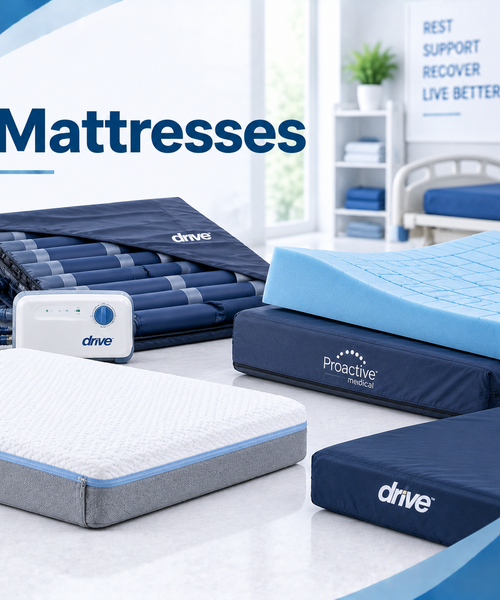
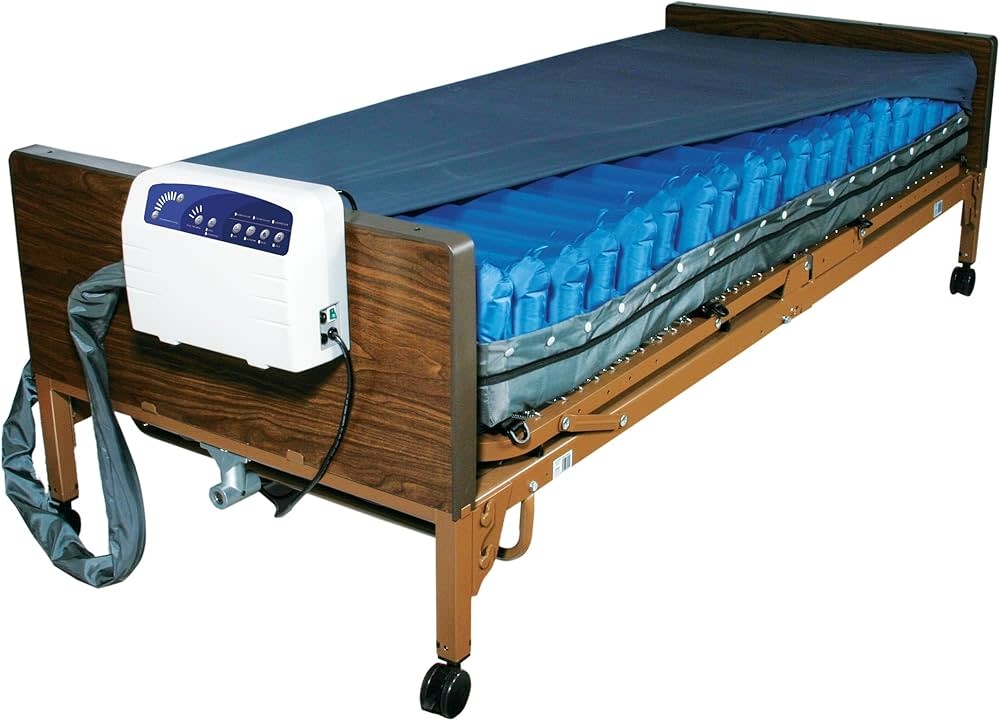
he Drive Air Mattress Level II Base Cover Replacement is the fluid-resistant stretch cover for Drive Medical Level II alternating pressure mattress systems, protecting air cells and maintaining a hygienic low-shear patient contact surface.

    • Why the Base Cover Is the Infection Control Boundary and the Mechanical Protection Layer of the Level II Mattress Simultaneously

      The base cover on a Level II alternating pressure mattress serves two structurally distinct functions that are both essential to the therapeutic surface’s clinical performance, and that a single cover material must satisfy simultaneously. The first function is containment: the cover must prevent any patient fluid — urine, wound exudate, perspiration, or emesis — from penetrating to the air cell bladder layer below. The air cell bladders are not cleanable to a clinical disinfection standard — they are sealed polyurethane chambers that cannot be wiped internally and cannot withstand immersion or chemical disinfection without degrading the bladder material. A fluid breach of the base cover that reaches the bladder layer produces a contamination event that cannot be remediated: the bladders retain biological material in a space that cleaning cannot access, the mattress becomes a permanent reservoir for pathogens, and the entire mattress assembly must be removed from service. The cover’s fluid resistance is therefore not a comfort feature — it is the infection control boundary that determines whether the mattress system can be maintained at a standard acceptable for continued patient use. A cover that has developed a fluid breach — through fabric delamination, zipper failure, or physical puncture — requires immediate replacement before the mattress is placed back in service under any patient.

      The second function the base cover must satisfy simultaneously is vapour permeability — the capacity to transmit the water vapour produced by the patient’s skin during normal thermoregulatory perspiration from the skin surface through the cover to the low air loss airflow below. Level II alternating pressure mattresses include a low air loss function in which conditioned air flows through perforations in the top surface of the air bladders — this airflow is designed to carry away moisture vapour from the patient-skin interface, reducing the humidity at the skin surface that is the primary contributing factor in maceration and skin barrier breakdown. If the base cover is vapour-impermeable — as a fully waterproof cover would be — the moisture vapour cannot pass through to the low air loss airflow and accumulates instead at the patient-skin interface, reintroducing the maceration risk that the low air loss function was designed to eliminate. The nylon stretch fabric of the Level II base cover is specified to be fluid-resistant rather than fully waterproof precisely to achieve this performance balance: it repels the pressure-driven penetration of bulk fluids while remaining open enough to transmit vapour by diffusion under the concentration gradient that perspiration produces.

      The stretch characteristic of the Level II base cover fabric is not a comfort specification — it is a mechanical requirement for the alternating pressure function of the mattress. The air cells cycle between inflated and deflated states on a defined timing interval, and the mattress surface physically rises and falls as each cell group inflates and deflates. A non-stretch cover fabric would resist this dimensional change, creating tension in the cover at the inflated cell peaks and compression at the deflated cell valleys with each cycle. Over thousands of cycles, the repeated tension-compression loading at the fabric’s weave points accumulates mechanical fatigue, causing the cover to stiffen and eventually crack at the high-tension points. A cracked cover exposes the underlying air cells and eliminates the cover’s containment function at the crack location. The stretch fabric resolves this by accommodating the air cell’s dimensional change through elastic deformation — the fabric stretches to follow the inflating cell and recovers as the cell deflates, without accumulating fatigue stress at the weave points. Maintaining cover integrity across tens of thousands of pressure cycles is a mechanical function of the stretch specification, not simply a patient comfort feature.

      The base cover’s low-shear surface characteristic addresses the specific pressure injury mechanism of friction and shear at the patient-skin interface. Alternating pressure surfaces address the compressive pressure component of pressure injury by continuously redistributing the pressure distribution across the patient’s body. However, friction and shear at the tissue surface — produced when the patient slides or is repositioned against a high-friction cover material — are independent pressure injury contributors that the pressure redistribution function does not address. A high-friction cover material that resists patient movement during repositioning generates shear stress in the skin and subcutaneous tissue as the patient slides against the cover surface, and sustained shear loading at a single tissue location produces tissue damage through a different mechanism than compressive pressure but with similar clinical consequences. The Level II cover’s low-shear nylon stretch surface allows the patient’s skin to move relative to the cover with reduced friction during repositioning, reducing the shear stress at the tissue level and addressing this second mechanism of pressure injury in a patient population that is already identified as high-risk for pressure damage.


      Key Features

      • Fluid-resistant nylon stretch fabric — repels bulk fluid penetration to the air cell layer while remaining vapour-permeable to transmit perspiration moisture through to the low air loss airflow
      • Stretch material accommodates alternating pressure cell cycling without accumulating fatigue stress at weave points — the mechanical requirement for cover integrity across tens of thousands of pressure cycles
      • Low-shear surface reduces friction during patient repositioning — addressing the shear-stress pressure injury mechanism independently of the compressive pressure redistribution provided by the alternating pressure function
      • Zipper design allows complete cover removal for laundering or replacement without disturbing the air cell array — maintaining the air bladder assembly in its calibrated position during cover service
      • Protects the air cell bladders from fluid contamination — the infection control boundary whose integrity determines whether the mattress system can be maintained at clinical hygiene standards
      • Compatible with Drive Medical Level II alternating pressure / low air loss mattress systems including Med-Aire and similar Drive support surfaces

      Benefits

      • Maintains the mattress system’s infection control boundary — replacing a cover with fluid breach, delamination, or physical damage before the underlying air cells are contaminated by biological fluids that the bladder material cannot be decontaminated from
      • Vapour permeability preserves the low air loss function’s moisture management effect — a replacement cover that is correctly specified maintains the therapeutic vapour transmission a fully waterproof cover would eliminate
      • Stretch fabric extends cover service life under cyclic loading — elastic deformation across each pressure cycle prevents the fatigue cracking at weave points that a non-stretch cover would develop
      • Low-shear surface reduces the repositioning-related shear component of pressure injury risk in an already high-risk patient population
      • Component-level cover replacement extends the Level II mattress system’s service life without replacing the air cell array or pump unit

      Typical Applications

      ✓ Fluid breach replacement — immediate cover replacement when any fluid penetration to the air cell layer is confirmed or suspected, removing the contamination risk before the mattress is returned to service ✓ Surface delamination replacement — covers with visible fabric delamination, peeling, or coating breakdown that has compromised the fluid-resistant layer and eliminated containment function at the delaminated area ✓ Physical damage replacement — covers with punctures, tears, or zipper failures that have opened a pathway for fluid to reach the air cell layer ✓ Scheduled hygiene replacement — base cover replacement between patients in long-term care or hospital settings as part of mattress turnover protocol, regardless of visible damage, when cover integrity cannot be confirmed at the patient transfer ✓ Stretch fatigue replacement — covers that have lost elasticity and no longer conform smoothly to the air cell cycling profile, identified by visible cover tenting or bunching over deflated cells during operation ✓ Homecare recommissioning — cover inspection and replacement when a Level II mattress system is transferred to a new homecare patient, confirming fluid resistance and surface integrity before the system enters service

    • No reviews yet

      Add yours

    Testimonials from Google

    See all reviews

    Your cart — 0

    You cart is currently empty

    Login

    By using our website, you agree to the use of cookies. These cookies help us understand how customers arrive at and use our site and help us make improvements. Hide this message More on cookies »