
Slideshow Items

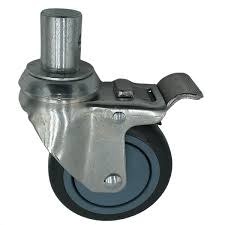
Drive Caster with lock for 15307LW

C$25.00
In stock online
In store: Check availability

Available in store

SKU: 15044CL

Caster for Drive Medical bariatric and homecare hospital beds including model 15307LW. Foot-operated brake mechanism locks the bed securely in position during patient transfers and care, while releasing fully for smooth omnidirectional repositioning.

    • Why the Locking Caster Is the Stability Boundary and the Load Transfer Component of the Drive 15307LW Bed Frame Simultaneously

      The locking caster on a Drive Medical 15307LW bariatric bed serves two structurally distinct functions that are both essential to the bed frame's clinical and mechanical performance, and that a single wheel component must satisfy simultaneously. The first function is positional stability: the locking caster's brake mechanism is the sole mechanical element that prevents the bed frame from moving under the lateral forces generated during patient transfers and care procedures. A bariatric bed frame loaded with a patient generates substantial lateral floor forces during transfer — the caregiver's transfer movement, the patient's weight shift, and the assistive equipment contact all produce horizontal loads at the frame base that an unlocked or brake-failed caster cannot resist. The locking caster is therefore not a safety accessory — it is the stability boundary that determines whether the bed can be used safely during transfers. A locking caster whose brake mechanism has failed — through pawl wear, spring fatigue, or pedal linkage fracture — presents an immediate bed movement hazard and must be replaced before the bed is returned to use under any patient.

      The second function the locking caster must satisfy simultaneously is load distribution from the bed frame corner into the floor surface when the brake is engaged. A bariatric bed frame in clinical use carries static loads that concentrate at each of the four caster mounting points. When the brake is engaged, the locked wheel transfers this corner load into the floor through a stationary contact patch rather than a rolling one, and the brake mechanism must hold the wheel stationary against both the vertical patient load and the horizontal transfer forces simultaneously. A caster wheel that has cracked, delaminated, or developed bearing play reduces the stability of the locked position by allowing micro-movement at the contact patch under transfer loading — the locked caster shifts fractionally under load rather than holding the frame corner absolutely stationary, introducing the incremental frame movement that transfer safety depends on eliminating.

      The foot-operated pedal linkage of the locking caster is not an ergonomic convenience — it is the activation mechanism that allows the caregiver to engage and release the brake without bending or reaching under the frame while managing a patient transfer. A pedal linkage that has fractured, bent, or disengaged from the brake pawl mechanism requires the caregiver to engage the brake by an alternative method or to operate the bed without the locking function at the affected corner. In a bariatric care context where frame stability during transfer is critical, a non-functional brake pedal that leaves the frame corner unlocked during transfer presents a direct patient and caregiver safety risk that a functioning locking caster eliminates.

      The 4-inch diameter specification of the 15307LW replacement locking caster addresses the specific load and floor clearance geometry of the 15307LW frame. The 4-inch specification is a functional dimension for the 15307LW frame geometry — not an interchangeable size parameter — and must be matched exactly to maintain the patient transfer height and caregiver working posture at the manufacturer-specified positions.

      KEY FEATURES

      • Foot-operated locking brake mechanism — arrests wheel rotation and swivel plate movement at the designated frame corner, providing the positional stability required during patient transfers and care procedures on bariatric beds
      • 4-inch swivel caster — diameter specified for the floor clearance and frame rail height geometry of the Drive 15307LW bed frame, maintaining patient transfer height at the manufacturer-specified position
      • Full swivel release when unlocked — omnidirectional rolling function when the brake is disengaged, allowing controlled bed steering and repositioning without corner lifting
      • Durable wheel and brake construction — selected for resistance to the cyclic load, brake engagement, and directional change cycles that bariatric bed frames accumulate across frequent repositioning and transfer events
      • Sold individually — allows single-caster replacement at the failed locking position without replacing the full caster set, restoring brake function at component replacement cost

      BENEFITS

      • Restores the positional stability function at the failed locking corner — replacing a brake-failed or mechanically damaged locking caster before the bed is used under transfer load, removing the bed movement hazard that a non-functional brake creates
      • Foot-operated pedal linkage allows brake engagement without caregiver bending or reaching under the frame — restoring safe brake activation that a fractured or disengaged pedal linkage eliminates
      • 4-inch diameter maintains the manufacturer-specified frame rail height — ensuring patient transfer height and mattress surface geometry are preserved after caster replacement
      • Durable brake and wheel construction supports the load and engagement cycle demands of bariatric care environments where transfer frequency and corner loads exceed standard homecare bed specifications
      • Component-level locking caster replacement extends the bed frame's service life without replacing the frame rail assembly, non-locking caster set, or drive mechanism

      TYPICAL APPLICATIONS

      ✓ Brake mechanism failure replacement — immediate locking caster replacement when the brake pawl, spring, or pedal linkage has failed to hold the frame stationary under transfer load, removing the bed movement hazard before the next patient transfer

      ✓ Pedal linkage fracture replacement — replacement when the foot-operated brake pedal has fractured or disengaged from the brake mechanism, restoring caregiver brake activation without bending or reaching under the frame

      ✓ Wheel damage replacement — replacement of locking casters with cracked, flat-spotted, or delaminated wheels that have introduced micro-movement at the locked contact patch under transfer loading

      ✓ Scheduled maintenance replacement — locking caster inspection and replacement as part of bed frame service intervals in bariatric and long-term care facilities, confirming brake engagement force and wheel integrity before the next patient placement

      ✓ Bed refurbishment and recommissioning — locking caster replacement when a Drive 15307LW bed frame is recommissioned after storage or transfer, confirming brake function and load-bearing integrity before the frame enters active clinical or homecare use

    • No reviews yet

      Add yours

    Testimonials from Google

    See all reviews

    Recently viewed

    Your cart — 0

    You cart is currently empty

    Login