
Slideshow Items

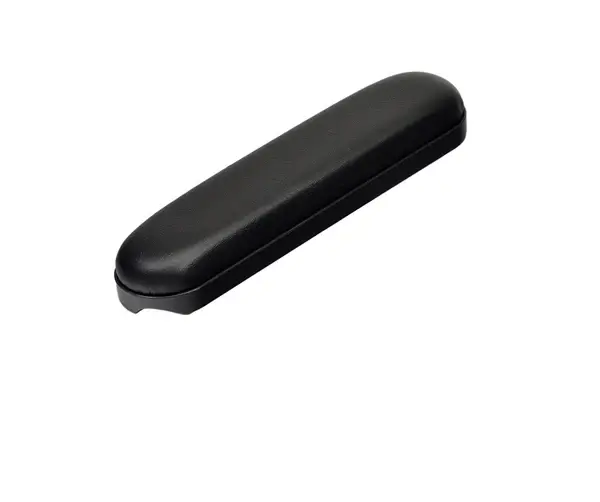
Drive Desk Arm Complete Left SSPRB 1/ea

C$20.00
In stock online
In store: Check availability

Available in store

SKU: STDS5D4705L

The Drive Desk Arm Complete Left SSPRB is an OEM left-side desk-length arm assembly for Drive Medical SSPRB seating, including the arm frame, padded upholstery, and mounting hardware for safely restoring arm support and patient positioning.

    • Why the Left Arm Assembly Is a Clinically Distinct and Non-Interchangeable Component?

      The left arm of a medical seating system is not a mirror duplicate that can be produced by rotating the right arm — it is a component whose frame geometry, mounting interface, upholstery cut, and locking mechanism position are all specifically designed for the chair's left side, and whose function in the patient's daily seating, transfer, and access routine carries clinical significance that is distinct from the right arm's role. This distinction is most clearly visible in the transfer protocols for patients who have experienced stroke with right-sided hemiplegia — the most common post-stroke motor deficit presentation. A patient with right hemiplegia has reduced or absent voluntary movement on their right side, and their physiotherapy-guided transfer technique is specifically designed around their left-side strength: the patient's left arm performs the primary pushing and stabilizing role during the sit-to-stand transfer, while the right arm is guided or supported through the movement rather than contributing active force. For this patient population — a significant proportion of the long-term care and homecare seating population for whom the Drive SSPRB seating system is prescribed — the left arm's structural integrity, mounting security, and cushion condition are not symmetric with the right arm's; the left arm is the primary transfer arm, and its failure or degradation directly affects transfer safety in a way that right arm wear does not equivalently produce.

      The asymmetric wear pattern that develops on medical seating arm assemblies over their service life reflects the functional difference between the dominant-side push arm and the stabilizing arm during the habitual movements of daily seated use. For the majority of right-handed patients — who tend to use their right arm for reaching, manipulating objects, and initiating movements — the left arm performs a sustained, static stabilizing function: it is the arm that remains rested on the chair arm surface during right-hand reaching activities, that provides lateral trunk support during periods of rest and positioning, and that anchors the patient's seated position during the movements that would otherwise create trunk rotation or lateral lean. This sustained contact and lateral loading pattern places a different mechanical demand on the left arm than the intermittent reaching and pushing load on the right — specifically a higher cumulative compressive and lateral load on the left arm upholstery, which can produce asymmetric upholstery compression and wear even when both arms are nominally the same age. Replacing only the arm that appears most visibly worn may miss the left arm's functional degradation if the wear pattern is compressive rather than surface-visible, and a complete left arm assembly replacement is warranted when the arm's padding has lost its therapeutic compression-distribution function regardless of whether the upholstery surface shows obvious wear.

      The desk-length dimension of the left arm has a specific functional significance for the orientation that many communal dining, table activity, and workspace seating arrangements use. At a standard rectangular table, a patient seated on the left side of the table may approach the table from the left, positioning the chair's left arm toward the table edge — in this orientation, it is the left arm's desk-length front opening that allows the chair to advance to the table surface rather than stopping several inches short. At an L-shaped desk or workspace where the patient's primary work surface is to their left, the left arm's front clearance is the relevant dimension that determines whether the patient can position themselves at the work surface without obstruction. The desk-length design of the left arm serves these left-side approach contexts in the same functionally critical way that the right arm's desk-length design serves right-side approaches — and the left arm's specific desk-length geometry must be present and undamaged for these access contexts to work correctly.

      The left-side non-interchangeability of this arm assembly is reinforced at every component level: the frame tube geometry curves or profiles toward the chair's left seat rail rather than the right; the mounting interface locking mechanism is oriented for left-side engagement with the chair frame's left mounting receiver; the upholstery is cut and sewn with the seam allowances and corner geometry that match the left arm's specific profile when the padded surface faces left and the mounting side faces right. Attempting to install this left arm on the right position of the SSPRB chair — even if the mounting hardware appears similar — produces a misaligned mounting interface that cannot achieve correct locking engagement, a padded surface that faces inward rather than upward, or an arm that protrudes at the wrong angle for safe patient arm resting. Confirming that the left-side assembly is the required component before ordering prevents the installation attempt, discovery of incompatibility, and reordering delay that an incorrect side selection would produce.

      What's Included

      • Complete left-side desk-length arm assembly — arm frame, padded upholstery, and mounting hardware in a single ready-to-install unit
      • OEM Drive Medical component manufactured to SSPRB series specifications
      • Mounting hardware for direct attachment to the existing SSPRB chair frame left-side mounting interface — no drilling or frame modification required
      • Quantity: 1 each

      Key Features

      • Left-side specific geometry — frame profile, mounting interface, and upholstery cut designed for the SSPRB chair's left arm position, not interchangeable with the right
      • Desk-length design provides front clearance for left-side table and desk approach, enabling the patient to position flush to the work surface without arm obstruction
      • Complete assembly format ensures arm frame structural integrity, upholstery compression function, and mounting hardware security are all at full service quality simultaneously
      • Padded upholstery distributes the sustained compressive and lateral loading of the dominant-side resting arm across the arm surface, protecting against localized skin and tissue breakdown
      • OEM Drive Medical specification maintains the SSPRB's designed arm height, lateral alignment, and mounting engagement without modification or tolerance compromise
      • Strong mounting hardware provides the lateral stability required for safe use as a push-to-stand and stabilizing arm in transfer protocols for hemiplegic and transfer-dependent patients

      Benefits

      • Left-side specificity ensures correct mounting interface engagement and proper padded surface orientation — cannot produce the misalignment that a right arm attempted on the left position would create
      • Desk-length front clearance restores left-side table approach access for patients in communal dining, desk workspace, and activity table seating contexts
      • Complete assembly replacement addresses the compressive wear pattern of the stabilizing arm that may not be surface-visible but has degraded the arm's pressure-distribution function
      • OEM fit quality prevents arm height, alignment, and locking discrepancies that generic replacement arms introduce at the SSPRB mounting interface
      • Left arm structural restoration is a patient safety priority for hemiplegic and transfer-dependent patients whose transfer technique relies on the left arm as the primary push and stabilizing arm
      • Equipment repair economics — left arm assembly replacement extends the seating system's service life at a fraction of full chair replacement cost

      Clinical Applications

      ✓ Drive Medical SSPRB series recliner and seating system repair — left arm replacement when the original arm is worn, damaged, or missing ✓ Stroke and hemiplegia rehabilitation seating — patients with right hemiplegia whose left-arm-primary transfer technique makes left arm structural integrity a direct patient safety requirement ✓ Transfer-dependent patients — individuals who rely on arm support for push-to-stand transfer initiation and require a structurally sound left arm for safe and confident transfer execution ✓ Homecare seating maintenance — restoration of left arm function for patients with extended-duration seating needs who use the left arm as the primary resting and stabilizing arm ✓ Long-term care facility equipment servicing — left arm replacement to maintain resident safety during meals, activities, and transfers at dining and activity tables with left-side approach configurations ✓ Seating posture management — patients requiring correct bilateral arm support for postural symmetry during extended seated periods, where left arm absence or degradation contributes to lateral trunk lean ✓ Pre-discharge equipment assessment — replacement of worn SSPRB left arms before a patient returns home to ensure the home seating system is in safe condition for the patient's transfer and seating routine

      Installation Notes

      Confirming Compatibility and Side Selection Confirm the existing chair is the Drive Medical SSPRB series — check the model label on the chair frame rear rail or seat bottom. Confirm that the left arm is the correct side requirement by approaching the chair from the front: the left arm is on the patient's left side when seated in the chair. If there is any uncertainty about which arm is needed, confirm by inspecting the worn or missing arm's mounting position on the chair rather than relying on the product label alone. Do not attempt to install this left-side assembly in the right arm position — the side-specific geometry prevents correct mounting engagement on the wrong side.

    • No reviews yet

      Add yours

    Testimonials from Google

    See all reviews

    Your cart — 0

    You cart is currently empty

    Login

    By using our website, you agree to the use of cookies. These cookies help us understand how customers arrive at and use our site and help us make improvements. Hide this message More on cookies »