Slideshow Items

Drive Nitro Fork Left Aluminum Nitro (Serial # 2A1606301542 & higher)

C$80.00
Out of stock online
In store: Check availability

Available in store

SKU: 1026622-AN

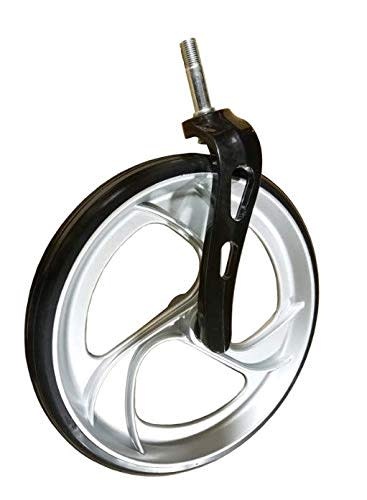
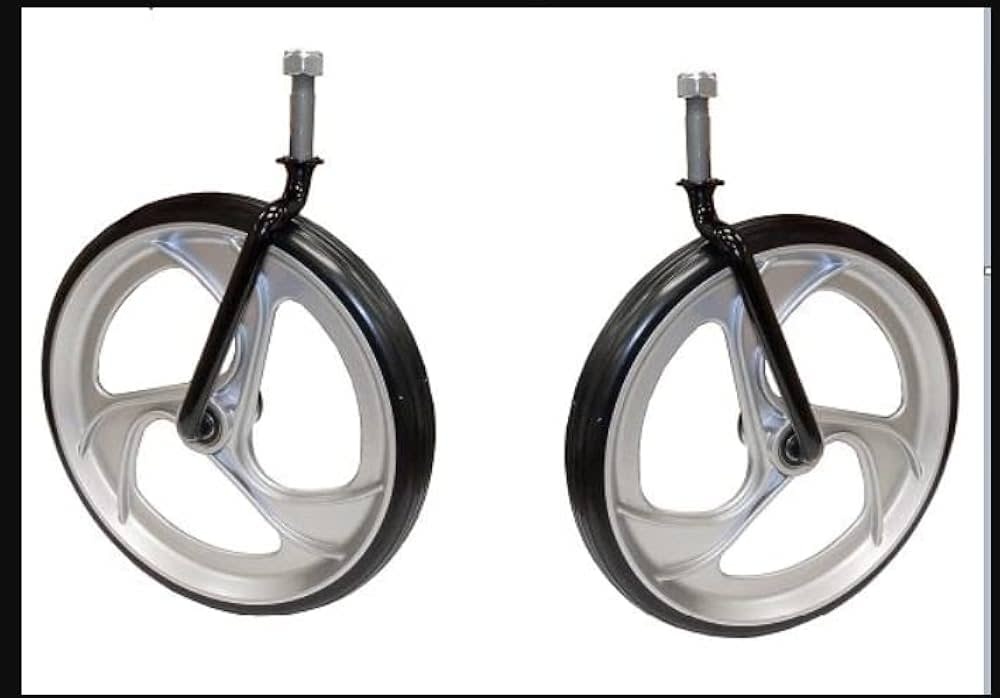
The Drive Nitro Fork — Left (Aluminum) is the correct-specification left replacement fork for Drive Nitro scooters (Serial # 2A1606301542 and higher), restoring steering geometry, wheel alignment, and structural integrity after fork damage.

    • Why the Fork Blade Is the Structural and Geometric Foundation of the Nitro's Entire Front-End Assembly

      The front fork on a mobility scooter is not simply a wheel-mounting bracket — it is the structural component that simultaneously defines three interdependent parameters of the scooter's front end: the axle-to-steering-stem geometry that determines how the wheel tracks during straight-line travel, the offset distance between the steering axis and the wheel contact patch that determines steering trail and self-centering behavior, and the load path that transfers the combined weight of the scooter and rider from the front axle upward through the steering stem into the frame. All three parameters are fixed by the fork's physical geometry — the blade length, the axle-to-crown offset, and the angle at which the fork crown mates with the steering stem. A fork blade that is bent, cracked, or dimensionally incorrect from a non-OEM source alters all three parameters simultaneously, and because they are interdependent, correcting one without the others is not possible. The replacement fork must reproduce the OEM geometry exactly to restore the front end to the alignment, handling, and load-bearing specification that Drive designed into the Nitro — which is why serial-matched OEM replacement is the correct approach for fork blade damage, not repair or aftermarket substitution.

      The left fork blade's structural function is most clearly understood in the context of what fork damage actually looks like in mobility scooter use. The Drive Nitro is a travel scooter operated in real outdoor environments — kerb strikes, building threshold impacts, parking lot surface drops, and the occasional tip-over event that transfers the full scooter weight asymmetrically onto one fork blade. A kerb strike on the left wheel transmits the impact load directly into the left fork blade as a combination of axial compression and lateral bending — the two load types that produce the characteristic damage modes of fork blades: axial compression shortens the blade and reduces trail, pulling the front wheel rearward from its correct position and reducing ground clearance; lateral bending shifts the wheel laterally out of the steering plane, creating a persistent lean and a steering pull that cannot be corrected by alignment adjustment because the fork geometry itself is no longer symmetric. Either damage mode changes the scooter's handling in ways that are not always immediately obvious to the rider — particularly elderly riders who may attribute handling changes to road surface variation rather than recognizing them as equipment failures. The replacement threshold for a visually deformed fork blade is immediate, not deferred.

      Aluminum is the correct material specification for the Nitro fork blade for reasons that go beyond weight. The Drive Nitro is positioned as a travel scooter — a class defined by portability, moderate speed, and outdoor use — and its aluminum fork contributes to the total weight budget that makes the Nitro appropriate for boot transport and transit use. Aluminum's specific strength (strength-to-weight ratio) allows the fork blade to meet the structural load requirements of the Nitro's front-end geometry at a cross-section that steel would require significantly more mass to achieve. Beyond weight, aluminum's corrosion behavior in outdoor mobility scooter use is mechanically superior to steel in one critical respect: aluminum oxidizes at the surface to form a stable, adherent oxide layer that inhibits further corrosion penetration, while steel corrodes progressively through the cross-section in the presence of road salt and moisture — the precise conditions of Alberta outdoor scooter use. A steel fork blade in Northern Alberta's road salt environment will develop through-section corrosion at the axle dropout and crown weld areas within a few winter seasons; the aluminum replacement maintains its structural cross-section integrity across the same exposure conditions. This is not an aesthetic consideration — progressive cross-section loss from corrosion in a structural fork blade reduces load-bearing capacity toward the threshold where normal use forces can initiate fracture.

      The left-side designation of this fork is a dimensional specification, not merely a labeling convention. On the Drive Nitro, the fork blades are not mirror-symmetric components that can be installed on either side — the axle dropout geometry, the bearing seat position relative to the dropout, and the crown attachment interface are machined to specific tolerances for each side. Installing a right fork blade in the left position — or an incorrectly specified aftermarket blade — produces axle misalignment in which the wheel sits at a lateral angle to the intended steering plane. Wheel misalignment of even a few millimeters at the axle creates a measurable steering pull in straight-line travel, a non-uniform bearing load that accelerates bearing wear on the loaded side, and a tire contact patch geometry that increases rolling resistance and tire wear. These consequences develop from the first moment of use and are not corrected by any subsequent adjustment — only by installing the correct left-side fork blade.


      Key Features

      • Serial-matched left fork blade for Drive Nitro scooters at or above Serial # 2A1606301542 — OEM geometry for correct axle-to-steering-stem offset, wheel trail, and crown interface fit
      • Aluminum construction achieves the Nitro's required fork structural strength at reduced weight — maintaining the travel scooter's total weight budget for portability and transport
      • Aluminum oxidation behavior provides corrosion resistance in Alberta road salt and wet-weather outdoor use conditions — resisting the progressive cross-section corrosion that shortens steel fork blade service life in the same environment
      • Left-side dimensional specification — axle dropout geometry, bearing seat position, and crown interface machined for the left fork position on the Nitro steering assembly
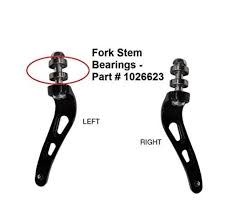
      • Mounting provisions for front wheel axle, fork stem bearings, and steering hardware integrated into the fork blade geometry at OEM specification
      • Replacement restores all three interdependent front-end parameters simultaneously — axle track, steering trail, and structural load path — which a bent or damaged fork alters together and which cannot be individually corrected without fork replacement

      Benefits

      • Restores the OEM front-end geometry that determines straight-line tracking, self-centering steering behavior, and symmetric axle load distribution on the Drive Nitro
      • Eliminates the steering pull, front-end lean, and handling vagueness produced by a bent or dimensionally incorrect fork blade that has altered the scooter's axle-to-steering-axis geometry
      • Aluminum corrosion resistance extends service life in Northern Alberta outdoor use conditions — maintaining structural cross-section integrity through road salt and wet weather exposure cycles
      • Correct left-side dimensional fit prevents the wheel misalignment, bearing overloading, and elevated rolling resistance produced by installing an incorrect fork blade at the left position
      • Serial-matched specification ensures correct crown interface fit with the post-2A1606301542 Nitro steering head — preventing the fitment and preload failures produced by pre-revision fork hardware
      • Component-level fork replacement restores full front-end structural and steering function without replacing the complete scooter front assembly

      Typical Applications

      ✓ Impact damage replacement — Nitro scooters with a visibly bent, cracked, or deformed left fork blade following a kerb strike, tip-over event, or front-end impact ✓ Corrosion damage replacement — fork blades with visible pitting, surface oxidation, or structural compromise at the axle dropout or crown from extended outdoor use in road salt environments ✓ Steering pull correction — persistent steering pull to the left in straight-line travel that inspection has traced to left fork blade deformation rather than tire pressure or bearing issues ✓ Front-end rebuild — complete steering assembly disassembly, inspection, and component replacement following major front-end damage or after extended high-mileage use ✓ Scooter refurbishment — second-hand or reconditioned Nitro scooters being returned to service with complete front-end inspection and fork replacement as required ✓ Long-term care and homecare equipment maintenance — fork inspection and replacement on resident or patient Nitro scooters during annual service where fork condition assessment reveals damage or structural compromise

    • No reviews yet

      Add yours

    Testimonials from Google

    See all reviews

    Your cart — 0

    You cart is currently empty

    Login

    By using our website, you agree to the use of cookies. These cookies help us understand how customers arrive at and use our site and help us make improvements. Hide this message More on cookies »