
Slideshow Items


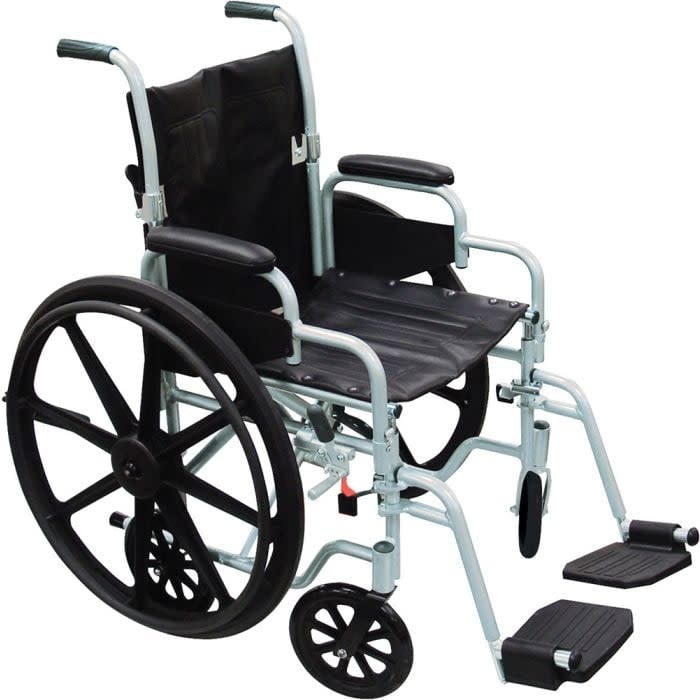
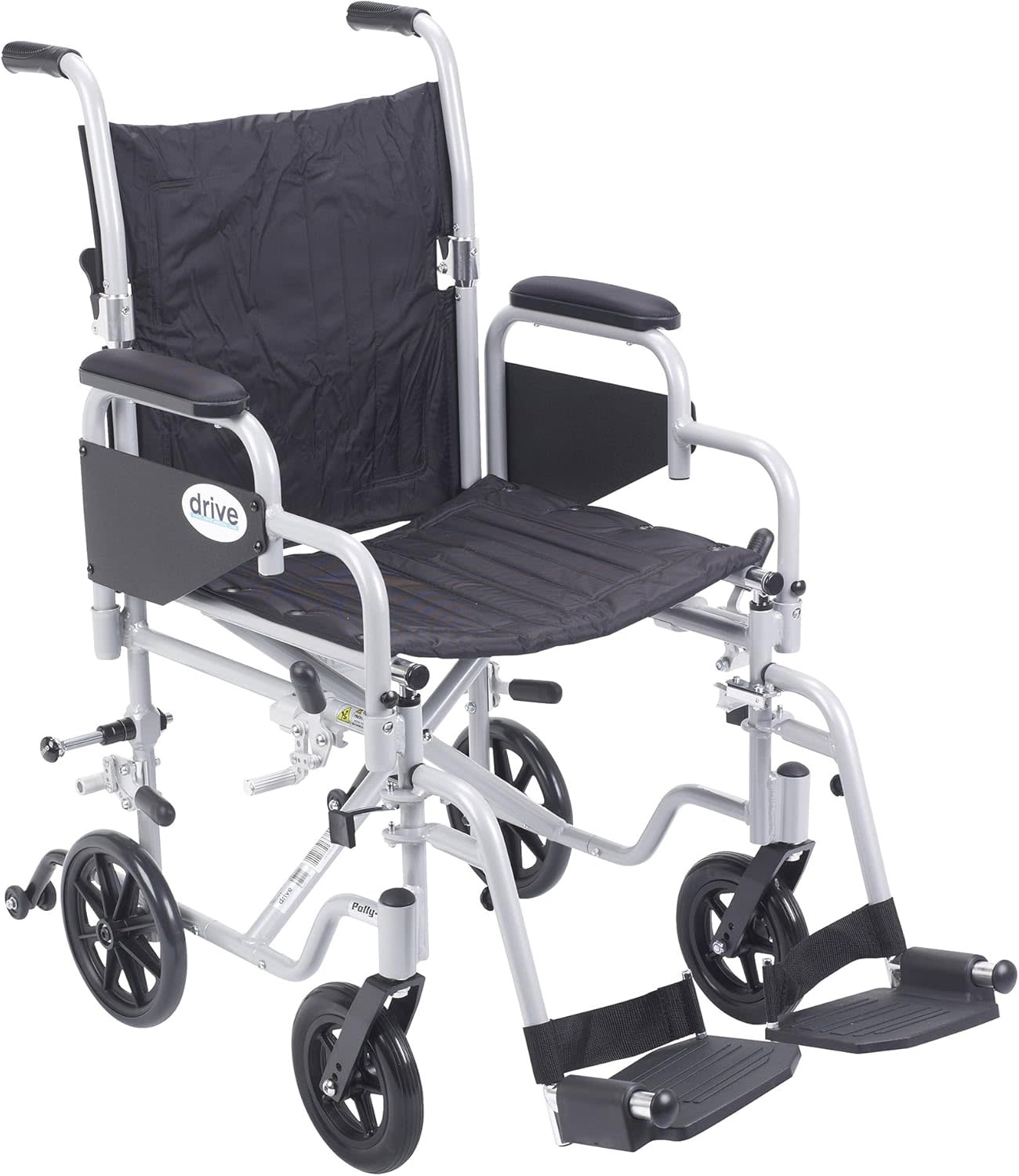
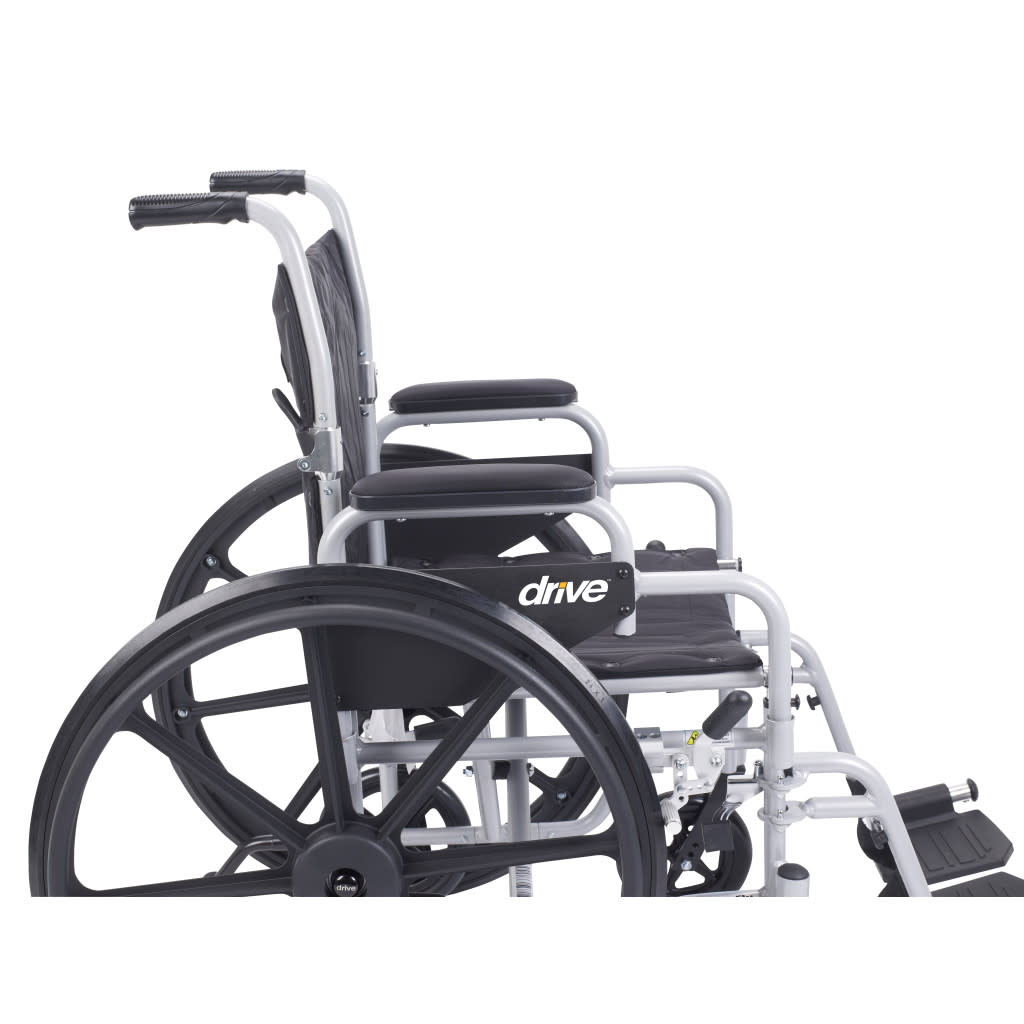
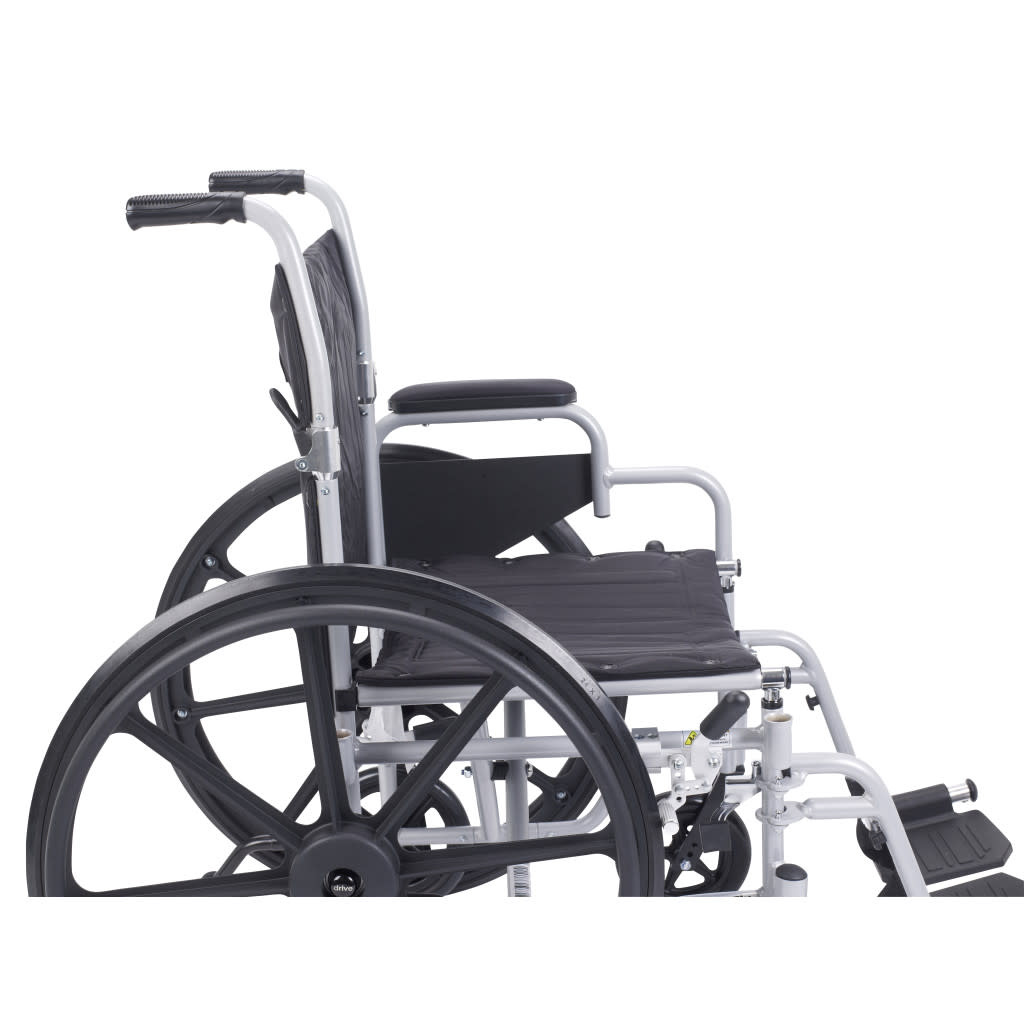
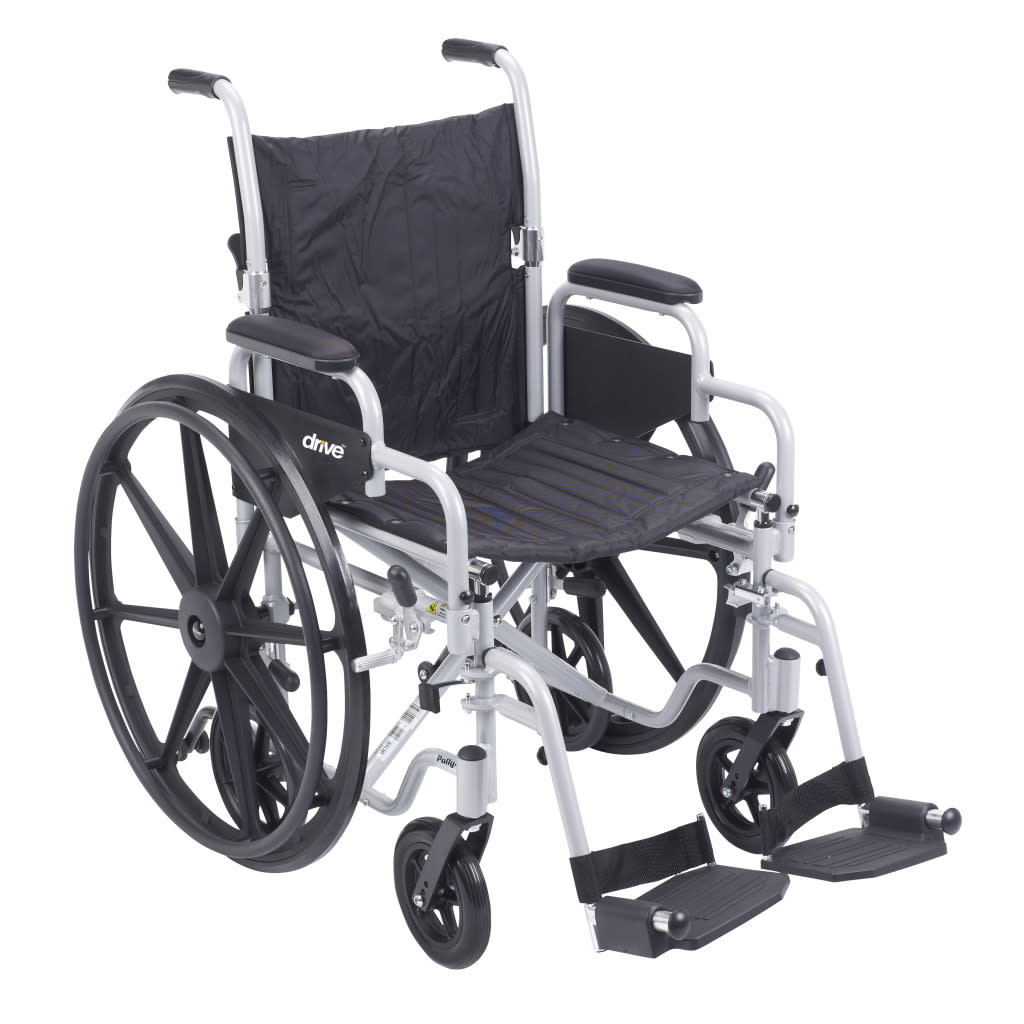
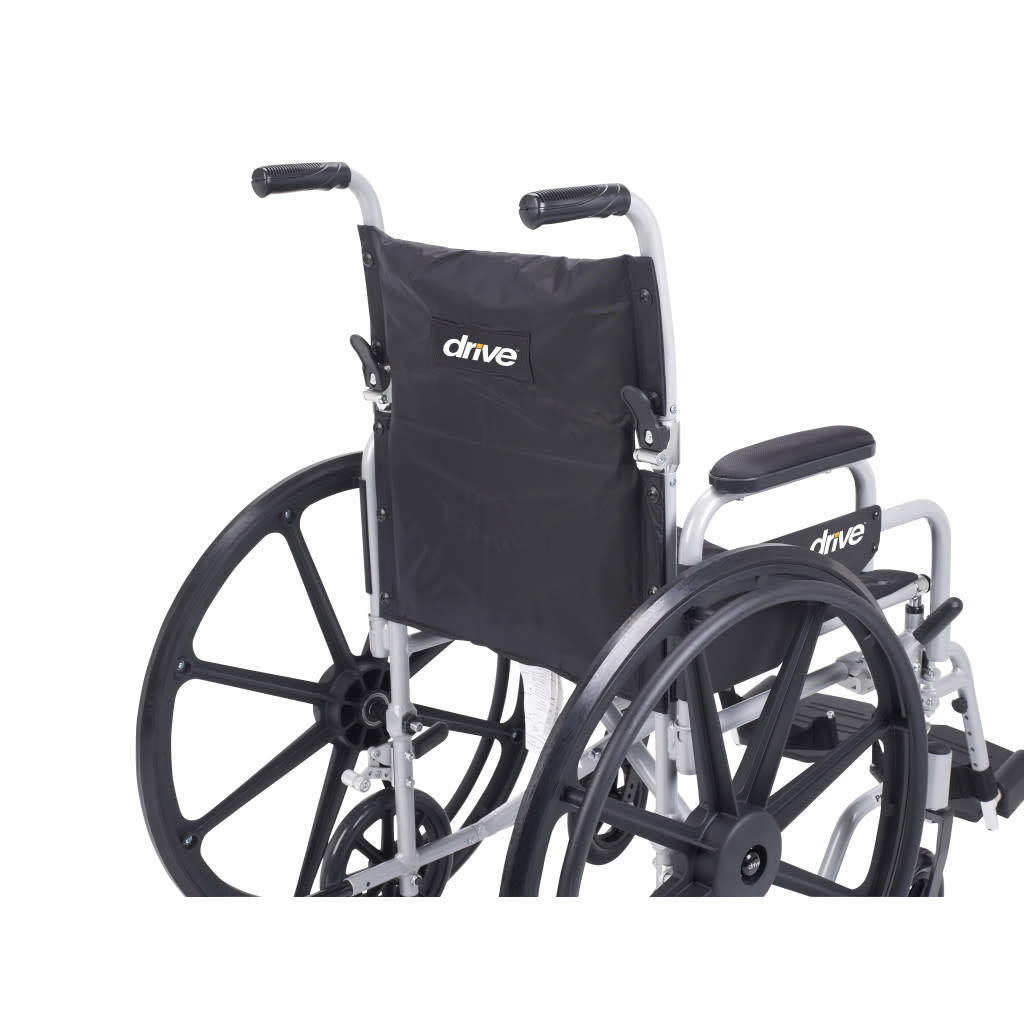
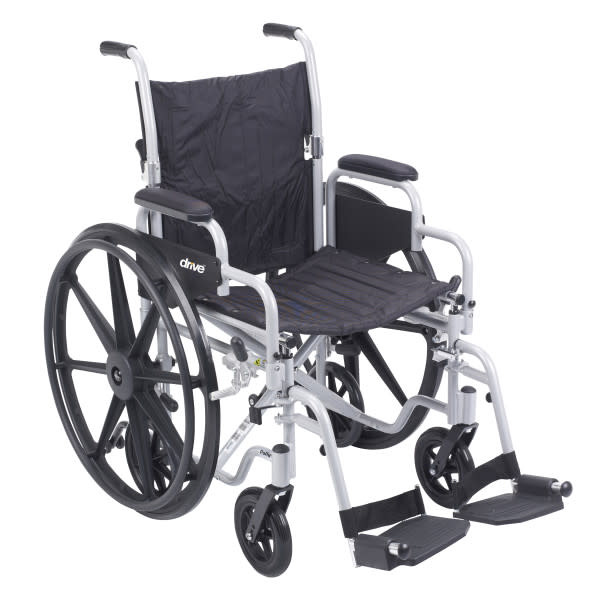
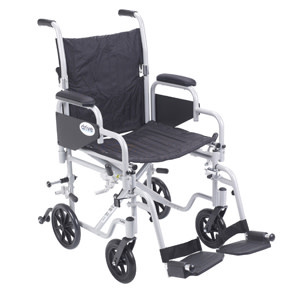
The quick-release 24-inch rear wheels on lightweight aluminum frame transform between self-propelling wheelchair and compact transport chair in seconds, while flip-back armrests and swing-away footrests provide optimal safe transfer access.
Loading…
The Poly-Fly's push-button quick-release rear wheel system eliminates the need for two separate mobility devices by converting instantly between self-propelling wheelchair configuration and compact transport chair mode. This dual functionality serves users with fluctuating independence levels, accommodates multiple environments (wide outdoor spaces versus narrow indoor corridors), and simplifies travel by reducing vehicle storage requirements. The 24-inch rear wheels provide efficient self-propulsion when attached, while removal creates an ultra-compact 29-pound transport chair ideal for caregiver assistance, tight doorways, vehicle loading, and airline travel. The flip-back armrests and swing-away footrests complement this versatility by enabling unobstructed lateral transfers regardless of configuration, making the Poly-Fly the definitive single-chair solution for users requiring adaptive mobility across diverse settings.
✓ Rehabilitation patients transitioning from assisted to independent mobility
✓ Post-operative recovery with fluctuating energy and strength levels
✓ Multiple sclerosis with episodic fatigue requiring variable assistance
✓ Parkinson's disease with on/off periods affecting self-propulsion capability
✓ Cardiac patients with activity restrictions and endurance limitations
✓ Respiratory conditions requiring energy conservation strategies
✓ Stroke survivors in progressive rehabilitation phases
✓ Elderly users maintaining partial independence with backup caregiver support
✓ Short-term mobility assistance following injury or illness
✓ Travel situations requiring both self-propulsion and compact transport
✓ Medical appointment transportation through varied facility environments
✓ Assisted living residents with variable daily capability
✓ Home health patients requiring flexible mobility options
✓ Rental scenarios serving users with uncertain long-term needs
Initial Setup & Configuration: Remove Poly-Fly from packaging in transport chair mode (wheels detached). Unfold frame by lifting seat edges upward until cross-brace locks completely and seat is taut. Verify frame rigidity by applying downward pressure on armrests—frame should not flex or collapse. Attach quick-release rear wheels by aligning axle buttons with receiver holes in frame hub, pushing wheels firmly until audible click confirms engagement. Test security by attempting to pull wheels off without pressing release buttons—wheels should remain absolutely fixed. Adjust armrest height by loosening adjustment mechanism, sliding to desired position (typically 9-11 inches above seat), and retightening securely. Position swing-away footrests onto frame mounting brackets and secure locking clips.
Wheelchair Mode Operation: With 24-inch rear wheels attached, user can self-propel by gripping hand rims and pushing forward. Teach proper propulsion technique: lean forward slightly, grip rims at 12 o'clock position, push down and forward through 3 o'clock position, release and return hands to 12 o'clock for next stroke. For turning, push harder on opposite-side rim while reducing force on turning-side rim. To brake, engage push-to-lock brake levers by pushing forward until locked. Always engage both brakes before standing or transferring. Adjust footrest height so feet rest comfortably with 2-3 inches ground clearance when seated.
Converting to Transport Chair Mode: Engage both parking brakes and ensure user is not seated during conversion. Press quick-release buttons on both rear wheel axles simultaneously while pulling wheels straight away from frame. Store wheels in vehicle trunk or designated location. With wheels removed, chair is now in transport chair mode with rear casters functioning as steering mechanism. Attendant controls direction by pushing chair and steering with rear casters. Weight reduces from 33 lb to approximately 29 lb for easier lifting and maneuvering. Re-engage transport mode brakes (if equipped) on rear casters.
Converting to Wheelchair Mode: Position chair on flat, stable surface. Retrieve stored 24-inch rear wheels. Align wheel axle with frame hub receiver, ensuring quick-release buttons are not depressed. Push wheel firmly onto axle until audible click and visual confirmation that buttons have engaged locking mechanism. Repeat for second wheel. Test both wheels by attempting to pull off without pressing release buttons—wheels must remain absolutely secure. Do not allow user to sit until wheel attachment is verified on both sides.
Transfer Protocol with Flip-Back Arms: Position wheelchair parallel to transfer destination (bed, toilet, car seat). Engage both parking brakes. Swing footrests to side or remove completely to create clear path. Flip armrests upward and back by pressing release mechanism and rotating arms 180 degrees. User can now approach transfer laterally without armrest obstruction. For sliding board transfers, create level surface between chair and destination. For stand-pivot transfers, user stands using grab bars or stable furniture, pivots, and sits in chair. After transfer, return armrests to down position for stability and support during propulsion or transport.
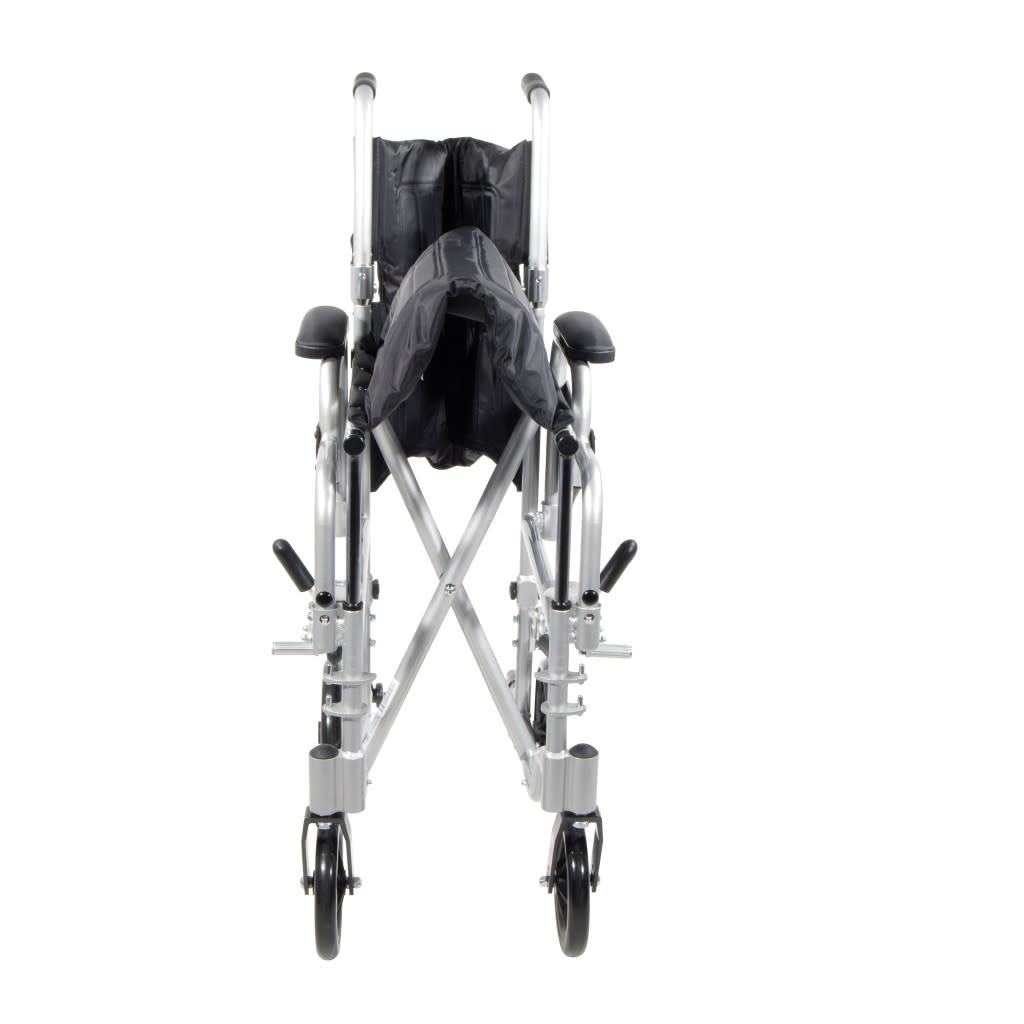
Travel & Vehicle Loading: Convert to transport chair mode by removing rear wheels as described above. Fold chair by lifting center of seat upward, allowing frame to collapse into narrow profile. Stored dimensions: approximately 16-18 inches wide × 30-32 inches tall × 32-36 inches deep (varies by seat width). Lift folded chair into vehicle trunk or cargo area using proper lifting technique (33 lb full weight, 29 lb without wheels). Store rear wheels separately in vehicle, ensuring they won't roll or cause damage during transit. Upon arrival, unfold chair, reattach wheels, and verify secure engagement before user sits.
Footrest Adjustment & Removal: To adjust footrest height, loosen adjustment clamp on leg rest tube, slide footplate to desired height (typically user's feet rest flat with knees at 90 degrees when seated), and retighten clamp securely. To swing away footrests, release locking mechanism and rotate footrest 90 degrees outward. To remove completely, swing outward to 90 degrees and lift upward off mounting bracket. Reverse process to reinstall. Always remove or swing away both footrests before standing or transferring to prevent tripping hazard.
Maintenance & Safety Inspection: Inspect quick-release wheel mechanism weekly by removing and reattaching wheels, verifying positive engagement with audible click each time. Check frame joints and cross-brace monthly for loose fasteners; tighten if necessary. Inspect flat-free tires monthly for wear, cracking, or deformation; replace if tread depth reduced significantly or sidewall damaged. Clean upholstery weekly with mild soap and water; avoid harsh chemicals that may damage nylon. Lubricate pivot points on flip-back arms and swing-away footrests quarterly with lightweight machine oil. Test brake function weekly by engaging brakes and attempting to push chair—chair should not roll when brakes engaged. Monitor aluminum frame for cracks or deformation monthly; discontinue use if structural damage detected.
User Weight & Capability Assessment: Confirm user weight does not exceed 250-pound capacity. Assess user's upper body strength and endurance to determine appropriate configuration—users with strong arms and good endurance can self-propel in wheelchair mode, while those with fatigue, weakness, or cardiopulmonary limitations may require transport chair mode with attendant assistance. For users with progressive conditions, reassess capability monthly and adjust primary configuration as needed. Educate users and caregivers on conversion process to enable optimal flexibility.
Seat Width Selection: 18-inch seat width accommodates users with hip width 15-18 inches (measure at widest point while seated). 20-inch seat width serves users with hip width 17-20 inches. Select narrowest width that comfortably accommodates user to optimize maneuverability through doorways and tight spaces. If user hip width is borderline between sizes, consider clothing bulk, seasonal variations, and incontinence product use when selecting.
Carousel items
Testimonial items
Very welcoming and informative. We went in to rent a Walker for my mom to see if she would use it. They had no rentals left so he gave us a brand new one on rental. Highly recommend this company for all your ADL needs.
Tara Maye
The rating of this product is 5 out of 5
Fantastic service and experience, from delivery to pickup we could not have asked for anything more! We rented a hospital bed, and I do not believe you would get better service anywhere. Highly recommended!
Shawn Dillon
The rating of this product is 5 out of 5
Super friendly and very helpful! Delivered the wheelchair for me, special ordered other parts and took the time to show me how to install. I recommend!
Fiona Haines
The rating of this product is 5 out of 5
Can not thank the team at Med Supplies enough for their amazing service. We were in a tough spot till we got their help. Amazing service. Kind and respectful delivery. First class all the way. Thank you again.
Jon Beatty
The rating of this product is 5 out of 5
Ordered the chair on Sunday and it arrived Monday morning. Spoke to customer service to follow up on delivery times. It was already on my front door. Excellent and helpful staff. The product is sturdy and of good quality. Thank you for your help.
H D
The rating of this product is 5 out of 5
Excellent experience - website faithfully represented what was in stock (which hasn't always been my experience with other vendors sadly), and local shipping was really fast - ordered on the weekend, received it on Monday in my case. Thank you for being
Jason Hudson
The rating of this product is 5 out of 5
0/0
You cart is currently empty
780 409-1509
Get directions