Slideshow Items

  • Socks & Hosiery
  • compression-stockings-garments/socks-hosiery
  • Compression Stockings & Garments
  • compression-stockings-garments
SGV-SIGVARIS

  |  

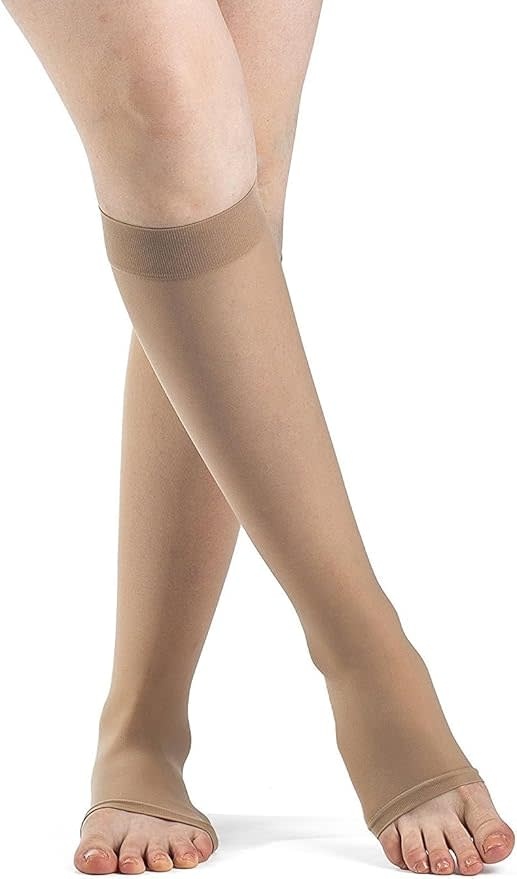
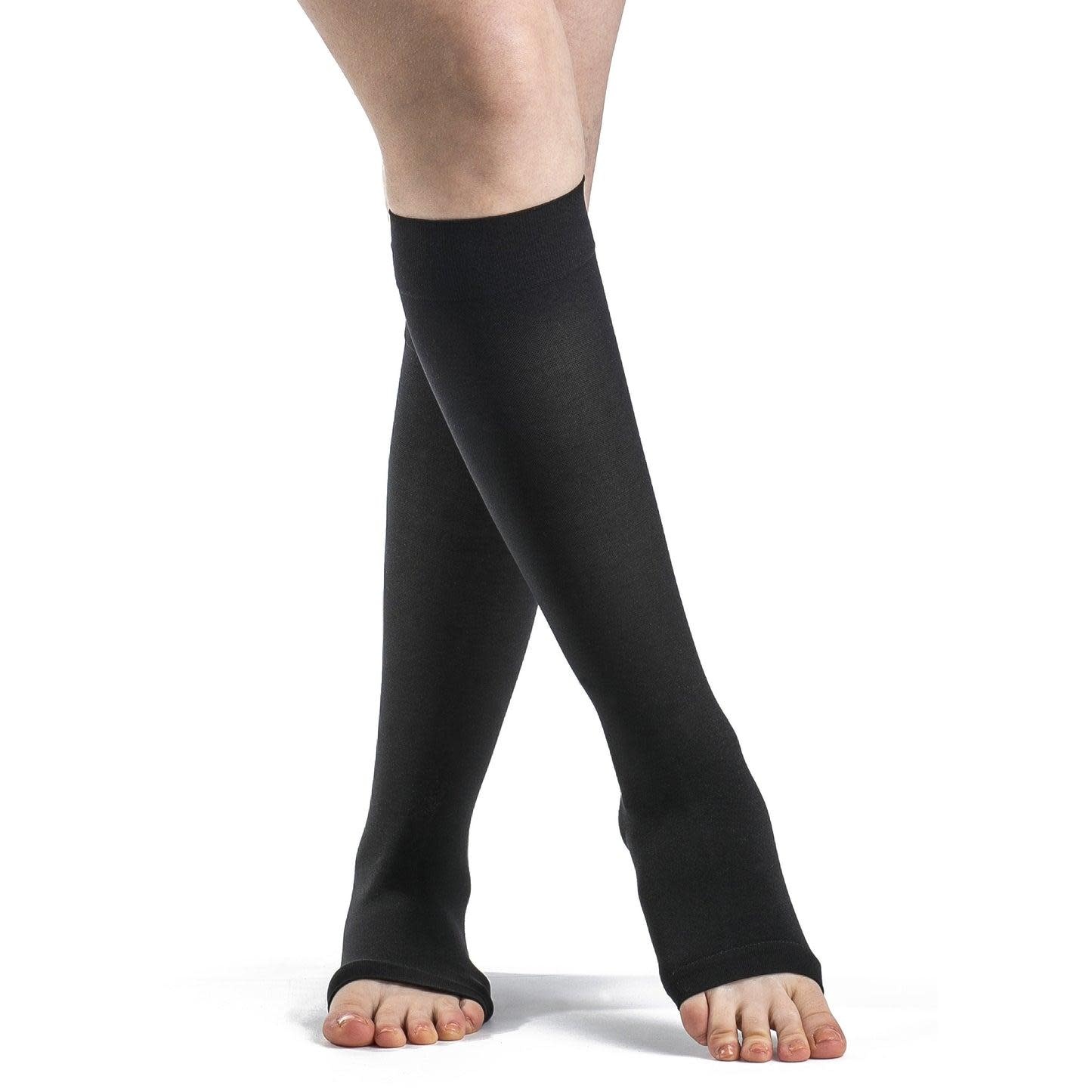
Essential Opaque Knee High 20-30mmHg Open Toe

C$103.00
In stock online
In store: Check availability

Available in store

SKU: 862CLLO66

The Essential Opaque Knee High 20–30 mmHg (Open Toe) compression stockings are durable, everyday medical-grade compression socks designed to support circulation and provide relief from leg fatigue and swelling with a smooth opaque finish.

    • Why Open-Toe Design for Firm Therapeutic Compression

      Open-toe compression stockings address fundamental comfort, clinical monitoring, anatomical accommodation, and footwear versatility challenges that closed-toe designs create, particularly at firm 20-30 mmHg therapeutic compression levels where toe pressure accumulation, circulation monitoring requirements, and fit complications become significantly more problematic than with lighter 15-20 mmHg preventive compression. The open-toe construction eliminates toe compartment entirely, creating stocking that ends at metatarsal heads (ball of foot) rather than enclosing toes in graduated compression fabric—this design modification delivers multiple therapeutic and practical advantages essential for specific patient populations requiring firm compression while experiencing toe-related complications, deformities, or monitoring needs that closed-toe compression exacerbates or prevents.

      The elimination of toe pressure proves clinically significant for patients with toe deformities, diabetic neuropathy, peripheral arterial disease concerns, or conditions where even modest toe compression creates discomfort, circulation compromise, or tissue damage risk. Common toe deformities—bunions (hallux valgus), hammertoes, mallet toes, claw toes, Morton's neuroma—create irregular toe shapes poorly accommodated by uniform compression toe compartments that assume normal anatomical toe structure. Firm 20-30 mmHg compression applied to deformed toes concentrates pressure on bony prominences, creating painful pressure points, skin breakdown risks, and potential exacerbation of existing deformities. Open-toe design allows deformed toes to rest naturally without compression stress, enabling patients requiring leg compression to receive therapeutic benefit without compromising toe health or comfort.

      The visual access and monitoring capability provided by open-toe compression proves essential for diabetic patients, peripheral arterial disease patients, and anyone requiring regular toe and forefoot circulation assessment. Diabetic neuropathy reduces sensation in feet and toes, preventing patients from detecting early signs of circulation compromise, skin breakdown, infection, or injury—closed-toe compression conceals toes throughout 12-16 hour daily wear, creating dangerous gap in monitoring where problems develop undetected until advanced stages requiring aggressive intervention. Open-toe compression enables patients, caregivers, and healthcare providers to visually inspect toes multiple times daily for color changes (pallor indicating arterial insufficiency, cyanosis indicating venous congestion), temperature variations (coolness suggesting circulation compromise), wounds, blisters, or infection signs requiring immediate attention. This visual monitoring capability transforms compression from potential concealment risk into monitored therapeutic intervention.

      The enhanced breathability and ventilation from open-toe construction addresses moisture accumulation, overheating, and fungal infection risks that closed-toe compression creates, particularly in warm climates, during physical activity, or for patients with excessive perspiration. Toes generate significant heat and moisture during daily activity—closed-toe compression traps this moisture in enclosed toe compartment, creating warm, moist environment ideal for fungal growth (athlete's foot, toenail fungus) and bacterial proliferation causing odor and infection. Open-toe design allows continuous air circulation around toes and forefoot, promoting evaporative cooling, reducing moisture accumulation, and maintaining healthier foot environment essential for long-term compression therapy compliance and foot health.

      The footwear versatility provided by open-toe compression dramatically expands wardrobe and seasonal wear options compared to closed-toe limitations. Open-toe stockings accommodate sandals, open-toed shoes, peep-toe pumps, and other fashionable footwear that closed-toe compression prevents—this versatility matters significantly for professional women whose workplace dress codes or personal style preferences include open-toed footwear, particularly in warm weather or regions. The ability to wear compression with expanded footwear choices removes psychological and practical barriers to consistent therapy compliance—patients more likely to wear compression daily when it doesn't restrict footwear options or require lifestyle compromises. Additionally, open-toe design eliminates the challenge of matching compression color to exposed toes in sandals, as toes remain uncovered and compression ends discreetly at ball of foot.

      Key Features & Benefits

      Firm Therapeutic Graduated Compression (20-30 mmHg)

      • Medical-grade Class 2 compression for moderate to severe venous conditions
      • Maximum pressure at ankle gradually decreasing up calf
      • Clinically proven efficacy for chronic venous insufficiency
      • Appropriate for moderate to severe varicose veins
      • Reduces venous hypertension and supports valve function
      • Prevents progression of established venous disease
      • Essential for post-thrombotic syndrome management
      • Generally healthcare provider recommendation advised

      Open-Toe Pressure Relief Design

      • Eliminates toe compression and pressure
      • Accommodates toe deformities (bunions, hammertoes, Morton's neuroma)
      • Prevents pressure points on bony prominences
      • Comfortable for sensitive or painful toes
      • Reduces discomfort at firm 20-30 mmHg level
      • Essential for diabetic foot care protocols
      • Allows natural toe positioning and movement

      Visual Toe Monitoring Access

      • Enables continuous toe and forefoot inspection
      • Critical for diabetic neuropathy patients requiring circulation monitoring
      • Allows detection of color changes indicating circulation problems
      • Facilitates early identification of wounds, blisters, or infections
      • Essential for peripheral arterial disease patients
      • Supports proactive foot health management
      • Reduces risk of undetected complications

      Enhanced Breathability and Ventilation

      • Promotes air circulation around toes and forefoot
      • Prevents moisture accumulation in toe area
      • Reduces overheating during extended wear
      • Decreases fungal infection risk (athlete's foot)
      • Maintains healthier foot environment
      • Particularly beneficial in warm climates
      • Improves comfort during physical activity

      Versatile Footwear Compatibility

      • Works with sandals and open-toed shoes
      • Compatible with peep-toe pumps and fashionable footwear
      • Expands wardrobe options vs. closed-toe compression
      • Professional appearance with business footwear
      • Seasonal versatility (summer-appropriate)
      • No color-matching concerns with exposed toes
      • Removes barriers to consistent compression wear

      Professional Opaque Finish

      • Smooth matte opaque appearance
      • Conceals varicose veins and skin discoloration
      • Professional look for workplace settings
      • Fashionable appearance rather than medical device look
      • Available in multiple neutral colors
      • Coordinates with business and casual attire
      • Reduces self-consciousness about wearing compression

      Essential Line Value Positioning

      • Sigvaris quality at accessible pricing
      • Budget-friendly firm 20-30 mmHg compression
      • Medical-grade therapeutic efficacy
      • Cost-effective ongoing compression therapy
      • Makes prescription compression affordable
      • Quality construction without premium pricing
      • Accessible to broader patient populations

      Double-Covered Yarn Technology

      • Durable construction for extended lifespan
      • Easier application than single-covered yarns
      • Smoother glide during donning
      • Maintains compression integrity longer
      • Reduced snagging and running risk
      • Professional manufacturing quality
      • Cost-effective through durability

      Knee-High Practical Length

      • Appropriate coverage for most lower leg venous conditions
      • Easier to apply than thigh-high compression
      • Comfortable behind-knee fit
      • Professional appearance under trousers or skirts
      • Time-efficient application
      • Cost-effective compared to thigh-high options

      Latex-Free Hypoallergenic

      • Safe for latex allergies and sensitivities
      • Nylon and spandex blend (approximately 64% nylon, 36% spandex)
      • Reduces allergic reaction risk
      • Suitable for sensitive skin
      • Healthcare-safe for handling

      Sigvaris Swiss Quality Engineering

      • Premium compression manufacturer expertise
      • Medical-grade standards
      • Consistent graduated pressure verification
      • Trusted by healthcare professionals
      • Essential line: Swiss quality at accessible prices
      • Complete compression therapy solutions

      Clinical Applications

      Appropriate for individuals with: ✓ Moderate to severe chronic venous insufficiency (CVI) requiring open-toe compression ✓ Moderate to severe varicose veins with toe deformity considerations ✓ Post-thrombotic syndrome requiring firm compression and toe monitoring ✓ Leg edema with toe circulation concerns ✓ Diabetic patients requiring visual toe monitoring during compression therapy ✓ Peripheral arterial disease patients needing circulation assessment access ✓ Bunions, hammertoes, or other toe deformities preventing closed-toe wear ✓ Morton's neuroma or toe pain exacerbated by compression ✓ Neuropathy requiring regular toe inspection protocols ✓ Occupational leg fatigue in warm climates needing breathability ✓ Post-sclerotherapy or post-ablation compression with footwear flexibility needs ✓ Seasonal compression therapy during warm weather ✓ Professional settings requiring fashionable open-toed footwear ✓ Fungal infection history requiring enhanced ventilation ✓ Excessive foot perspiration needing toe area ventilation

      Important Clinical Considerations: The 20-30 mmHg compression level provides firm therapeutic support typically requiring healthcare provider recommendation. Open-toe design particularly valuable for diabetic patients, those with peripheral arterial disease requiring monitoring, and individuals with toe deformities. Professional fitting ensures proper size selection accounting for open-toe design. Healthcare provider consultation recommended before beginning firm compression therapy, especially for arterial circulation concerns, acute DVT, congestive heart failure, or dermatological conditions.

      When Open-Toe vs. Closed-Toe Appropriate:

      • Open-Toe: Toe deformities, diabetic monitoring needs, warm climates, open-toed footwear, toe sensitivity, enhanced ventilation preference
      • Closed-Toe: Cold weather, complete foot coverage preference, closed footwear exclusively, no toe deformity concerns

      When Higher Compression May Be Needed:

      • Advanced chronic venous insufficiency (CEAP C4-C6)
      • Active or recently healed venous ulcers
      • Severe post-thrombotic syndrome
      • Conditions specifically requiring 30-40 mmHg prescription compression

      Diabetic Patient Considerations: Open-toe compression essential for diabetic patients because:

      • Visual Monitoring: Enables multiple daily toe inspections
      • Circulation Assessment: Detects color and temperature changes
      • Early Problem Detection: Identifies wounds before advanced stages
      • Deformity Accommodation: Reduces pressure on diabetic toe changes
      • Safety Protocol: Aligns with diabetic foot care guidelines

      Usage & Application

      For Firm Therapeutic Open-Toe Compression Under Healthcare Provider Guidance: These 20-30 mmHg open-toe knee-high compression stockings provide firm therapeutic support for moderate to severe venous conditions while offering toe pressure relief, monitoring access, and footwear versatility. Healthcare provider consultation and professional fitting recommended.

      Professional Measurement and Sizing

      1. Healthcare Provider Consultation Recommended:
        • Physician or compression specialist assesses appropriateness
        • Professional measurement ensures optimal therapeutic fit
        • Evaluation of venous condition and toe health
        • Consideration of medical history and contraindications
        • Guidance on proper wear schedule
      2. Critical Measurements for Knee-High Stockings:
        • Ankle circumference at narrowest point above ankle bone
        • Calf circumference at widest point
        • Leg length from floor to fibular head (below knee)
        • Measurements taken in morning when swelling minimal
        • Match measurements to Sigvaris Essential Opaque size chart
      3. Open-Toe Fit Considerations:
        • Open-toe design ends at ball of foot (metatarsal heads)
        • Foot length measurement less critical than closed-toe
        • Focus on ankle and calf circumference accuracy
        • Ensure compression starts properly above toes
        • Professional fitter assesses appropriate positioning

      Application Technique for 20-30 mmHg Open-Toe Compression

      IMPORTANT: Firm 20-30 mmHg compression requires proper technique. Do NOT force or use excessive pulling that could damage fabric or cause injury.

      1. Optimal Application Timing:
        • Apply first thing in morning before getting out of bed
        • Legs should be elevated 10-15 minutes if applying later
        • Easier application when minimal swelling present
        • Establish consistent morning routine
      2. Preparation:
        • Ensure legs and feet are clean and completely dry
        • Remove all jewelry (anklets, toe rings)
        • Trim and smooth toenails
        • Consider latex-free donning gloves for better grip
        • Avoid lotions immediately before application
        • Have comfortable seated position
      3. Step-by-Step Application for Open-Toe Compression:
        • Step 1: Turn stocking inside-out down to heel pocket
        • Step 2: Gather fabric carefully with gloved hands if using
        • Step 3: Position stocking opening at toes
        • Step 4: Insert foot so toes extend freely through opening
        • Step 5: Pull stocking over ball of foot to proper position
        • Step 6: Verify stocking edge sits comfortably at metatarsal heads
        • Step 7: Work carefully over heel maintaining proper position
        • Step 8: Continue pulling up ankle area gradually
        • Step 9: Smooth all wrinkles continuously
        • Step 10: Pull up calf area slowly, working evenly
        • Step 11: Ensure no bunching behind knee
        • Step 12: Verify top band sits comfortably below knee
        • Step 13: Check entire stocking lies flat and smooth
        • Step 14: Confirm toes extend naturally without compression
      4. Fit Verification:
        • Compression should feel FIRM but not painful
        • NO wrinkles, bunches, or folds anywhere
        • Heel properly positioned in heel pocket
        • Toes extend freely through opening without pressure
        • Stocking edge comfortable at ball of foot
        • Toes have normal color, warmth, sensation
        • Can wiggle toes freely and comfortably
        • Top band secure but not cutting into skin
        • Stocking smooth all around leg
        • Full range of motion possible
      5. Open-Toe Specific Checks:
        • Verify stocking not pulling on toes
        • Ensure opening edge not creating pressure line on foot
        • Confirm comfortable positioning for extended wear
        • Check that toes visible for monitoring

      Daily Wear Guidelines

      • Recommended Duration: All waking hours (12-16 hours typical)
      • Removal Timing: Remove before bedtime unless physician prescribes nighttime wear
      • Activity Compatible: Suitable for work, daily activities, light exercise
      • Toe Monitoring: Inspect toes multiple times daily for color, warmth, integrity
      • Footwear Options: Compatible with sandals, open-toed shoes, closed shoes
      • Consistent Use: Daily wear essential for managing venous conditions

      Diabetic Patient Toe Monitoring Protocol

      Morning (Before Application):

      • Thoroughly inspect toes and feet for wounds, blisters, color changes
      • Check for temperature variations between feet
      • Document any concerns before covering with compression

      Throughout Day (During Wear):

      • Visual inspection every 2-4 hours when possible
      • Check toe color (should be pink, not pale or blue)
      • Verify toes remain warm to touch
      • Monitor for any discomfort or sensation changes

      Evening (After Removal):

      • Complete foot and toe examination
      • Clean feet gently
      • Apply moisturizer to dry areas (not between toes)
      • Check for pressure marks or irritation
      • Document and report any concerns to healthcare provider

      Care and Maintenance

      1. Daily Washing:
        • Wash after every wearing using Sigvaris Washing Solution
        • Hand wash preferred for longevity
        • Machine wash acceptable: cold water, gentle cycle, mesh bag
        • Mild detergent or specialized compression wash
        • Never bleach or use fabric softeners
      2. Drying:
        • Air dry flat for best results
        • Do NOT tumble dry (heat damages elastic)
        • Avoid hanging (can stretch compression)
        • Keep away from direct heat or sunlight
        • Ensure completely dry before next use
      3. Rotation System:
        • Have TWO pairs minimum for daily alternation
        • Allows proper drying between wearings
        • Extends overall lifespan
        • Ensures continuous therapy availability
      4. Replacement:
        • Replace every 3-6 months with daily wear
        • Replace if compression feels reduced
        • Replace if fabric damage or excessive wear
        • Maintain therapeutic efficacy through timely replacement

      Footwear Selection with Open-Toe Compression

      • Sandals: Compression ends discreetly at ball of foot
      • Open-Toed Shoes: Compatible with peep-toe pumps, slingbacks
      • Closed Shoes: Works equally well with enclosed footwear
      • Professional: Pairs with business heels, flats, loafers
      • Casual: Compatible with casual sandals, slip-ons
      • Athletic: Can wear with athletic shoes for active pursuits

      Troubleshooting

      1. Stocking Edge Uncomfortable:
        • Verify proper size selection
        • Ensure edge positioned at metatarsal heads (not too far forward/back)
        • May need professional fit reassessment
      2. Toe Monitoring Concerns:
        • Report any color changes, coolness, or numbness immediately
        • Pale or blue toes indicate circulation problem
        • Cold toes suggest inadequate circulation
        • Seek emergency care for concerning changes
      3. Footwear Fit Issues:
        • Open-toe design should work with most footwear
        • If stocking edge visible or uncomfortable, consider shoe fit
        • May need slightly larger shoes to accommodate compression

      WHEN TO CONTACT HEALTHCARE PROVIDER

      Emergency:

      • Toes become pale, blue, or very cold
      • Severe leg pain
      • Sudden swelling increase
      • Chest pain or shortness of breath

      Urgent:

      • New toe wounds, blisters, or color changes
      • Increasing swelling despite compression
      • Persistent toe discomfort
      • Skin breakdown

      Routine:

      • Application questions
      • Fit concerns
      • Replacement needs
      • General questions

      Product Specifications

      Compression Parameters

      • Compression Class: Class 2 Medical Grade (firm therapeutic)
      • Pressure Range: 20-30 mmHg at ankle
      • Graduation Profile: Maximum ankle pressure, decreasing to calf
      • Clinical Classification: Moderate to severe venous conditions
      • Prescription Status: Healthcare provider recommendation advised

      Material Composition

      • Nylon: Approximately 64% (durability, shape retention)
      • Spandex: Approximately 36% (compression elasticity)
      • Latex Content: Latex-free
      • Construction: Double-covered yarns for durability and ease of application
      • Finish: Opaque matte appearance

      Design Features

      • Length: Knee-high
      • Gender: Women's (men's sizes available in some Sigvaris lines)
      • Toe Style: Open-toe design
      • Heel Design: Reinforced heel pocket
      • Top Band: Comfort band with grip
      • Appearance: Professional opaque finish
      • Colors: Multiple neutral color options

      Sizing Information

      • Available Sizes: Multiple sizes based on measurements
      • Size Determination: Ankle and calf circumference; leg length
      • Open-Toe Fit: Stocking ends at metatarsal heads (ball of foot)
      • Measurement Timing: Morning when swelling minimal
      • Professional Fitting: Recommended for optimal results

      Quality and Manufacturing

      • Brand: Sigvaris
      • Product Line: Essential Opaque
      • Medical Device: Meets medical compression standards
      • Compression Testing: Verified graduated pressure
      • Quality Control: Swiss precision manufacturing
      • Value Positioning: Accessible pricing with Sigvaris quality

      Care Requirements

      • Washing: Hand wash preferred, gentle machine acceptable
      • Water Temperature: Cold only
      • Detergent: Sigvaris Washing Solution or mild soap
      • Drying: Air dry flat—NO heat
      • Frequency: After every wearing
      • Lifespan: 3-6 months with proper care

      Package Contents

      • Pair of Essential Opaque compression stockings (sold individually in medical setting)
      • Care instructions
      • Size and compression information

      Patient Selection Criteria

      Ideal Candidates

      • Individuals with moderate to severe chronic venous insufficiency
      • Varicose vein patients requiring firm compression
      • Post-thrombotic syndrome patients
      • Those with toe deformities (bunions, hammertoes)
      • Diabetic patients requiring toe monitoring
      • Peripheral arterial disease patients needing circulation assessment
      • Neuropathy patients requiring visual toe inspection
      • Warm climate residents needing enhanced breathability
      • Professional women wanting open-toed footwear compatibility
      • Seasonal compression therapy users (warm weather)
      • Fungal infection prevention in toe areas
      • Budget-conscious patients needing quality compression
      • First-time 20-30 mmHg compression users
      • Those preferring open-toe comfort and versatility

      Contraindications

      • Severe peripheral arterial disease (ABI <0.5)
      • Acute deep vein thrombosis without anticoagulation
      • Severe congestive heart failure
      • Active skin infection or cellulitis
      • Known severe allergy to nylon or spandex

      Special Considerations

      • Diabetic Patients: Open-toe design essential for daily toe monitoring
      • Pregnant Women: Physician approval required for 20-30 mmHg
      • Elderly: May need application assistance; open-toe easier than closed
      • Toe Deformities: Open-toe prevents pressure on painful areas

      When Closed-Toe May Be Better

      • Cold climate with complete foot coverage needs
      • Preference for enclosed toes
      • No toe deformity or monitoring needs
      • Closed footwear exclusively

      When Alternative Products May Be Better

      • Advanced disease requiring 30-40 mmHg prescription compression
      • Preference for natural fibers vs. synthetic
      • Need for thigh-high coverage
      • Specific brand preferences
    • No reviews yet

      Add yours

    Testimonials from Google

    See all reviews

    Your cart — 0

    You cart is currently empty

    Login