Slideshow Items


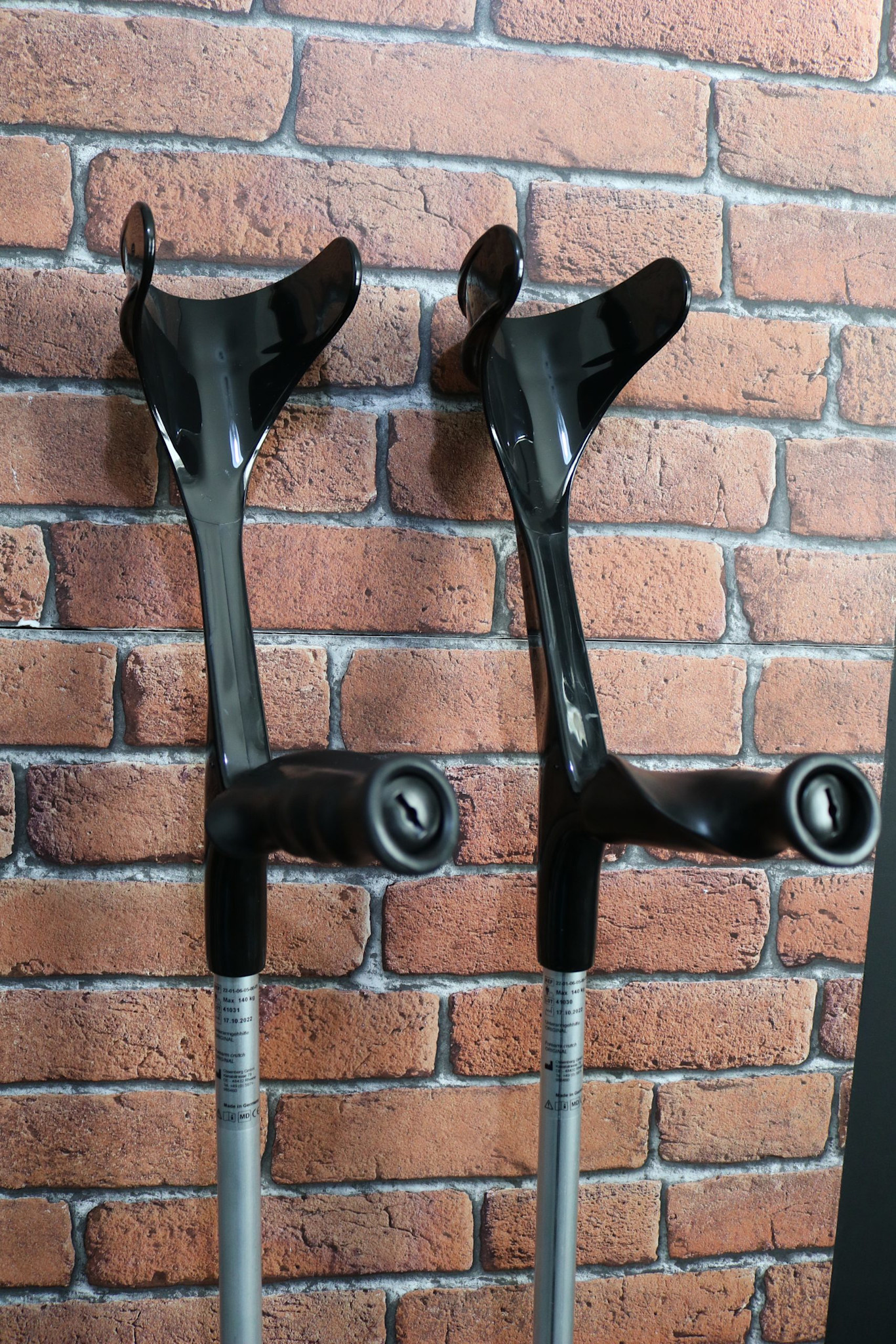
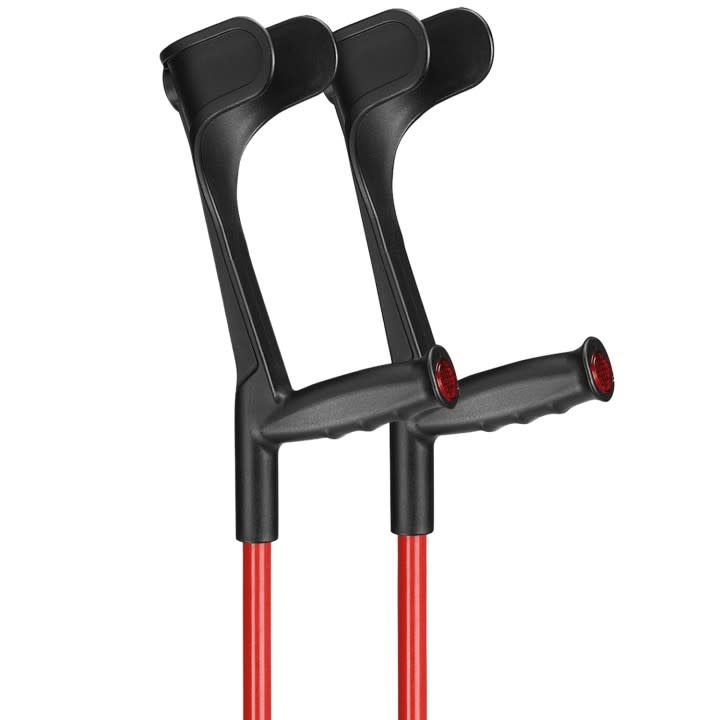
The open-cuff design with anatomic soft grips delivers quick arm entry and palm pressure distribution while colored aluminum tubes, fiberglass-reinforced cuffs and metal-insert tips provide height-adjustable support up to a 140-kg capacity.
Loading…
The open-cuff forearm crutch represents a fundamental evolution in ambulatory aid design, addressing specific limitations inherent in closed-cuff configurations while providing critical advantages for users requiring frequent hand release, varied activity patterns, or specific medical conditions affecting forearm mobility. Traditional closed-cuff designs, which completely encircle the forearm with fixed or hinged circumferential bands, provide maximum lateral stability and prevent crutch separation from the arm during stumbling or unexpected weight shifts—characteristics essential for users with significant balance impairments or progressive neurological conditions. However, closed cuffs create functional barriers that significantly impact daily living activities: entering or exiting cuffs requires two-handed operation (one hand holds crutch while other hand opens/closes cuff mechanism), creating obstacles for users who need to briefly free one hand to open doors, retrieve items from bags, operate phones, sign documents, or stabilize themselves against walls during transfers. The repetitive cuff fastening/unfastening cycle throughout the day (potentially 50-100 times for active users) creates cumulative time burden and can prove impossible for users with arthritis, reduced hand dexterity, or cognitive limitations affecting multi-step task sequencing. Open-cuff designs eliminate the encirclement barrier by using C-shaped or U-shaped cuffs that cradle the posterior and lateral forearm while leaving the anterior (front) forearm surface unobstructed—users simply slide their forearms into the open cuff from the front, requiring only single-handed operation with the opposite arm maintaining crutch control. This open-entry design enables instantaneous hand release by simply pulling the forearm forward out of the cuff, providing critical safety advantages in emergency situations (fire alarms, sudden illness, unexpected obstacles) where rapid crutch abandonment may be necessary. The trade-off involves reduced lateral stability compared to closed cuffs—open cuffs provide less resistance to lateral crutch displacement if users stumble sideways or experience lateral weight shifts, making them less suitable for users with significant balance deficits or those unable to maintain consistent vertical downward pressure through forearms into crutches. The anatomic soft grip component addresses the biomechanical reality that traditional straight cylindrical grips create pressure concentration in small contact areas of the palm, particularly at the base of the thumb (thenar eminence) and the pisiform bone in the heel of the hand. During weight-bearing phases of ambulation, 40-60% of body weight transmits through each crutch alternately, focusing this substantial force onto the small grip contact patches—for a 180-lb user, this creates 70-110 lbs of force concentrated in approximately 2-3 square inches of palm contact area. Prolonged concentrated loading causes pain, calluses, blisters, nerve compression (particularly median nerve compression mimicking carpal tunnel syndrome), and fatigue that reduces users' willingness to ambulate necessary distances. Anatomic soft grips incorporate ergonomic contouring that increases contact surface area across the entire palm, distributing weight-bearing forces across 4-6 square inches rather than 2-3 square inches—this 50-100% increase in contact area creates proportional reduction in pressure per square inch, significantly reducing discomfort and enabling extended ambulation periods. The soft material (typically thermoplastic rubber, foam, or gel composites) provides compliance that allows grip material to conform to individual palm contours rather than forcing palms to conform to rigid grip surfaces, further enhancing pressure distribution and comfort.
✓ Post-operative lower extremity orthopedic procedures requiring partial or non-weight-bearing ambulation (6-12 weeks typical)
✓ Lower extremity fractures with prolonged healing periods necessitating extended crutch dependence
✓ Ankle or foot injuries requiring protected weight-bearing during rehabilitation phases
✓ Knee ligament reconstruction (ACL, PCL, MCL repairs) with gradual progressive weight-bearing protocols
✓ Hip preservation surgeries (labral repairs, femoroacetabular impingement corrections) requiring hip precautions
✓ Chronic conditions requiring permanent or long-term ambulatory assistance (juvenile arthritis, post-polio syndrome)
✓ Multiple sclerosis with lower extremity weakness requiring forearm support but maintaining adequate balance
✓ Muscular dystrophy patients transitioning from independent ambulation to assistive device use
✓ Cerebral palsy with diplegia requiring bilateral support for community ambulation
✓ Spina bifida ambulators using reciprocating gait orthoses requiring upper extremity support
✓ Amputation recovery during prosthetic fitting and gait training phases
✓ Peripheral neuropathy with proprioceptive deficits requiring tactile feedback through forearm loading
✓ Users requiring frequent hand release for occupational tasks, personal care, or childcare activities
✓ Arthritis affecting hands/wrists limiting ability to manage closed-cuff fastening mechanisms
✓ Pediatric and adolescent users requiring age-appropriate equipment styling to encourage compliance
✓ Active community ambulators requiring equipment enabling shopping, dining, and social participation
Initial Height Adjustment and Fit Optimization: Proper crutch height adjustment represents the most critical factor determining user comfort, safety, and biomechanical efficiency during ambulation. To establish correct height, the user should stand upright wearing typical footwear (shoes worn during daily activities, not bare feet or slippers) with arms hanging naturally at sides in relaxed position. The crutch hand grip should align with the crease of the wrist (the flexion fold where hand meets forearm)—this positioning creates approximately 15-20 degrees of elbow flexion when gripping the handle, optimizing force transmission while minimizing shoulder and elbow joint stress. If grips position below wrist crease, excessive elbow flexion results, creating shoulder elevation, upper trapezius muscle strain, and inefficient force transfer; if grips position above wrist crease, insufficient elbow flexion prevents proper shock absorption and creates uncomfortable locked-elbow posture. To adjust height, locate push-button mechanisms on crutch shafts (typically positioned every 1 inch or 2.5 cm along adjustment range). Depress spring-loaded buttons fully while sliding the tube section to desired height—adjustment holes should align precisely with push-button pins. Release buttons and verify they've engaged fully into holes by attempting to pull or push tube sections without pressing buttons (no movement should occur if properly engaged). After adjusting to approximate height based on wrist-crease alignment, fine-tune by having user grip handles and extend arms downward—forearms should angle slightly downward from horizontal (approximately 10-15 degrees below horizontal), creating natural wrist position without excessive flexion or extension. The cuff should position 1-2 inches (2.5-5 cm) below the elbow point, providing adequate forearm support without impeding elbow flexion during swing phase of gait. Both crutches must be adjusted to identical heights to prevent asymmetric loading, altered gait patterns, and development of compensatory postures causing pain or injury.
Open-Cuff Entry Technique and Forearm Positioning: The open-cuff design's primary advantage—simplified entry/exit—requires proper technique to maximize benefits while maintaining adequate forearm support. To enter open cuffs, grasp the crutch grip with the hand while simultaneously sliding the forearm through the open front of the cuff from anterior (front) direction. The forearm should slide completely through the cuff opening until the posterior (back) of the forearm contacts the inside curve of the cuff—insufficient insertion depth reduces lateral stability and increases risk of inadvertent crutch separation during use. Proper depth positioning places the maximum circumference of the forearm (typically 3-4 inches or 8-10 cm below elbow) within the widest part of the cuff's C-shape, creating optimal load distribution and preventing cuff migration up or down the forearm during ambulation. The cuff should cradle the posterior and lateral aspects of the forearm while leaving anterior forearm surface uncontacted—this geometry provides medial-lateral stability (preventing crutch from swinging away from body) while enabling instant forearm withdrawal by pulling forward. Users with reduced forearm muscle mass (elderly, pediatric, or those with muscle wasting conditions) may experience more cuff movement during use; these individuals benefit from cuffs with adjustable interior padding or may require transition to closed-cuff designs providing circumferential security. To exit cuffs for hand release, simply pull forearm forward out of the cuff opening while maintaining grip on handle with the hand—the entire exit motion requires less than 1 second with practice. For temporary hand release (opening doors, retrieving items), users can maintain crutch vertical position by pinning crutch shaft against the torso with the upper arm while the hand performs required task, then immediately reinserting forearm into cuff. This technique prevents crutch dropping while enabling brief one-handed activities essential for independence.
Anatomic Grip Utilization for Optimal Pressure Distribution: The anatomic soft grip's effectiveness depends on proper hand positioning that engages the entire contoured surface rather than partial grip contact that negates pressure distribution benefits. Grasp grips with the full palm wrapping around the contoured surface, ensuring the thenar eminence (base of thumb pad), hypothenar eminence (heel of hand), and central palm all contact grip surfaces. The grip should nestle into the natural curves and valleys of the palm, with contoured grip projections fitting into palm depressions and valleys. Fingers should wrap comfortably around the grip without excessive flexion—over-gripping creates unnecessary forearm muscle fatigue and defeats the comfort purpose of anatomic designs. The thumb should wrap around the front of the grip, creating opposition pressure that prevents grip slip during forward propulsion phases, but avoid excessive thumb abduction (spreading away from palm) which creates thumb web space strain. During weight-bearing phases when body weight transmits through the crutch, consciously distribute loading across the entire palm rather than allowing weight to concentrate in thenar eminence or heel of hand—proper technique involves subtly rolling weight across the full palm surface during each step cycle. For users experiencing persistent palm discomfort despite anatomic grips, consider supplementary interventions: padded gloves designed for crutch use (providing additional cushioning and friction), grip covers or wraps that increase diameter for users with large hands whose palms don't fully contact anatomic contours, or grip modification putty that can be molded to precisely fit individual palm geometry.
Ambulation Patterns and Weight-Bearing Techniques: Forearm crutches support multiple gait patterns depending on weight-bearing restrictions, bilateral versus unilateral injury, and user strength/coordination. For non-weight-bearing ambulation (affected leg must not contact ground), use the three-point gait: advance both crutches simultaneously approximately 12-18 inches forward, then swing the unaffected leg through to or slightly ahead of crutch tips while affected leg remains elevated. This pattern requires substantial upper body and core strength as all body weight transmits through crutches and single leg during each cycle. For partial weight-bearing (physician-specified percentage of body weight allowed on affected leg, typically 25-50%), use four-point alternating pattern: advance left crutch and right leg simultaneously, then advance right crutch and left leg, creating four distinct contact points that distribute loading and provide maximum stability. For toe-touch weight-bearing (affected foot may contact ground for balance but bears minimal weight), advance crutches and affected leg together as a unit, then step through with unaffected leg. The open-cuff design particularly benefits users requiring frequent pattern changes throughout the day—morning stiffness may necessitate protective gait patterns that evolve into more normal patterns as joints warm up and pain medications take effect. The instant hand release also proves essential during transitions between surfaces (grass to pavement, entering buildings, navigating stairs) when one hand may be needed momentarily for door handles, railings, or balance support against walls.
Metal-Insert Tip Maintenance and Wear Assessment: The metal-insert rubber tips provide enhanced durability compared to standard rubber tips lacking internal reinforcement, but proper maintenance and timely replacement remain essential for safety. Inspect tips weekly during active use by examining the rubber tread pattern and contact surface—fresh tips display clearly defined tread grooves approximately 2-3 mm deep; replace tips when tread depth reduces to less than 1 mm as slip resistance decreases dramatically with minimal remaining tread. The metal insert inside the tip prevents the crutch shaft from puncturing through the rubber during high-impact loading (when users come down hard on crutches or during unintentional trips/stumbles), but the metal can become exposed if rubber wears completely through. Exposed metal inserts create severe slip hazards as metal-on-floor contact eliminates traction—inspect tip bottoms to ensure metal inserts remain covered by at least 1-2 mm of rubber. Tips wear faster with outdoor use on concrete or rough surfaces compared to indoor use on smooth floors; outdoor-primary users should inspect tips more frequently (every 3-4 days) during active recovery phases. Uneven wear patterns (more wear on one side of tip than the other) indicate improper crutch angle during ambulation—tips should wear evenly across the entire contact surface if crutches are positioned correctly during use. Persistent asymmetric wear suggests physical therapy consultation to correct technique. To replace worn tips, firmly grasp the old tip and pull directly away from the crutch shaft—it should slide off with steady force. Push new tips onto crutch shaft until fully seated with metal insert positioned inside the shaft end. Some tips require twisting motion during installation; others install straight-on depending on design. After replacement, verify tips are secure by attempting to pull them off without release mechanisms activated—properly installed tips should resist removal with substantial force.
Color Selection Considerations for Function and Safety: The availability of colored aluminum tubes transforms crutches from purely functional medical devices into personalized mobility equipment that users feel more comfortable using in social settings, potentially improving compliance and psychological adjustment during recovery. Color selection serves both aesthetic and practical functions. High-visibility colors (bright yellow, orange, red) provide safety advantages in outdoor environments, parking lots, or dimly lit spaces where other pedestrians and vehicles need to see mobility equipment users. These colors prove particularly valuable for pediatric users whose smaller stature makes them less visible to adults. Neutral colors (black, gray, navy) appeal to users preferring subtle equipment that draws less attention in professional or social settings, reducing self-consciousness about using assistive devices. Vibrant colors (purple, teal, pink) particularly appeal to younger users (teenagers, young adults) who may resist using equipment perceived as institutional or elderly-focused—personalization through color encourages consistent use rather than dangerous premature abandonment. For institutional equipment (clinics, hospitals, rental programs), consider color-coding by size or type to enable staff to quickly identify correct equipment—blue for pediatric, gray for standard adult, black for tall/heavy-duty models. The colored finishes (anodizing or powder-coating) add negligible weight (typically less than 1-2 ounces total) while providing corrosion protection superior to clear-coated aluminum, extending service life particularly for users in humid climates or those storing equipment outdoors.
Fiberglass-Reinforced Cuff Care and Inspection: The fiberglass-reinforced plastic cuffs provide durability advantages over metal cuffs prone to stress-concentration cracking at bend points, but proper care extends their service life. Clean cuffs regularly (weekly during active use) with mild soap and water using soft cloth or sponge—avoid abrasive cleaners or scrub brushes that can damage surface finish or create scratches that initiate cracks. Pay particular attention to the cuff interior where forearm contact creates accumulation of perspiration, skin cells, and oils—thorough cleaning prevents bacterial growth and odor development. After outdoor use in wet conditions, dry cuffs thoroughly before storage as prolonged moisture exposure can degrade certain plastic formulations. Inspect cuffs monthly for stress cracks, particularly at the narrowest point of the C-opening where stress concentrates during loading, and around mounting bolt holes where cuffs attach to crutch shafts. Small surface cracks (less than 5mm length, not penetrating through material thickness) can be monitored but should prompt planning for replacement within 2-3 months; cracks exceeding 10mm length, multiple cracks, or through-thickness cracks require immediate cuff replacement as failure during use creates fall risk. The open-cuff design experiences different stress patterns than closed cuffs—loading concentrates more on the posterior curve where forearm weight bears rather than distributing circumferentially. This concentration can create fatigue cracks in the posterior cuff section after 2-3 years of daily use (1000-2000 hours typical). Replacement cuffs are available separately from complete crutches, enabling cost-effective component replacement rather than full crutch replacement when cuffs fail but shafts, grips, and tips remain serviceable.
Overall Dimensions
Height Adjustment Range: Approximately 76-96 cm (30-38 inches) overall length
Adjustment Increment: Typically 1 inch (2.5 cm) spacing between adjustment holes
User Height Accommodation: Approximately 5'0" to 6'4" (152-193 cm) with proper adjustment
Tip Placement: Approximately 2 inches (5 cm) lateral to feet during standing position
Weight Specifications
Crutch Weight: Approximately 1.0-1.5 lbs (0.5-0.7 kg) per crutch (varies by size and color options)
Pair Weight: Approximately 2.0-3.0 lbs (0.9-1.4 kg) total
Maximum User Weight: 135-140 kg (298-308 lbs) depending on specific model and manufacturer
Weight-to-Capacity Ratio: Approximately 1:100 (exceptional strength-to-weight performance)
Cuff Specifications
Cuff Design: Open C-shaped or U-shaped configuration
Cuff Material: Fiberglass-reinforced plastic composite
Forearm Opening: Anterior (front) opening for tool-free entry/exit
Cuff Depth: Typically 4-6 inches (10-15 cm) forearm coverage
Cuff Positioning: 1-2 inches (2.5-5 cm) below elbow point when properly adjusted
Interior Padding: May include foam or rubber padding for comfort (model-dependent)
Grip Specifications
Grip Design: Anatomic contoured profile with increased palm contact surface area
Grip Material: Soft thermoplastic rubber, foam composite, or gel material
Contact Surface Area: Approximately 4-6 square inches (25-40 square cm) vs. 2-3 square inches for straight grips
Grip Diameter: Ergonomically varied (thicker at palm center, thinner at ends) typically 1.0-1.5 inch (2.5-3.8 cm) range
Grip Texture: Textured or ribbed surface for enhanced friction and slip resistance
Pressure Distribution: 50-100% reduction in pressure per square inch versus straight cylindrical grips
Tube Specifications
Tube Material: Extruded aluminum alloy (6061-T6 or similar)
Tube Diameter: Typically 7/8 inch (22mm) or 1 inch (25mm) depending on model
Wall Thickness: Sufficient for 140-kg capacity (varies by manufacturer specification)
Finish Options: Anodized or powder-coated in multiple color options
Available Colors: Varies by manufacturer—common options include silver, black, blue, red, purple, pink, green, orange
Finish Durability: Scratch-resistant and corrosion-resistant coating
Tip Specifications
Tip Material: Natural rubber compound
Internal Reinforcement: Metal insert prevents tip collapse and shaft penetration
Tread Pattern: Multi-directional grooves for slip resistance on varied surfaces
Tread Depth: Approximately 2-3 mm when new (replace when less than 1 mm remains)
Tip Diameter: Typically 7/8 inch to 1 inch (22-25 mm) base diameter matching tube size
Expected Service Life: 6-12 months with daily use (varies by surface types and usage patterns)
Adjustment Mechanism
Mechanism Type: Push-button spring-loaded pin-and-hole system
Operation: Tool-free height adjustment requiring no screws or wrenches
Lock Security: Spring-loaded pins engage into precision-drilled holes for secure positioning
Adjustment Range: Typically 8-10 positions spanning 8-10 inches (20-25 cm) total range
Ease of Use: Single-handed operation possible for users with adequate hand strength
Safety and Standards
Weight Capacity Testing: Tested to support 135-140 kg user weight with appropriate safety margin
Material Standards: Medical-grade materials appropriate for skin contact and durability
Slip Resistance: Rubber tips rated for traction on tile, wood, concrete, and outdoor surfaces
Structural Integrity: Aluminum tubes tested for fatigue resistance through typical service life
Quality Control: Factory inspection for cuff cracks, tube defects, and tip mounting security
Packaging and Accessories
Packaging: Typically sold as pair (left and right crutches)
Included Components: Crutches with pre-installed cuffs, grips, and tips
Documentation: User manual with height adjustment instructions and usage guidelines
Replacement Parts: Cuffs, grips, and tips available separately for component replacement
Accessories: Optional padded grip covers, cuff pads, and tip varieties (ice tips, etc.) available separately
Maintenance Requirements
Inspection Frequency: Weekly during active use for tip wear and cuff cracks
Cleaning: Mild soap and water weekly; thorough drying after wet use
Tip Replacement: Every 6-12 months with daily use (sooner if outdoor-primary)
Expected Service Life: 2-3 years with daily use assuming proper maintenance and timely component replacement
Storage: Dry indoor environment; avoid prolonged direct sunlight or temperature extremes
Carousel items
Testimonial items
Very welcoming and informative. We went in to rent a Walker for my mom to see if she would use it. They had no rentals left so he gave us a brand new one on rental. Highly recommend this company for all your ADL needs.
Tara Maye
The rating of this product is 5 out of 5
Fantastic service and experience, from delivery to pickup we could not have asked for anything more! We rented a hospital bed, and I do not believe you would get better service anywhere. Highly recommended!
Shawn Dillon
The rating of this product is 5 out of 5
Super friendly and very helpful! Delivered the wheelchair for me, special ordered other parts and took the time to show me how to install. I recommend!
Fiona Haines
The rating of this product is 5 out of 5
Can not thank the team at Med Supplies enough for their amazing service. We were in a tough spot till we got their help. Amazing service. Kind and respectful delivery. First class all the way. Thank you again.
Jon Beatty
The rating of this product is 5 out of 5
Ordered the chair on Sunday and it arrived Monday morning. Spoke to customer service to follow up on delivery times. It was already on my front door. Excellent and helpful staff. The product is sturdy and of good quality. Thank you for your help.
H D
The rating of this product is 5 out of 5
Excellent experience - website faithfully represented what was in stock (which hasn't always been my experience with other vendors sadly), and local shipping was really fast - ordered on the weekend, received it on Monday in my case. Thank you for being
Jason Hudson
The rating of this product is 5 out of 5
0/0
You cart is currently empty
780 409-1509
Get directions