Slideshow Items

  • Needles, Syringes & IV's
  • needles-syringes-ivs
DRV-Drive Medical

  |  

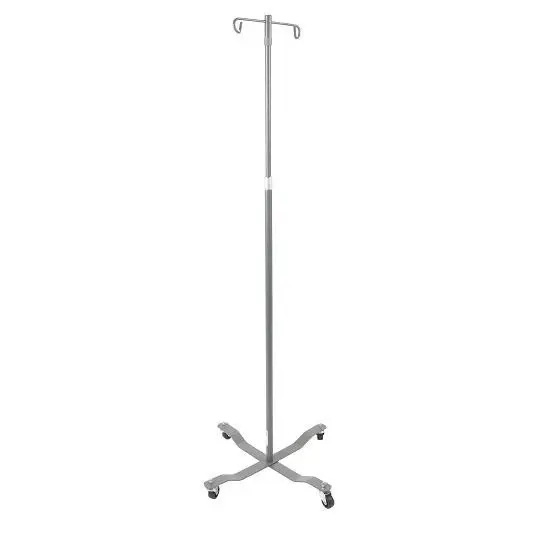
IV Pole Economy Silver Vein Removable hooks 2Hook

C$84.99
Out of stock online
In store: Check availability

Available in store

UPC Code: 822383232034
SKU: 13033SV

height-adjustable design accommodating diverse patient positions, removable dual-hook top convertible to four hooks, weighted wheeled base for stability and mobility, and durable chrome-plated construction for long-lasting clinical performance.

    • Why Height-Adjustable Design with Removable Hooks and Wheeled Base for Versatile IV Support

      The height-adjustable pole extending from 40 inches to 82 inches (102cm to 208cm) accommodates patients in varying positions—from reclined hospital beds where lower IV bag placement maintains adequate gravity flow, to standing or ambulatory patients requiring elevated positioning to ensure proper fluid delivery rate—while enabling optimal positioning for different room configurations, bed heights, and patient care scenarios without requiring multiple poles for different applications. The removable two-hook top design with push-pin conversion capability to four hooks provides flexibility for changing clinical needs—two hooks adequate for single IV infusions or basic setups, while four-hook conversion supports multiple concurrent IV lines, blood transfusions, medication piggybacks, and complex infusion protocols common in critical care, oncology, and emergency settings where medication management requires simultaneous administration of multiple solutions. The weighted base with four rubber caster wheels creates the essential balance between stability preventing accidental tipping that could dislodge IV catheters or disrupt infusions, and mobility enabling patient ambulation with IV poles, room-to-room transport, and easy repositioning by healthcare staff without lifting heavy equipment or disturbing patient care.

      Key Features & Benefits

      Key Features:

      • Height adjustable from 40 inches to 82 inches (102-208 cm)
      • Removable two-hook top configuration (standard)
      • Convertible to four-hook setup with push-pin adjustment
      • Chrome-plated steel construction with silver-vein finish
      • Weighted base for stability
      • Four rubber caster wheels for smooth mobility
      • Locking collar secures pole at desired height
      • Corrosion-resistant finish for long life
      • Easy-clean smooth surfaces
      • Tool-free height adjustment
      • Push-pin mechanism for hook conversion
      • Heavy-duty construction supports multiple IV bags
      • Base diameter provides stable footprint
      • Hooks positioned for multiple bag hanging
      • Compatible with standard IV bags and bottles

      Benefits:

      • Adjustable height fits all patient positions and bed heights
      • Two hooks adequate for most routine IV setups
      • Four-hook conversion supports complex infusion protocols
      • Removable top enables easy hook configuration changes
      • Chrome finish resists rust and maintains appearance
      • Weighted base prevents tipping accidents
      • Wheels enable patient ambulation with IV support
      • Easy transport between rooms and locations
      • Locking collar ensures stable height maintenance
      • Smooth surfaces facilitate infection control cleaning
      • Tool-free adjustment speeds setup and changes
      • Durable construction withstands years of clinical use
      • Versatile for hospital, clinic, and home care
      • Cost-effective compared to multiple specialized poles

      Clinical Applications

      Adjustable IV Pole Stands are appropriate for:

      ✓ Hospital inpatient rooms for IV therapy support ✓ Emergency department IV administration ✓ Operating room IV fluid support ✓ Post-anesthesia care unit (PACU) ✓ Intensive care unit multiple IV line support ✓ Medical-surgical unit patient care ✓ Oncology infusion centers ✓ Dialysis centers ✓ Outpatient infusion clinics ✓ Urgent care facilities ✓ Long-term care facilities ✓ Rehabilitation centers ✓ Home healthcare IV therapy ✓ Ambulatory patient IV support during mobilization ✓ Blood transfusion administration ✓ Chemotherapy infusion support ✓ Labor and delivery IV support ✓ Pediatric units (adjustable for child bed heights)

      Usage & Application

      Assembly and Setup:

      1. Unpack and inspect:
        • Remove from packaging
        • Check all components present:
          • Main pole
          • Base with wheels
          • Removable hook top
          • Push-pins or securing mechanisms
        • Inspect for damage during shipping
        • Verify all wheels rotate freely
      2. Assemble if required:
        • Most arrive assembled or require minimal assembly
        • If base separate: insert pole into base receptacle
        • Secure per manufacturer instructions
        • Ensure tight fit with no wobbling
      3. Attach hook top:
        • Insert removable hook top into pole
        • Align push-pin holes
        • Insert push-pin through holes
        • Push firmly until pin clicks or locks
        • Tug to verify secure attachment (should not pull out)
        • Ensure hooks facing outward for bag hanging
      4. Test stability:
        • Place on level floor
        • Push gently to verify stable (should not tip easily)
        • Check wheels roll smoothly
        • Adjust if wobbly

      Height Adjustment:

      1. Loosen locking collar:
        • Locate locking collar on pole (typically knob or clamp)
        • Twist counterclockwise to loosen
        • Do NOT remove collar completely
      2. Adjust height:
        • Raise: Pull pole upward to desired height
        • Lower: Push pole downward
        • Use smooth motion
        • Avoid jerking or forcing
      3. Secure at desired height:
        • Twist collar clockwise to tighten
        • Tighten firmly (hand-tight adequate)
        • Do NOT over-tighten (can damage threads)
      4. Verify locked:
        • Try to move pole up or down
        • Should be completely stable
        • If moves: tighten collar more
        • Should support IV bag weight without slipping

      Height Selection Guidelines:

      For bedridden patients:

      • IV bag should be 18-24 inches above IV insertion site
      • Typical bed height: 24-36 inches from floor
      • Pole height needed: 42-60 inches typical
      • Adjust as bed raises/lowers

      For sitting patients:

      • IV bag 18-24 inches above IV site
      • Chair/seated position: IV site ~30-40 inches from floor
      • Pole height needed: 48-64 inches typical

      For ambulatory/standing patients:

      • IV bag at or slightly above shoulder level
      • Standing patient: IV site ~48-60 inches from floor
      • Pole height needed: 66-82 inches typical
      • Maximum height often used for ambulation

      Converting to Four-Hook Configuration:

      1. Remove two-hook top:
        • Press push-pin button or release mechanism
        • While pressing, pull hook top straight up
        • Remove completely from pole
      2. Obtain four-hook top (if not included, purchase separately):
        • Verify compatible with pole model
        • Check push-pin alignment
      3. Install four-hook top:
        • Align push-pin holes in four-hook top with pole
        • Insert top onto pole
        • Push down until push-pin engages
        • Should hear/feel click
        • Tug to verify secure
      4. Arrange hooks:
        • Four hooks typically positioned in cross pattern
        • Provides more hanging options
        • Distribute IV bags evenly for balance

      Hanging IV Bags:

      1. Height considerations:
        • Bag must be above patient's IV insertion site
        • Higher = faster gravity flow rate
        • Lower = slower gravity flow rate
        • Typical: 18-24 inches above insertion site
      2. Hanging technique:
        • Hang bag by hanger loop (not by tubing)
        • Ensure secure on hook
        • Do not overload hooks:
          • Maximum 2-3 standard IV bags per hook typically
          • Check pole weight capacity
        • Distribute weight evenly:
          • If multiple bags, hang on different hooks
          • Prevents pole tipping
      3. Tubing management:
        • Allow tubing to hang straight down (no kinks)
        • Secure excess tubing to prevent tangling
        • Avoid tubing tangled in wheels

      Moving the IV Pole:

      Stationary use:

      1. Position pole next to patient bed or chair
      2. Adjust height appropriately
      3. Hang IV bags
      4. Ensure wheels not in walkway (trip hazard)

      Patient ambulation with IV pole:

      1. Prepare for ambulation:
        • Verify IV site secure
        • Check tubing not kinked or caught
        • Ensure pole height appropriate for standing
        • Test pole rolls smoothly
      2. Patient holds pole:
        • Grasp pole with one or both hands (sturdy grip area)
        • Not by hooks (unstable)
        • Height should allow comfortable pushing
      3. Ambulate:
        • Patient pushes pole while walking
        • Pole should roll smoothly alongside
        • Walk at comfortable pace
        • Watch for:
          • Tubing catching on wheels or obstacles
          • Pole tipping (check weight distribution)
          • IV site pulling or discomfort
      4. Staff assistance:
        • Assist patient as needed
        • Monitor IV site during ambulation
        • Ensure patient stable while moving
        • One staff member may push pole while assisting patient

      Transport between rooms:

      1. Lower pole if needed:
        • May need to lower to fit through doorways
        • Standard doorways ~80 inches clearance
        • Pole at 82 inches may need lowering
      2. Push pole alongside patient:
        • IV bags remain hanging during transport
        • Move slowly to prevent swinging bags
        • Watch for tubing catching
      3. Elevator use:
        • Pole fits in standard elevators
        • Position pole to not block doors

      Maintenance and Cleaning:

      Daily/routine cleaning:

      1. Wipe down pole:
        • Use hospital-grade disinfectant wipes
        • Clean entire pole surface
        • Pay special attention to:
          • Handles and areas touched frequently
          • Hooks (contact with bag hangers)
          • Base (floor contact)
        • Follow facility infection control protocols
      2. Inspect wheels:
        • Check for hair, lint, or debris wrapped around wheel axles
        • Remove any obstructions
        • Verify wheels roll freely
      3. Check stability:
        • Ensure base not damaged
        • Verify locking collar functions
        • Test that pole doesn't wobble

      Deep cleaning:

      • Periodic thorough cleaning per facility schedule
      • Disassemble if possible for complete cleaning
      • Clean all crevices and joints
      • Dry thoroughly to prevent rust

      Maintenance checks:

      1. Monthly inspection:
        • Test locking collar tightens/loosens properly
        • Verify push-pins secure hook top firmly
        • Check chrome plating for chips or rust spots
        • Inspect welds and joints for cracks
        • Test wheel rotation (should spin freely)
      2. Annual maintenance:
        • Comprehensive inspection
        • Replace worn wheels
        • Touch up any finish damage
        • Verify weight capacity maintained
        • Document maintenance performed

      Troubleshooting:

      Pole height won't stay locked:

      • Locking collar may be loose or damaged
      • Tighten collar more firmly
      • Check for stripped threads
      • May need collar replacement
      • Lubricate threads if sticky (appropriate lubricant)

      Pole tips over:

      • Weight distribution issue:
        • Too many bags on one side
        • Redistribute IV bags evenly across hooks
      • Base not weighted enough:
        • May need heavier-duty pole
        • Ensure base not damaged
      • Floor uneven:
        • Move to level surface
        • May need adjustable feet (some models)

      Wheels don't roll smoothly:

      • Debris wrapped around axles
      • Remove hair, lint, string
      • Lubricate wheel bearings if appropriate
      • Replace damaged wheels
      • Check floor surface (carpet vs. hard floor)

      Hook top won't stay attached:

      • Push-pin not fully engaged
      • Remove and reinsert, ensuring click
      • Push-pin may be damaged—replace
      • Holes misaligned—check alignment
      • Top may be incompatible—verify correct part

      Rust or corrosion appearing:

      • Chrome plating damaged
      • Clean and dry thoroughly after each use
      • Touch up with chrome polish or paint
      • Severe rust: may need replacement

      Height difficult to adjust:

      • Locking collar may be over-tightened
      • Loosen collar more
      • Pole may have debris inside—clean
      • Lubricate with appropriate product
      • Bent pole: may need replacement

      Special Considerations:

      Pediatric use:

      • Adjust to lower heights for children's beds
      • Ensure stable (children may grab or pull)
      • Use four hooks for multiple pediatric IV bags (smaller volumes)
      • Supervise children around poles (climbing hazard)

      Bariatric patients:

      • Ensure pole rated for weight if used for patient support
      • Standard poles for IV support only (not patient weight)
      • May need bariatric bed height accommodation

      Home healthcare:

      • Teach patient/caregiver safe use
      • Demonstrate height adjustment
      • Emphasize ambulation safety
      • Show proper cleaning
      • Ensure adequate space for pole in home

      MRI environment:

      • Standard steel poles NOT MRI-safe
      • Remove from MRI room before scanning
      • Use MRI-compatible IV poles in MRI suites

      Ambulatory surgery:

      • Pole allows patient mobility post-op
      • Reduces bed rest complications
      • Enables early ambulation with continued IV therapy

      Long-term care:

      • Durable construction withstands extended daily use
      • Easy cleaning important for infection control
      • Mobility enables resident participation in activities

      Safety Considerations:

      Preventing falls:

      • IV poles can be trip hazards
      • Position away from walkways when not in use
      • Ensure wheels locked if pole has locking wheels
      • Secure tubing to prevent tripping

      Preventing IV dislodgement:

      • Ensure pole height appropriate (not pulling on IV site)
      • Check tubing not caught on wheels during movement
      • Secure tubing with clips or tape

      Preventing tipping:

      • Don't overload hooks
      • Distribute weight evenly
      • Ensure base on level surface
      • Don't allow patients to lean heavily on pole

      Infection control:

      • Clean between patients
      • Follow facility protocols for high-touch surfaces
      • Pay attention to frequently-touched areas

      When to Replace:

      Replace pole if:

      • Base cracked or damaged
      • Locking collar stripped or non-functional
      • Significant rust or corrosion
      • Bent pole that won't adjust smoothly
      • Wheels broken and cannot be replaced
      • Welded joints cracked
      • No longer stable under normal loads

      Typical lifespan:

      • 5-10+ years with proper maintenance
      • High-quality chrome poles last longer
      • Wheels may need periodic replacement

      Storage:

      • Store in clean, dry area when not in use
      • Lower to minimum height for storage (saves space)
      • Do not store with heavy items on hooks
      • Protect from moisture to prevent rust
      • Keep away from high-traffic areas

      Purchasing Considerations:

      When selecting IV pole:

      • Height range: Ensure fits your needs (40-82" typical)
      • Hook configuration: Two vs. four hooks
      • Base weight: Heavier = more stable
      • Wheel quality: Ball-bearing wheels roll better
      • Chrome quality: Better plating lasts longer
      • Weight capacity: Check maximum load
      • Mobility needs: Locking vs. non-locking casters

      Accessories available:

      • Additional hook tops (two-hook to four-hook conversion)
      • Replacement wheels
      • Replacement locking collars
      • Accessory attachments (basket trays, pump holders)

      Technical Specifications

      Product Details:

      • Product Type: Adjustable IV pole stand
      • Height Range: 40 inches to 82 inches (102 cm to 208 cm)
      • Height Adjustment: Continuous adjustment with locking collar
      • Hook Configuration: Removable two-hook top (standard)
      • Hook Conversion: Convertible to four-hook with push-pin adjustment
      • Pole Material: Chrome-plated steel
      • Finish: Silver-vein chrome plating
      • Base Type: Weighted base for stability
      • Base Material: Steel (weighted)
      • Wheels: Four rubber caster wheels
      • Wheel Type: Swivel casters for maneuverability
      • Wheel Material: Rubber (non-marking)
      • Locking Mechanism: Locking collar on pole for height adjustment
      • Push-Pin Attachment: Tool-free hook top attachment
      • Weight Capacity: Varies by model (typically supports 15-25 lbs)
      • Pole Diameter: Standard IV pole diameter (typically ~1 inch)
      • Base Dimensions: Varies by model (typically 20-24 inch diameter)
      • Corrosion Resistance: Chrome-plated for rust resistance
      • Cleaning: Wipe-clean smooth surfaces
      • Assembly: Minimal assembly required (often pre-assembled)
      • Intended Use: Hospital, clinic, home healthcare IV support
      • Patient Mobility: Enables ambulation with IV therapy
      • Durability: Heavy-duty construction for extended use
      • Maintenance: Low maintenance with periodic cleaning and inspection
      • Typical Lifespan: 5-10+ years with proper care
      • Manufacturer: Various (Medline, Drive Medical, McKesson, others)
    • No reviews yet

      Add yours

    Testimonials from Google

    See all reviews

    Your cart — 0

    You cart is currently empty

    Login

    By using our website, you agree to the use of cookies. These cookies help us understand how customers arrive at and use our site and help us make improvements. Hide this message More on cookies »